Is an Online MBA in Nonprofit Management Worth It for Nonbusiness Bachelor's Graduates?

Co-Founder and Chief Data Scientist
A nonbusiness bachelor's degree can be an asset in nonprofit work: expertise in education, healthcare, the arts, or another mission area helps you understand the people an organization serves. But moving into management may require skills your undergraduate program did not teach.
This article examines when an online MBA in nonprofit management is worth the cost, how to assess your business-course readiness, and whether another path would serve your career better. You'll leave with a way to judge programs against the role you actually want.
Key Things You Should Know
- An online nonprofit management MBA is most likely to pay off when you can apply its finance and leadership training to a plausible management move, not when you need a degree simply to enter the sector.
- A nonbusiness bachelor's degree does not automatically bar admission, but accounting and quantitative preparation may affect your workload or require foundation courses.
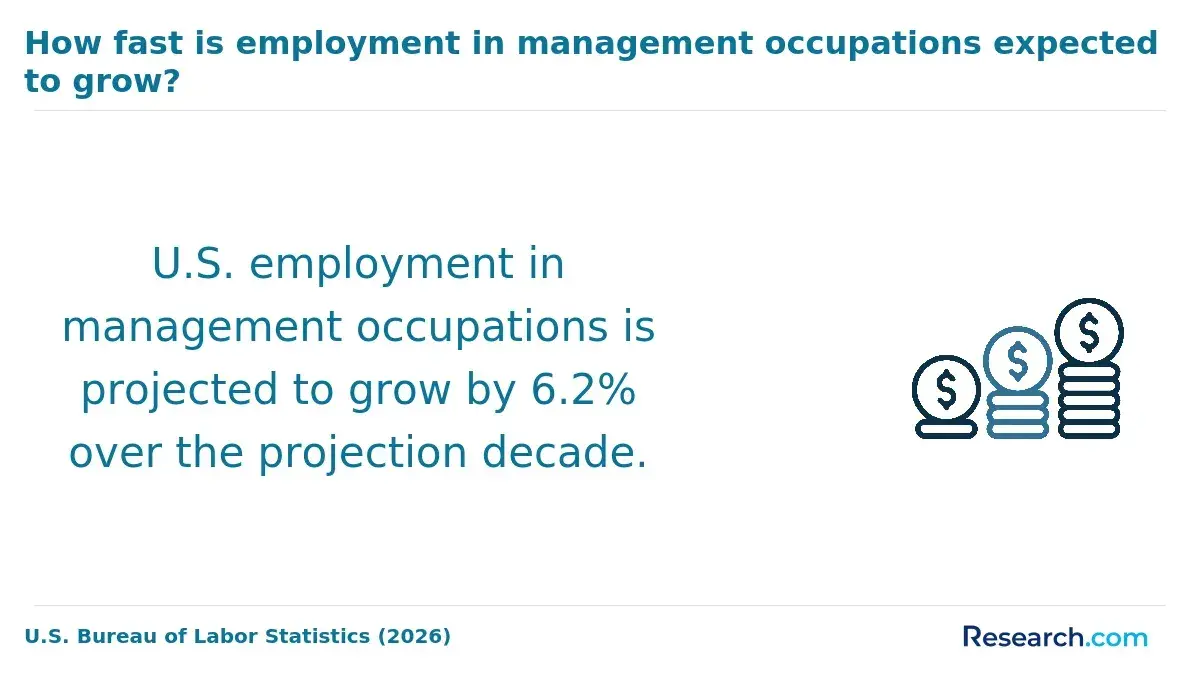
- The $126,520 median for all U.S. management occupations in May 2025 is not a nonprofit MBA salary estimate; use the pay for your target role and organization when weighing costs.
Is an online MBA in nonprofit management worth it for nonbusiness graduates?
It can be, if the degree closes a specific management gap and supports a realistic next job. An experienced program coordinator seeking responsibility for budgets and staff may use an MBA immediately. A recent graduate hoping the credential alone will lead to an executive role is less likely to see the same value.
Your undergraduate field matters, but not as a simple business-versus-nonbusiness divide. An education graduate managing youth programs may already understand service delivery and stakeholders, while needing financial training. A mathematics graduate may find analytics familiar but need experience with fundraising and nonprofit governance. Neither needs to discard their existing expertise.
For a financial decision, compare the total amount you would pay, including fees, financing, and any lost work time, with a conservative improvement in earnings you could reasonably pursue. Divide that cost by the annual increase in take-home pay you expect to retain to estimate a rough payback period.
If there is no credible next role or pay increase, do not manufacture one to justify enrollment. Mission impact, confidence in managing people, and broader career options can still matter, but they deserve an explicit place in your decision.
The best alternative depends on the gap you need to close. This comparison separates a broad management degree from more targeted training.
| Path | Best fit | Main limitation |
| Nonprofit management MBA | Broad business leadership plus nonprofit-focused study | May cost more and take longer than the skills gap requires |
| Master of public administration or nonprofit management | Deeper emphasis on public-service institutions, policy, or nonprofit operations | May offer less general business training |
| Courses, certificates, or supervised work projects | A defined need, such as budgeting or fundraising | Less comprehensive management education |
An MBA's value is most uncertain when you lack sector experience and the program offers little opportunity to build it. In that case, a relevant job, volunteer responsibility, or targeted course may be the better first investment.
Can you earn a nonprofit management MBA with a nonbusiness bachelor's degree?
Many MBA programs consider applicants from multiple undergraduate disciplines, although each school sets its own rules. A nonbusiness degree is not, by itself, proof that you need remedial coursework. Compare your transcript and work experience with the program's published expectations for accounting, finance, economics, statistics, and quantitative reasoning.
Some schools incorporate introductory material into the MBA; others assign foundation courses or recommend preparation before classes begin. Ask whether those courses carry extra tuition, extend the completion time, or can be waived through prior study. If you have managed a project budget or analyzed program data, describe that work in your application rather than relying on your degree title to represent your abilities.
Readers coming from technical fields can also look at online MBA programs for engineers. The useful comparison is how each program builds management skills from your existing expertise; an engineering-focused program is not necessarily a nonprofit-focused one.
What careers can an online MBA in nonprofit management prepare you for?
The most credible next step usually builds on work you already do. A program specialist might seek a program manager role; someone responsible for operations could pursue broader responsibility for staffing, budgets, or organizational planning.
An MBA can strengthen your case, but employers may still require demonstrated fundraising, grant management, financial oversight, or people-management experience.
The following roles illustrate how the degree may connect to prior experience, not jobs conferred by graduation.
| Potential direction | Relevant prior experience | Experience an MBA may not replace |
| Program or operations manager | Coordinating services, vendors, or teams | Accountability for outcomes and staff supervision |
| Development or fundraising manager | Donor relations, campaigns, or communications | A record of securing and stewarding funding |
| Finance or administrative leader | Budgeting, reporting, or organizational operations | Role-specific accounting and compliance expertise |
Industry knowledge can make a transition more plausible. For example, a healthcare worker considering a health-focused nonprofit can compare graduate business options in healthcare with nonprofit coursework. The better choice depends on whether the target role chiefly requires knowledge of healthcare operations or of fundraising, boards, and mission-driven funding.
An MBA normally combines a general management core with electives or a formal concentration. The core may cover managerial accounting, finance, strategy, marketing, operations, and organizational behavior.
Nonprofit-focused study may examine board governance, fundraising, grant-supported budgets, mission measurement, and accountability to donors and communities. Course names and depth vary by school.
For a nonbusiness graduate, the distinction matters. General accounting teaches you to interpret financial information; nonprofit coursework may then ask how funding restrictions and mission priorities affect decisions. Neither automatically provides the technical preparation for a specialized accounting role.
Check whether "nonprofit management" is an officially designated concentration, a group of electives, or simply a course. Request a current degree plan and look for applied work, such as a project with a nonprofit, if you need evidence of sector experience as well as classroom knowledge.
Online study can let you keep working and apply lessons to your organization. Campus study may be easier to use for frequent in-person collaboration or local recruiting. Neither format guarantees stronger teaching or better career outcomes; the relevant comparison is between the specific programs you could attend.
Ask online programs whether classes are asynchronous, when live sessions occur, how group projects are scheduled, and whether residencies require travel. Also ask which career services and nonprofit employer connections are available to online students.
If you are changing sectors, access to projects and people in that sector may matter more than the convenience of the delivery format. Do not assume an online MBA offers the same recruiting opportunities as a school's full-time campus MBA.
Requirements vary by school. Applicants commonly need an accredited bachelor's degree and may be asked for transcripts, a résumé, a statement of purpose, and recommendations. Schools differ on professional experience, minimum grades, tests, interviews, and foundation courses; none of these should be treated as a universal nonprofit MBA requirement.
Before applying, identify a work or volunteer example that shows your readiness to manage resources, people, or projects. Then ask each admissions office whether your prior quantitative coursework meets its expectations and whether missing preparation adds courses or costs.
If a school's test policy or experience requirement is a barrier, a comparison of online MBA programs with accessible admissions can help you find questions to ask, but verify the current rules and nonprofit curriculum directly with the school.
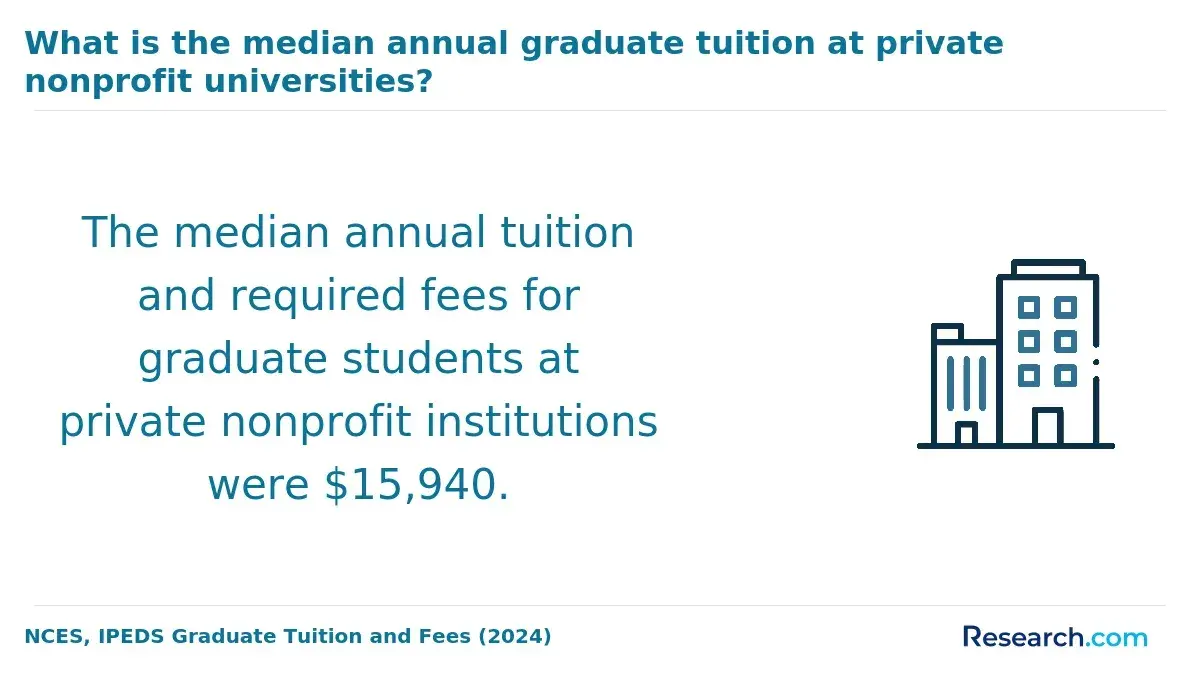
There is no single reliable price for this degree type. Published tuition may be quoted per credit, course, term, or program, so compare the cost of completing the entire degree. Include mandatory fees, foundation courses, materials, required travel, and borrowing costs. Check whether tuition differs by residency status and whether the school can provide a written estimate based on your transcript.
Employer education assistance can change the calculation, but confirm eligibility and any requirement to remain employed afterward. Scholarships or lower published tuition may also help; when reviewing affordable graduate business education, compare total expected cost rather than a yearly figure alone.
For an entry-level nonprofit worker, taking on substantial debt without a likely management opportunity may be difficult to justify. For a working manager with employer support, the same curriculum could be a more manageable investment.
Completion time depends on required credits, course sequencing, enrollment intensity, and any foundation work. An accelerated schedule may reduce time to graduation but concentrate the work; part-time study can protect your employment while extending the period over which you pay tuition.
Ask for a course-by-course plan reflecting your likely schedule, not just the fastest advertised completion time. Confirm how often nonprofit electives are offered and whether pausing enrollment would delay them. If you are new to accounting or statistics, leave room to learn those subjects rather than selecting a pace solely to finish sooner.
There is no dependable single salary for graduates of this specialization. Pay depends on the position, location, organization size and funding, and your experience before the MBA. The U.S. Bureau of Labor Statistics reports a $126,520 median annual wage for management occupations in May 2025, but that figure covers management jobs across industries and education backgrounds. It should not be read as nonprofit pay or as an MBA graduate outcome.
For an enrollment decision, seek posted pay ranges for the specific roles and employers you could realistically pursue. Compare those ranges with your current compensation, then ask whether the degree addresses a stated hiring or promotion requirement. An occupation's salary, and even a graduate's later earnings, does not establish that the MBA caused an increase.
How can you choose an accredited online nonprofit management MBA?
First, confirm that the institution holds recognized institutional accreditation. Then check whether its business school has separate specialized accreditation and whether the online MBA actually offers the nonprofit concentration you want. Institutional accreditation and business-school accreditation are different checks; neither tells you how much nonprofit coursework is included.
Shortlist programs by curriculum, total cost, scheduling, and access to relevant projects and career support. If you are considering schools in Texas, a resource to compare online MBA programs can help generate candidates.
Confirm each candidate's current accreditation, online concentration availability, and price with the institution before deciding. Choose the program that supports your next plausible role, not simply the one with the most appealing concentration label.
Other Things You Should Know About MBA Programs
It can help you understand budgets, strategy, and governance discussions. Board selection also depends on the organization's needs, your judgment, and the expertise or community connections you bring.
Some programs cover nonprofit formation or governance, but an MBA is not a substitute for legal and tax advice. Check the syllabus if launching an organization is your goal.
Potentially. General MBA skills can apply to a mission-driven business, while nonprofit courses may help with impact measurement. Check whether the program covers the operating and funding model you plan to use.
It is not always required, but even a substantive volunteer or work project can help you test your interest, choose relevant courses, and explain your career goal to employers.
- What Degree Do You Need for an MBA? | LSU Online https://online.lsu.edu/newsroom/articles/what-degree-do-you-need-for-an-mba/
- Do I Need an MBA for Nonprofit Jobs? | Howard University Online MBA https://onlinemba.howard.edu/blog/mba-nonprofit-jobs/
- M.B.A. vs. M.P.A.: Which Degree Fits Your Career Goals? | miami.edu https://news.miami.edu/uonline/stories/2025/08/mba-vs-mpa.html
- Online MBA Frequently Asked Questions | calbaptist.edu https://calbaptist.edu/academics/programs/online-master-of-business-administration-management/faqs
- Online MBA Cost & Financial Aid: Is It Worth It? | Longwood Online https://online.longwood.edu/business/mba/paying-for-graduate-school/
- Online MBA in Nonprofit Management at Mount Saint Vincent https://online.mountsaintvincent.edu/degrees/business/mba/nonprofit-management/
- Master's in Nonprofit Management vs. Public Administration | Northeastern University Graduate Programs https://graduate.northeastern.edu/knowledge-hub/nonprofit-management-vs-public-administration/
- 11 Best Degrees for a Career in Nonprofit | University of San Diego Online Degrees https://onlinedegrees.sandiego.edu/best-nonprofit-degrees/
- Is an MBA Worth It? ROI, Pros, Cons and Who Should Enroll | CSP Global Concordia University, ST. Paul https://online.csp.edu/resources/article/is-an-mba-worth-it/
- 18 Careers You Can Pursue with an MBA (Aside from Business) | umn.edu https://online.umn.edu/story/18-careers-you-can-pursue-mba-aside-business