Online MBA in Human Resources: Admissions Guide for Career Changers

Co-Founder and Chief Data Scientist
If you work outside human resources, an online HR MBA may look like a way to change careers without leaving your job. Admission, however, is only the first hurdle: you also need a program that helps you build HR knowledge and credible experience.
This guide explains how career changers can assess their readiness, prepare an application, compare online programs, and judge whether an MBA - or a more direct route - fits the HR role they want.
Key Things You Should Know
- A non-HR or nonbusiness background does not automatically rule out admission; schools set their own degree, work-experience, testing, and prerequisite policies.
- For a career change, prioritize applied HR work and access to employers over the concentration label alone. An MBA does not replace the experience commonly expected for HR management jobs.
- Budget against a realistic target role, not the $126,520 median wage for all US management occupations in May 2025; that figure is not an HR MBA graduate salary.
What is an online MBA in human resources?
An online MBA in human resources combines a broad business degree with HR-focused study. The MBA core typically covers subjects such as accounting, finance, strategy, and operations; the HR component may address staffing, compensation, employee relations, or workforce planning. Schools may call that component a concentration, specialization, track, or set of electives. Check the required courses before assuming those labels represent the same depth of study.
For a career changer, the distinction matters. Business coursework can help you connect hiring and retention decisions to organizational goals, but it is not a substitute for practicing HR work or learning the laws and procedures relevant to a particular role. An MBA with one HR elective is not necessarily equivalent to a formally designated HR concentration.
Is an online MBA in human resources worth it for career changers?
It can be worthwhile if you already bring transferable experience and want both HR capabilities and broader management education. A recruiting professional moving into workforce planning, or an operations manager taking on people-strategy responsibilities, may be able to apply the degree while building relevant experience. A move from an unrelated function into a senior HR position is harder: employers may still expect a record of handling HR decisions.
Match the credential to the gap you need to close. If you need hands-on HR foundations and an entry route into the function, an HR certificate, a specialized HR master's degree, employer training, or an internal HR assignment may be more direct. If you also want responsibility for budgets and organization-wide decisions, the MBA has a stronger case. Compare the full cost with the roles you could realistically pursue next, and ask whether the program offers projects or career support available to online students.
Cost-sensitive applicants can use lists of low-cost online MBA programs mba usa as a starting point, then verify which schools actually offer substantial online HR coursework. A low-priced general MBA is not automatically a good HR career-change program.
What are the admission requirements for an online HR MBA?
Requirements vary by university. Common application components include a bachelor's degree, transcripts, a résumé, a statement of purpose, and recommendations. Some programs consider GMAT or GRE scores; others waive tests or do not require them. Work-experience expectations, minimum grades, interviews, and foundation courses also vary. An HR concentration does not universally require an HR job history or business bachelor's degree.
Career changers should separate eligibility from readiness. The comparison below identifies what to confirm with each school and what evidence can strengthen an application without implying that every item is mandatory.
| Area | Confirm in the program's policy | Useful career-changer evidence |
| Academic preparation | Degree, grade, quantitative, and foundation-course rules | Relevant coursework or recent preparation in accounting and statistics |
| Professional background | Any minimum or preferred work experience | Examples of hiring, coaching, training, analysis, or organizational change |
| Application materials | Tests, essays, recommendations, interview, and deadlines | A specific HR goal supported by past work and a feasible transition plan |
To prepare an application, first identify the HR role you want and the experience you already have that relates to it. Next, review each school's current requirements and address any stated academic gaps. Finally, use your statement and recommendations to show how you have worked with people or organizational decisions - and what you still need to learn. Lists of online MBA programs with accessible admissions may help you find options, but confirm each program's current policy and HR curriculum directly.
Start with the institution's accreditation status in the US Department of Education or Council for Higher Education Accreditation directories. Then check whether the business school holds specialized accreditation, such as AACSB, ACBSP, or IACBE. Institutional accreditation and business-school accreditation answer different questions; neither confirms that the online HR concentration offers the courses or career support you need.
Check the school's current online MBA catalog for the exact HR course sequence, any campus requirements, and whether online students can use career services. Ask for examples of applied projects, employer engagement, and career support for students changing functions - not just students seeking promotion in their existing field. If you compare schools for online MBA programs online MBA programs, treat a state-focused comparison as an initial filter rather than evidence that a school is the best fit nationwide.
Expect an MBA core alongside HR courses, although requirements differ by school. Core work in finance, accounting, analytics, strategy, and organizational behavior can help an HR professional make a business case for a staffing plan or evaluate the costs of turnover. HR-focused courses may cover talent acquisition, compensation and benefits, employment law, labor relations, performance management, or strategic workforce planning.
Read course descriptions rather than relying on titles. A course on employment law may introduce managers to compliance risks without preparing them to give legal advice. A workforce analytics course may teach interpretation of people data rather than advanced statistical modeling. For a career switch, an applied project involving a staffing analysis, training plan, or compensation decision may be especially useful evidence of what you can do.
Completion time depends on required credits, course sequencing, enrollment pace, and whether foundation courses are needed. Online delivery does not necessarily mean self-paced study: live meetings, group projects, and fixed course schedules can affect how quickly a working student finishes. Ask how often HR electives run before planning a graduation date.
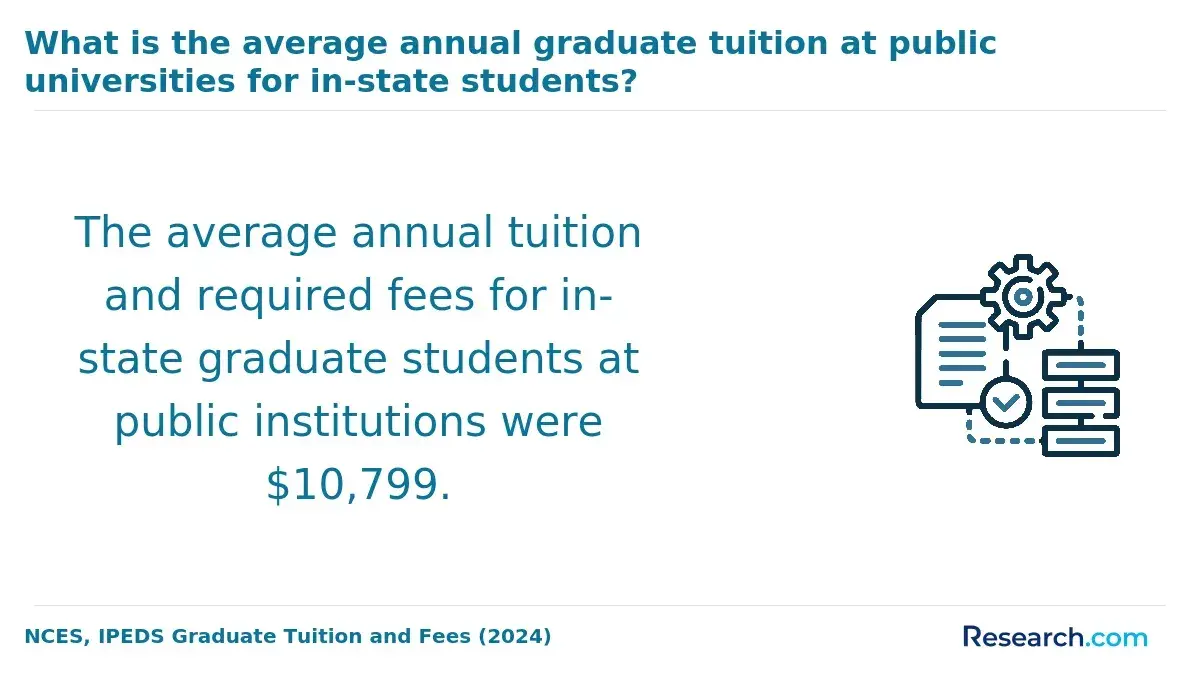
For a meaningful cost comparison, calculate required credits multiplied by tuition per credit - or the applicable term-based charges - then add mandatory fees, materials, and any required travel. Ask whether tuition changes by residency status or academic year. Financing costs and reduced work hours can also affect what the degree ultimately costs you.
Lists of MBA programs under $10,000 per year can help establish a budget shortlist. Confirm total program cost and HR course availability before comparing that figure with employer tuition assistance or a less expensive HR-specific credential.
An online program may let you keep working and apply new skills immediately. A campus-based program may offer more in-person contact with classmates and employers. Neither format guarantees access to internships, recruiting events, or the same career services offered to other MBA students.
For a career changer, compare the actual route into HR, not just the delivery mode. Ask whether online students can attend employer events, receive individual career coaching, complete HR-related projects, and connect with alumni in their target market. Also confirm live-session times, group-work expectations, and required visits; "online" alone does not establish scheduling flexibility.
Possible paths include recruiting, learning and development, compensation analysis, HR business partnership, and HR management. The appropriate entry point depends heavily on prior work. Someone who has managed training may move toward learning and development; someone with finance or analytics experience may be better positioned to pursue compensation or workforce-analysis work. HR manager and HR director roles generally call for substantial relevant experience, not just an MBA.
Translate your current work into evidence employers can evaluate: a documented hiring process improvement, a training initiative, or an analysis that informed a people decision. If your current role offers no HR exposure, look for an internal project, a cross-functional assignment, or an appropriately leveled HR opening while studying.
Some healthcare professionals consider combined nursing and business education. Resources on low-cost online MBA programs degree programs include MSN/MBA options, but those degrees primarily address nursing and business leadership. A nurse targeting an HR function should compare their coursework and career support with a dedicated HR pathway before choosing one.
There is no single reliable salary for "HR MBA graduates." Pay depends on the occupation, location, employer, responsibilities, and experience before and after the degree. For context - not as an HR-specific outcome - the US Bureau of Labor Statistics reports a $126,520 median annual wage for all management occupations in May 2025. That broad category includes many jobs outside HR and does not show what a career changer will earn.
BLS projects management occupations overall to grow faster than the average for all occupations from 2025 to 2035, with about 1.1 million openings annually on average from growth and replacement needs. This does not establish demand for a particular HR role. Evaluate pay and openings for the specific occupation and location you intend to enter, and compare them with your current compensation before estimating a financial return.
Do HR MBA graduates need SHRM or HRCI certification?
SHRM and HRCI certifications are separate from an MBA. An HR MBA does not automatically award either credential, and certification is not universally required for HR employment. Some employers value certification as evidence of HR knowledge, while others place more weight on relevant work experience.
Check the eligibility, exam, maintenance, and work-experience rules for the specific credential you are considering. For a newcomer, the best sequence may be to gain HR exposure first, then decide whether certification would strengthen applications for the roles you want. Do not assume that taking an MBA course satisfies a certifying organization's current requirements.
Other Things You Should Know About MBA
Often, yes, but check each program's work-experience rules. Be ready to explain your career goal, previous responsibilities, and how you plan to gain HR experience during the degree.
That depends on the school. It may appear on a transcript rather than the diploma. Ask the registrar how the credential is recorded before enrolling.
Leave-of-absence and reentry policies vary. Check how a pause affects tuition, financial aid, course availability, and the maximum time allowed to complete the degree.
Only if the program permits it. Ask whether your proposed project meets academic requirements and gives you work you can discuss with HR employers.
- Types of Financial Aid: Grants, Work-Study, and Loans | studentaid.gov https://studentaid.gov/understand-aid/types
- Plan and Pay for Higher Education - State Controller's Office https://www.sco.ca.gov/eo_higher_education.html
- Cost of Attendance (Budget) | 2025-2026 Federal Student Aid Handbook https://fsapartners.ed.gov/knowledge-center/fsa-handbook/2025-2026/vol3/ch2-cost-attendance-budget
- MBA Requirements: What You Need to Apply in 2026 | SCU https://www.scu.edu/business/blog/admissions/mba-requirements/
- What Degree Do You Need for an MBA? | LSU Online https://online.lsu.edu/newsroom/articles/what-degree-do-you-need-for-an-mba/
- Online MBA vs. Full-Time On-Campus MBA | SMU https://www.smu.edu/cox/business-degrees/mba-programs/online-mba/student-life/blog/online-mba-vs-full-time-on-campus-mba-which-is-better-for-you
- What Degree Do You Need for Human Resources? | snhu.edu https://www.snhu.edu/about-us/newsroom/business/what-degree-do-you-need-for-human-resources
- MBA Requirements: What You Need to Get Into Business School | Southwest Minnesota State University https://online.smsu.edu/resources/article/mba-requirements/
- HRCI vs. SHRM Certification - What's the Difference? | UTSA PaCE https://www.utsa.edu/pace/news/hrci-vs-shrm-certification-what-is-the-difference.html
- Online MBA vs. Offline MBA: The Benefits of a Campus-Based Program - Master of Business Administration https://www.augsburg.edu/mba/online-mba-vs-traditional-mba-campus-based-benefits/