
Is an Online MBA in Nonprofit Management Worth It for Public Sector Professionals?

Co-Founder and Chief Data Scientist
A government manager may need stronger budgeting and leadership skills without needing another degree to qualify for promotion. An online MBA in nonprofit management could help, but its value depends on the job you want, the coursework you need, and what you would pay. This guide is for public sector professionals weighing advancement within government against a move into nonprofit leadership. It explains where the MBA fits, how it compares with an MPA, and what to check before committing your time and money.
Key Things You Should Know
- The MBA is most compelling when your next role combines public-service goals with organization-wide finance, operations, fundraising, or cross-sector management.
- An MPA may better match government policy, public budgeting, and administrative career paths; targeted training may be enough for a narrower skills gap.
- The U.S. Bureau of Labor Statistics reports a $126,520 median annual wage for management occupations in May 2025, but that figure covers managers across sectors - not nonprofit MBA graduates or government promotions.
Is an online MBA in nonprofit management worth it for public sector professionals?
It can be worth it if you can apply broad business training to a plausible next role at a manageable cost. A public agency operations manager moving toward nonprofit executive leadership, for example, may benefit from financial management and strategy alongside coursework on mission and governance.
The case is weaker if your target is a government position with prescribed qualifications or a salary schedule that gives the MBA little weight.
Judge the return against your likely alternative, not an assumed private-sector salary jump. Compare the program's total cost and time commitment with employer education assistance, your current compensation, the requirements of specific target jobs, and less expensive ways to build the same skills.
For a financial check, divide your expected out-of-pocket cost by a credible estimate of any annual compensation increase. That gives a rough payback period before taxes and financing costs - but only if the increase is genuinely plausible. Better decisions, a wider professional network, and more satisfying work can also matter even when payback is uncertain.
What does an online MBA in nonprofit management prepare graduates to do?
An MBA supplies a broad management foundation; a nonprofit management concentration, when formally offered, applies part of that foundation to mission-driven organizations. Graduates may be better prepared to evaluate budgets, manage teams and operations, measure program performance, and make decisions involving funders, boards, and community stakeholders.
Public sector experience is especially useful when a nonprofit works with government grants or contracts. Yet methods that work in a business - such as choosing customers solely by profitability - may not fit an agency's statutory duties or a nonprofit's mission.
Coursework should teach you to weigh financial sustainability alongside access, accountability, and public outcomes. It does not replace experience with agency procurement rules, public law, or the community a nonprofit serves.
How does an online MBA compare with an MPA for public sector careers?
The better degree depends on the decisions you expect to make at work. The comparison below focuses on academic emphasis, not prestige: either degree's value depends on its courses, applied work, cost, and fit with employer requirements.
| Decision factor | MBA in nonprofit management | Master of Public Administration (MPA) |
| Primary emphasis | General management, with nonprofit-focused study if offered | Public administration, policy implementation, and governance |
| Strongest potential fit | Cross-sector operations, financial leadership, or nonprofit management | Government administration, public budgeting, or policy-oriented leadership |
| Key curriculum check | Depth of nonprofit finance, fundraising, governance, and applied projects | Depth of management training and relevance to nonprofit or cross-sector work |
A government employee pursuing agency leadership should examine promotion criteria and compare actual course lists before favoring the MBA.
For a public-hospital nurse considering leadership while retaining advanced nursing preparation, cost-effective MBA choices degree programs focused on MSN/MBA dual degrees represent a different, nursing-specific path - not a substitute for an MPA or a general recommendation for public employees.
Check two separate things: whether the university holds recognized institutional accreditation and whether its business school or MBA has specialized accreditation, such as AACSB, ACBSP, or IACBE accreditation.
Specialized accreditation may help you assess the business program, but it does not by itself prove that a nonprofit concentration is available online or that a particular employer prefers it.
Confirm the school's current status with the accreditor and ask whether "nonprofit management" appears as a formal concentration on the transcript or is simply a group of electives. For government hiring, read the vacancy's education and experience requirements; an accredited MBA is not automatic eligibility for a civil-service classification or a substitute for required professional credentials.
Most candidates should expect an MBA core covering subjects such as accounting, managerial finance, operations, organizational behavior, strategy, and data-informed decisions.
Nonprofit-focused courses may address fundraising, governance, grant-funded programs, social impact measurement, or nonprofit financial management. Schools differ in which subjects are required, elective, or offered online; an individual nonprofit elective does not necessarily constitute a concentration.
Look for an applied assignment you could connect to a real public-service problem, such as evaluating a program's costs or improving a contracted service. Ask how group projects, live sessions, and course sequencing affect your work schedule.
An online MBA time-to-degree guide degree programs can help frame the pace question, but the school's actual calendar determines whether faster completion is workable alongside a public sector job.
Requirements vary by school. Applicants commonly need a bachelor's degree and may be asked for transcripts, a résumé, a statement of purpose, and recommendations. Programs differ on work experience, GMAT or GRE policies, minimum grades, and foundation coursework.
Government experience can strengthen an application when you can show responsibility for budgets, teams, projects, or stakeholder decisions; a business bachelor's degree is not universally required.
Before applying, check the current policy for the exact online program rather than relying on general MBA advice. If testing or older academic records are a concern, explore online MBA programs with accessible admissions for working professionals, then verify each school's requirements directly. Also ask whether introductory accounting or quantitative preparation would help you succeed even if it is not mandatory.
Completion time depends on required credits, prior preparation, term structure, and how many courses you take while employed. "Online" does not necessarily mean self-paced: live meetings, fixed group deadlines, or campus visits may constrain your schedule. Request a course-by-course plan for both your intended pace and a slower pace if agency demands change.
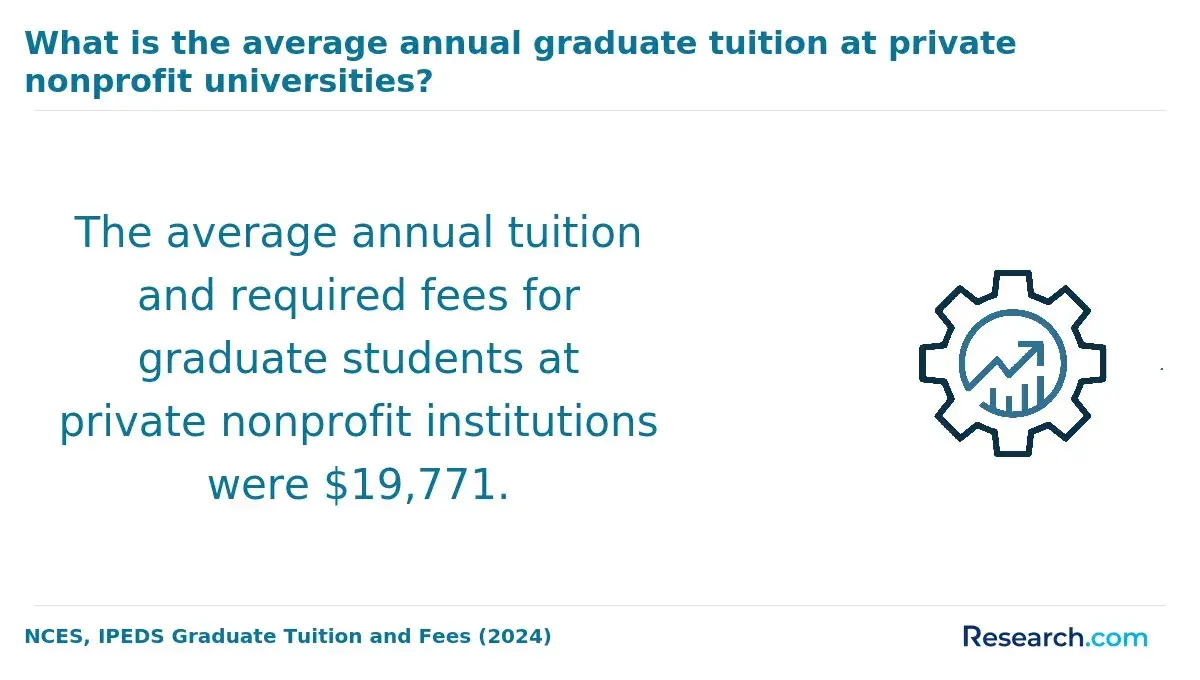
For cost, compare a written total that includes tuition, mandatory fees, books or software, any required travel, and borrowing costs - not tuition alone. Ask your employer about education assistance and any reimbursement or service conditions.
Lists of affordable graduate business education MBA programs can provide starting points, but confirm current prices and whether the nonprofit coursework you want is actually available. Without a specific program and funding arrangement, a reliable personal total cannot be stated.
The most realistic next job usually builds on work you already do. A government grants manager might pursue nonprofit grants or program leadership; an agency operations manager might compete for operations or administrative leadership roles in a nonprofit, public institution, or contractor.
Experienced professionals may eventually seek executive positions, but those jobs generally require demonstrated leadership, sector knowledge, and relationships beyond the degree.
For someone without management experience, an MBA can build knowledge but cannot supply a record of supervising staff or owning a budget. If that describes you, compare programs' experience expectations - including MBA programs with no GMAT requirement online MBA programs without work experience requirements - and seek stretch assignments at work.
For any target role, review actual postings to see whether employers emphasize an MBA, an MPA, grant expertise, procurement experience, or another qualification.
There is no single defensible salary or employment rate for graduates of this specialization. The U.S. Bureau of Labor Statistics reports that management occupations had a median annual wage of $126,520 in May 2025 and projects about 1.1 million openings annually, on average, from 2025 to 2035 across those occupations.
Those broad figures include many jobs outside government and nonprofits; they do not estimate an MBA graduate's pay, the degree's effect on earnings, or vacancies in your target specialty.
For a useful personal forecast, compare posted pay ranges for roles in your location with your agency's salary schedule and the compensation of nonprofit employers you would realistically consider.
Factor in public benefits and retirement provisions before treating a higher advertised salary as a better financial outcome. Ask prospective schools for career-outcome data specific to online students and, if available, nonprofit or public sector graduates.
Which certifications complement an MBA in nonprofit management?
A certification is most valuable when it addresses a skill your target job uses repeatedly. The Certified Fund Raising Executive (CFRE) credential may be relevant to experienced fundraising professionals; project-management credentials may help people running complex initiatives. Neither replaces an MBA's broad curriculum, and eligibility or renewal requirements must be checked with the credentialing organization.
If your goal is government grants, contracting, or agency leadership, employer training in the applicable rules may be more directly useful than a general nonprofit credential. Start with job postings and your supervisor's assessment of the skills you lack, then choose a credential - or no credential - accordingly.
Other Things You Should Know About MBA
Possibly, but obtain approval before sharing budgets, personnel information, client data, or unpublished plans. Ask whether you can use public information or a de-identified problem instead.
That depends on its education-assistance policy. Review eligibility, reimbursement timing, and any repayment obligation before enrolling or changing jobs.
Board service can teach governance and expand your perspective, but public employees should first check agency ethics rules and potential conflicts involving funding, contracts, or oversight.
Compare the full offer: pay, health coverage, retirement, leave, job scope, and the organization's financial position. Check how a departure would affect any public-service benefits you have accrued.
- M.B.A. vs. M.P.A.: Which Degree Fits Your Career Goals? | miami.edu https://news.miami.edu/uonline/stories/2025/08/mba-vs-mpa.html
- MBA Nonprofit: Advance Your Impact with a Nonprofit-Focused Graduate Business Program | Antioch University https://commonthread.antioch.edu/mba-nonprofit-advance-your-impact-with-a-nonprofit-focused-graduate-business-program/
- DU's Nonprofit Leadership Program Receives Specialized Accreditation - University College Blog https://professionalstudies.du.edu/blog/news-and-updates/nonprofit-leadership-accreditation/
- Top 18 essential nonprofit management skills and development tips | cmich.edu https://www.cmich.edu/blog/all-things-higher-ed/top-18-essential-nonprofit-management-skills-and-development-tips
- Policy Analyst Salary & Other Top MPA Career Paths | SIU Carbondale https://onlinedegrees.siu.edu/programs/business/public-health-administration/mpa/careers/
- Public vs. Nonprofit Sector: How an MPA Prepares You for Leadership in Both | Kent State Online https://onlinedegrees.kent.edu/blog/public-vs-nonprofit-sector-how-an-mpa-prepares-you-for-leadership-in-both
- Online MBA with Concentration in Nonprofit Management | Touro University Worldwide https://www.tuw.edu/academics/business/online-mba-nonprofit-management/
- Nonprofit Management and Leadership: Strategies for Organizational Success | Harvard Kennedy School https://www.hks.harvard.edu/educational-programs/executive-education/nonprofit-management-and-leadership-online


