
Best online MBA in Organizational Change programs for public sector professionals

Co-Founder and Chief Data Scientist
Changing how a public agency works takes more than a new strategy. Leaders must manage budgets, procurement rules, employees, elected officials, and public accountability at the same time. An online MBA can strengthen those management skills, but a concentration labeled "organizational leadership" is not necessarily focused on public sector change. This guide compares relevant programs, explains what to verify before applying, and helps government and public institution professionals decide whether an MBA - or a more targeted qualification - fits their next move.
Key Things You Should Know
- Start with a fit-based shortlist: Southern New Hampshire University, LSU Shreveport, and Liberty University offer online MBAs with organizational leadership or leadership options, but verify current change-management coursework before treating any as an organizational change specialization.
- Compare the full price and required schedule, not the concentration name alone; published tuition may exclude mandatory fees, materials, or travel.
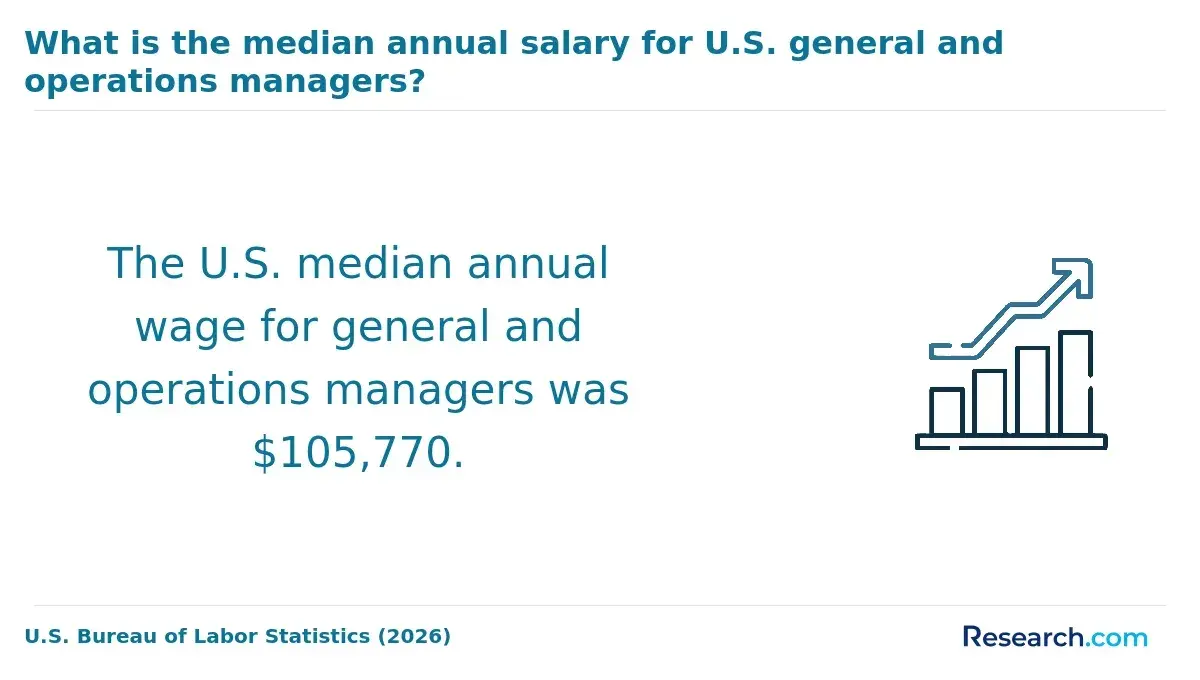
- The U.S. median annual wage across management occupations was $126,520 in May 2025, according to the Bureau of Labor Statistics, but that figure is not a public sector MBA graduate salary or a forecast of your pay.
What is an online MBA in organizational change for public sector professionals?
It is an online Master of Business Administration whose broad management core is paired with substantial study of leadership, organizational behavior, and implementing change. Schools may call the relevant option organizational leadership, leadership, or change management. Those labels are not interchangeable: a formal concentration has defined requirements, while one change-related elective may offer much less depth.
For a government manager, the practical test is whether coursework helps with changes that must survive procurement rules, legislative oversight, employee agreements, and public scrutiny. An MBA emphasizes organization-wide management and financial decisions. A Master of Public Administration (MPA) generally provides more direct study of public policy, governance, and administration. If you need both perspectives, a dual-degree route may be worth investigating; the online MBA programs program comparison mba programs guide is a starting point, not evidence that a particular school offers an MBA-MPA pairing.
Which online MBA programs in organizational change are best for public sector careers?
There is no defensible single winner for every public employee. The shortlist below selects identifiable online MBAs with leadership-focused options, then assesses how each might fit change work in an agency. It is not a ranking of formal "organizational change" concentrations: applicants should obtain the current catalog and confirm whether change management is required, elective, or absent before applying.
The comparison separates the named leadership option from its potential public sector use. It deliberately does not compare unverified prices or claim public-sector placement outcomes.
| Online MBA | Relevant option | Potential fit - and key verification |
| Southern New Hampshire University | Organizational leadership concentration | Consider for people-management development. Check current concentration courses for change implementation, and confirm the schedule and total charges. |
| Louisiana State University Shreveport | Leadership concentration | Consider if broad managerial leadership is the goal. Ask how much required work addresses organizational change rather than leadership generally. |
| Liberty University | Organizational leadership concentration | Consider if its curriculum and institutional mission suit your goals. Confirm the current change-related courses and whether that learning fits your agency's needs. |
These are starting points, not verified equivalents. For internal advancement, ask a supervisor or hiring office whether an MBA meets the education preference for the job you want. For a move into consulting or private-sector operations, weigh employer connections and career services more heavily. For each finalist, request the current course list, total tuition and mandatory fees, live-session requirements, and examples of applied projects before deciding which is best for you.
How do you verify accreditation for an online MBA program?
Check two different things. First, confirm the university's institutional accreditation in the U.S. Department of Education's accreditation database or the accreditor's directory. Then check whether the business school or MBA has specialized accreditation, such as AACSB, ACBSP, or IACBE, directly with the relevant accreditor. Institutional accreditation does not automatically mean specialized business accreditation, and a school's accreditation may not cover every program in the same way.
If specialized accreditation matters to your employer or future study plans, record the school's exact accreditation status rather than relying on a marketing phrase. The AACSB-accredited online MBA programs guide can help identify candidates, but confirm current status in AACSB's directory before enrolling.
The MBA core usually develops managerial accounting, finance, operations, strategy, and decision-making. Leadership or change-focused courses may then examine organizational behavior, communication, conflict, culture, and how to plan and evaluate an organizational transition. The exact mix differs by school; a concentration title alone cannot establish its depth.
Look for assignments you can adapt to a real agency problem: redesigning a service process, building support across departments, or evaluating whether a new system improves delivery. Also inspect what is not taught. An MBA course on change may help you lead an implementation, but it does not replace specialized instruction in public procurement law, civil service rules, or policy analysis.
An online MBA can let an employee remain in their role and apply assignments at work. Campus study may make informal contact with classmates and local employers easier. Neither format guarantees useful networking: cohort design, group projects, faculty access, and the backgrounds of fellow students matter more than the delivery label alone.
Before choosing online study, ask whether classes are asynchronous, whether live meetings occur during your workday, and whether any campus visits are required. An emergency-response or legislative-cycle schedule may favor MBA programs with self-paced learning, provided their course deadlines and group-work expectations also fit. If your main goal is a major career switch, compare each online program's recruiting access with that of its campus MBA rather than assuming they are identical.
Requirements vary by school. Applicants commonly need a bachelor's degree and an application that may include transcripts, a résumé, and a statement of purpose; test policies, references, interviews, and experience expectations differ. A nonbusiness degree does not automatically rule out admission, though accounting or quantitative preparation may be useful.
Use your application to explain a specific change you helped deliver, your role in budgeting or stakeholder coordination, and the management responsibility you seek next. If you have limited professional experience, check each school's policy rather than assuming an MBA requires - or waives - a fixed number of years. A guide to online MBA eligibility and admissions online MBA programs without work experience requirements can help identify options to investigate; the university's current admissions page controls.
Completion time depends on required credits, term length, course sequence, and how many courses you take while working. Compare the standard part-time path with any accelerated option, including whether the concentration can be completed on that schedule. One-year online MBA programs may be attractive if you can sustain the pace, but speed is a poor bargain if it conflicts with agency deadlines or weakens your ability to use coursework at work.
For a reliable cost comparison, obtain each school's current tuition basis - per credit, course, term, or program - and add mandatory fees, materials, and any required travel. Ask whether your agency's education assistance covers the school and whether reimbursement depends on grades or continued employment. Compare your expected out-of-pocket cost with a realistic advancement opportunity; do not use broad MBA salary claims as a payback estimate.
For someone already employed in government or a public institution, the most plausible path is advancement into broader responsibility: program management, operations leadership, organizational development, process improvement, or management of a service-delivery team. The degree may also support a move to a government contractor or consulting employer, but that transition depends on relevant experience and hiring needs.
Match the curriculum to the vacancy, not just the job title. A transformation role may require evidence that you implemented a new process and managed resistance; a budget leadership role may place more weight on public finance experience. An MBA does not override civil service eligibility, supervisory experience requirements, or a position's specialized qualifications.
There is no single credible salary for public sector professionals with this MBA. Pay depends on the employer, location, grade or pay band, occupation, and prior experience. The Bureau of Labor Statistics reports a $126,520 median annual wage for U.S. management occupations in May 2025. That broad figure includes jobs outside government and people without MBAs, so it should not be treated as your expected post-degree salary.
For an internal move, compare the published pay range of the position you actually qualify for with your current compensation. Include benefits and pension implications, and ask whether the degree changes eligibility, competitiveness, or neither. That comparison is more useful than applying a private-sector MBA pay premium to a public-sector pay scale.
Do public sector professionals need certifications or licenses after an MBA?
Not for general organizational change management: an MBA does not create a universal certification or license requirement. A particular position may, however, require a professional credential or specialized experience - for example, in accounting, procurement, or project delivery. Check the vacancy announcement and your agency's qualification standards before paying for another credential.
If your goal is a narrowly defined skill rather than broader management responsibility, employer training or a focused certificate may be faster and less costly than an MBA. A professional certification can demonstrate specific practice, but it is not interchangeable with graduate business education.
Other Things You Should Know About MBA
Potentially. Eligibility depends on the loan type, qualifying employment, repayment, and other program rules - not simply on earning an MBA. Check current Federal Student Aid requirements before borrowing.
Often, with instructor approval. Obtain any required agency permission first, and remove protected, procurement-sensitive, or confidential information from your submission.
That depends on the university's diploma policy. Ask the registrar what appears on both the diploma and transcript if the distinction matters to you.
Yes, if you plan to request tuition assistance, use work time, or study an agency project. Get reimbursement terms and any ethics or data-use restrictions in writing.
- Program Eligibility, Written Arrangements, and Distance Education | 2024-2025 Federal Student Aid Handbook https://fsapartners.ed.gov/knowledge-center/fsa-handbook/2024-2025/vol2/ch2-program-eligibility-written-arrangements-and-distance-education
- Leading Organizational Change - PMC - NIH https://pmc.ncbi.nlm.nih.gov/articles/PMC8506892/
- MBA in Leadership and Change Management | Concordia University Chicago https://career.cuchicago.edu/mba-leadership-and-change-management-specialization/
- Policy Analyst Salary & Other Top MPA Career Paths | SIU Carbondale https://onlinedegrees.siu.edu/programs/business/public-health-administration/mpa/careers/
- MBA in Organizational Management | Online | $9900 | Eastern University https://www.eastern.edu/academics/graduate-programs/mba-management
- Course Offerings - MCNY https://www.mcny.edu/academics/school-public-affairs-administration/mpa-public-affairs-administration/course-offerings/
- Undergraduate and Graduate Tuition and Fees | Purdue Global https://www.purdueglobal.edu/tuition-financial-aid/undergraduate-graduate-tuition-and-fees/
- Curriculum - MPA - Pace University Online https://online.pace.edu/graduate-programs/master-public-administration-mpa/curriculum/
- Graduate Public Administration Course Descriptions | Academic Catalog https://catalogs.saintpeters.edu/graduate/masterspublicadministration/courses/
- Master of Public Administration (MPA) - Columbia SIPA https://www.sipa.columbia.edu/sipa-education/bulletin/MPA


