Online MBA in Cybersecurity Management: Curriculum and Workload for First-Time Managers

Co-Founder and Chief Data Scientist
Moving from cybersecurity work into management changes what you are accountable for: budgets, priorities, people, and decisions made with incomplete information. An online MBA in cybersecurity management may help you make that transition, but its business courses and scheduling demands need to fit your new role.
This guide explains what you are likely to study, how to assess the workload before enrolling, and when a full MBA offers more value than narrower training. It is for first-time managers who want to lead security work without mistaking a management degree for advanced technical preparation.
Key Things You Should Know
- Expect an MBA core in finance, operations, strategy, and leadership alongside cybersecurity courses focused on governance, enterprise risk, and security decisions - not necessarily hands-on defense.
- For a first-time manager, the hardest scheduling conflicts may come from live classes, group projects, and unpredictable incidents. Request a sample course calendar before committing to a pace.
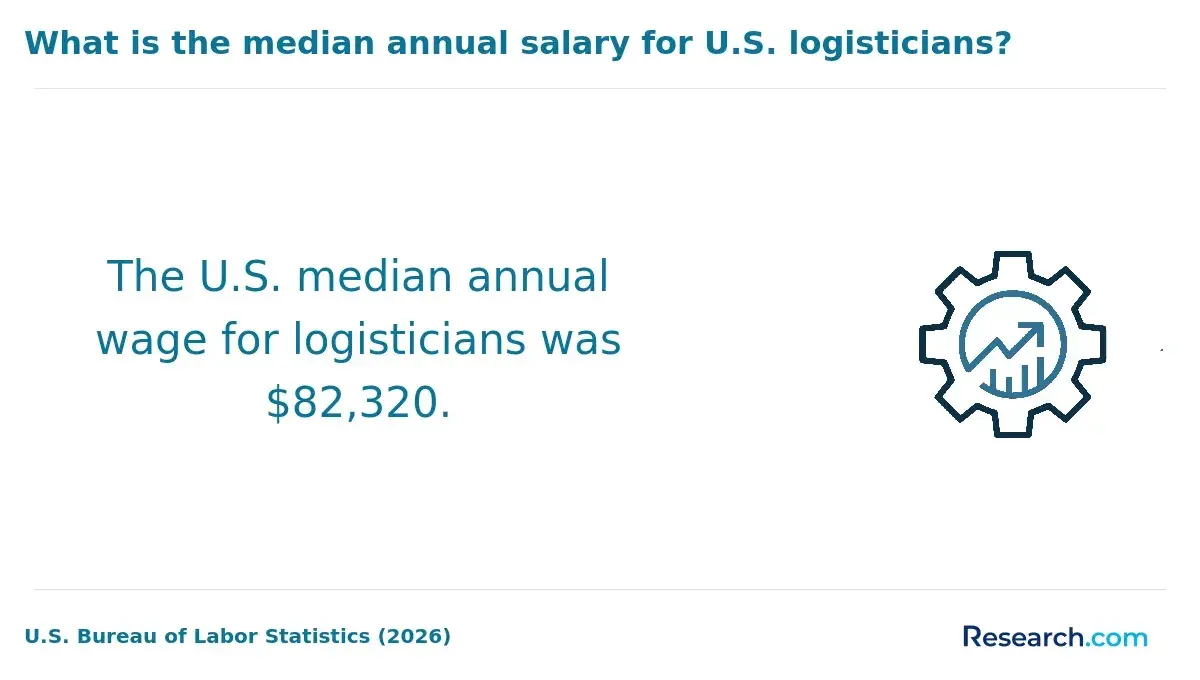
- The U.S. median annual wage for management occupations was $126,520 in May 2025, according to the Bureau of Labor Statistics; that is not a salary estimate for cybersecurity MBA graduates or new managers.
What is an online MBA in cybersecurity management?
It is a graduate business degree that pairs general management education with coursework related to security oversight. Schools may call the subject cybersecurity management, cyber risk, information security, or technology management. Those labels do not establish the same curriculum: one school may offer a formal concentration, while another offers only a relevant elective.
The management emphasis matters. A security leader may need to explain investment choices to executives, assign ownership of risk, and coordinate legal, IT, and business teams. An MBA can develop those business skills, but it should not be treated as equivalent to a technical cybersecurity master's degree or professional experience defending systems.
Check the school's published requirements and transcript policy to confirm whether cybersecurity is a designated concentration. Related degrees serve different goals; for example, graduate business options in healthcare online MBA programs for healthcare professionals address sector-specific operating decisions rather than cyber risk as the central subject.
Why choose an online MBA for cybersecurity management?
The strongest reason for a first-time manager is to become better at translating security needs into business decisions. Someone newly responsible for a team might use managerial accounting to defend a staffing request, organizational behavior to handle conflict, and risk coursework to explain why a control deserves funding. Studying online can let that manager apply ideas at work while remaining employed.
The fit is weaker if your immediate gap is technical - for example, performing incident response or engineering cloud controls. Targeted training, supervised experience, or a technical graduate program may address that gap more directly. A manager whose goals are primarily clinical operations or healthcare administration should likewise compare the needs of healthcare professionals pursuing an MBA rather than assume a cyber concentration is the right match.
Before choosing the degree, identify a management responsibility you already have or can reasonably seek. The MBA can improve how you carry it out; enrollment alone does not grant authority over a team, budget, or security program.
What does an online MBA in cybersecurity management curriculum include?
There is no universal cybersecurity MBA curriculum. Compare required courses - not just concentration names - to see whether a program teaches the decisions you expect to make. The following course groups show how business foundations and security-focused study can complement one another.
| Course group | Likely management application | What to verify |
| MBA core: accounting, finance, operations, and strategy | Evaluate investments, allocate resources, and connect security plans to organizational goals | Which courses are required and whether foundation work adds credits |
| Leadership and organizational behavior | Delegate work, give feedback, manage conflict, and lead across departments | Whether assignments practice people-management decisions |
| Cybersecurity concentration courses | Assess enterprise risk, governance, security policy, and incident-related business decisions | Required course titles, technical prerequisites, and concentration depth |
| Electives and applied work | Analyze a case, propose a security investment, or present recommendations to stakeholders | Whether a capstone, consulting project, or employer-based project is required |
A useful assignment for a new manager might ask for a board-facing recommendation that weighs control effectiveness against cost and operational disruption. That differs from configuring the control. Look for coverage of recognized governance approaches, such as the National Institute of Standards and Technology Cybersecurity Framework 2.0, while checking whether the course teaches practical use rather than merely naming a framework.
Weekly work varies with course design, enrollment pace, and your familiarity with finance and quantitative material. Credit totals alone cannot tell you how many hours a particular week will take. For a new manager, the larger risk is often when work must happen: a team issue or security incident can collide with a live presentation or group deadline.
Build a realistic schedule before applying. These checks expose commitments that a program's "online" label may not reveal:
- Request a recent syllabus and calendar for a core course and a cybersecurity course; note live sessions, exams, and fixed deadlines.
- Ask whether courses run concurrently and whether you can reduce your load without disrupting concentration sequencing or aid eligibility.
- Find out how group members coordinate across time zones and how instructors handle missed presentations during work emergencies.
- Reserve recurring study blocks, then test them against your meeting load, on-call duties, and personal commitments.
Case discussions and group decisions can be particularly valuable practice for someone learning to manage stakeholders. They also require coordination. If your work hours are unpredictable, favor a pace and attendance policy you can sustain over the shortest advertised completion time.
Requirements vary by school. Applicants generally need to document a bachelor's degree and submit academic records; schools may also request a résumé, recommendations, essays, an interview, or a GMAT or GRE score. Test policies, minimum grades, and work-experience expectations must be checked program by program. A cybersecurity bachelor's degree or certification is not a universal prerequisite.
As a first-time manager, use the application to show how your responsibilities have changed: decisions you now make, people or projects you coordinate, and business knowledge you want to build. If finance or accounting is unfamiliar, ask whether the program requires foundation courses and whether they affect cost or completion time. Applicants comparing start-date flexibility can examine graduate business programs with flexible admissions online MBA programs with rolling admission, while confirming each school's current policy directly.
Completion time depends on required credits, term length, course availability, and whether you study part time or take multiple courses at once. A published accelerated timeline may assume a course load that is difficult to combine with a first management role. Concentration courses offered infrequently can also affect sequencing.
Ask for a term-by-term plan showing your intended pace, any foundation courses, and the next available offering of each required cyber course. Confirm the maximum time allowed to finish and the process for taking a break. The best timeline is one that leaves enough capacity to practice new management skills at work, not simply the fastest one advertised.
Without a named school, there is no reliable single price. Compare the full cost under your intended course load, not a tuition headline; fees and time away from work can change the decision. Ask each program for an itemized estimate covering:
- Tuition for all required MBA credits, including any added foundation courses
- Mandatory program, technology, and university fees
- Books, software, and any required travel or residency
- Potential borrowing costs and the effect of studying for longer
Ask your employer whether reimbursement covers an online MBA, whether grades affect payment, and whether you must remain employed afterward. Compare net cost only after checking those conditions and any aid for which you actually qualify. For a broader tuition benchmark, MBA program prices and tuition options MBA programs can help you identify schools to investigate, but current school-issued cost estimates should control your budget.
Online delivery reduces the need to commute, but it does not guarantee self-paced classes. Campus programs may make it easier to build local relationships through regular in-person contact; online programs may better preserve employment continuity. Either format can include team projects, career services, or required in-person activities, so compare the actual program rather than the delivery label.
For a manager whose security work cannot be paused, ask whether live classes conflict with on-call coverage and whether online students can use the same career resources as campus students. If local attendance is feasible, compare regional tuition as well: lower-cost graduate business programs MBA NC illustrate why a nearby option may deserve consideration alongside a nationally marketed online program. Compare its curriculum and attendance requirements before treating a lower price as a better fit.
For an existing security professional, the most plausible next steps build on prior experience: managing a security team, overseeing governance or third-party risk, coordinating a security program, or taking broader technology-management responsibility. Employers may still expect a record of technical judgment, people leadership, and results. A first-time manager should not assume the degree alone will qualify them for a chief information security officer position.
The U.S. Bureau of Labor Statistics reports a median annual wage of $126,520 for all management occupations in May 2025. This broad figure includes roles outside cybersecurity and people at many career stages; it is not a starting salary, an MBA-graduate outcome, or a forecast of your pay. For a useful personal comparison, examine compensation for the specific role, location, and experience level you are targeting, then weigh any likely advancement against the program's net cost.
How can you evaluate accreditation and certifications for cybersecurity MBA programs?
Start by checking the institution's recognized accreditation and the status of the specific business school. Specialized business-school accreditation, such as AACSB, is distinct from institutional accreditation; neither tells you by itself how substantial the cybersecurity curriculum is. Verify accreditation with the accreditor and inspect the school's current course catalog.
Professional security certifications serve a different purpose from an MBA: they may demonstrate knowledge or experience against a credential's particular requirements. Do not assume an MBA course grants a certification or makes you eligible for an exam. If a credential matters for your next role, check its issuer's eligibility rules, then ask whether the MBA coursework supports your preparation. Choose the degree for the management responsibilities it helps you handle, not as a substitute for an employer-required credential.
Other Things You Should Know About MBA
Not necessarily. Schools may record a concentration on the transcript, diploma, both, or neither. Ask the registrar how completion is officially documented.
Only with your employer's permission and appropriate safeguards. Ask whether assignments allow fictional or publicly documented cases if workplace information is confidential.
An MBA does not grant a security clearance. Clearance decisions follow separate government processes and depend on the position and individual eligibility.
Not for every program. Check required software, device specifications, and any virtual-lab access before enrolling; requirements depend on the courses you select.
- Required Courses - Business Administration MBA | Temple University https://www.temple.edu/academics/degree-programs/business-administration-mba-bu-ba-mba/required-courses
- What's the Difference Between Asynchronous and Synchronous Learning? | Ohio State Online https://online.osu.edu/content-hub/blogs/whats-the-difference-between-asynchronous-and-synchronous-learning/
- Cybersecurity Risk Management (MBA) | Seton Hill University https://www.setonhill.edu/academics/degrees-programs/graduate-programs/cybersecurity-risk-management-mba.html
- Online MBA in Cybersecurity in Oregon | Bushnell University https://bushnell.edu/programs/mba/cybersecurity/
- Online MBA in Cybersecurity | Cybersecurity Management | Touro University Worldwide https://www.tuw.edu/academics/business/online-mba-cybersecurity-management/
- Capstone Project in Cybersecurity - 695.795 https://ep.jhu.edu/courses/695795-capstone-project-in-cybersecurity/
- Do You Need a Tech Background for a Cybersecurity Master's? | Bay Path University https://www.baypath.edu/news/bay-path-university-blogs/post/do-you-need-a-tech-background-for-a-cybersecurity-master-s/
- Program: Cybersecurity Management, MBA - Hofstra University https://bulletin.hofstra.edu/preview_program.php
- Capstone: Your Problems, Our Solutions - Heinz College | Carnegie Mellon University https://www.heinz.cmu.edu/employers-partners/propose-project
- MBA in Cybersecurity: Online Degree & Career Guide | UIS https://onlinecbm.uis.edu/degrees/business/mba/cybersecurity-management-program/online-degree-guide/