Online MBA in Organizational Change: Curriculum and Workload for First-Time Managers

Co-Founder and Chief Data Scientist
Your first management role may require you to lead a new process, explain an unpopular decision, and manage a budget - all while learning how to supervise people. An online MBA in organizational change can help connect those responsibilities, but its value depends on what it teaches and whether its schedule fits your job.
This guide separates the MBA core from change-focused coursework, shows how to assess the real workload, and explains when a shorter course or employer training may be the better next step.
Key Things You Should Know
- Expect a broad MBA core in finance, operations, and leadership alongside change-focused courses; verify whether organizational change is a formal concentration rather than a single elective.
- Online does not necessarily mean self-paced. Live classes, group projects, and course sequencing can matter more to a working manager than the advertised completion time.
- The US Bureau of Labor Statistics reports a May 2025 median wage of $126,520 across management occupations, not a starting salary or expected outcome for change-management MBA graduates.
What is an online MBA in organizational change?
An online MBA in organizational change is a general management degree with coursework focused on how organizations plan, communicate, and sustain changes to processes, technology, structure, or culture. Depending on the school, that focus may be a named concentration, a set of electives, or simply a course within a general MBA. The designation matters: one change-management elective offers less depth than a sequence with an applied project.
For a first-time manager, the appeal is combining people leadership with business decisions. You might learn to explain why a process must change while also assessing its cost, operational impact, and effect on your team. That is different from advanced training in organizational psychology or a credential focused solely on a particular change framework.
A business bachelor's degree is not inherently necessary to consider an MBA. Managers entering from another discipline can use an online MBA programs for nonbusiness majors to examine whether schools offer foundations in accounting and other core subjects.
What does an organizational change MBA curriculum include?
Curricula differ by school, so review required courses rather than relying on a concentration label. The distinction below helps you judge whether a program addresses both the business case for change and the work of leading people through it.
| Curriculum component | Likely subjects | Value for a first-time manager |
| MBA core | Managerial accounting, finance, operations, strategy, and organizational behavior | Helps you weigh budgets, resources, and business consequences instead of treating change as a communication exercise alone |
| Change-focused courses or electives | Organizational development, stakeholder analysis, change communication, conflict, and implementation | Helps you anticipate resistance and coordinate with employees and decision-makers |
| Applied learning, if offered | Case work, simulations, consulting projects, or a capstone | Lets you practice diagnosing a problem and proposing a feasible rollout |
Look for assignments that require an implementation plan: identifying who is affected, setting measures of progress, and revising the plan after feedback. A course that only surveys leadership theories may be useful, but it provides less practice with execution. If your intended projects specifically concern environmental operations, compare the change coursework with online study options for online MBA in sustainability; the two emphases address different parts of that work.
How much workload should first-time managers expect in an online MBA?
There is no reliable universal weekly-hours estimate for an online organizational change MBA. Time demands depend on course design, how many courses you take at once, your preparation in quantitative subjects, and whether assessments require coordination with classmates. An asynchronous lecture can be viewed on your schedule; a live discussion or group deadline cannot.
The most useful workload test is to request a sample syllabus and map its obligations against your actual management calendar. Check the following before committing to an enrollment pace:
- Identify fixed live sessions, exam windows, campus visits, and the time zones in which they occur.
- Mark group meetings and major deadlines alongside work peaks such as budgeting, performance reviews, or a planned rollout.
- Review sample accounting and finance assignments; allow extra preparation time if those subjects are new to you.
- Ask whether you can reduce your course load or pause enrollment if your responsibilities change.
First-time managers also need time to apply what they learn without turning direct reports into an unapproved class project. If unpredictable shifts or caregiving duties constrain your schedule, investigate flexible online business-school choices, then verify each program's actual deadlines and collaboration requirements. "Flexible" is not a substitute for a weekly calendar you can sustain.
Requirements are set by each university, not by the organizational change subject. Schools commonly review an undergraduate degree and transcripts, a résumé, and application statements; policies on work experience, recommendations, interviews, and GMAT or GRE scores vary.
Some programs require or offer introductory business coursework. A first-time manager should check whether their professional experience meets the school's expectations rather than assuming that a recent promotion either qualifies or disqualifies them.
In an application, distinguish management potential from management tenure. A strong example might describe a process improvement you helped implement, how you gained colleagues' cooperation, and what you learned when the original plan met resistance. Before applying, confirm the current requirements directly with each program.
If test policies or experience thresholds limit your options, a comparison of online MBA programs with accessible admissions can be a starting point, not a substitute for checking whether the curriculum fits.
Completion time depends on required credits, term length, course availability, prerequisites, and how many courses you can take while working. A concentration may fit within normal MBA electives, while another program's sequence can restrict when you take change-focused classes. Ask for a term-by-term plan at your intended pace, including any required foundation courses and capstone.
Accelerated study can bring the credential sooner but compresses readings, team assignments, and exams into periods when your new role may still be demanding. Compare short-duration MBA pathways only after checking whether the schedule leaves room to practice new management skills at work. The fastest option is not necessarily the most useful one.
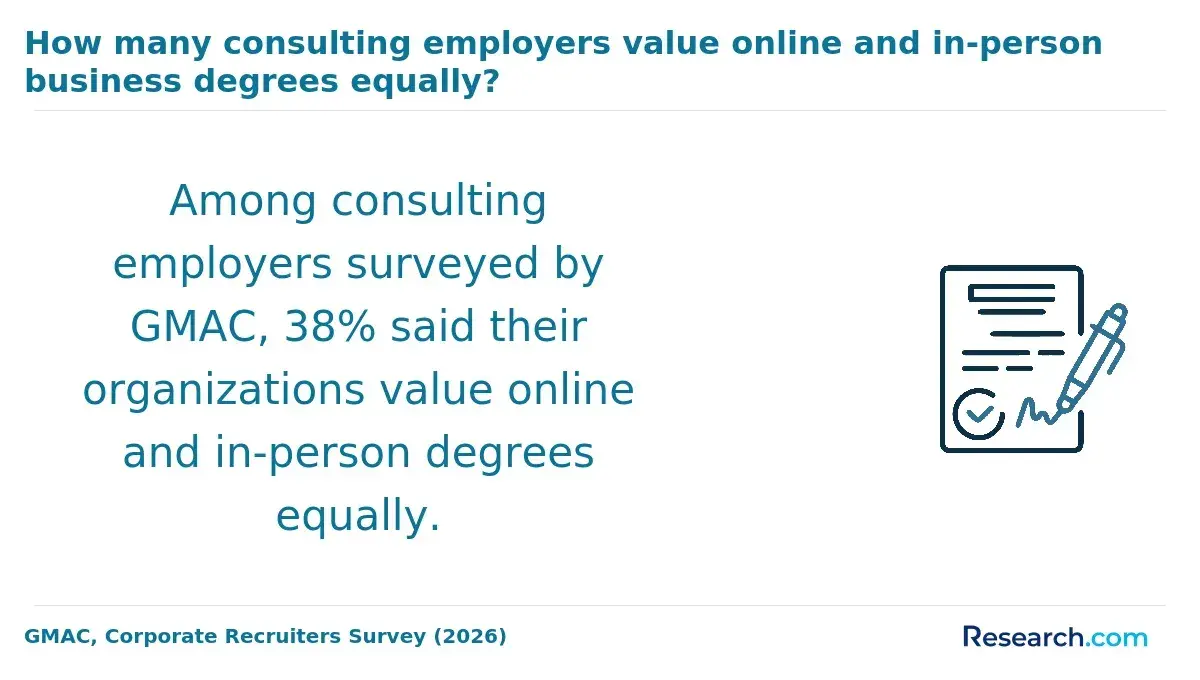
There is no standard price for this specialization. Calculate tuition using the school's published charge per credit, course, or term and the credits you must complete. Then account for mandatory fees, materials, technology, and any required travel. Ask whether change-focused courses cost the same as other MBA courses and whether foundation courses add to the degree requirements.
For a working manager, affordability also depends on cash flow. Employer tuition assistance may lower your out-of-pocket cost, but check grade requirements, annual limits, and repayment rules if you leave your job.
Borrowing adds financing costs; taking fewer courses at once can make payments easier to manage but may extend the period over which you pay fees. Compare the complete cost with the specific responsibilities or opportunities you expect the education to support - not with an assumed promotion.
An online MBA may fit better if you need to keep your job, cannot commute regularly, and can organize independent study. Campus study may fit better if scheduled in-person discussion, nearby recruiting, or regular face-to-face relationships are central to your goal. Neither format is automatically more flexible: online programs can require live attendance, while campus programs may offer evening or part-time schedules.
For organizational change, compare opportunities to practice difficult conversations and receive feedback. Ask how online students collaborate, whether instructors assess implementation plans, and which career services they can actually use.
If changing employers is a major objective, verify recruiting access rather than assuming the online and campus MBAs provide identical opportunities. If your immediate objective is to manage your current team more effectively, strong applied coursework and a sustainable schedule may matter more than location.
For a first-time manager, the most realistic near-term outcome is broader responsibility within your existing function: leading a process update, coordinating across teams, or taking on a larger operating budget. Experience with those projects can later support applications for roles in operations, organizational development, internal consulting, or change-management teams.
Those paths are not interchangeable. An internal change role may require a record of implementing initiatives; organizational development positions may favor deeper experience in HR or employee development; consulting employers may look for client-facing and analytical experience. Use MBA projects to build evidence of your contribution, but do not treat the degree as a substitute for managing people or delivering measurable work.
If you only need a method for a project already assigned to you, targeted training may be more direct than a full MBA.
There is no single reliable salary figure for graduates of this specialization: "change manager" can describe different responsibilities across industries and career stages. For context, the US Bureau of Labor Statistics reports a median annual wage of $126,520 for all management occupations in May 2025. That broad occupational median includes experienced managers and is not a prediction of what a new manager - or an MBA graduate - will earn.
BLS projects overall management employment to grow faster than the average for all occupations from 2025 to 2035. Use that outlook as context, not proof of demand for a particular MBA concentration. To assess your prospects, examine pay ranges for the roles you could realistically seek in your location and compare their stated experience requirements with your current record.
How can you evaluate accreditation and professional standards for an online MBA?
Check that the university holds recognized institutional accreditation, then separately determine whether its business school holds specialized business accreditation, such as AACSB, ACBSP, or IACBE. These are different forms of review; business-school accreditation does not, by itself, establish that a particular organizational change concentration is offered online or that its schedule will suit you.
Confirm accreditation status through the relevant accreditor and inspect the current online curriculum.
Change-management certifications and frameworks can teach a defined approach to implementation, but they are not equivalent to an MBA's broader business education. Before paying for both, ask whether your employer values a specific framework and whether you need that method now or wider preparation for budgeting, strategy, and people management. For many first-time managers, the deciding evidence is the syllabus, assessment methods, and time commitment - not the concentration name alone.
Other Things You Should Know About MBA
Often, but obtain your employer's permission before sharing internal information. Ask the instructor whether you can anonymize details or use a public case instead.
No. You can practice stakeholder analysis and communication while coordinating a cross-functional project. Do not imply you have authority over colleagues you do not supervise.
Contact your academic adviser promptly. Withdrawal deadlines, course-load changes, and leave policies vary, and their financial consequences may differ.
Be transparent when a proposed change affects them, and follow workplace approval and privacy rules. Coursework should support your responsibilities, not make employees unwitting research subjects.
- MBA vs. MSOL A Guide to Deciding Your Path to Leadership | keiseruniversity.edu https://www.keiseruniversity.edu/articles/mba-vs-msol-path-to-leadership/
- Getting an MBA While Working Full Time: How to Make It Work | Pace University New York https://www.pace.edu/news/getting-an-mba-while-working-full-time
- Work Experience Requirements for the Wharton MBA | MBA Program https://mba.wharton.upenn.edu/work-experience/
- What to Expect in Your First Semester of an MBA Program | Carson-Newman University https://www.cn.edu/cps-blog/what-to-expect-in-mba-programs/
- An Online MBA Specializing in Management and Leadership | UNC Kenan-Flagler's Business School's Online MBA https://onlinemba.unc.edu/academics/concentrations/management-and-leadership/
- MBA in Leadership & Change: Is It Worth the Investment? | Edgewood College https://online.edgewood.edu/blog/mba-in-organizational-leadership-and-change/
- Online MBA Concentrations - Terry College of Business - UGA https://www.terry.uga.edu/mba/online/curriculum/concentrations/
- MBA Requirements: What You Need to Apply in 2026 | SCU https://www.scu.edu/business/blog/admissions/mba-requirements/
- Navigating MBA Programs While Juggling Work | Northeastern Online https://online.northeastern.edu/resources/how-long-does-it-take-to-do-an-mba-while-working/
- What Is Organizational Change Management? | Harvard Business School https://online.hbs.edu/blog/post/organizational-change-management