Online MBA in Healthcare Management: Admissions Guide for Public Sector Professionals

Co-Founder and Chief Data Scientist
If you manage a public health program, government healthcare contract, or public hospital team, an online MBA in healthcare management may help you take on broader operational responsibility. But admission is only part of the decision: the degree must fit your experience, schedule, budget, and agency's advancement rules.
This guide explains what schools commonly request, how to present public-sector work in an application, and what to verify before enrolling. It also helps you decide whether an MBA - or a more focused qualification - is the better next step.
Key Things You Should Know
- Admissions rules vary by school. A nonbusiness bachelor's degree or government job does not automatically disqualify you; verify experience expectations, testing policies, and any foundation coursework for each program.
- The strongest application connects your public-sector responsibilities - such as budgeting, procurement, compliance, or service delivery - to the management skills you want to develop.
- Do not use broad management pay as an MBA outcome: the US median annual wage for management occupations was $126,520 in May 2025, across occupations and workers with many different qualifications.
What is an online MBA in healthcare management?
An online MBA in healthcare management combines a general business-management core with coursework focused on healthcare organizations. The core typically addresses finance, accounting, operations, strategy, and leadership; healthcare courses may examine payment systems, policy, quality, or organizational change. It prepares students to make management decisions, not to provide clinical care.
Program labels matter. A formally designated healthcare management concentration is different from a general MBA that happens to offer one healthcare elective. Before applying, check whether the concentration is available online, which courses are required, and whether it appears on the transcript. Also check the delivery schedule: online courses can still require live meetings or group work. If shift work or agency deadlines make fixed sessions difficult, compare online MBA programs with asynchronous classes and ask how their collaborative assignments work.
Is an online healthcare management MBA worth it for public-sector professionals?
It can be worthwhile when your target role calls for broader responsibility over budgets, people, contracts, and operations - and your employer recognizes the degree or helps pay for it. Its value is less certain when promotion depends chiefly on civil-service classification, tenure, a specific credential, or an opening that has not materialized. Private-sector salary expectations should not be applied to a government pay scale.
Start with an actual target position. Compare its posted qualifications with your current experience, then ask your supervisor or human resources office whether an MBA would improve eligibility, competitiveness, or pay. If you want to move into a private healthcare organization, investigate its experience requirements and recruiting support rather than assuming the degree alone enables the transition. For a narrowly defined policy or public-administration role, an MPA, MHA, targeted graduate courses, or employer training may be more direct.
Time matters alongside tuition. One-year online MBA programs may appeal if you can sustain a heavier course load, but a faster finish is not necessarily a better return when it strains work performance or limits employer reimbursement.
What careers can an online healthcare management MBA prepare you for?
For an experienced public-sector employee, the most plausible next step is usually greater management responsibility in a familiar setting. Depending on prior work and local hiring rules, relevant paths include public hospital operations, health program administration, healthcare contracting, quality improvement, and management of community-service delivery. Responsibilities may involve staffing, budgets, vendor oversight, performance measures, and coordination across agencies or providers.
An MBA can also support a move toward private or nonprofit healthcare management, but employers may expect direct experience with their payment systems, service lines, or regulations. Clinical leadership positions may require clinical qualifications that an MBA does not provide. Readers comparing clinical and business paths can explore MBA career fit and job options while keeping their own licensure and experience requirements in view.
First, verify that the university holds institutional accreditation from an accreditor recognized by the US Department of Education. Then check whether the business school or MBA holds specialized business accreditation, such as AACSB, ACBSP, or IACBE. Institutional and business-school accreditation serve different purposes; neither establishes that a particular healthcare concentration has the courses you need.
Some healthcare administration programs hold CAHME accreditation, but do not assume it applies to an MBA merely because the MBA teaches healthcare management. Confirm the exact program covered by any accreditation claim. If an agency offers tuition assistance, ask whether it imposes additional school or program eligibility rules before you apply.
Requirements belong to the individual university, not to healthcare MBA programs as a category. Schools commonly request evidence of a bachelor's degree, academic records, a résumé, and a statement of goals. Recommendations, interviews, professional-experience thresholds, and GMAT or GRE policies differ. Some schools require or offer foundation work for applicants who need preparation in subjects such as accounting or quantitative analysis.
Public-sector experience can be highly relevant even if your job title does not contain "manager." An application can show how you allocated resources, coordinated stakeholders, improved a process, managed a contract, or reported results under public accountability rules. Use specific, supportable examples without disclosing protected health information or confidential agency material.
Before submitting applications, work through these checks for each school:
- Read the current online MBA admissions page and confirm degree, transcript, experience, test, recommendation, essay, interview, and deadline policies.
- Ask whether healthcare management is a formal online concentration and whether your academic background triggers required foundation courses.
- Match your résumé and statement to your target management role, explaining both your public-service experience and the business skills you need next.
- Choose recommenders who can describe your judgment, collaboration, and responsibility; follow agency rules on references and use of work examples.
- Confirm delivery requirements, total program charges, employer-approval procedures, and any funding deadlines before accepting an offer.
A nonbusiness bachelor's degree is not inherently a barrier. If finance or accounting is unfamiliar, introductory study can strengthen your readiness even when it is not an admission requirement. Likewise, a test-optional policy at one school says nothing about another school's rules.
Expect a management core plus healthcare-focused courses, although titles and requirements vary. The core may develop budgeting, financial analysis, operations, organizational behavior, and strategy. Healthcare coursework may apply those tools to quality, payment, regulation, and decisions affecting patients and communities.
For public-sector applicants, curriculum fit is more useful than a concentration label alone. Compare course descriptions for public budgeting, governance, procurement, population-health operations, or interagency change if those subjects matter to your goals. A private-hospital marketing course might still be useful, but it is not a substitute for learning how decisions work within public mandates and accountability structures. Ask whether projects can address a public healthcare problem under appropriate data-use rules.
Completion time depends on required credits, course sequencing, enrollment intensity, foundation requirements, and the availability of healthcare electives. A published minimum may assume continuous enrollment and a course load that is difficult to maintain through budget cycles, emergencies, or changing shifts.
When reviewing accelerated online MBA options, ask when required healthcare courses run, whether a capstone must be taken last, and what happens if you pause enrollment. Check live-session times and group-project expectations as carefully as the advertised finish date. A manageable pace that preserves your job performance may be the faster route to a useful outcome.
There is no reliable universal price: schools charge by credit, course, term, or program, and published tuition may exclude mandatory fees. To compare MBA tuition and total cost, request a written estimate based on the credits you must actually complete, including any foundation courses. Add required fees, materials, technology, travel for any campus visits, and borrowing costs where applicable.
For public-sector professionals, the net cost may depend heavily on employer assistance. Ask what expenses your agency covers, whether approval must come before enrollment, what grades or continued-service commitments apply, and whether reimbursement arrives only after a course ends. Compare the remaining cost with your realistic advancement prospects under your agency's pay and hiring rules - not with an assumed private-sector salary increase.
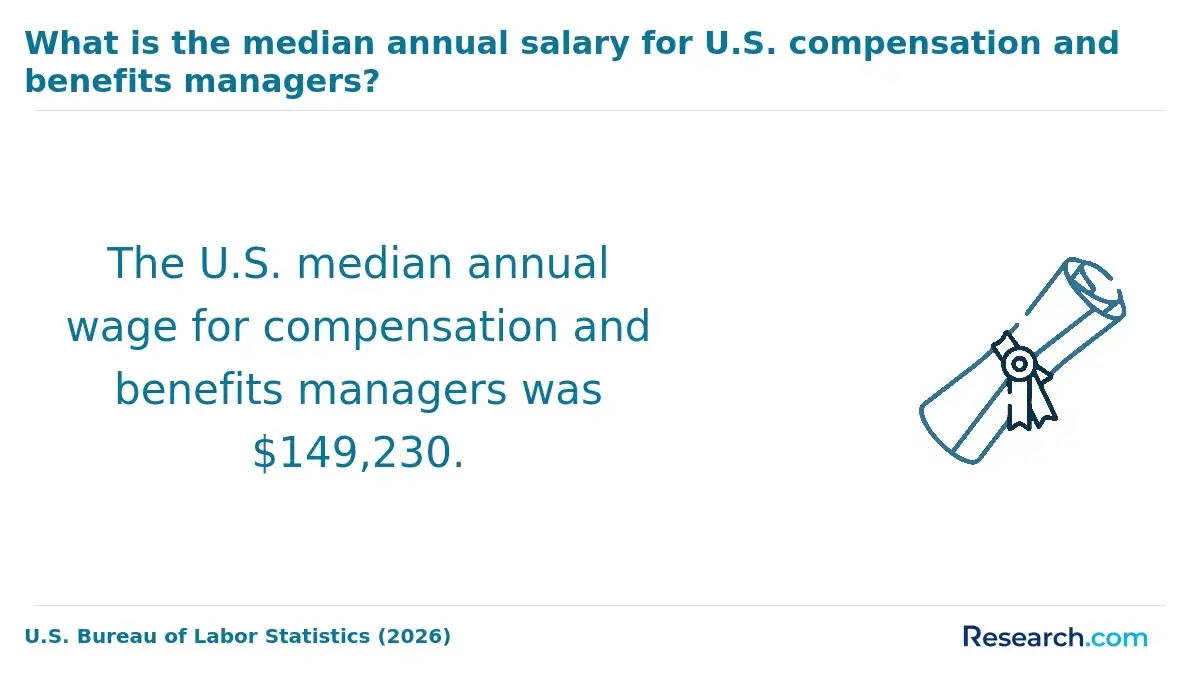
No single salary describes online healthcare MBA graduates. The US Bureau of Labor Statistics reports a $126,520 median annual wage for management occupations in May 2025. That figure covers a broad occupational group, not healthcare MBA alumni or public-sector managers specifically; it should not be treated as a post-degree pay forecast.
BLS projects management occupations overall to grow faster than the average for all occupations from 2025 to 2035. That broad outlook does not establish demand for a particular agency job. For a useful personal estimate, review pay schedules and recent postings for your target title, location, and employer, then compare their experience and credential requirements with your qualifications.
Do healthcare management careers require licenses or certifications?
Many general healthcare management jobs do not require a professional license solely because the work involves healthcare. Requirements change with the position and jurisdiction: a role involving clinical practice requires the relevant clinical license, while certain facility-administrator jobs may have state-specific licensing rules. An MBA does not replace either.
Optional credentials can demonstrate expertise in areas such as healthcare management or project management, but eligibility may depend on work experience or examinations. Before paying for a credential, check the requirements in target job postings and with the appropriate licensing board or certifying organization.
Other Things You Should Know About MBA
That depends on the university. Ask for its diploma and transcript policies if the distinction matters to you or your employer.
Possibly, but obtain any required permission first. Follow agency policies on confidential information, procurement-sensitive material, and protected health information.
Some schools allow it under limits on course equivalence, grades, age of credits, and residency. Request a written evaluation before relying on transfer credit to shorten the program.
Do not assume it will. Training leave and schedule adjustments depend on agency policy and supervisor approval; settle those arrangements before committing to live sessions.
- General Schedule Qualification Standards | U.S. Office of Personnel Management https://www.opm.gov/policy-data-oversight/classification-qualifications/general-schedule-qualification-standards/
- Accreditation in the U.S. | ed.gov http://www.ed.gov/laws-and-policy/higher-education-laws-and-policy/college-accreditation/accreditation-in-the-us
- Types of Financial Aid: Grants, Work-Study, and Loans | studentaid.gov https://studentaid.gov/understand-aid/types
- Issuing Financial Aid Offers-What Institutions Should Include and Avoid | Knowledge Center https://fsapartners.ed.gov/knowledge-center/library/electronic-announcements/2021-10-28/issuing-financial-aid-offers-what-institutions-should-include-and-avoid
- GRE and GMAT Test Score and Waiver Options | umn.edu https://carlsonschool.umn.edu/graduate/resources/gre-gmat-test-score-waivers
- FAQ: MSIM Residential & Online - UW Information School https://ischool.uw.edu/programs/msim/degree-options/residential-online-faq
- 4.1.21 Instructional Modalities and Distance Education | Illinois State https://policy.illinoisstate.edu/academic/4-1-21
- Application Overview | Apply | University of Notre Dame | Undergraduate Admissions https://admissions.nd.edu/apply/application-overview/
- AACSB Initial Business Accreditation Process https://www.aacsb.edu/educators/accreditation/accreditation-process/initial-accreditation