Is an online MBA in Marketing worth it for public sector professionals?

Co-Founder and Chief Data Scientist
A public agency may need better outreach, clearer services, and stronger management - but that does not mean its staff need an MBA. For government and other public institution professionals, an online MBA in marketing can build business and communication skills without requiring a full-time career break. Its value depends on the role you want, your employer's promotion rules, and what you would pay. This guide explains where the degree can help, where public-sector constraints limit its return, and how to compare it with more targeted training.
Key Things You Should Know
- An online marketing MBA is most compelling when a public-sector professional needs both management skills and responsibility for outreach, service adoption, or stakeholder engagement - not marketing coursework alone.
- Public-sector pay grades and hiring rules can limit financial returns. The Bureau of Labor Statistics' $126,520 median annual wage for management occupations in May 2025 covers workers across sectors, not marketing MBA graduates or government employees specifically.
- Before enrolling, confirm the program's total cost, actual marketing curriculum, scheduling demands, and whether your employer recognizes the degree for the roles you seek.
Is an online MBA in marketing worth it for public sector professionals?
Yes, conditionally. An online MBA in marketing can be worthwhile if you are moving toward management while also overseeing public communications, community engagement, or the adoption of agency services. It is less likely to pay off if your goal is a narrowly defined communications role, your employer gives the credential no weight in advancement, or you must borrow heavily without a plausible career benefit.
Public-sector marketing is not simply selling a product. A transit agency may need residents to understand a new service; a health department may need an outreach campaign to reach eligible communities. In both cases, effectiveness matters, but so do accessibility, privacy, procurement rules, public accountability, and the agency's mission. An MBA can strengthen managerial judgment; it does not replace knowledge of those constraints.
The likely return depends on the change you are trying to make. This comparison separates three decisions that are often treated as one.
| Goal | When the MBA may help | Main limitation or alternative |
| Advance within an agency | The target role combines team leadership, budgets, strategy, and outreach. | Check the job classification and promotion criteria; a degree may not change your pay grade. |
| Move into public communications | You already know the institution and need broader management responsibility. | A communications portfolio or targeted training may be more direct for a specialist role. |
| Transition to the private sector | You can pair the MBA with relevant projects and industry contacts. | The degree alone does not establish commercial marketing experience or guarantee a salary increase. |
To judge financial value, compare total tuition, fees, materials, financing costs, and time against employer assistance and a realistic change in earnings - not a schoolwide graduate salary. If advancement would occur on the same schedule without the degree, do not credit the MBA with the entire raise. Nonfinancial value, such as leading a better public service, can still matter, but it should be an explicit reason for enrolling.
What can an online MBA in marketing teach public sector professionals?
An MBA is a broad management degree. Its accounting, finance, operations, leadership, and strategy core can help an agency employee assess budgets, coordinate vendors, and defend decisions to stakeholders. A formal marketing concentration adds focused study; a general MBA with one marketing elective does not provide the same depth.
Marketing coursework can teach audience research, segmentation, message testing, campaign planning, and performance measurement. In a public institution, those tools might improve enrollment in a service or explain a policy change. The essential adjustment is to measure mission outcomes and equitable access, rather than treating revenue or conversion as the only measures of success.
Prior academic background also affects value. A professional with a degree in public health, policy, or communications may bring substantial subject expertise but want more preparation in managerial finance or analytics. A nonbusiness bachelor's degree does not automatically rule out an MBA; schools offering online MBA programs for nonbusiness majors can provide a starting point for comparing how programs support different backgrounds.
Which public sector careers can an online marketing MBA support?
The best fit is often an adjacent move: expanding responsibilities in an institution you already understand. Relevant roles include public information or communications manager, community engagement director, program manager with outreach responsibilities, and service or enrollment marketing manager at a public institution. Depending on the employer, these jobs can involve staff supervision, campaign evaluation, contracts, budgets, and coordination with policy or service teams.
Experience remains decisive. Someone who has led outreach projects may use the MBA to compete for broader management work. Someone with no communications experience will usually need evidence of writing, research, campaign execution, or stakeholder engagement as well as the degree. Government vacancies may also specify particular experience, grade-level qualifications, or competitive hiring procedures that an MBA cannot waive.
For a career change, examine actual vacancies at your target agency before choosing a program. Compare the required duties with your current work, then seek a relevant project or cross-functional assignment. If most gaps concern technical communications practice rather than management, a portfolio-building course or supervised project may be the better first step.
An online MBA may let a public employee continue working and apply coursework to current projects. A campus-based program may offer more routine in-person contact with classmates, faculty, and recruiters. Neither format automatically provides better teaching or career outcomes; course design and access to services matter more than the delivery label.
Ask whether online courses require live attendance, group meetings, travel, or residencies, and whether online students can use the same career services and employer events as campus students. If your goal is internal advancement, maintaining employment while studying may be especially valuable. If you need a substantial career switch and intensive recruiting, investigate whether the specific online program offers the access you need.
Public employees who are also veterans have another set of questions about benefits and support. A guide to online MBA programs and veterans can help frame that comparison, but confirm your individual benefit eligibility and the program's approved delivery details before relying on funding.
Curricula vary by school. A typical MBA combines a general management core - such as managerial accounting, finance, operations, organizational behavior, and strategy - with marketing courses or electives. A marketing concentration may cover consumer or audience behavior, research, digital channels, analytics, and marketing strategy. Some programs include an applied project or capstone.
For public-sector work, examine course assignments as carefully as titles. A campaign project that requires defining a target audience, testing messages, setting a budget, and evaluating results may transfer well to public outreach. But a curriculum focused exclusively on commercial customer acquisition may leave you to make the connection to accessibility, public trust, and noncommercial outcomes yourself.
Ask for the current degree plan and confirm which marketing courses are required, which are merely available as electives, and whether the concentration appears on the transcript. Also check whether an applied project can address a public-service problem without exposing confidential agency information.
Requirements are set by each school, not by the marketing specialization as a whole. Programs commonly consider an accredited bachelor's degree, academic record, résumé, and application materials explaining professional goals. Policies on work experience, recommendations, interviews, and GMAT or GRE scores vary. Do not assume a test waiver or a minimum experience requirement applies until the school confirms it.
Public-sector applicants can strengthen an application by describing decisions they have owned: managing a budget, improving a service, coordinating stakeholders, or measuring an outreach effort. Those examples demonstrate management readiness more clearly than a job title alone.
If accounting or statistics is unfamiliar, ask whether the program requires foundation coursework or simply recommends preparation. Some online MBA programs that don't require business prerequisites may be worth examining, but applicants should verify each school's current policy and consider preparation even when it is optional.
Completion time depends on required credits, course sequencing, enrollment pace, and whether a capstone or residency is required. Part-time study may fit an agency schedule better than an accelerated plan, but it can extend the period during which tuition, group work, and family obligations compete for time. Request a sample course sequence rather than relying on a program's shortest advertised completion time.
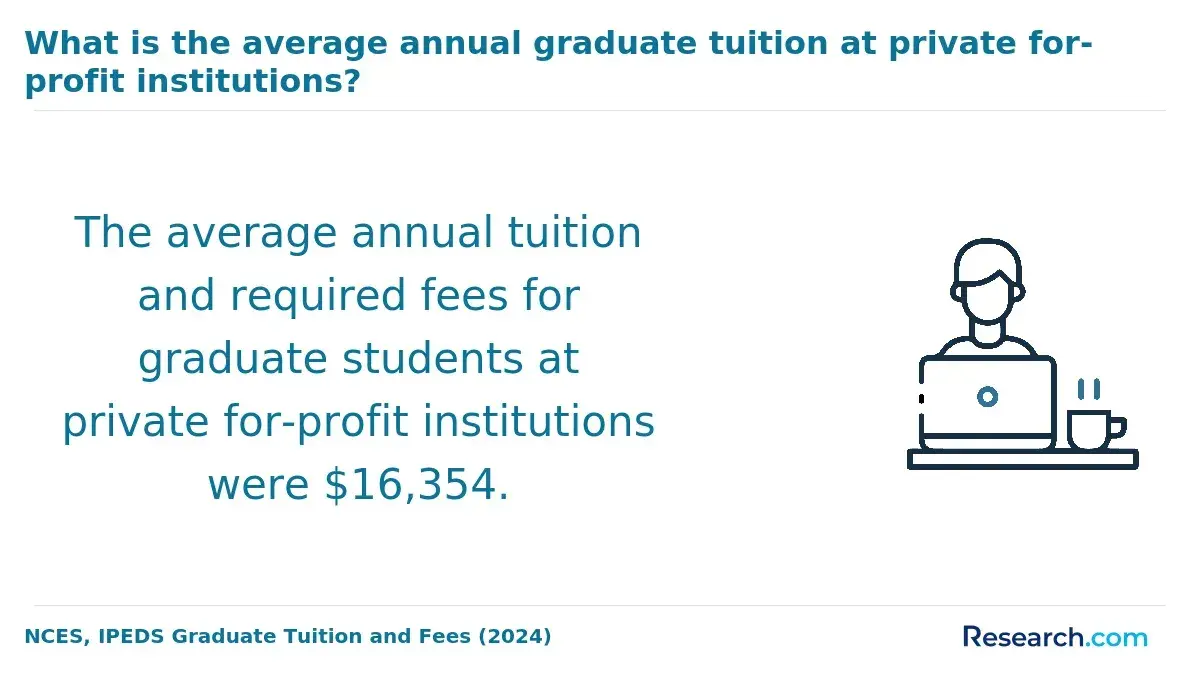
For cost, obtain a written estimate of tuition for the full required credit load, mandatory fees, books or software, and any travel. Ask whether employer education assistance requires preapproval, a minimum grade, continued service, or repayment if you leave. Federal loan eligibility and other aid depend on the student and program; borrowing also adds financing costs.
An executive MBA is a different format, often designed around experienced managers, so its price should not stand in for a conventional online marketing MBA. If that format fits your seniority, an online business school cost comparison affordable online executive MBA programs may help you identify options to investigate. Compare complete, current costs on the same basis before deciding that any program is affordable.
First, verify that the institution holds recognized institutional accreditation. Then check whether the business school or program holds specialized business accreditation, such as AACSB, ACBSP, or IACBE. These are different checks: specialized accreditation does not replace institutional accreditation, and a school's marketing claims do not establish either status.
Accreditation can help you assess academic oversight, but it does not prove that a program teaches public-sector communications well or meets your employer's education rules. Confirm status with the accreditor and ask human resources whether the degree meets any stated qualification or tuition-assistance requirements. AACSB MBA program options offer one comparison path, not a substitute for reviewing curriculum, cost, and format.
There is no reliable single salary for public-sector marketing MBA graduates. Pay depends on employer, location, job classification, supervisory scope, and experience. The Bureau of Labor Statistics reports a $126,520 median annual wage for management occupations in May 2025, but that nationwide figure includes occupations and sectors far beyond public communications. It is not an expected MBA graduate salary or a sound estimate of your agency's promotion value.
For a useful comparison, look up posted salary ranges for roles you could realistically qualify for and compare them with your current compensation. Check whether the role sits on a pay scale, whether a degree changes eligibility or starting placement, and whether moving to another employer would be necessary. That gives you a defensible basis for evaluating potential earnings without attributing every future increase to the MBA.
Are certifications or licenses required for public sector marketing careers?
Public communications and marketing management roles generally do not have a universal professional license. An MBA concentration is not a license, and a marketing certificate is not normally a substitute for the experience listed in a government vacancy. Individual employers can still require or prefer training in areas such as accessibility, procurement, privacy, or their own communications systems.
Choose additional training to match a demonstrated gap. For example, a short course in accessible digital content or campaign measurement may be more immediately useful than another broad credential. Review the qualifications in your target job postings and your agency's policies before paying for a certification.
Other Things You Should Know About MBA
Possibly, but obtain permission first. Ask your agency what information can be shared with classmates or faculty, and use public or anonymized material when required.
Eligible federal student loans may qualify if you meet the program's loan, employer, payment, and other requirements. An MBA or government job alone does not guarantee forgiveness; check the current federal rules before borrowing.
Yes, some employers attach continued-service or repayment conditions to education assistance. Read the written policy before enrolling or accepting reimbursement.
Often, but confirm that the school can enroll or continue serving students in the new state. Also check whether a move affects tuition, required visits, or live-class scheduling.
- Communications and Public Affairs | intelligence.gov https://www.intelligence.gov/careers/explore-careers/communications-and-public-affairs
- Employer-offered educational assistance programs can help pay for college | Internal Revenue Service https://www.irs.gov/newsroom/employer-offered-educational-assistance-programs-can-help-pay-for-college
- Tuition and Financial Aid | MIA-BUS https://onlinemba.miami.edu/admissions/tuition/
- MBA Accreditation: What It Is and Why It's Important | KU Business https://onlinemba.ku.edu/experience-ku/mba-blog/mba-accreditation-what-it-is-why-its-important
- MBA Cost & Tuition Plan | MBA Programs at UT Dallas https://mba.utdallas.edu/tuition-aid/
- How Much Does an Online MBA Cost? | Howard University Online MBA https://onlinemba.howard.edu/blog/online-mba-cost-guide/
- Part-Time MBA concentration in Marketing | Rutgers Business School-Newark and New Brunswick https://www.business.rutgers.edu/part-time-mba/marketing
- 5 Careers You'll Be Qualified for with an MBA in Marketing | JWU Online https://online.jwu.edu/blog/5-careers-you-ll-be-qualified-when-you-earn-mba-marketing/
- Navigating MBA Programs While Juggling Work | Northeastern Online https://online.northeastern.edu/resources/how-long-does-it-take-to-do-an-mba-while-working/
- 7 High-Impact Government and Public Service Careers for MPA Graduates - Cornell Brooks Public Policy https://publicpolicy.cornell.edu/masters-blog/7-high-impact-government-and-public-service-careers-for-mpa-graduates/