Online MBA in Nonprofit Management: Curriculum and Workload for First-Time Managers

Co-Founder and Chief Data Scientist
Moving from delivering nonprofit programs to managing people and budgets requires a different set of skills. An online MBA in nonprofit management may help, but its broad business core, specialized coursework, and study schedule need to fit the responsibilities you are taking on.
This guide explains what first-time managers are likely to study, how coursework can compete with a working week, and what to check before committing. It also helps you decide whether a full MBA or a more focused option better addresses your next management challenge.
Key Things You Should Know
- Expect a general MBA core in finance, operations, and leadership, plus nonprofit-focused study in areas such as governance, fundraising, and mission-based accountability; the mix varies by school.
- For a first-time manager, the key workload question is not just program length: ask how often live classes, group meetings, and major assignments collide with staff supervision and fundraising cycles.
- An MBA can strengthen management skills but does not confer a promotion. The BLS median wage of $126,520 for management occupations in May 2025 is a broad occupational benchmark, not a nonprofit MBA graduate salary.
What is an online MBA in nonprofit management?
An online MBA in nonprofit management is a graduate business degree that combines general management training with coursework relevant to mission-driven organizations. The MBA core usually addresses decisions about money, people, operations, and strategy. Nonprofit study applies those decisions to organizations accountable to boards, donors, grantmakers, clients, and communities - not just customers or shareholders.
Program labels matter. A formally designated nonprofit management concentration is different from a general MBA with a nonprofit elective or an unrelated graduate certificate. Check the degree requirements and transcript designation before assuming the specialization has substantial depth. A list of online MBA programs can be a starting point for finding schools, but it does not establish which ones offer a nonprofit concentration online.
Is an online nonprofit management MBA worth it for aspiring leaders?
It may be worthwhile if you are beginning to supervise staff and need sustained practice with budgets, organizational decisions, and leadership across functions. The strongest case is a role in which you can apply coursework immediately - for example, building a program budget, resolving a team conflict, or reporting results to a board. Access to a supervisor who will give you meaningful management responsibility matters as much as the credential.
Value is less certain if the curriculum largely repeats skills you already use, the debt would strain your budget, or your employer has no plausible path to broader responsibility. A nonprofit management master's degree may offer more sector-specific policy and governance study; a short course in supervision, fundraising, or nonprofit accounting may address a narrower gap at lower cost. An MBA is a particularly sensible comparison when you want portable business skills alongside nonprofit expertise.
Before applying, identify the responsibilities you expect to hold during and after the degree. Compare the courses and applied projects with those tasks, then weigh the total cost against employer support and realistic advancement opportunities - not an assumed post-MBA salary.
What careers can you pursue with an online MBA in nonprofit management?
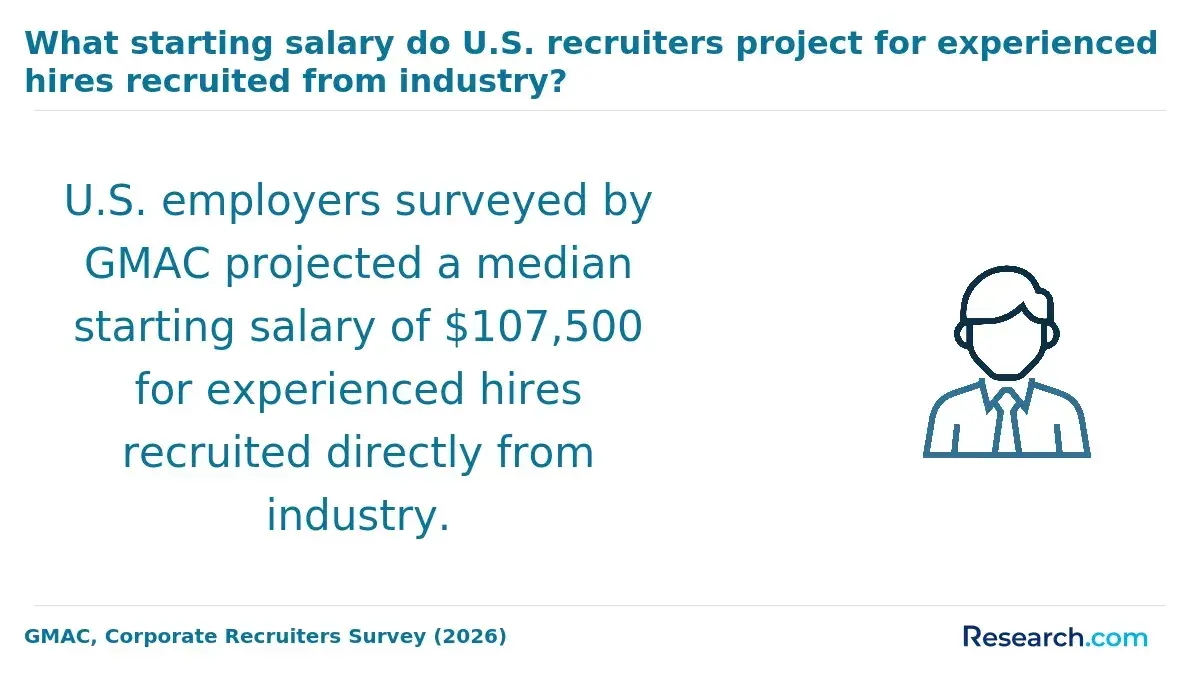
For a first-time manager, the most realistic next step is often a broader version of work you already know: program manager, operations manager, development manager, or finance and administration manager. These roles can involve supervising staff, allocating resources, meeting grant obligations, and communicating results to leadership. Relevant program, fundraising, accounting, or community-service experience remains important; an MBA alone does not qualify someone to lead every function.
Executive director and chief operating officer roles generally demand a demonstrated record of organizational leadership, financial stewardship, and board relationships. If you want to move into finance or development from an unrelated function, look for an MBA project you can complete with that team and ask what additional experience its hiring managers expect. That is more actionable than treating the concentration as an automatic career switch.
There is no standard curriculum shared by every school. The table separates common MBA foundations from nonprofit-specific applications so you can judge whether a program teaches the work you are about to manage.
| Curriculum component | What to look for | Why it matters to a new manager |
| MBA core | Managerial accounting, finance, operations, strategy, and organizational behavior | Supports budget decisions, workflow improvement, and staff leadership |
| Nonprofit specialization | Board governance, fundraising, grant funding, mission measurement, and nonprofit financial accountability | Addresses decisions shaped by restricted funding and multiple stakeholders |
| Electives | Choices such as social enterprise, public policy, or human resources | Lets you target a skill gap, if those courses are actually offered online |
| Applied work | A capstone, consulting assignment, or organizational project, where offered | May let you practice a management decision using a real organizational problem |
For a first-time manager, organizational behavior and managerial accounting deserve particular attention. They can help you shift from doing the work yourself to setting expectations, handling conflict, and explaining trade-offs in a budget. Nonprofit finance coursework should also teach you to interpret funding restrictions and accountability requirements; it is not a substitute for professional accounting training.
Ask for recent syllabi and assessment descriptions. A concentration with a compelling name but little practice in supervising people or managing nonprofit resources may not meet your immediate needs.
Completion time depends on required credits, course sequencing, enrollment pace, and how often courses are offered. Accelerating may shorten the calendar but concentrate deadlines; part-time study may be easier to sustain while managing a team. Do not infer weekly study hours from credits alone: readings, quantitative preparation, group assignments, and major projects vary substantially by course.
Request a sample term schedule rather than relying on the word "flexible." Check when live sessions occur, whether group meetings can be arranged independently, how exams are delivered, and whether a residency requires travel. Then map major assignment periods against board meetings, grant deadlines, and your busiest staffing periods. If your work schedule is unpredictable, ask about course withdrawal, leave, and reentry policies before enrolling.
Start dates also affect when study will intersect with work. Online MBA programs with rolling admission may offer another application-timing option, but verify the actual course start dates and sequencing before building a workload plan around one.
Requirements vary by institution. Online MBA applications commonly ask for evidence of a completed bachelor's degree, academic records, a résumé, and a statement of goals; schools set their own rules for work experience, recommendations, tests, and prerequisite or foundation coursework. A nonbusiness bachelor's degree does not automatically rule you out, though preparation in accounting or quantitative work may make the core more manageable.
In your application, describe the transition you are making: the work you have led, any budgets or projects you have owned, and the people-management skills you need next. If testing is a concern, compare stated policies rather than assuming every program requires a GMAT score; a guide to affordable online MBAs with no GMAT required can help you identify options to verify directly with admissions.
There is no single price for this specialization. Compare each school's tuition basis - per credit, course, or term - with the credits you must complete. Add mandatory fees, materials, technology costs, and any required travel. A tuition figure alone is not a complete program budget, and a slower pace can change the timing of payments or add term-based fees.
If price is your first filter, online MBA programs under $30,000 offer a comparison starting point; confirm current total costs and nonprofit coursework with each school. Ask your employer about tuition assistance and whether reimbursement depends on grades or continued employment. Borrow only after testing whether the likely responsibilities you can gain justify the full cost and time commitment.
Online study can let you remain employed and apply lessons to your organization immediately. Campus study may provide more scheduled face-to-face interaction and easier access to certain on-site activities. Neither format guarantees a stronger network: compare who is in the cohort, how students work together, and which career services and projects are available to the specific program you would enter.
For a new manager, the deciding constraint is often scheduling. An online course with fixed evening meetings and frequent team projects may be harder to manage than a nearby campus course at a predictable time. If military service is also part of your background, comparisons of online MBA programs for military members and veterans can help frame additional support questions; confirm benefits and scheduling details with the school and the relevant benefits administrator.
First, verify that the university holds recognized institutional accreditation and that the online MBA is included in its accredited offerings. Then check whether the business school holds specialized business accreditation, such as AACSB, ACBSP, or IACBE accreditation. Institutional and business-school accreditation are different checks; neither by itself confirms that the nonprofit concentration is offered online.
Use the accreditor's directory and the university's current program catalog rather than relying only on a marketing page. Confirm the exact degree name, concentration requirements, and any limits on online course availability. Accreditation is a baseline quality check, not evidence that a particular curriculum or schedule suits your management role.
What salary and job outlook can nonprofit MBA graduates expect?
There is no single reliable salary or job-growth figure for "nonprofit MBA graduates." Compensation depends on the role, organization, location, responsibilities, and prior experience. For broad context, the U.S. Bureau of Labor Statistics reports a median annual wage of $126,520 for management occupations in May 2025. That figure covers management jobs across industries and experience levels; it should not be used as a salary forecast for a first-time nonprofit manager.
The BLS projects management occupations overall to grow faster than the average for all occupations from 2025 to 2035. That broad outlook does not establish demand for a specific nonprofit position. For a useful personal comparison, review posted pay ranges for the roles you could realistically pursue, note their experience requirements, and ask whether your current employer has a defined advancement path.
Other Things You Should Know About MBA
Often, but not automatically. Ask whether instructors permit workplace projects and what approvals are needed before using donor, employee, client, or financial information.
Leadership courses may cover feedback and conflict, but classroom practice is not the same as supervision. Look for role-play or coaching opportunities and seek feedback from an experienced manager at work.
Not necessarily. Leading volunteers or cross-functional projects can give you situations to bring into class. If management responsibility is likely soon, compare your expected start date with the program schedule.
Do not assume it will. Certifications set their own education and experience rules; check the credentialing organization's current requirements before choosing courses for that purpose.
- General Schedule Qualification Policies | U.S. Office of Personnel Management https://www.opm.gov/policy-data-oversight/classification-qualifications/general-schedule-qualification-policies/
- Semester Course Load and Student Performance - PMC - NIH https://pmc.ncbi.nlm.nih.gov/articles/PMC7568764/
- Do I Need Work Experience to Pursue an MBA? | Online Master of Business Administration https://onlinemba.unoh.edu/about-unoh/news/mba-no-work-experience/
- What is an MBA? A Comprehensive Guide to the Most Sought-After Business Degrees | Sacred Heart University https://www.sacredheart.edu/news-room/news-listing/what-is-an-mba-a-comprehensive-guide-to-the-most-sought-after-business-degrees/
- Online MBA in Nonprofit Management at Mount Saint Vincent https://online.mountsaintvincent.edu/degrees/business/mba/nonprofit-management/
- Careers in Nonprofit Management: Tips for Success | Fairfield University https://www.fairfield.edu/news/insights/arts-sciences/careers-in-nonprofit-management-tips-for-success.html
- Student Workload in Online Learning | Florida Gulf Coast University https://www.fgcu.edu/digitallearning/online-education/student-workload-in-online-learning
- What's the Difference Between Asynchronous and Synchronous Learning? | Ohio State Online https://online.osu.edu/content-hub/blogs/whats-the-difference-between-asynchronous-and-synchronous-learning/
- Breaking Down Online Course Workloads: What to Expect and How to Plan | Kent State Online https://onlinedegrees.kent.edu/blog/online-workload
- How an MBA Degree Can Help You in Your Nonprofit Career | BGSU Online https://onlinedegree.bgsu.edu/programs/business/mba/general/help-your-nonprofit-career/