Online MBA in Data Science for Business: Curriculum and Workload for Small Business Owners

Co-Founder and Chief Data Scientist
A small business can collect sales, customer, and operating data without having anyone who knows how to turn it into better decisions. An online MBA with a data science or analytics focus may help an owner connect that evidence to pricing, cash flow, marketing, and growth. But coursework competes with the time needed to run the business.
This guide explains what such programs typically teach, how their workload can affect an owner's schedule, and when a full MBA is a better investment than shorter training.
Key Things You Should Know
- Expect a broad MBA management core plus analytics-focused courses. The degree usually teaches owners to use and evaluate data, not to become specialist data scientists.
- Workload depends on course design and enrollment pace, not just whether classes are online. Group projects, live sessions, and peak business seasons can make even one course difficult to manage.
- Judge value against a specific business problem and the full cost of study, including time away from the company. A targeted course may be enough if you do not need the MBA core.
What is an online MBA in data science for business?
It is a graduate business degree that combines general management education with coursework on using data to make business decisions. Schools may call the focus data science for business, business analytics, or a related name. Those labels are not interchangeable: one school may offer a formal concentration, while another offers only a few relevant electives.
The MBA core typically addresses finance, accounting, marketing, operations, strategy, and leadership. The data-focused portion may teach students to frame a business question, interpret an analysis, assess a model's limitations, and communicate a recommendation.
Some programs include substantial coding or statistics; others emphasize managing analysts and applying their findings. For an owner, that difference determines whether the degree will help with hands-on analysis or primarily with decisions about what to measure and whom to hire.
An MBA is not the same as a specialized master's in data science. The latter generally puts more emphasis on technical methods; the MBA devotes more of its curriculum to running an organization. Neither label alone establishes what graduates can do, so examine the required courses and assignments.
Is an online MBA in data science worth it for small business owners?
It can be worthwhile when an owner needs both stronger management judgment and the ability to use data across several parts of the business. For example, an owner considering a new location may need to evaluate demand alongside financing, staffing, and operating capacity. An MBA can provide a structured way to connect those decisions.
The case is weaker when the problem is narrow. If the immediate need is to clean up bookkeeping, measure advertising results, or build a sales dashboard, a focused course, experienced mentor, consultant, or qualified hire may solve it sooner and at lower cost. The degree also cannot compensate for poor source data or create hours the owner does not have.
Before applying, name a decision you expect to make differently after studying: which customers to retain, which products earn an adequate margin, or when to add staff. Estimate the program's tuition and fees, borrowing costs if applicable, and the value of time redirected from the business. Then compare those costs with a shorter option. Treat possible revenue improvements as uncertain, not as guaranteed returns from the MBA.
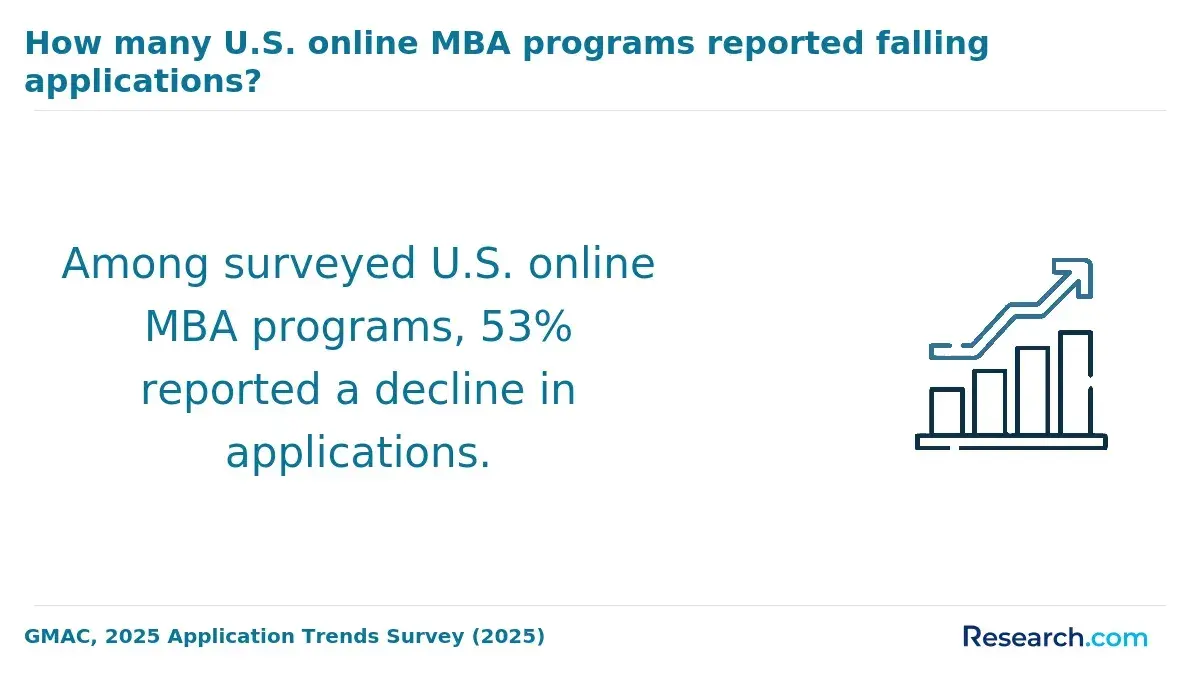
What careers can an online MBA in data science prepare you for?
For many owners, the most relevant outcome is not a new job title. It is better oversight of the business: setting useful performance measures, questioning vendor reports, supervising an analyst, or deciding whether a proposed expansion is financially sound.
Owners who later seek employment may find their operating experience relevant to general management, operations, product, or analytics-management roles.
Those paths depend on the scale of the business, the owner's responsibilities, and evidence of results. An analytics-focused MBA alone does not qualify someone for a technical data scientist role, which may require deeper programming, statistical, and modeling experience. Nor does it establish eligibility for a senior management position without relevant leadership experience.
For context, the U.S. Bureau of Labor Statistics reports a median annual wage of $126,520 for management occupations in May 2025. That figure describes workers across many management jobs, not small business owners or MBA graduates, and should not be used to forecast an owner's income or the degree's payoff.
There is no universal curriculum. The distinction to check is how much of the degree is broad management study and how much is required, rather than optional, data-focused work. This comparison shows what each component may contribute to an owner's decisions.
| Curriculum component | Typical subject matter | Potential small business application |
| MBA core | Managerial accounting, finance, marketing, operations, strategy, and leadership | Connect customer growth plans to cash needs, staffing, and capacity |
| Data-focused courses | Business statistics, data visualization, forecasting, analytics, and possibly introductory modeling or coding | Evaluate demand patterns, customer retention, or inventory decisions |
| Electives | Topics selected from a school's approved options | Deepen a skill relevant to the company, if the elective is actually offered online |
| Applied project or capstone, when required | Analysis and recommendations for a business problem | Test a decision framework using permitted, suitably protected company data |
Look beyond course titles. A class called "data science" might require building models in software, while another may focus on interpreting a model produced by someone else. Ask for recent syllabi, software requirements, prerequisites, and examples of assessments.
If you have a nonbusiness degree, introductory finance or accounting may also deserve attention; guidance on choosing online MBA programs for nonbusiness majors can help frame that preparation without assuming your undergraduate major is a barrier.
There is no dependable weekly-hours figure for every online MBA. Reading, quantitative assignments, discussions, exams, and projects vary by course and by a student's preparation. Taking more than one course at once increases the demand, but even a single course can become difficult during a busy sales period or staffing shortage.
The least visible commitments are often the hardest for an owner to absorb: scheduled live classes, group meetings, fixed assignment deadlines, and any required travel. Asynchronous lectures allow some control over when to watch them; they do not necessarily make deadlines or collaborative work flexible.
Owners who cannot reliably leave daily operations should ask when live activities occur and whether group meetings can be arranged around work. Guidance on online MBA programs with limited group work can help clarify that trade-off.
Before enrolling, compare a sample course calendar with your busiest operating cycle. Identify who can handle customer or employee escalations while you study, and ask the school about part-time pacing, course availability, breaks, and policies for interruptions. A workable schedule needs protected study time and a plan for unexpected business demands.
Requirements vary by school. An online MBA application commonly asks for a bachelor's degree, academic records, a résumé, and written statements.
Some programs also request recommendations, an interview, or a GMAT or GRE score. Professional-experience expectations, minimum grades, test waivers, and application deadlines must be checked with each program rather than assumed from the degree name.
A business or computer science bachelor's degree is not universally required. Still, an owner should assess readiness for graduate accounting, finance, statistics, and any software-intensive analytics courses. Business ownership can provide strong examples of leadership and decision-making, while a short preparatory course may help fill a specific quantitative gap.
If undergraduate grades are a concern, distinguish an official minimum from the rest of an admissions review. Options discussed in MBA admission pathways for working adults with a low GPA may help you identify questions to ask, but only a school can confirm how it evaluates your record.
Completion time depends on required credits, course sequencing, enrollment pace, and whether relevant previous coursework can count toward the degree.
A faster schedule may shorten the calendar commitment but leave less room for business emergencies; a slower one may be easier to sustain while extending fees or other continuing costs. Ask each school for a term-by-term plan at the pace you intend to take.
For cost, request the full required credit total and the price basis, per credit, course, or term, along with mandatory fees. Add books, software, required travel, and any borrowing costs. If an owner pays through the business, tax treatment depends on individual circumstances and should be reviewed with a qualified tax professional; business payment does not make the degree free.
Compare totals using the same assumptions, not advertised tuition figures alone. A starting point is a comparison of affordable AACSB-accredited online MBA programs, followed by confirmation of each school's current charges and the availability of the data-focused coursework you want.
The better format depends less on the word "online" than on which commitments an owner can actually keep. The comparison below highlights differences to verify at individual schools, not features guaranteed by either format.
| Consideration | Online MBA | Campus-based MBA |
| Location | May allow study without routine travel; residencies can still be required | Generally requires travel to scheduled classes |
| Scheduling | May combine recorded work with fixed deadlines or live sessions | Usually has scheduled in-person sessions |
| Collaboration | May rely on virtual group meetings and projects | Often includes in-person class and group interaction |
| Business continuity | May reduce time away from the company, depending on the schedule | May require more predictable on-site coverage during class or travel |
An owner with unpredictable operating hours may favor a largely asynchronous program. An owner who can delegate reliably and values in-person interaction may prefer a campus option.
Neither format should be assumed to offer identical career services, networking access, technical coursework, or recruiting opportunities; ask how students in the specific format use those resources.
First, confirm that the institution holds recognized institutional accreditation. Then check whether its business school also holds specialized accreditation, such as AACSB, ACBSP, or IACBE, if that distinction matters to you. Institutional and business-school accreditation are different; neither confirms that a particular data science concentration exists online.
A useful shortlist should reflect your business, not just a ranking. Verify the official concentration designation, required analytics courses, technical depth, live-session and residency requirements, total cost, and the pace at which courses are offered. Ask whether you can use an approved company problem for a project and what restrictions apply to customer or employee data.
Admissions fit matters, but a less restrictive application process is not a substitute for a suitable curriculum. If eligibility is holding up your search, information on online MBA programs with accessible admissions can inform a shortlist; confirm current requirements and academic fit directly with each school.
Do online MBA graduates need certifications or licenses for data-focused careers?
There is no general U.S. license to use business analytics as an owner or manager. Employers may value evidence that a candidate can use particular tools or methods, but an MBA and a software certification serve different purposes.
A certification may demonstrate familiarity with a platform; it does not replace experience making sound business decisions or a degree's broader management education.
Owners should choose additional training based on the work they will actually perform. A short course may be more useful than another credential if the goal is to build a dashboard or evaluate a marketing campaign.
Technical data science roles can demand substantial programming and statistical expertise beyond typical MBA coursework. Separate regulated professions may have their own licensing rules, regardless of whether the practitioner also has an MBA.
Other Things You Should Know About MBA Programs
Possibly, but obtain the instructor's approval and follow the school's project rules. Remove or protect sensitive information and check your obligations to customers, employees, and business partners before sharing data.
You can still learn to define useful measures and collect better information. Avoid treating a small or inconsistent dataset as a reliable basis for forecasts; ask whether a course permits public datasets or other approved alternatives for assignments.
That may be the better investment if the main need is hands-on reporting and you already have the management skills to act on the results. An owner-focused MBA makes more sense when the knowledge gap spans finance, strategy, operations, and data-informed leadership.
Not necessarily. Ask how discussions and group projects handle confidential information before enrolling. You can often discuss a business problem using altered figures or a different case, subject to course requirements.
- Cost of Attendance (Budget) | 2025-2026 Federal Student Aid Handbook https://fsapartners.ed.gov/knowledge-center/fsa-handbook/2025-2026/vol3/ch2-cost-attendance-budget
- Undergraduate and Graduate Tuition and Fees | Purdue Global https://www.purdueglobal.edu/tuition-financial-aid/undergraduate-graduate-tuition-and-fees/
- What's the Difference Between Asynchronous and Synchronous Learning? | Ohio State Online https://online.osu.edu/content-hub/blogs/whats-the-difference-between-asynchronous-and-synchronous-learning/
- Deep dive into the differences between an MS in Business Analytics and an MBA - D'Amore-McKim School of Business https://damore-mckim.northeastern.edu/resources/cc-deep-dive-into-the-differences-between-an-msba-and-an-mba/
- Data Science for Business | harvard.edu https://harvardonline.harvard.edu/course/data-science-business
- MBA in Data Analytics Online | Southeastern Oklahoma State University https://online.se.edu/programs/business/mba/data-analytics/
- Business Analytics Degree Guide: Types, Careers, and Formats | Pace University New York https://www.pace.edu/news/business-analytics-degree
- MIT Sloan Analytics Capstone | Master of Business Analytics https://mitsloan.mit.edu/programs/master-business-analytics/mit-sloan-analytics-capstone
- Time Managment Calculator | School of Chemical Sciences | Illinois https://scs.illinois.edu/time-managment-calculator
- Students Solve Problems for Real Businesses in Analytics Capstone | Daniels College of Business https://daniels.du.edu/blog/students-solve-problems-for-real-businesses-in-analytics-capstone/