
Careers After an Online MBA in Technology Management for International Applicants

Co-Founder and Chief Data Scientist
An online MBA in Technology Management can help an experienced professional move from delivering technology to making decisions about products, budgets, teams, and strategy. For international applicants, the career calculation has an added dimension: a US degree may be accessible from abroad, but enrollment does not create permission to work in the United States.
This guide connects likely roles to the experience employers expect, explains the limits of salary data, and shows how to assess programs against your location and career goal.
Key Things You Should Know
- The most realistic paths build on existing technology, product, operations, or consulting experience; an MBA alone rarely qualifies someone for a senior technology role.
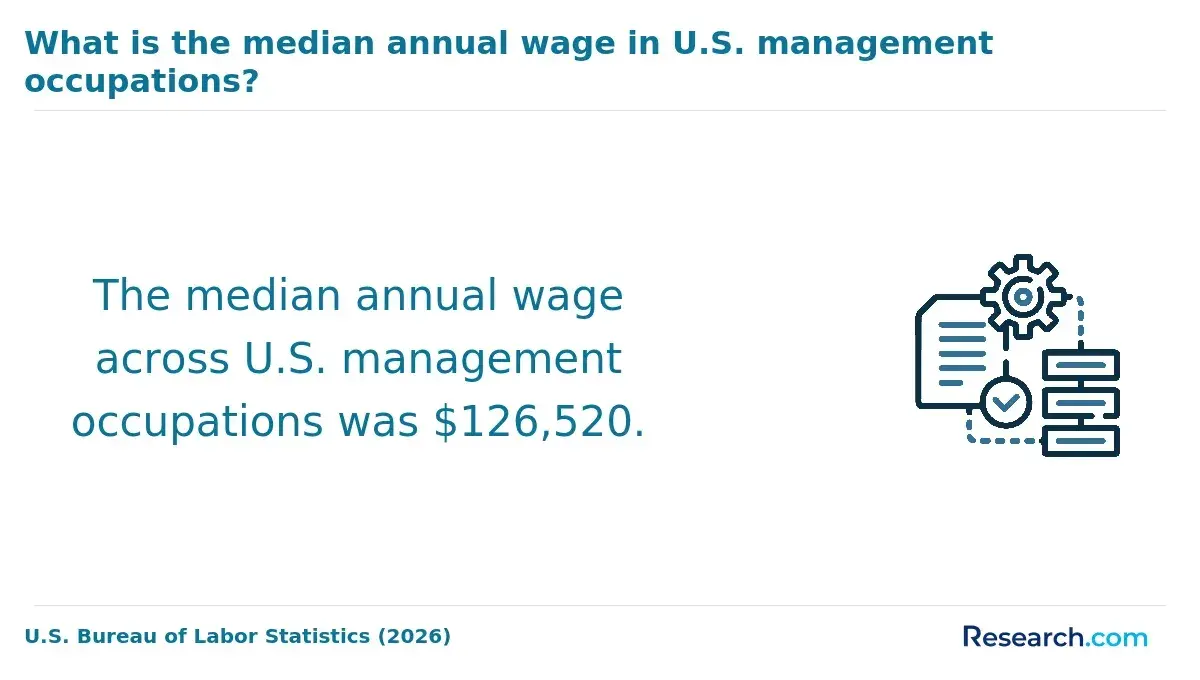
- US management occupations had a median annual wage of $126,520 in May 2025, according to the Bureau of Labor Statistics (BLS). That is an occupational benchmark, not an expected salary for MBA graduates.
- A US online MBA does not itself provide a US visa or work authorization. International applicants should check overseas enrollment rules, career-service access, and the degree's usefulness in their intended job market.
What careers can you pursue with an online MBA in Technology Management?
A Technology Management MBA combines a general business education with coursework on managing technology investments, innovation, or digital operations. It is most useful when it adds commercial and leadership skills to experience you already have. The table distinguishes plausible transitions from the experience employers may still require.
| Starting background | Potential next role | Important hiring consideration |
| Software engineering or IT delivery | Engineering manager, IT manager, or technology program manager | Evidence of team leadership, delivery ownership, and technical judgment |
| Product, marketing, or customer-facing technology work | Product manager or product strategy manager | Customer research, prioritization, and measurable product decisions |
| Operations, systems, or process improvement | Digital transformation or technology operations manager | Change management and implementation results |
| Consulting or business analysis | Technology consultant or strategy manager | Client communication, sector knowledge, and project outcomes |
Progression toward director or executive positions usually requires years of increasing responsibility, not just the degree. Senior professionals already leading major teams may also compare online executive MBA programs, which may better match their career stage.
How does an online MBA in Technology Management benefit international applicants?
The principal advantage is the possibility of studying a US business curriculum while continuing to work and live abroad. Projects may let you apply finance, strategy, and organizational-change concepts to your current employer rather than pause your career for a campus program. A cross-border cohort can also broaden your professional contacts, although networking and recruiting access vary by school.
Online does not necessarily mean location-independent. Ask whether the school permits enrollment from your country, schedules required live sessions in manageable time zones, and requires travel for exams or residencies. If your work hours make live classes difficult, compare online MBA programs with asynchronous classes - then check whether group meetings still require real-time participation.
Match the degree to your intended employment market. An employer abroad may value a recognized US business qualification, but local hiring practices still matter. If your goal is a US job, separate that career goal from enrollment: completing a US online MBA from abroad does not itself confer a visa, US work authorization, or access to campus recruiting.
What are the highest-paying jobs after an online MBA in Technology Management?
Senior technology executives, experienced product leaders, and managers responsible for substantial technology budgets can command high compensation. Their pay depends heavily on location, employer, scope of responsibility, and prior results; it is misleading to rank these as guaranteed "post-MBA salaries."
For context, the BLS reports that the median annual wage across all US management occupations was $126,520 in May 2025. The figure includes managers with many educational backgrounds and experience levels. BLS also projects about 1.1 million annual openings across management occupations, on average, from 2025 to 2035; these are not openings reserved for MBA holders or international candidates. Use occupation-specific pay and job descriptions in your target US region when judging whether a particular transition could justify tuition.
Employers may consider MBA graduates for roles that connect technical teams with commercial decisions. A product manager weighs customer needs and business priorities; a technology program manager coordinates complex initiatives; an IT manager oversees systems, staff, and spending; and a digital transformation manager leads process or platform changes. Technology consulting can combine several of these responsibilities for clients.
For each target role, compare job postings with your record before applying. If they emphasize people management, document hiring, coaching, or team leadership. If they emphasize products, show decisions you made using customer and financial evidence. Someone moving from a nontechnical function into engineering management will generally need more than MBA coursework to establish technical credibility. An adjacent transition - from IT project delivery to technology program leadership - is often more plausible.
The MBA core typically develops managerial skills in accounting, finance, strategy, marketing, operations, and organizational leadership. Technology-focused study may address digital strategy, innovation, product decisions, analytics, IT governance, or managing technology projects. Exact courses and the depth of study differ by institution: a formally named concentration is not the same as a general MBA with one relevant elective.
Look for assignments that connect technical choices to business outcomes, such as evaluating an investment, planning adoption of a new system, or communicating a product trade-off. An MBA generally teaches managers how to assess and lead this work; it is not a substitute for advanced software engineering, data science, or cybersecurity training. If your target job requires deep technical practice rather than business leadership, a specialized degree or focused training may fit better.
Requirements vary by school, but applicants commonly submit evidence of a completed bachelor's degree, academic records, a résumé, and application materials describing professional goals. A school may request recommendations, an interview, GMAT or GRE results, or proof of English proficiency; none of these should be assumed universal.
Ask admissions staff whether your degree needs a course-by-course credential evaluation, which English-language tests or waivers they accept, and whether they can receive official records from your institution. Confirm country-of-residence eligibility before paying an application fee. Applicants who are also veterans should separately check whether any education benefit applies to their circumstances; a comparison of online MBA programs for military and veterans is a starting point, not a determination of benefit eligibility.
Completion time depends on credit requirements, course sequencing, and whether you study part-time or at an accelerated pace. Before choosing a shorter option, check whether its required live sessions, group work, and deadlines are workable across your time zone. You can compare accelerated MBA degree programs, but confirm each program's actual technology-focused curriculum rather than assuming a fast MBA offers the concentration.
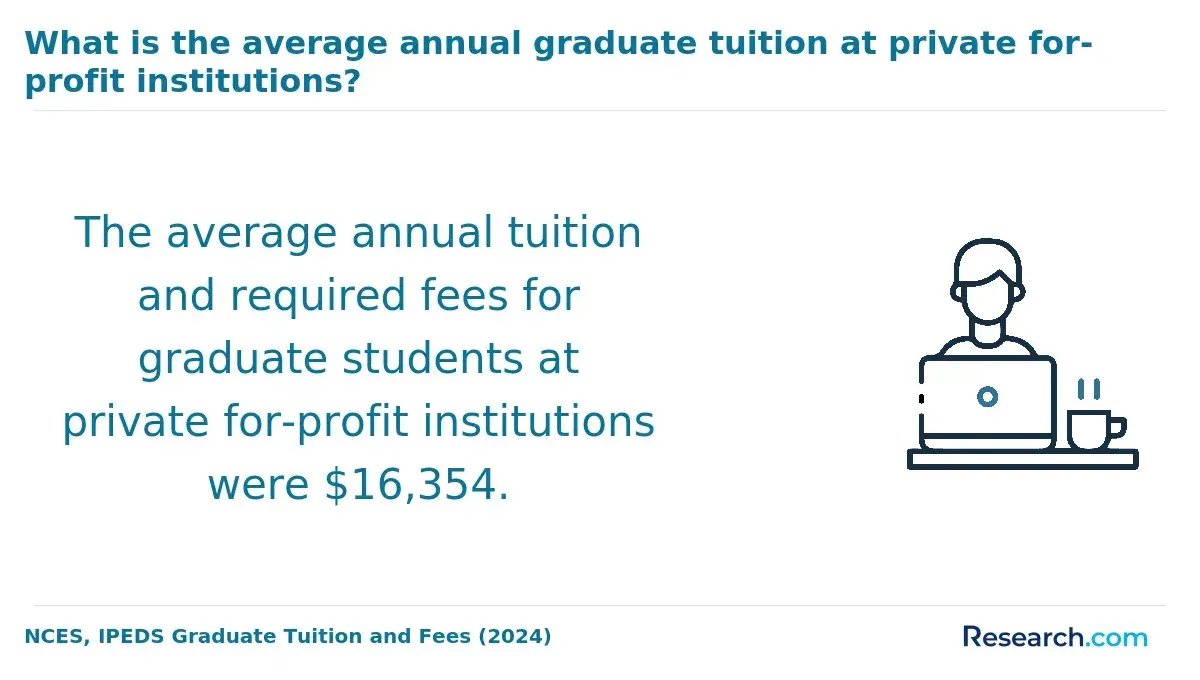
To compare costs, request the current total tuition for the credits you must complete, then add mandatory fees, materials, possible travel, and currency-conversion or international payment charges. Ask whether tuition differs by residency or enrollment location, whether scholarships are open to overseas students, and whether your employer will reimburse study at a US institution. Do not assume eligibility for US federal student aid while living abroad. A lower-priced MBA may offer better value if it supports your intended role without imposing travel or financing costs you cannot recover.
First, verify that the institution has recognized US institutional accreditation. Then check whether its business school holds specialized accreditation, such as AACSB, ACBSP, or IACBE, if that matters to your employer or future study plans. Institutional and business-school accreditation are different claims; neither establishes that a particular technology concentration is available online.
STEM designation is also program-specific. Do not infer it from "technology" in a concentration name or from another MBA offered by the same school. A STEM-designated degree does not, by itself, create eligibility for F-1 status or optional practical training (OPT).
Immigration benefits depend on the student's circumstances, the school and program, and applicable rules; a wholly online degree completed abroad should not be selected on an assumption that it leads to US post-study work authorization. Request written clarification from the school's international student office and consult qualified immigration advice for your situation.
Most general technology management roles do not have a universal professional license, but employers may prefer evidence of skills beyond an MBA. Project-management credentials can support program-delivery roles; cloud or security credentials may matter when managing those functions; and product roles often place greater weight on demonstrated launches and decisions than on a certificate alone.
Choose a credential after reviewing postings for your target role and location. It may be a more direct investment than an MBA if your gap is narrow - for example, familiarity with a particular platform or delivery method. Conversely, certification alone may not address gaps in budgeting, strategy, and people leadership.
How can you choose a reputable online MBA in Technology Management?
Start with the job you want and the experience you can already prove. Then compare programs on the evidence most likely to change your career prospects: relevant coursework, applied projects, employer or alumni connections in your intended market, access to career services from abroad, scheduling constraints, accreditation, and total cost.
Ask each school to identify the exact credential and concentration shown on its records, share a current course plan, and explain whether overseas students can use the same career resources as US-based students. Seek outcomes for online MBA students where available, but avoid treating a school-wide employment figure as a forecast for international graduates. If affordability is decisive, a list of MBA programs under $30,000 can help you begin comparing options; verify current total charges and technology-management coursework directly with each school.
The MBA is strongest when you can apply it to a credible next step, such as moving from technical delivery into budget and team leadership. If you need entry-level technical skills, US work authorization, or a guaranteed career switch, solve that constraint directly rather than expecting the degree to do it for you.
Other Things You Should Know About MBA
Yes, but clients usually hire for demonstrated expertise and results, not the degree alone. Build a defined service offering around problems you have already solved.
That depends on the university. Ask how the diploma and official transcript identify the degree, delivery mode, and concentration before enrolling.
Some programs permit employer-based projects. Confirm the school's approval process and your employer's rules for confidential information before proposing one.
You can apply, but an employer must be able and willing to employ someone in your country under applicable employment, tax, and data rules. A remote listing does not necessarily mean the employer hires internationally.
- Students and Employment | uscis.gov https://www.uscis.gov/working-in-the-united-states/students-and-exchange-visitors/students-and-employment
- Hiring International Students | Recruiting | Harvard Business School https://www.hbs.edu/recruiting/find-talent/hiring-international
- What Jobs Can You Get With an MBA? | SDSU https://business.sdsu.edu/graduate/mba/what-jobs-can-you-get-with-an-mba
- Jobs That Require an MBA: Career Paths and Salaries | Touro University Worldwide https://www.tuw.edu/business/21-jobs-require-mba/
- Making sense of different perspectives on career transitions | sciencedirect.com https://www.sciencedirect.com/science/article/pii/S1053482218306788
- How AI may reshape career pathways to better jobs | Brookings https://www.brookings.edu/articles/how-ai-may-reshape-career-pathways-to-better-jobs/
- U.S. Employer's Guide to Hiring International Students | umich.edu https://careercenter.umich.edu/article/us-employers-guide-hiring-international-students
- How a Technology-Focused MBA Prepares Graduates for Management Jobs | Stevens Online https://online.stevens.edu/blog/tech-management-jobs/
- How IT MBA Skills Drive Business Decisions and Data-Driven Strategies | University of the Cumberlands https://www.ucumberlands.edu/blog/applying-mba-it-skills-across-enterprises
- What Can You Do With an MBA in Information Systems? | UNCW https://onlinedegree.uncw.edu/programs/business/mba/information-systems/it-manager-career-outlook/


