Is an online MBA in Sustainability worth it for working parents?

Co-Founder and Chief Data Scientist
An online MBA can fit around a job more easily than a campus program, but it still competes with school pickups, caregiving, and household finances. For working parents interested in sustainability, the decision is whether broad business training and a sustainability focus will help them reach a realistic career goal without making family life unmanageable. This guide explains what these programs teach, how to assess their cost and scheduling demands, and when a shorter or more specialized option may offer better value.
Key Things You Should Know
- An online sustainability MBA is most likely to pay off when it supports a specific management move and its cost and weekly demands fit the household budget and caregiving schedule.
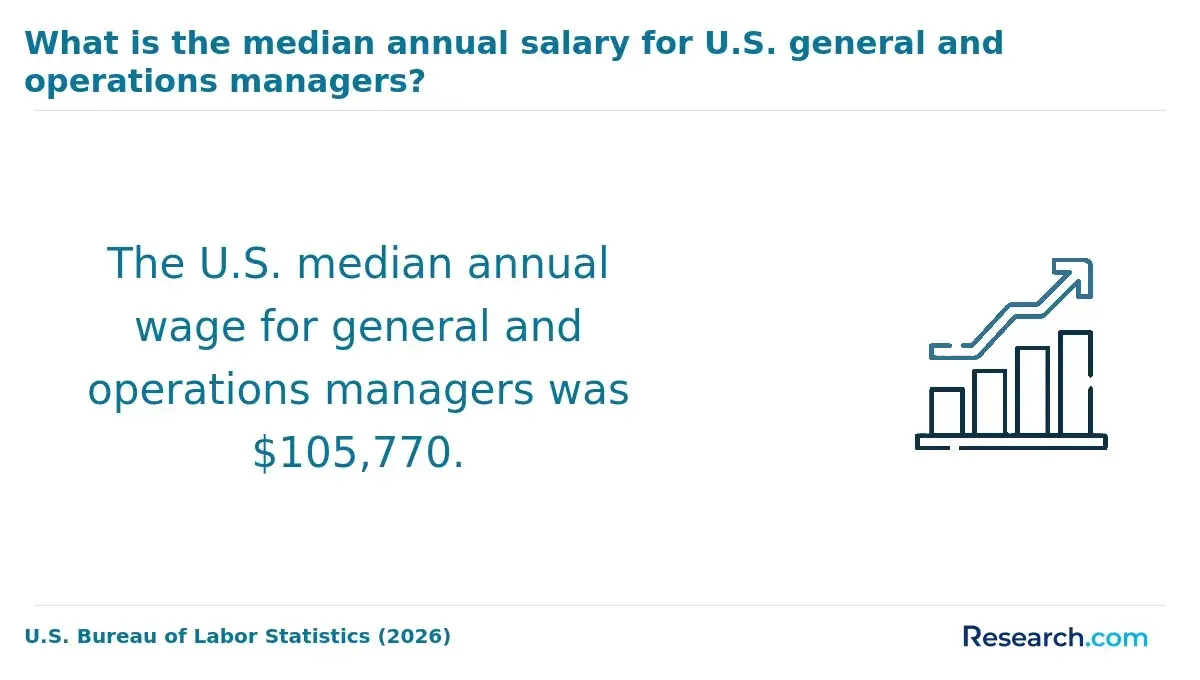
- The U.S. median annual wage for management occupations was $126,520 in May 2025, but that figure describes all workers in those occupations - not sustainability MBA graduates or an expected post-MBA salary.
- Before enrolling, verify live classes, group meetings, travel requirements, total charges, and whether sustainability is a formal concentration rather than a single elective.
Is an online MBA in sustainability worth it for working parents?
It can be, if the degree addresses a defined career need and you can sustain its cost and workload alongside paid work and caregiving. An MBA builds broad management skills; a sustainability concentration applies some of those skills to issues such as resource use, supply chains, reporting, and long-term business risk. Neither the concentration nor online delivery guarantees a promotion or a flexible week.
The strongest case is often an adjacent move: for example, an operations manager taking responsibility for supplier standards or a finance professional moving into climate-related business planning. A parent trying to enter sustainability from an unrelated field may need relevant projects and industry contacts as well as the degree. The distinction matters because a program's return depends partly on experience you already have.
These comparisons show how the same MBA can have different value depending on the career change you want and the time your family can protect for study.
| Goal | Potential value | Main caution |
| Advance into management at a current employer | Apply MBA tools to existing sustainability responsibilities and pursue internal opportunities | Confirm that the employer values the degree and offers a plausible advancement path |
| Move from an adjacent business role into sustainability | Combine existing functional experience with relevant coursework and projects | Check whether target jobs also require sector-specific experience |
| Make a substantial career change | Build business knowledge and a network while employed | A part-time online MBA may offer fewer opportunities for internships or career switching than a full-time program |
| Gain a specific technical skill | Limited value if broad management training is not needed | A targeted course, certificate, or specialized master's may be more direct |
Compare the full cost you would pay with a conservative estimate of additional earnings or advancement opportunities - not an advertised graduate salary. Ask what happens if a promotion takes longer than expected, then add the nonfinancial benefits you value, such as stronger decision-making or the ability to contribute to a mission-driven project. To identify schools worth examining, start with business-school options for online MBA in sustainability, then verify each program's current curriculum and format directly.
What does an online MBA in sustainability teach?
Typically, it combines an MBA core - finance, accounting, strategy, operations, marketing, and leadership - with coursework applying business decisions to environmental and social challenges. Sustainability in this context means considering long-term business performance alongside impacts on people and natural resources. Programs differ in how deeply they cover those topics.
Students may learn to evaluate a supplier decision using cost, emissions, and operational risk; make a business case for reducing waste; or assess how reporting demands affect a company's strategy. That is management-level preparation, not a substitute for environmental engineering, advanced climate science, or specialized technical training. If your goal is to perform technical analysis yourself, inspect the course descriptions rather than relying on the concentration name.
For a working parent, the most valuable assignment may be one that can be applied to an existing role. Before counting on that benefit, ask whether the program permits workplace-based projects and whether your employer would approve use of its information.
How much does an online sustainability MBA cost?
There is no reliable single price for an online sustainability MBA. Schools may charge by credit, course, term, or entire program, and a concentration may or may not add credits. A published tuition figure is therefore a starting point, not a household budget.
Use the following cost categories to compare schools on the same basis, especially if one program requires travel or takes longer to complete part-time.
| Cost category | What to verify | Why it matters for working parents |
| Tuition | Required credits and the rate that applies to your enrollment status | A lower advertised rate may not mean a lower total bill |
| Required fees and materials | Program, technology, graduation, books, and software charges | These expenses compete with other household needs |
| Travel and caregiving | Residencies, campus visits, and coverage needed during required sessions | An online program can still create travel and childcare costs |
| Financing and time | Loan interest, reimbursement timing, and any income lost through reduced work | Part-time study can spread bills out without reducing their total |
Calculate your likely out-of-pocket cost as tuition plus required expenses and financing costs, minus confirmed employer assistance, scholarships, or other aid. Ask whether employer reimbursement is paid before or after you complete a course and whether you must repay it if you leave your job. Do not assume aid or reimbursement will cover a concentration's additional courses.
Completion time depends on required credits, term structure, course sequencing, and how many classes you take at once. Part-time study may protect family time but extend the period during which tuition bills and assignments remain part of household life. An accelerated program shortens the calendar only if its concentrated workload is manageable.
Compare a school's published completion ranges with the schedule you could actually maintain during a demanding work period or a child's school break. Ask whether sustainability courses run every term; an infrequently offered required class can delay graduation even when the MBA core is available. Parents considering short-duration MBA pathways accelerated online MBA programs should pay particular attention to overlapping courses and fixed deadlines, not just the advertised finish date.
Online does not necessarily mean self-paced. Asynchronous lessons let you choose when to watch or read material, but assignments still have deadlines. Synchronous classes require attendance at set times, while team projects may add meetings outside class. Residencies and exams can create further fixed commitments.
Request a recent syllabus or sample course calendar and map every required commitment onto a normal family week and a difficult one. In particular, check whether live sessions fall during dinner or bedtime, whether group members choose their own meeting times, and whether weekend work is routine. Ask how the program handles a missed session, a temporary reduction in course load, or a leave for family reasons; policies vary by school.
A useful test is to identify dependable study periods and backup caregiving coverage before applying. If the plan works only when nothing unexpected happens, a lighter pace or a shorter credential may be the safer choice.
Requirements vary by school. Online MBA applicants commonly submit evidence of a bachelor's degree, academic records, a résumé, and a statement of purpose; some schools also request recommendations, an interview, or GMAT or GRE scores. Work-experience expectations, test waivers, GPA standards, and application deadlines must be checked against the individual program's current policy.
A science or environmental degree is not automatically required. Business experience can strengthen an application if you explain how you would use the MBA to address a concrete sustainability challenge. If accounting or quantitative coursework is unfamiliar, ask about foundation courses and prepare for them without assuming they are formal prerequisites.
Parents returning to school after a long gap should explain their professional progression and current goal, rather than treating time away from formal education as a weakness. If an earlier academic record is a concern, review MBA application options for experienced professionals and confirm each school's actual admissions criteria before applying.
The required MBA core commonly includes managerial accounting and finance, operations, strategy, organizational behavior, and marketing. Sustainability-related offerings may address sustainable supply chains, business ethics, corporate reporting, energy decisions, or social impact. A capstone or consulting project may bring these subjects together, but course titles and requirements differ by school.
Check whether the advertised sustainability pathway is a formal concentration with required courses, a group of electives, or simply an opportunity to take one relevant class. Then read the descriptions: a supply-chain course may be more useful to a procurement manager than a broad introductory course, while a reporting-focused class may better serve someone moving from finance.
Parents whose goal is specifically to lead customer research, brand strategy, or communications around sustainable products may get a closer curricular fit from marketing-focused online MBA options. The better choice depends on the work you want to do, not which concentration sounds more closely tied to your interests.
Possible paths include sustainability program management, responsible sourcing, operations improvement, and strategy roles involving environmental or social goals. Job titles are inconsistent across employers: one company's sustainability manager may oversee reporting, while another's manages supplier relationships or cross-functional projects. Read job descriptions for responsibilities and experience requirements, not titles alone.
The most credible next role often builds on your current function. An operations professional might pursue waste-reduction or supply-chain initiatives; a finance professional might support investment decisions involving sustainability risks. Employers may expect evidence that you have led projects and influenced stakeholders, rather than treating an MBA concentration as proof of hands-on expertise.
Sector knowledge also matters. A healthcare worker who wants to improve hospital operations while managing sustainability initiatives might compare a sustainability MBA with graduate management programs for healthcare workers online MBA programs for healthcare professionals. Neither degree replaces the operational experience or professional qualifications a particular healthcare job requires.
There is no single dependable salary for sustainability MBA graduates. Pay varies with occupation, employer, location, seniority, and prior experience. The U.S. Bureau of Labor Statistics reports a $126,520 median annual wage for management occupations in May 2025. That broad figure includes managers without MBAs and managers outside sustainability, so it is context for comparing occupations - not a forecast of what this degree will earn you.
For a more useful estimate, compare current job postings for your target role and location with your present compensation. Look closely at required experience: if a posting expects years of sector leadership you do not yet have, its pay range should not anchor your immediate return-on-investment calculation. Advancement may also occur without a degree, so attribute a potential raise to the MBA only when there is a credible reason to do so.
How do you choose an accredited online sustainability MBA?
First, verify the institution's accreditation through a recognized U.S. accreditor. Then check whether the business school or MBA holds separate business-school accreditation, if that matters to your employer or career plans. Institutional accreditation and specialized business-school accreditation are different claims; neither confirms that a sustainability concentration exists or is available online.
A final comparison should focus on evidence you can obtain from each school. These checks are especially important when your available study hours and household funds are limited.
- Confirm the exact degree, any formal concentration designation, required courses, and whether every requirement can be completed online.
- Request the current total-cost breakdown, sample calendar, live-session times, group-work expectations, and any travel requirements.
- Ask about part-time pacing, course availability, leave policies, career services for online students, and access to relevant projects or employers.
- Compare those answers with your target job's requirements and decide what career benefit would justify the cost and time.
Choose the program that meets those tests at a manageable price and pace. If no program does, postponing enrollment or taking targeted coursework is a sound decision - not a missed opportunity.
Other Things You Should Know About MBA
Diploma wording varies by institution. Ask the registrar for the exact wording and whether the transcript identifies the delivery format.
Possibly. Ask the instructor whether workplace projects are permitted, and obtain employer approval before sharing confidential data or involving colleagues.
Not exactly. Environmental, social, and governance (ESG) measures are one way organizations assess and report certain risks and practices. Sustainability can also encompass broader operational and long-term strategic decisions.
You may, if they help explain your path or goals. Focus on relevant accomplishments and why the program fits your circumstances; you generally do not need to disclose personal details that do not support your application.
- Accreditation in the U.S. | ed.gov http://www.ed.gov/laws-and-policy/higher-education-laws-and-policy/college-accreditation/accreditation-in-the-us
- Is Online MBA Worth It? In a Word, Yes. | Babson College https://www.babson.edu/graduate/admissions/graduate-school-advice/is-online-mba-worth-it/
- What Can You Do with an MBA in Sustainability? | Bard College https://leadthechange.bard.edu/blog/can-an-mba-really-help-me-change-the-world
- Tuition and Financial Aid | MIA-BUS https://onlinemba.miami.edu/admissions/tuition/
- Course Modalities | Howard University Provost's Office https://provost.howard.edu/DOL/Quality-Forward-Initiative/Course-Modalities
- Flex Start Classes: The Perfect Solution for Busy College Students | Maricopa Community Colleges https://www.maricopa.edu/news/2023/flex-start-classes-perfect-solution-busy-college-students
- What are Asynchronous Classes? | University of Bridgeport https://www.bridgeport.edu/news/what-are-asynchronous-classes/
- Careers in ESG: Insights from MBA Career Management | Impact, Value, and Sustainable Business Initiative https://impact.wharton.upenn.edu/news/careers-in-esg-insights-from-mba-career-management/