Is an online MBA in Information Systems worth it for small business owners?

Co-Founder and Chief Data Scientist
A small business can outgrow its spreadsheets, disconnected software, and informal processes before its owner has time to fix them. An online MBA in Information Systems may help you make better technology and management decisions, but the degree also competes with cash you could invest directly in the business. This guide explains what the MBA teaches, how it might pay off, and when a shorter course or outside expert is the better choice. Use it to judge the degree against your company's needs - not a generic graduate salary claim.
Key Things You Should Know
- An Information Systems MBA is most likely to be worthwhile when you need both broad management skills and a sustained way to improve technology decisions across a growing business.
- Compare the full cost and time away from operations with a specific business outcome; an urgent software problem may be better served by a consultant or targeted course.
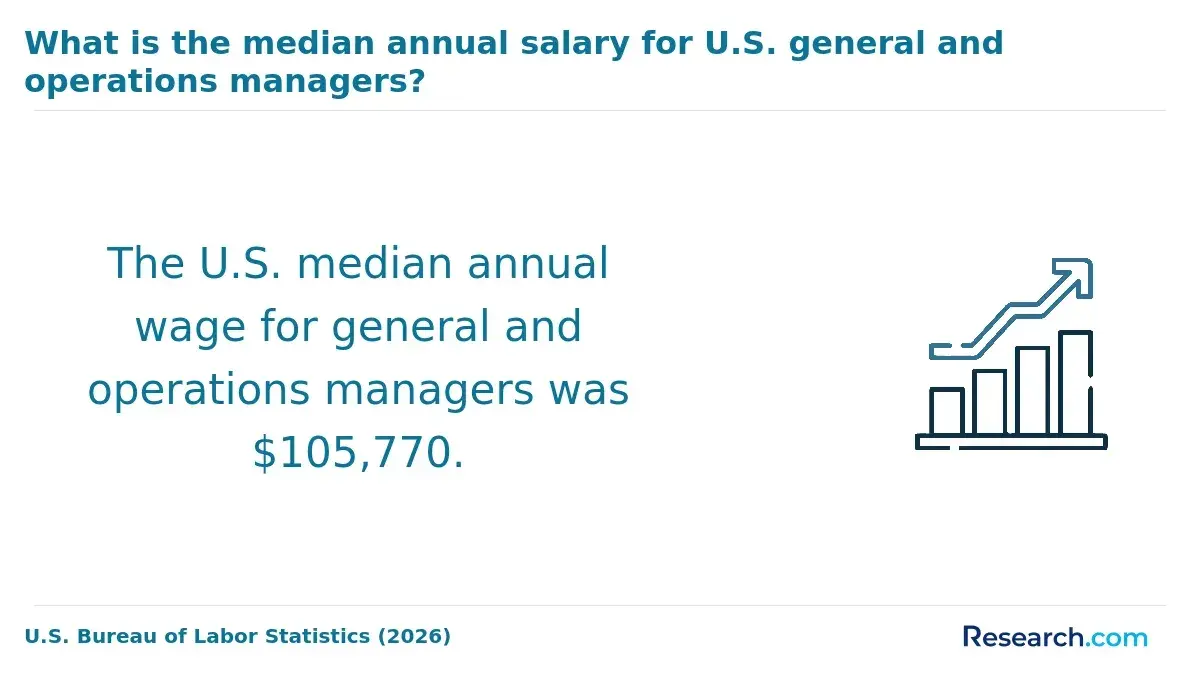
- The U.S. median wage for management occupations was $126,520 in May 2025, according to the Bureau of Labor Statistics (BLS), but that figure does not predict an owner's income or an MBA graduate's pay.
Is an online MBA in Information Systems worth it for small business owners?
It can be - but only if the degree addresses a recurring management problem, not just a one-time technology purchase. An Information Systems MBA combines the broad MBA core with coursework on how organizations select, use, and govern information systems. For an owner, its strongest potential return is better decisions about cash flow, customers, employees, and systems as the business grows.
Start with the decision your business actually faces. The comparison below separates a broad education from faster, narrower ways to solve a problem.
| Option | Best fit for an owner | Main limitation |
| Information Systems MBA | You want sustained development in finance, leadership, strategy, and technology management. | Substantial cost and study time; coursework may not solve an immediate operational issue. |
| Targeted course or executive education | You need to learn a defined skill, such as evaluating software vendors or interpreting business data. | Less breadth and usually less sustained feedback on management decisions. |
| Mentor, consultant, or implementation partner | You need experienced help with a current decision or rollout. | Can solve the immediate problem without developing your own broader management capability. |
An MBA is more compelling if you can apply assignments to your company, afford the full cost without weakening working capital, and protect study time during busy periods. Its value is less certain if growth plans are unclear or the curriculum barely covers the systems decisions you face. Before committing, compare online MBA programs on total cost and curriculum rather than relying on a value label alone.
How can an Information Systems MBA help small business owners solve technology challenges?
The practical benefit is learning to connect a technology choice to a business result. If customer records, inventory, and accounting sit in separate systems, the owner must decide which process to fix first, what data should move between tools, who will maintain it, and whether the change improves service or cash flow. MBA coursework may provide frameworks for evaluating those trade-offs; it will not replace a qualified implementer.
Marketing illustrates the distinction. A new customer platform has limited value if the business cannot identify acquisition costs or decide which customer relationships merit attention. Owners whose central challenge is customer growth may find it useful to compare marketing MBA programs before choosing an Information Systems concentration.
Security and data privacy matter, too. An owner may learn to assign responsibility, evaluate vendor risk, and budget for safeguards, but should not expect management coursework to provide hands-on cybersecurity expertise. The most useful class project is one you can test against a real business measure - such as fewer manual corrections or more reliable inventory information - without exposing confidential customer data.
What careers can an online MBA in Information Systems prepare you for?
For many owners, the intended "career outcome" is a better-run business rather than a new job. The degree may support a transition from handling every decision personally to overseeing managers, budgets, vendors, and technology investments. If you later seek employment, your evidence of building systems and leading change may matter as much as the diploma.
Potential paths include operations management, business systems management, technology-focused consulting, and, with relevant prior experience, information technology management. Employers may expect a record of managing people, projects, or technical teams; an MBA concentration alone does not establish that experience. Industry context also matters: an owner moving into healthcare leadership, for example, should compare online MBA programs for healthcare professionals with a general Information Systems path.
The MBA core typically develops management judgment through subjects such as accounting, finance, marketing, operations, strategy, and leadership. Information Systems coursework adds a managerial view of business data, technology strategy, systems planning, digital processes, and technology-related risk. The course titles and depth vary by school.
Check whether Information Systems is a formally designated concentration, an elective group, or simply one available course. Then inspect the actual syllabus: a class about choosing and governing enterprise systems serves a different purpose from one focused on technical design. Applied projects can be especially valuable if a school permits you to examine your own company and you can use appropriate safeguards for business information. Neither an MBA core nor an Information Systems concentration should be assumed to teach software engineering.
Completion time depends on required credits, course availability, transfer or waiver policies, and how many courses you take at once. Ask each school for a course-by-course plan at the pace you can maintain while running your business; an advertised accelerated timeline may assume a workload you cannot sustain during peak trading periods.
Online does not necessarily mean self-paced. Live classes, team meetings, fixed deadlines, and any campus visits can conflict with customer and employee needs. If control over study hours is essential, investigate online MBA programs with asynchronous classes, then confirm how group work, exams, and leave policies function in the specific program.
There is no reliable single price for this degree: schools differ in credit requirements, tuition structures, mandatory fees, and residency costs. Obtain a written estimate for the full program, not just the advertised per-credit rate. Include books or software, any travel, interest if you borrow, and the value of owner time diverted from operations.
A useful break-even test compares total education and financing costs plus lost business income with benefits you can reasonably attribute to the degree. Those benefits might be higher operating profit from improved decisions or compensation from a credible career change. Do not count a proposed software saving as an MBA return if you could achieve the same result by hiring an expert for less. Protect payroll, taxes, and working capital before treating tuition as a growth investment.
Requirements vary by university. Applicants commonly need a bachelor's degree and may be asked for transcripts, a résumé, a statement of purpose, recommendations, or an interview. Schools set their own policies on professional experience, GMAT or GRE scores, and foundation coursework; owning a business is valuable experience but does not automatically satisfy every program's criteria.
Before applying, ask how the school evaluates owner-operated businesses, whether it requires quantitative preparation, and which courses must be completed before Information Systems electives. If you need a broader set of application options, review online MBA programs with accessible admissions for working professionals while verifying each school's current requirements directly.
Check two distinct claims. First, verify the university's institutional accreditation through the accreditor's directory or the U.S. Department of Education's accreditation database. Second, if the school advertises business-school accreditation, confirm that claim with the named business accreditor and check its scope. Institutional accreditation and specialized business accreditation are not interchangeable.
Confirm that the online MBA is offered by the institution you checked, then ask whether the concentration is formally listed on the program's current curriculum. Accreditation helps establish oversight; it does not establish that the schedule, price, or Information Systems coursework fits your business.
Both formats can cover the same management and systems topics, but the experience may differ substantially. Online study can reduce commuting and let an owner remain at work; campus study may make face-to-face discussion and local networking easier. Neither advantage is automatic: some online courses require live attendance, while some campus programs accommodate working professionals.
Compare the specific programs' faculty access, team-project schedules, networking opportunities, career services, and any required travel. If you intend to use your own business as a learning laboratory, ask which format makes that feasible. If you plan to sell or leave the business and recruit for a new role, examine the actual recruiting access available to online students rather than assuming it matches the campus MBA.
What salaries and job outlook can Information Systems MBA graduates expect?
The BLS reports a $126,520 median annual wage for U.S. management occupations in May 2025. This is a broad occupational figure, not the salary of Information Systems MBA graduates. It is particularly unsuitable as a forecast for an owner, whose income depends on business performance, debt, and how profits are taken.
The BLS projects overall management employment to grow faster than the average for all occupations from 2025 to 2035. That broad outlook does not establish demand for a particular concentration or guarantee a management job. If you are considering employment, compare postings for your target role with your existing experience and use compensation for that occupation and location - not a general MBA claim - in your financial decision.
Other Things You Should Know About MBA
Possibly. Ask the program whether projects can involve your company, whether teammates must participate, and what confidentiality rules apply before sharing financial or customer information.
A degree is not a substitute for the financial records, cash-flow evidence, and other criteria a lender uses. Better financial planning may strengthen your preparation, but approval depends on the lender and the business.
Tax treatment depends on the facts and applicable rules. Do not assume tuition is deductible because you own a business; ask a qualified tax professional before including a deduction in your cost estimate.
Not necessarily. Compare the skills each partner lacks and the effect of having both away from operations. One partner's MBA alongside the other's targeted training may provide a better balance.
- Manage your business - Small Business Administration https://www.sba.gov/counseling/manage-your-business/
- User, Usage and Usability: Redefining Human Centric Cyber Security - PMC https://pmc.ncbi.nlm.nih.gov/articles/PMC7968726/
- Get an employer identification number | Internal Revenue Service https://www.irs.gov/businesses/small-businesses-self-employed/get-an-employer-identification-number
- Online IT MBA | Information Technology | CU Online https://online.campbellsville.edu/online-degrees/mba-information-technology/
- MBA Accreditation Types and Benefits | Freeman News https://freemannews.tulane.edu/2026/08/06/mba-accreditation-types-and-benefits
- How Many Hours of Work Per Online Course Credit | ASU Online https://asuonline.asu.edu/newsroom/online-learning-tips/discover-weekly-number-hours-online-students-study/
- Is an MBA Worth It? ROI, Pros, Cons and Who Should Enroll | CSP Global Concordia University, ST. Paul https://online.csp.edu/resources/article/is-an-mba-worth-it/
- Information Systems and Business Analytics (ISBA) | SCU https://www.scu.edu/bulletin/graduate/leavey-school-of-business/chapter-7/information-systems-and-business-analytics-isba.html
- 5 Great Jobs for Professionals With an Information Systems MBA | St. Cloud State https://degree.stcloudstate.edu/online-programs/business/mba/information-systems/jobs-professionals-information-systems-mba/
- How IT MBA Skills Drive Business Decisions and Data-Driven Strategies | University of the Cumberlands https://www.ucumberlands.edu/blog/applying-mba-it-skills-across-enterprises