Careers after an online MBA in Cybersecurity Management for small business owners

Co-Founder and Chief Data Scientist
For a small-business owner, cybersecurity is both an operating risk and a possible career direction. An online MBA in Cybersecurity Management may help you make better security investments, lead a growing company, or move into risk and technology management. It will not, by itself, qualify you for every technical security job. This guide separates realistic career paths from roles that require deeper experience, then examines the skills, time, and cost involved so you can decide whether a full MBA - or a shorter option - fits your business and goals.
Key Things You Should Know
- The most direct outcomes for owners are stronger security leadership within their business, advisory work built on relevant experience, and management roles involving risk, vendors, or operations - not automatic entry into technical security jobs.
- The U.S. Bureau of Labor Statistics reports a $126,520 median annual wage for management occupations in May 2025; that broad figure is not a cybersecurity MBA graduate salary or a forecast of an owner's earnings.
- Compare the MBA's total cost and time away from your business with targeted security training before enrolling. A degree is most useful when you need broad management education as well as cybersecurity governance skills.
What careers can you pursue after an online MBA in Cybersecurity Management?
The clearest pathway starts with work you already do. An owner who manages budgets, employees, customer data, and outside technology providers can use an MBA to take on more formal responsibility for security decisions. Moving into another employer's cybersecurity leadership team is possible, but hiring managers will also assess the scale of your experience and your knowledge of security operations.
The roles below differ substantially in how much prior cybersecurity experience they demand. Titles vary by employer, so evaluate the responsibilities rather than the title alone.
| Path | Typical responsibilities | Fit for a small-business owner |
| Security-minded business owner or operator | Set priorities, approve controls, manage vendors, and plan for incidents. | The most immediate application; it may improve resilience without creating a new salaried job. |
| Cybersecurity governance, risk, and compliance manager | Coordinate risk assessments, policies, reporting, and control reviews. | More attainable when the owner can document relevant risk, compliance, or vendor-management work. |
| Technology or security program manager | Manage budgets, timelines, suppliers, and cross-functional security projects. | Builds on operations experience, but employers may expect a record of delivering technology projects. |
| Security consultant or fractional advisor | Help clients prioritize risks and oversee improvement plans. | Requires credible subject expertise, clear service boundaries, and the ability to win clients; the MBA alone is insufficient. |
| Chief information security officer | Lead enterprise security strategy and teams. | Generally a later-career goal requiring substantial security leadership experience. |
Industry experience can make a transition more plausible. For example, an owner familiar with patient-data workflows may bring useful operational context to healthcare risk work, although an MBA does not replace healthcare compliance or security expertise. Owners considering that sector can also explore MBA pathways for healthcare leaders.
How does an online MBA in Cybersecurity Management benefit small-business owners?
A management-focused cybersecurity MBA can help an owner connect security spending to cash flow, customer trust, staffing, and growth. Instead of treating every proposed tool as essential, you can assess which risks threaten revenue or continuity, assign responsibility, and decide what your business can afford. MBA coursework in finance and operations may also help with pricing, hiring, and process improvement beyond cybersecurity.
The return may be operational rather than a higher salary: fewer unmanaged vendor relationships, clearer incident decisions, or a stronger basis for serving clients with security requirements. Those benefits are difficult to price in advance. If your immediate need is to implement basic safeguards in a small firm, a targeted course, experienced mentor, or qualified security provider may deliver value sooner and with less time away from customers.
Cost comparisons should reflect local options as well as the hours you cannot spend running the company. For an owner considering North Carolina schools, an MBA tuition comparison mba nc can start a shortlist, but it cannot establish a program's cybersecurity depth or your business's opportunity cost.
What skills does an online MBA in Cybersecurity Management teach?
The distinctive skill is translating security concerns into business decisions. Relevant study may cover risk assessment, governance, policy, incident planning, vendor oversight, privacy, and communication with executives or customers. The MBA core can add budgeting, accounting, operations, and organizational leadership - the skills an owner needs to fund and carry out those decisions.
Consider a supplier that stores customer information. A useful management-level assignment would weigh the supplier's controls, contract terms, replacement costs, and potential disruption, then recommend an accountable owner and response plan. It would not necessarily teach you to test the supplier's systems. Technical security engineering, forensic investigation, and penetration testing generally require different training and practice.
Technical certifications are not universal hiring requirements for business-facing security work. Depending on the employer and your experience, you may be considered for security program coordination, vendor-risk management, governance or compliance support, and technology project management. Your strongest evidence will be completed work: a documented vendor review, an approved incident plan, a managed budget, or a policy rollout in your business.
"No certification required" does not mean "no security knowledge required." Employers may still expect familiarity with controls, regulations relevant to their industry, and the people who implement technical safeguards. Analyst, engineering, testing, and senior security-leadership positions often call for hands-on experience that management coursework cannot substitute for. If your aim is to perform technical work rather than manage it, compare the MBA with focused technical study and supervised practice first.
Choose a credential for the work you intend to do, not simply to add letters after your name. Certification bodies set their own examination, experience, and renewal rules; check current eligibility before making it part of your career plan.
- CompTIA Security+: Can provide a broad technical-security foundation for an owner who needs to communicate more effectively with IT providers.
- ISACA CISM: Aligns with security governance and management; its professional-experience requirements make it better suited to established practitioners than beginners.
- ISACA CISA: Is relevant to auditing and assessing information-system controls, especially when your target work involves assurance.
- ISC2 CISSP or CGRC: May suit experienced professionals pursuing broad security leadership or governance, risk, and compliance work; verify each credential's experience rules.
For an owner focused only on securing one company, a short, task-specific course may be more useful than certification preparation. If you plan to advise clients or seek employment, examine actual job postings and client requirements before choosing a credential.
There is no universal curriculum. Most such degrees combine a broad MBA core - commonly finance, accounting, marketing, operations, strategy, and leadership - with security-related courses or electives. The cybersecurity component may address enterprise risk, information-security governance, privacy, incident management, or technology policy. An applied project might let you build a risk register or investment proposal for your own firm, subject to school rules on confidential information.
Check the degree requirements rather than relying on the program name. Ask which courses are mandatory, whether Cybersecurity Management is a formally designated concentration or merely an elective option, who teaches the security courses, and whether assignments address small organizations as well as large enterprises. A single security elective is not equivalent to a substantial specialization.
Completion time depends on required courses, term structure, and how many courses you take at once; an accelerated calendar is not necessarily manageable while operating a business. Ask for the school's published part-time and accelerated schedules, course sequencing, maximum time to finish, and leave policy. Also confirm live sessions, group-work expectations, exam windows, and any campus visits before committing.
Map those requirements against your busiest sales periods and identify who will cover urgent customer or staffing decisions. Veteran owners comparing programs may find it helpful to compare schools for online MBA programs and veterans, then verify scheduling and any applicable education benefits directly with each school. Veteran status alone does not establish benefit eligibility.
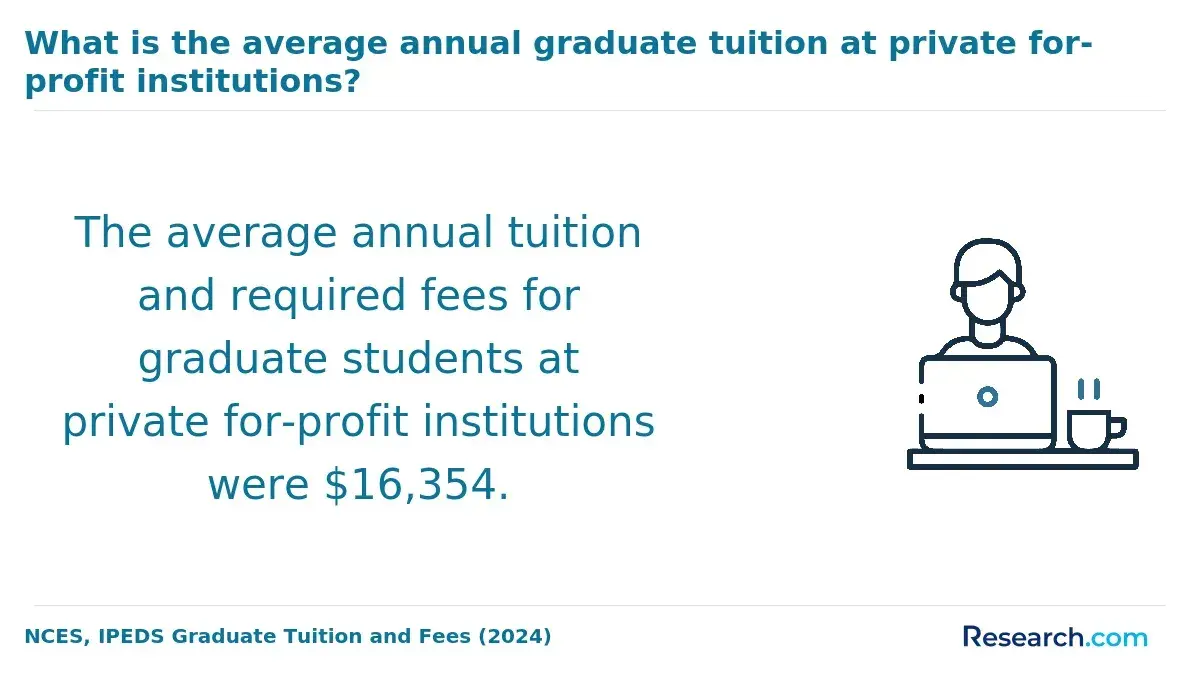
There is no reliable single price for this degree type. Build a total-cost estimate from the school's required credits and published tuition basis, then add mandatory fees, materials, technology charges, and any required travel. Ask whether tuition changes by enrollment pace and whether a concentration adds courses or charges. Interest on borrowed funds and time diverted from the business also matter, even though they may not appear on a school bill.
For a first comparison, a tuition-focused MBA program search online MBA tuition and total cost can help identify questions to bring to schools. Request an itemized estimate for your intended pace before treating an advertised tuition figure as the amount you will pay.
An owner should compare that commitment with the business problem being solved. If the goal is a near-term security improvement, price a targeted course and qualified implementation help alongside the MBA. If you also need sustained education in finance, leadership, and growth, the broader degree may justify a larger investment.
First verify that the institution holds recognized institutional accreditation; then check separately whether its business school has specialized accreditation, such as AACSB, ACBSP, or IACBE. These are different claims. Confirm both with the school and the relevant accreditor rather than assuming that an accredited university has an accredited business school.
Next, compare the actual cybersecurity courses, total price, delivery schedule, and opportunities to apply coursework to a small business. Ask career services whether online students can access employer introductions or alumni events, particularly if you want to leave self-employment. If specialized business-school accreditation is a priority and cost is tight, a list of MBA program prices and tuition options mba programs can provide candidates to investigate; independently confirm the accreditation and whether each program offers the security coursework you need.
Before applying, request a sample course plan and discuss one concrete outcome with an advisor: improving your own security governance, moving into a risk role, or building an advisory practice. A school that cannot show how its courses support that outcome may not be the right investment.
What is the salary and job outlook for cybersecurity management careers?
The U.S. Bureau of Labor Statistics reports that management occupations had a median annual wage of $126,520 in May 2025. This covers many kinds of managers - not specifically cybersecurity managers, MBA holders, or small-business owners - and should not be used as an expected post-degree salary.
BLS projects management occupations overall to grow faster than the average for all occupations from 2025 to 2035, with about 1.1 million openings annually on average from growth and replacement needs. That broad outlook indicates opportunities across management, not demand for a particular cybersecurity concentration. For an owner seeking employment, local postings, required security experience, industry, and the scope of the role are more useful compensation benchmarks. For an owner staying in business, evaluate potential gains through business performance rather than comparing your income with an occupational wage.
Other Things You Should Know About MBA
Possibly, but obtain permission and follow school rules, contracts, and privacy obligations. Use anonymized or fictionalized information when you cannot safely share business records.
No. Insurers assess the business's coverage application and required controls, not simply the owner's degree. Review the policy and application with your insurer or broker.
Tax treatment depends on your circumstances and applicable rules; a degree is not automatically deductible because it relates to your business. Consult a qualified tax professional before relying on a deduction.
Not automatically. Review the school's intellectual-property and project policies, plus any agreements with teammates, before sharing a proprietary idea or client information.
- Cyber security career guide https://www.cyber.gc.ca/en/guidance/cyber-security-career-guide
- Cybersecurity for Small Business | Federal Trade Commission https://www.ftc.gov/business-guidance/small-businesses/cybersecurity
- Who Should Consider an MBA in Cyber Security Management? | STU https://online.stu.edu/degrees/business/mba/cybersecurity-management/why-consider-this-program/
- The Importance of Cybersecurity Leadership | The University of Tulsa https://online.utulsa.edu/blog/cybersecurity-leadership/
- How to Build a Cybersecurity Portfolio | University at Albany https://www.albany.edu/cehc/communications/build-cybersecurity-portfolio
- MBA with Cybersecurity Concentration | NDNU https://www.ndnu.edu/business-management/mba/cybersecurity.html
- Why an MBA in Cybersecurity Is Your Next Step | eccuedu https://www.eccu.edu/blog/mba-in-cybersecurity-career-leadership/
- Online Master's Degree: Cybersecurity Management & Policy | University of Maryland Global Campus https://www.umgc.edu/online-degrees/masters/cybersecurity-management-policy
- Steps, Considerations, and Best Practices for Businesses | Capitol Technology University https://www.captechu.edu/blog/building-robust-cybersecurity-strategy-steps-considerations-and-best-practices-businesses
- What Jobs Can I Get With an MBA in Cybersecurity Management Online Degree? | UIS Online https://onlinecbm.uis.edu/degrees/business/mba/cybersecurity-management-program/what-jobs-can-i-get/