Careers after an online MBA in Data Science for Business for international applicants

Co-Founder and Chief Data Scientist
An online MBA in Data Science for Business can help an experienced professional move from reporting on data to leading decisions informed by it. But the career payoff depends on your existing skills, the depth of the program's analytics coursework, and where you intend to work. For international applicants, overseas enrollment and US employment are separate questions. This guide compares realistic career paths, salary and job-market evidence, and the program features worth checking before you invest.
Key Things You Should Know
- The strongest paths usually build on existing experience: an operations professional might pursue analytics leadership, while a marketer might move into customer insights. An MBA alone rarely qualifies someone for a technical data scientist role.
- The US Bureau of Labor Statistics reports a $126,520 median annual wage for management occupations in May 2025. That is an occupational benchmark, not the expected salary of an MBA graduate or an international applicant.
- Before enrolling from abroad, confirm that the school accepts students in your location and that its career support serves your target market. Online enrollment does not itself provide US work authorization.
What careers can you pursue after an online MBA in Data Science for Business?
This degree typically combines broad management education with the use of data to solve business problems. It is most useful for professionals who can connect analytics to a function they already understand. The table separates plausible next steps from roles that generally demand deeper technical preparation.
| Career path | Typical responsibilities | Most relevant starting point |
| Business analytics manager | Set reporting priorities, guide analysts, and turn findings into operational decisions. | Experience in analytics, operations, finance, or managing cross-functional projects. |
| Product or growth analytics lead | Evaluate customer behavior, experiments, and product performance with product teams. | Product, marketing, or commercial experience plus practical analytics skills. |
| Operations or supply chain manager | Use forecasts and performance measures to improve capacity, costs, or service. | Substantial operations or supply chain experience. |
| Analytics consultant | Frame client problems, assess evidence, and recommend changes. | Industry expertise, client-facing experience, and demonstrable project results. |
| Data scientist or machine learning engineer | Build and validate statistical models or production systems. | Usually requires stronger statistics, programming, and technical project experience than a managerial MBA alone provides. |
An MBA can support a move from analyst to manager, but it does not replace evidence that you can lead people, budgets, or decisions. If you are switching both industry and function, an intermediate role or applied project may be more realistic than an immediate management appointment. Healthcare professionals interested in using analytics to lead care organizations can also compare MBA pathways for healthcare leaders; healthcare operations experience remains important.
How much can you earn with an online MBA in Data Science for Business?
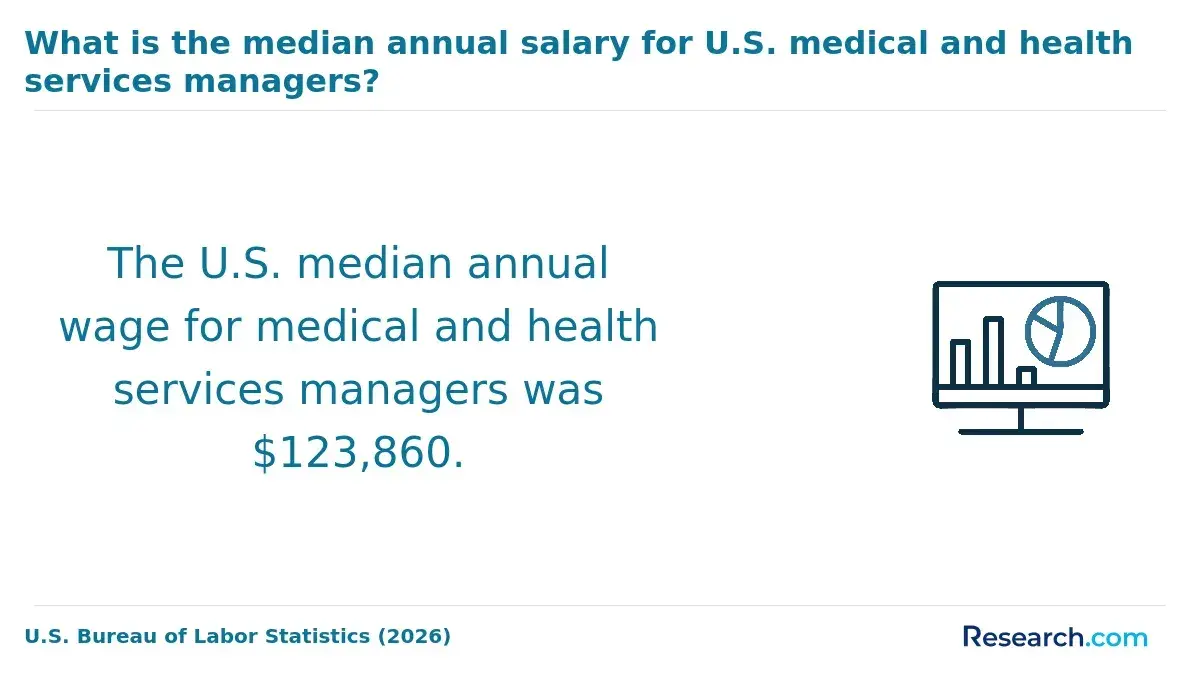
There is no reliable single salary for graduates of this specialization. Pay depends on the occupation, location, employer, seniority, prior experience, and right to work in the hiring market. As a US reference point, the Bureau of Labor Statistics reports that management occupations had a $126,520 median annual wage in May 2025. That figure covers managers across many fields and education levels; it is not a post-MBA salary estimate.
For a useful comparison, identify a target job title and location, then compare its posted pay range with your current compensation and the program's total cost. If you plan to remain outside the US, do not use US occupational wages as a forecast of local earnings. An internal promotion with documented business results may also provide a clearer return than an untested international job search.
What is the job outlook for business data science careers?
US demand for management work is broad but not interchangeable with demand for MBA graduates. The Bureau of Labor Statistics projects about 1.1 million openings each year, on average, in management occupations from 2025 to 2035, including openings created when workers leave those occupations. This indicates opportunities across management, not a count of analytics-management vacancies or positions open to applicants without US work authorization.
Business analytics roles span industries, but hiring requirements differ. An employer seeking someone to govern metrics and guide a team may value management experience; one seeking a specialist to build models may prioritize technical depth. Read job descriptions in your intended employment market before choosing a degree, and note which requirements you can already demonstrate.
The distinctive skill is turning analysis into a business decision: defining a useful question, judging the quality and limits of evidence, explaining trade-offs, and gaining support for action. MBA core work can add finance, strategy, operations, and leadership skills so graduates can connect a model's output to costs, customers, and organizational priorities.
Technical depth varies substantially. Some programs teach students to work directly with statistical methods, databases, visualization tools, or programming; others emphasize interpreting work produced by technical teams. For a career in model development, check whether assessed assignments require you to write code and validate models rather than merely discuss analytics cases. For management roles, look for projects that require communicating uncertainty and addressing data privacy, bias, and governance.
There is no universal curriculum or guaranteed concentration under this name. A program may combine an MBA core in accounting, finance, marketing, operations, and strategy with courses in business statistics, predictive analytics, data visualization, and data-driven decision-making. Another may offer only analytics electives within a general MBA. A formally named concentration should have published requirements beyond a single relevant elective.
Compare course descriptions and assessed work, not just titles: a forecasting course built around managerial interpretation serves a different goal from one requiring substantial statistical programming. Capstones or employer projects can help you produce evidence for a career move, but confirm whether students based overseas can participate and use suitable data. If speed matters, compare the course sequence in one-year online MBA programs without assuming a shorter schedule provides the same analytics depth.
Requirements vary by school. Applicants commonly need a recognized bachelor's degree, transcripts, a résumé, and application statements. A school may request an international credential evaluation, English-language test results or an eligible waiver, recommendations, and a GMAT or GRE score; other schools may waive or not require particular items. Professional experience can matter for admission and for making the MBA useful, even where no minimum is published.
Ask admissions whether your institution and degree are eligible, which documents must be translated or evaluated, and whether enrollment is permitted from your country. Also check whether live classes, exams, or group meetings fall at workable local times. These are program-specific questions, not requirements shared by all US online MBAs.
Completion time depends on required credits, course availability, and whether you study full time or part time; schools do not follow a single schedule. Accelerated study may reduce the time to graduation but intensify technical coursework and group assignments. The more useful question for a working applicant abroad is whether you can complete the analytics sequence while maintaining employment across time zones.
When you compare online MBA program length, check prerequisites, course rotations, live attendance, residency requirements, and the maximum time allowed to finish. A faster degree is not necessarily a faster career transition if it leaves little time to build a portfolio or pursue relevant work.
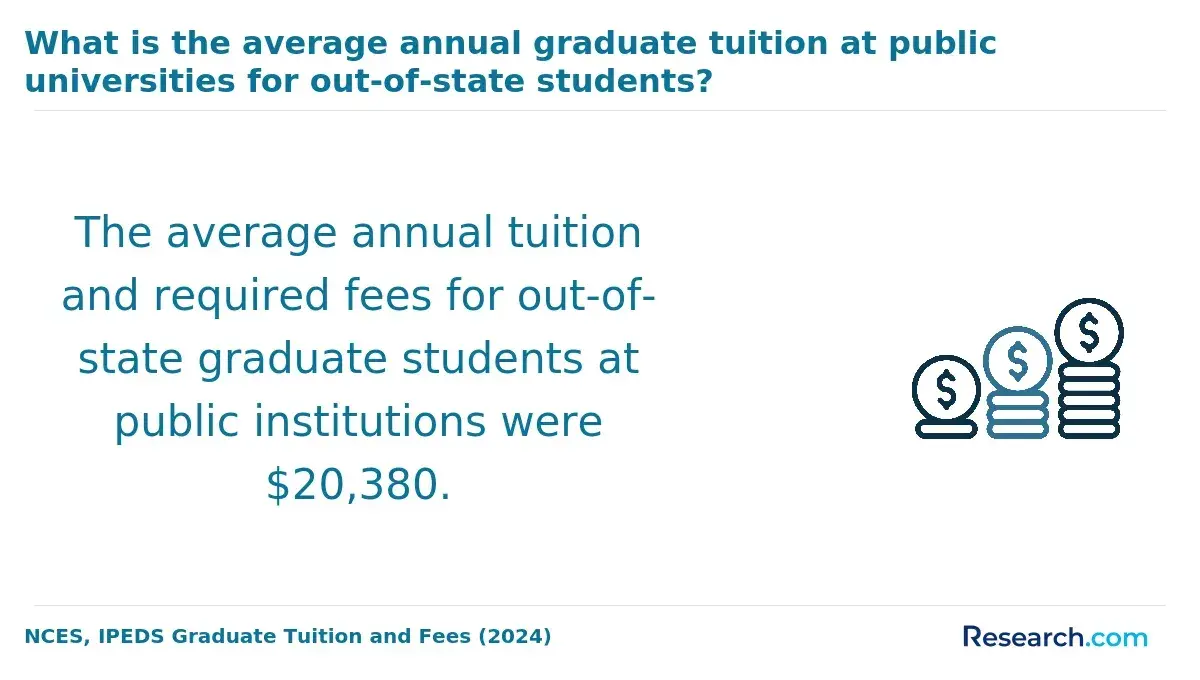
Without a named school, there is no defensible program price. Compare total tuition for the credits you must complete, mandatory fees, books and software, any travel, currency-conversion charges, and financing costs. Ask whether tuition changes by residency or overseas location and whether employer reimbursement or scholarships apply to online international students.
Use online MBA tuition and total cost as a starting point for identifying expense categories, then obtain a current written estimate from each school. To judge affordability, compare that estimate and the time required with a realistic career step - not a broad US management salary. A targeted analytics course or specialized master's degree may be a better investment if you do not need the MBA's management core.
Institutional accreditation and specialized business-school accreditation answer different questions. Confirm that the US institution has recognized institutional accreditation, then check whether its business school holds any claimed specialized accreditation. You can use affordable AACSB-accredited online MBA programs as a comparison starting point, but verify the current status and exact online offering directly before applying.
STEM designation is program-specific and should be confirmed for the exact degree and delivery format. It does not mean an applicant studying online from abroad receives a US visa, work authorization, or a STEM-related immigration benefit. Eligibility for any US student status or subsequent employment benefit depends on separate rules and individual circumstances. If US employment is your goal, ask the school's international-student office what, if anything, its online format supports; seek qualified immigration advice for a personal determination.
How can international applicants choose a reputable online MBA program?
Start with the job you want and the country where you intend to pursue it. A credible program should make it possible to verify its institutional status, exact curriculum, full cost, online participation rules, and career services available to students abroad. Rankings and a familiar university name cannot establish whether a program will help you enter your particular labor market.
Use these checks to compare your shortlist against your career goal before committing to a deposit:
- Collect target job postings and separate management requirements from technical requirements; note which gaps an MBA could realistically close.
- Confirm that the online MBA offers the advertised concentration or required analytics courses, and inspect assignments or project descriptions for evidence of practical depth.
- Ask whether overseas students can enroll, attend required sessions, complete projects, and access relevant alumni, recruiting events, and career advising.
- Compare written total-cost estimates and ask for career outcomes that identify the population measured; do not treat campus MBA outcomes as online international-student outcomes.
If your main gap is coding or statistics, a specialized technical program may be more direct. If you already work with data and need to lead decisions across teams, an MBA with substantial applied analytics coursework may fit better.
Other Things You Should Know About MBA
Only with your employer's permission and the program's approval. Check confidentiality, privacy, and cross-border data-transfer rules first; a public or anonymized dataset may be safer.
Remote interviews may be possible, but interview access does not establish eligibility for a US-based job. Clarify the role's location and work-authorization requirements early.
It can provide evidence of business impact if you can describe the problem, your analysis, and the decision made. Check local rules governing independent work and client data.
Possibly, if its education-benefit policy covers the program. Confirm approval, payment timing, any service commitment, and applicable local tax treatment with your employer.
- Comparing the Compensation of Federal and Private-Sector Employees in 2022 | Congressional Budget Office https://www.cbo.gov/publication/60235
- 9 FAM 402.5 (U) STUDENTS AND EXCHANGE VISITORS | state.gov https://fam.state.gov/fam/09FAM/09FAM040205.html
- Students and Employment | uscis.gov https://www.uscis.gov/working-in-the-united-states/students-and-exchange-visitors/students-and-employment
- Section 10 Compensation Discrimination | U.S. Equal Employment Opportunity Commission https://www.eeoc.gov/laws/guidance/section-10-compensation-discrimination
- Recognition of Foreign Qualifications | ed.gov http://www.ed.gov/about/initiatives/international-affairs/recognition-of-foreign-qualifications
- The Importance of Business Analytics in an MBA Program | SMU https://www.smu.edu/cox/business-degrees/mba-programs/online-mba/student-life/blog/importance-of-business-analytics-mba
- Becoming a business analyst in 2026 and beyond | Cornell SC Johnson College of Business https://business.cornell.edu/news/2026/03/20/how-to-become-a-business-analyst/
- Master's in Business Analytics vs. MBA: Key Differences | Freeman News https://freemannews.tulane.edu/2026/08/06/masters-in-business-analytics-vs-mba-key-differences
- What Can I Do With a Degree in Data Science? Career Paths & Skills | Harvard SEAS https://seas.harvard.edu/news/what-can-i-do-degree-data-science-career-paths-skills
- What Jobs Can You Get with an MBA in Business Analytics? | Tulane University Freeman School of Business https://online-business.tulane.edu/online-mba/articles/jobs-with-mba-in-business-analytics/