Is an online MBA in Healthcare Management worth it for small business owners?

Co-Founder and Chief Data Scientist
If you run a healthcare business, an online MBA may help you manage cash flow, staff, and growth - but tuition and study time compete with needs inside the business. The choice is especially consequential when you must keep operations running while you learn.
This guide explains what a healthcare management MBA can teach, how to compare its cost with shorter options, and which program details to verify. It will help you decide whether the degree addresses a real business constraint or whether a more targeted investment would serve you better.
Key Things You Should Know
- An online healthcare management MBA is most valuable when you need broad management skills and can apply coursework to measurable business problems; it is less compelling if you need one specific skill.
- Count tuition, fees, financing, and time away from the business. Compare those costs with a realistic benefit, such as improved margins or capacity - not an assumed post-MBA salary increase.
- The $126,520 median annual wage for US management occupations in May 2025 is a broad labor-market benchmark, not a forecast of what healthcare MBA graduates or business owners will earn.
Is an online MBA in healthcare management worth it for small business owners?
It can be worth it when the degree helps you solve several consequential management problems and its total cost does not crowd out more valuable investments in your business. A healthcare management MBA combines general business education with healthcare-focused study. It may suit an owner expanding a practice, home-health agency, healthcare technology company, or other service business who needs stronger financial, operational, and leadership judgment.
The case is weaker if your main challenge is narrow - for example, improving bookkeeping or learning a particular marketing channel. The options below address different scopes of need; none is inherently the best choice for every owner.
| Option | Best fit | Main trade-off |
| Healthcare management MBA | Several connected challenges involving finance, people, operations, and growth | Substantial cost and sustained time commitment |
| Targeted course or executive education | One defined skill gap with an immediate application | Less breadth and typically no MBA credential |
| Mentor, consultant, or experienced hire | An urgent operating problem or need for hands-on execution | May solve the problem without building the owner's own management skills |
Test the financial case against your own business: estimate the full education cost plus the value of owner hours diverted from operations, then identify a plausible improvement you could measure, such as lower turnover or better service-line margins. Do not count projected revenue as profit, and do not assume the MBA caused every improvement that follows enrollment. Nonfinancial benefits - confidence in decisions, succession planning, or a stronger professional network - may matter, but they should be named rather than treated as guaranteed returns.
When comparing programs, use a business education for healthcare careers comparison as a starting point, then confirm each school's current curriculum and delivery requirements directly.
What does an online MBA in healthcare management teach small business owners?
The MBA core typically develops managerial accounting, finance, marketing, operations, strategy, and people-management skills. Healthcare-focused study applies some of those tools to organizations that must balance service quality, regulation, payment arrangements, and financial sustainability. Course names and depth vary by school.
For an owner, the useful test is whether assignments can inform actual decisions: pricing a service, assessing cash-flow pressure during growth, improving a patient intake process, or deciding when a new hire is affordable. A project tied to your business may deliver more immediate value than a concentration label alone; ask whether instructors permit work on a student's own organization and how confidential information is handled.
This is management education, not clinical training. An MBA will not qualify an owner to provide licensed care or replace specialist advice on legal compliance, billing, or reimbursement.
How much does an online MBA in healthcare management cost and take to complete?
There is no reliable single price or completion time for this category. Schools may charge by credit, course, or term, and the required credits, fees, and pace differ. Before comparing offers, request a written estimate based on your planned enrollment schedule, including tuition, mandatory fees, materials, technology, and any required travel.
Part-time study may let you keep running the business, but it extends the period during which classes compete with customers, staff, and family commitments. Accelerated study can shorten that period while increasing weekly pressure. Ask about live sessions, group meetings, breaks between terms, and policies for pausing when the business has a demanding season. Owners seeking a flexible start can investigate MBA application options for experienced professionals, while verifying whether a program's actual enrollment dates fit their schedule.
For affordability, compare the total commitment with available business cash, personal savings, and any financing costs. Federal student aid eligibility depends on the student and program; business ownership alone does not establish eligibility. Avoid assuming a tuition-only quote represents the full cost - or that time spent studying has no cost because classes are online.
Online study can reduce travel and make it easier to stay near the business. Campus study may offer more predictable in-person contact, but commuting and class attendance can pull an owner away during operating hours. Neither format is automatically more flexible: an online program may require evening meetings, group projects, or campus visits, while a campus program may offer part-time scheduling.
Compare the formats by examining a sample term calendar and asking how students interact with faculty, healthcare employers, and one another. For an owner who wants peer advice rather than a new job, cohort composition and opportunities to discuss real operating problems may matter more than conventional recruiting access. If you are comparing schools in North Carolina, an MBA tuition comparison mba nc can help identify candidates, but confirm whether each quoted price applies to the format and enrollment status you would choose.
Expect a broad MBA core and, where the school offers a formal healthcare management concentration, a defined set of healthcare courses or electives. Common subjects to look for include healthcare finance, organizational leadership, operations, policy, and strategic management. A capstone or applied project may connect these subjects, but it is not universal.
Read the degree requirements rather than relying on the program name. Check how many courses are healthcare-specific, which are required, and whether they address the kind of organization you operate. One healthcare elective does not necessarily constitute a formal concentration, and a course on healthcare policy may not teach the operational details of your particular business model.
Requirements vary by university. Applicants commonly need a bachelor's degree and may be asked for transcripts, a résumé, a statement of purpose, recommendations, or an interview. Schools set their own policies on professional experience, quantitative preparation, and GMAT or GRE scores; neither a business undergraduate degree nor clinical licensure should be assumed to be a universal requirement.
As an owner, explain the scope of your work - budgets, hiring, growth decisions, and results - rather than relying on the title "founder." If accounting or statistics is unfamiliar, ask whether the school offers preparation or foundation coursework. Online MBA programs with accessible admissions education pathways may help you find policies to investigate, but verify each program's current requirements before applying.
First, confirm that the university holds recognized institutional accreditation using the accreditor and status listed by the school, then check that information against the US Department of Education's or the Council for Higher Education Accreditation's institutional records. Next, determine whether the business school or program has separate business accreditation, such as AACSB accreditation, if that matters to you. Institutional and business-school accreditation are different claims; neither should be inferred from the other.
Confirm that the accredited institution awards the online degree and ask whether online students receive the same credential described in the school's catalog. An online business school cost comparison can narrow a search, but check both current accreditation status and the full program cost before deciding.
For many small business owners, the most relevant outcome is running an existing organization better rather than changing jobs. The degree may also support a move into practice management, healthcare operations, service-line management, or business development, especially when the owner can demonstrate relevant budgets, staffing decisions, and measurable results.
A transition into a larger health system is a different proposition from growing your own company. Employers may expect experience with their scale, payment systems, or regulatory environment. Ask prospective programs whether career services serve online students and whether alumni connections include the types of organizations you might target; an MBA alone does not establish eligibility for a senior role.
There is no single salary for healthcare management MBA graduates or for owners, whose income depends heavily on business performance. As broad context, the US Bureau of Labor Statistics reports a median annual wage of $126,520 for management occupations in May 2025. That figure covers many occupations and workers without MBAs; it should not be used as a personal earnings forecast.
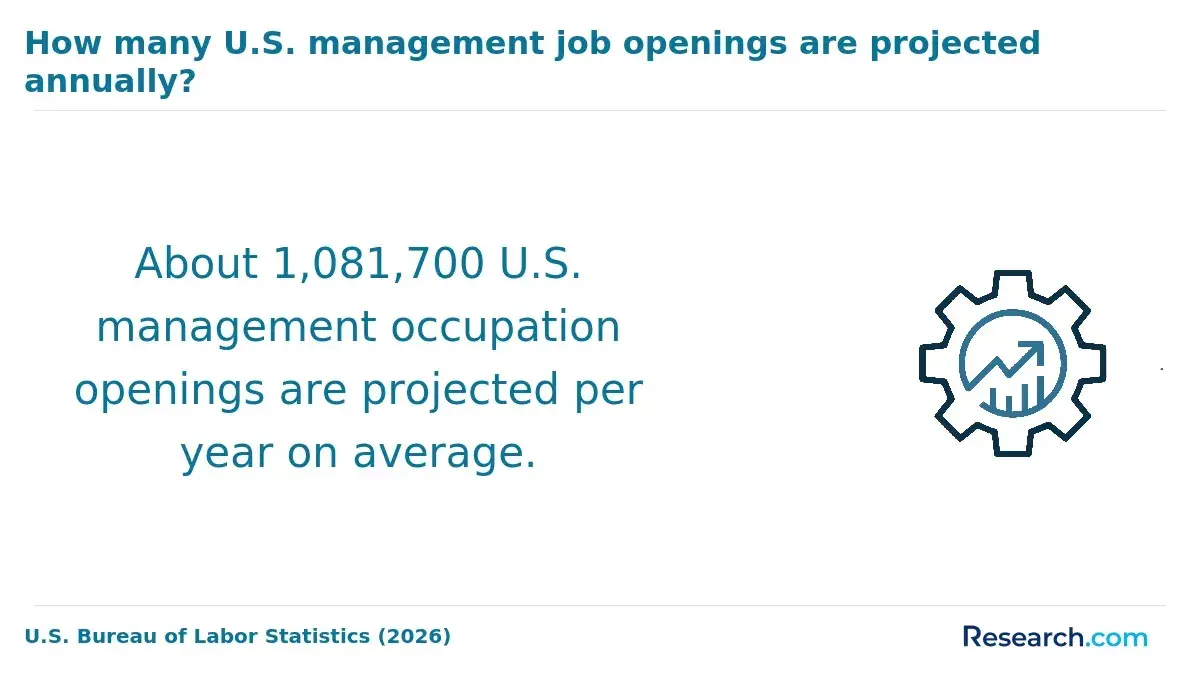
BLS projects about 1.1 million openings per year across management occupations from 2025 to 2035, reflecting both growth and replacement needs. This broad outlook does not tell an owner how many suitable healthcare roles will be available locally - or whether an MBA will raise the business's profits. For a personal decision, compare your current compensation and business results with specific opportunities you could realistically pursue.
Do healthcare management MBA graduates need licenses or certifications?
An MBA itself does not grant a clinical license, and many business-management roles do not require an MBA-specific license. Requirements depend on the services provided and the role: clinical work remains subject to the applicable professional licensing rules, while certain healthcare facilities and administrative positions may have separate state or employer requirements.
If you are entering a regulated service line, check with the relevant state licensing authority before treating a course or credential as sufficient preparation. Optional professional certifications may help demonstrate focused expertise, but compare their eligibility rules and practical value with the skills you actually need.
Other Things You Should Know About MBA
Sometimes. Ask whether the instructor permits projects based on a student's business and what safeguards apply to customer, patient, employee, and financial information.
Possibly, but leave, course sequencing, and maximum completion policies differ. Get the rules in writing before enrolling if seasonal demands are predictable.
Transfer decisions belong to the receiving school, which may limit eligible credits or require particular grades and course matches. Ask for a written evaluation before changing programs.
Do not assume so. US tax treatment depends on your circumstances and whether the education meets applicable rules. Consult a qualified tax professional before including a deduction in your cost calculation.
- CMS' Value-Based Programs https://www.cms.gov/medicare/quality/value-based-programs
- Accreditation in the U.S. | ed.gov http://www.ed.gov/laws-and-policy/higher-education-laws-and-policy/college-accreditation/accreditation-in-the-us
- What Is Healthcare Management? Degree, Skills & Career Paths | EWU https://online.ewu.edu/degrees/business/mba/healthcare-administration/salary-job-outlook-career-paths/
- MBA Requirements: What You Need to Apply in 2026 | SCU https://www.scu.edu/business/blog/admissions/mba-requirements/
- How to Pay for Your Healthcare MBA - Online Programs | Case Western Reserve University MBA https://onlineprograms.case.edu/mba/blog/how-to-pay-for-your-healthcare-mba/
- MPH vs. MHA vs. MBA: Choosing the Right Path for Your Career in Healthcare - Purdue Online https://www.purdue.edu/online/mph-vs-mha-vs-mba-choosing-the-right-path-for-your-career-in-healthcare/
- What Is an MBA in Healthcare Administration? Careers and Benefits | post.edu https://post.edu/blog/guide-to-an-mba-in-healthcare-administration/
- What is Healthcare Management? | University of Phoenix https://www.phoenix.edu/articles/healthcare/what-is-healthcare-management.html
- Is an MBA for healthcare professionals worth it? | Cornell SC Johnson College of Business https://business.cornell.edu/news/2025/05/21/mba-in-healthcare-management-worth-it/
- Full-Time MBA and MBAxMS | Costs | Financial Aid at CBS https://business.columbia.edu/financial-aid/costs/full-time