Online MBA in Cybersecurity Management: Curriculum and Workload for International Applicants

Co-Founder and Chief Data Scientist
An online MBA in cybersecurity management can help a security professional move toward business leadership - but its courses may be less technical, and less schedule-flexible, than the name suggests. For international applicants, the decision also depends on whether the school permits enrollment from their country, when live classes meet, and how the degree will be recognized where they plan to work. This guide explains the curriculum, realistic workload considerations, and questions to ask before committing to a US-based program.
Key Things You Should Know
- Expect a broad MBA core plus security-focused study in risk, governance, and leadership - not a substitute for hands-on cybersecurity training.
- Weekly effort depends on course design and pace; request sample syllabi and convert every live-session deadline into your local time zone before enrolling.
- A US online MBA does not itself provide US immigration status or work authorization. The relevant career market matters more than the degree's delivery location.
What is an online MBA in cybersecurity management?
It is a graduate business degree that applies management education to organizational security decisions. Students typically learn to weigh cyber risks against budgets, operations, legal obligations, and business goals. Depending on the school, cybersecurity management may be a formal concentration, a track, or simply a set of electives; those labels do not necessarily represent the same amount of coursework.
The distinction matters if you want to lead a security team rather than perform technical work. An MBA can strengthen budgeting, communication, and executive decision-making. It generally will not teach the technical depth of a specialized cybersecurity master's degree or replace experience in incident response, engineering, or security operations. Applicants with substantial work experience should also consider whether they need another degree at all; online MBA programs for working professionals after 50 provide one perspective on matching the time commitment to a later-career goal.
What does an online MBA in cybersecurity management curriculum include?
Course titles vary, but the central question is how much of the degree develops general management ability and how much addresses cybersecurity specifically. The following comparison helps you read a course catalog without mistaking a security-themed elective for a full specialization.
| Curriculum component | Likely focus | What to check |
| MBA core | Accounting, finance, strategy, operations, organizational behavior, and analytics | Whether foundational courses add time for students without a business background |
| Security-focused courses | Enterprise risk, security governance, technology management, policy, and incident-related business decisions | Which courses are required, available online, and offered frequently enough to graduate on schedule |
| Applied work | Cases, group projects, simulations, or a capstone addressing organizational decisions | Whether projects require an employer, access to sensitive data, or meetings across time zones |
Look beyond course names to assignments. A course on incident response might ask students to brief executives and allocate resources, rather than investigate malware. That is valuable preparation for security leadership, but it serves a different goal from technical training. Ask for recent syllabi and a sample degree plan; a required capstone and an optional consulting project should not be treated as equivalent experiences.
How much does an online cybersecurity MBA cost and how long does it take?
There is no reliable single price or completion time for this degree category. Schools may charge by credit, course, or term, while pace depends on required credits, course availability, and how many courses you take alongside work. An accelerated plan may be impractical if security electives run infrequently or group projects demand fixed meeting times.
Request a written estimate covering total required tuition, mandatory fees, textbooks and software, and any travel for residencies. Confirm whether international students pay a different rate, which currency is billed, and how payment plans work across borders. Compare the full estimate - not just the advertised rate - with cost-effective MBA choices MBA USA. Employer assistance may reduce your personal cost, but eligibility and reimbursement timing require confirmation.
For a practical timeline, ask the program to map your intended course load to its actual rotation of required security courses. Then ask what happens financially and academically if you need to pause enrollment.
Schools set their own requirements. Common application materials include an undergraduate degree, academic transcripts, a résumé, recommendations, and a statement of purpose. Some programs require or waive entrance tests; English-language testing may apply depending on the applicant's education and the school's policy. A cybersecurity undergraduate degree or professional certification is not a universal prerequisite.
International applicants should ask whether transcripts need a credential evaluation, which evaluator and document format the school accepts, and whether translations must be certified. Confirm that the university can enroll students physically located in your country; being able to access the website does not establish enrollment eligibility. If standardized testing is a concern, use information on MBA programs for applicants without test scores as a starting point, then verify each school's current test policy directly - the linked program list is not proof that every school waives a test.
Before applying, describe your target role and identify the preparation your background already supplies. A security specialist may need more finance preparation; a business manager moving toward security may need introductory technical and risk-management knowledge. Neither gap automatically prevents admission, but each changes how demanding the coursework may feel.
Delivery mode affects more than where lectures take place. For an applicant outside the US, compare the actual learning and recruiting arrangements rather than assuming online and campus students receive identical opportunities.
| Consideration | Online MBA | Campus-based MBA |
| Scheduling | May support continued employment, but live classes and group meetings can fall outside local working hours | Usually requires presence at scheduled classes and may require relocation |
| Networking and projects | Remote access varies by program; employer-based projects may be especially useful | In-person activities may be easier to attend, though access still varies by school |
| US immigration | Enrollment from abroad does not itself confer US student status or work authorization | Eligible in-person study may involve a student-visa process, subject to the school's and government's rules |
If you are comparing institutions in a particular US region, review both format and full cost. For example, low-cost online MBA programs mba nc can help identify North Carolina options to investigate, but affordability alone does not establish a cybersecurity concentration or suitability for overseas enrollment.
Start by confirming that the US institution is accredited by an agency recognized by the US Department of Education. Then check whether its business school holds separate business accreditation, such as AACSB, ACBSP, or IACBE, if that distinction matters to your employer or future study plans. Institutional accreditation and business-school accreditation answer different questions; neither automatically confirms that a cybersecurity concentration is offered online.
Verify the degree and concentration directly in the school's current catalog, including any transcript designation. Ask for sample syllabi, instructor qualifications, a course rotation, and the services available to online students abroad. If you intend to use the degree outside the US, check recognition requirements with the relevant employer, professional body, or education authority in that destination. US accreditation alone cannot guarantee recognition under another country's rules.
No single weekly-hour figure applies across programs. Time depends on course intensity, your experience with finance and technical concepts, assessment deadlines, and whether you take courses concurrently. Expect a mix of reading, case analysis, quantitative assignments, discussion, and group work; a capstone may create heavier weeks than an ordinary course.
The most useful workload estimate comes from the courses you would actually take. Ask the program for recent syllabi and a typical study-time expectation per course, then examine the busiest assessment weeks - not just the average. Convert live classes and group meetings into your local time zone, and check whether exams use fixed windows. MBA programs with adaptable schedules may offer useful comparisons, but confirm what "self-paced" means for each required cybersecurity course.
If you work full time, test the proposed schedule against a demanding period at work. A manageable plan leaves room for urgent security incidents and meetings with classmates abroad. Taking fewer courses may improve feasibility, although it can extend completion time and alter costs or employer-funding eligibility.
The most direct path is advancement from an existing security, technology, risk, or compliance role into work involving budgets, teams, and executive stakeholders. Potential directions include security program management, cyber-risk management, technology governance, and security consulting. Senior security leadership usually calls for substantial relevant experience in addition to a degree.
For a manager without a technical security background, the MBA may support a move into governance or coordination, but it will not by itself establish credibility for engineering-heavy positions. For an experienced security professional, its distinctive value may be learning to defend investments and explain risk to executives. Compare job descriptions in the country where you intend to work: required technical experience, local regulations, language skills, and employer networks can matter more than the concentration's name.
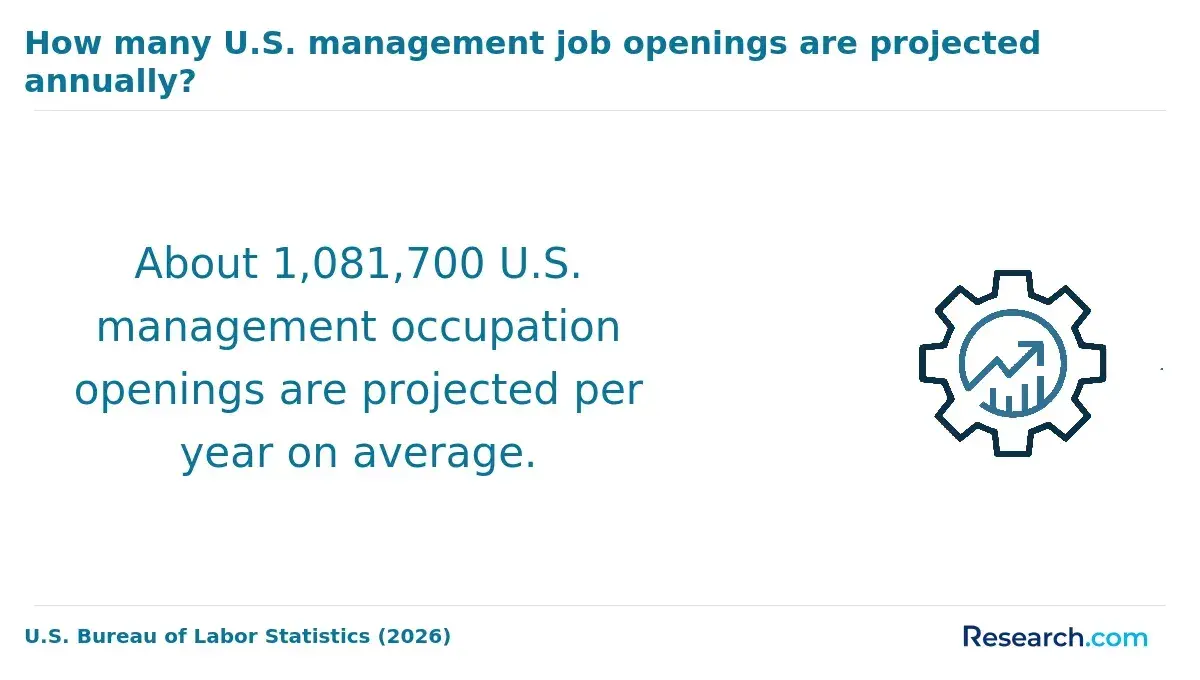
There is no dependable salary figure for graduates of this particular specialization. As broad US context, the Bureau of Labor Statistics reports a median annual wage of $126,520 for management occupations in May 2025. That figure covers management workers across many industries and levels; it is not an expected starting salary, a cybersecurity-specific median, or evidence that an MBA caused higher pay.
BLS projects management occupations overall to grow faster than the average for all occupations from 2025 to 2035. This is a broad occupational outlook, not a forecast for cybersecurity MBA graduates. Assess your prospects using vacancies for your target role and location, your existing experience, and whether employers there recruit from the program. US wage and outlook figures may have limited relevance if you plan to remain employed elsewhere.
Which cybersecurity certifications complement an online MBA?
A certification can demonstrate specific knowledge that an MBA's management curriculum does not assess. CISSP is commonly relevant to experienced security practitioners, while CISM focuses on information security management. CRISC can suit risk-focused work, and Security+ may be a more appropriate foundation for someone developing initial technical literacy. These credentials have different exams, experience requirements, and maintenance obligations; check the issuing organization's current rules before choosing one.
Match the credential to the gap you need to close. If employers already regard you as technically credible but you need budgeting and leadership skills, the MBA may add more than another introductory certificate. If you lack security experience and seek a technical security job, relevant practice and a targeted credential may be a more direct first step than a full MBA.
Other Things You Should Know About MBA
That depends on the university's diploma and transcript policies. Ask for a sample or written explanation, including whether the cybersecurity concentration appears on either document.
Not without permission. Ask whether the program accepts anonymized, public, or simulated data, and follow your employer's confidentiality and security policies.
No. Some roles have citizenship or clearance requirements independent of education. Check eligibility in specific job postings before treating those roles as a likely outcome.
Ask the school in advance about payment deadlines, approved payment methods, assignment extensions, and leave policies. Do not assume online delivery means deadlines can be changed.
- Cost of Attendance (Budget) | 2025-2026 Federal Student Aid Handbook https://fsapartners.ed.gov/knowledge-center/fsa-handbook/2025-2026/vol3/ch2-cost-attendance-budget
- MBA in Cybersecurity: Online Degree & Career Guide | UIS https://onlinecbm.uis.edu/degrees/business/mba/cybersecurity-management-program/online-degree-guide/
- Definitions of Instructional Delivery Types/Course Delivery Options | Morgan Community College https://catalog.morgancc.edu/definitions-of-instructional-delivery-types-course-delivery-options
- International Applicants | Emory University | Atlanta GA https://gs.emory.edu/admissions/international_appls.html
- CYBRMG: MBA Program | Florida International University Catalog https://catalog.fiu.edu/programs/CYBRMG:MBA/requirements-uz47h
- International Undergraduate Admissions | Texas A&M University-San Antonio Catalog https://catalog.tamusa.edu/undergraduate/student-enrollment/admissions/international/
- MBA vs MS in Cybersecurity: Which Degree Fits Your Career? | EWU https://online.ewu.edu/degrees/business/mba/cybersecurity/vs-ms-career-path/
- International Credentials & Applicants | miami.edu https://www.grad.miami.edu/graduate-education/international-credentials-and-applicants/index.html
- Synchronous vs Asynchronous | University of Bridgeport https://www.bridgeport.edu/news/synchronous-vs-asynchronous/
- How Many Hours of Work Per Online Course Credit | ASU Online https://asuonline.asu.edu/newsroom/online-learning-tips/discover-weekly-number-hours-online-students-study/