
Is an Online MBA in Risk Management Worth It for Career Changers?

Co-Founder and Chief Data Scientist
An online MBA in risk management can help you move toward work involving financial, operational, insurance, or enterprise risk, but it cannot replace the experience employers expect in those fields.
If you are changing careers, the value of the degree depends on what you already know, which risk role you want, and whether the program helps you build credible evidence of your skills. This guide compares career paths, program features, costs, and alternatives so you can decide whether an MBA is a practical next step.
Key Things You Should Know
- Best fit: The MBA is most compelling for a career changer who can connect existing industry, analytical, or management experience to a specific risk function.
- Biggest limitation: Risk coursework alone rarely qualifies someone for a senior risk role; projects, relevant work, and employer connections matter when making the switch.
- Salary context: The U.S. median wage for management occupations was $126,520 in May 2025, according to the Bureau of Labor Statistics. That broad figure is not a starting salary or an expected outcome for risk management MBA graduates.
What Is an Online MBA in Risk Management?
An online MBA in risk management combines a broad business management degree with coursework on identifying, measuring, financing, and responding to organizational threats. Depending on the school, those threats may include credit losses, insurance claims, supply disruptions, regulatory failures, or strategic decisions.
The risk component may be a formal concentration, a track, or simply a few electives. Those are not equivalent: a course titled "Enterprise Risk Management" does not, by itself, establish that the school offers a designated risk management MBA. Check the required courses and how the specialization appears on the transcript before applying.
The MBA's distinguishing feature is its management core. It generally prepares students to make business decisions across functions, whereas a specialized master's degree may devote more of its curriculum to risk analysis, finance, insurance, or another technical field.
Is an Online MBA in Risk Management Worth It for Career Changers?
It can be worth it when the MBA closes a management knowledge gap and gives you a credible route into a defined risk role. An operations manager who has handled vendor disruptions may be able to build on that experience for operational risk work.
A finance professional may have a shorter path into credit or financial risk than someone entering finance for the first time. A switch across both industry and function is harder: the degree may help, but you may still need to enter through an analyst or adjacent role.
The comparison below separates the transitions an MBA may support from those for which a narrower qualification or direct experience could be more efficient:
| Starting point and goal | Likely value of the MBA | Key limitation or alternative |
| Operations professional moving into operational risk | Connects existing process knowledge with finance, governance, and leadership | Risk-focused projects or an internal transfer may provide a more direct first step |
| Finance professional pursuing risk leadership | Adds cross-functional decision-making and management preparation | Technical risk roles may call for deeper quantitative training |
| Professional changing both industry and function | Provides business foundations and potential access to a new network | Employers may still expect industry experience; a specialized degree or entry-level role may be more direct |
Calculate value against your realistic next job, not a senior title you might pursue years later. Compare total tuition and fees, financing costs, and time spent studying with any employer assistance and the compensation change you could reasonably pursue.
Because that change is uncertain, do not treat a published occupational salary as an MBA payoff. Nonfinancial benefits, such as keeping your current job while changing direction, also matter. If cost is the main obstacle, examine lower-cost graduate business programs alongside targeted courses and employer training.
The MBA's value is least certain when you have no target risk function, the concentration is shallow, or the school cannot explain how online students access projects and career support. In those cases, testing the field through an internal assignment, relevant course, or professional credential may be the better investment first.
What Jobs Can You Get With an MBA in Risk Management?
Risk management spans several functions, so the most plausible job depends on your prior work. Someone with procurement or operations experience might pursue vendor risk or business continuity roles. A banking or finance professional might move toward credit risk.
An insurance professional could pursue underwriting management or enterprise risk work. Compliance and operational risk roles may suit people who already understand a regulated industry's processes.
Entry points can include risk analyst, compliance analyst, insurance or claims specialist, and risk-focused project roles. Risk manager, director, and chief risk officer positions typically require substantial relevant experience beyond an MBA. Employers may also expect knowledge of their industry's regulations, data, and reporting practices.
Industry-specific experience can be an advantage rather than something to discard. For example, a clinician considering healthcare administration may find it useful to compare business leadership jobs after an MBA before deciding whether a general risk path fits better than a healthcare-focused one.
For any target role, review actual job postings: distinguish requirements you already meet from those requiring experience, technical training, or a different credential.
The MBA core commonly covers accounting, managerial finance, operations, strategy, leadership, and business analytics. These subjects matter in risk work because identifying a threat is only part of the job; professionals must also weigh its financial consequences and communicate decisions to leaders.
Risk-focused courses may address enterprise risk management, insurance and risk financing, internal controls, regulatory issues, or quantitative assessment.
Offerings vary. A strong program for a career changer should let you apply those concepts to your intended field through cases, a capstone, or an employer-based project. Ask to see course descriptions and recent project examples rather than relying on the concentration's name.
Managerial risk analysis is not necessarily advanced statistical modeling, actuarial training, or hands-on cybersecurity instruction. If your target job calls for those technical abilities, check whether the curriculum teaches them at the required depth.
An online MBA can let you retain your income and apply lessons at work while studying. That can be particularly useful if you can take on a risk-related assignment with your current employer.
Online delivery does not automatically mean self-paced study, though: live classes, group projects, exams, and residencies may still constrain your schedule.
An on-campus program may be more attractive if your career switch depends on full-time recruiting, an internship, or frequent in-person employer contact.
Neither format guarantees access to those opportunities. Ask each school whether online students can use the same career services, employer events, internships, and alumni resources as campus students, and how students actually participate.
Requirements vary by school. Applicants commonly need a bachelor's degree and may be asked for a résumé, transcripts, recommendations, and a statement of purpose. Schools set their own policies on professional experience, GMAT or GRE scores, interviews, and foundation coursework; a nonbusiness bachelor's degree does not automatically rule you out.
If you are changing careers, use your application to connect prior decisions, such as managing budgets, processes, clients, or regulatory obligations, to your proposed risk role.
Check each program's official requirements rather than assuming that all MBAs expect the same work history. If experience is a concern, online MBA admission requirements offers a starting point for identifying policies to verify with schools.
Completion time depends on required credits, term schedules, course load, and whether risk courses are offered when you need them. Part-time study can preserve your income but extend the period over which you balance school and work. Before enrolling, request a course-by-course completion plan, particularly if the concentration has courses offered infrequently.
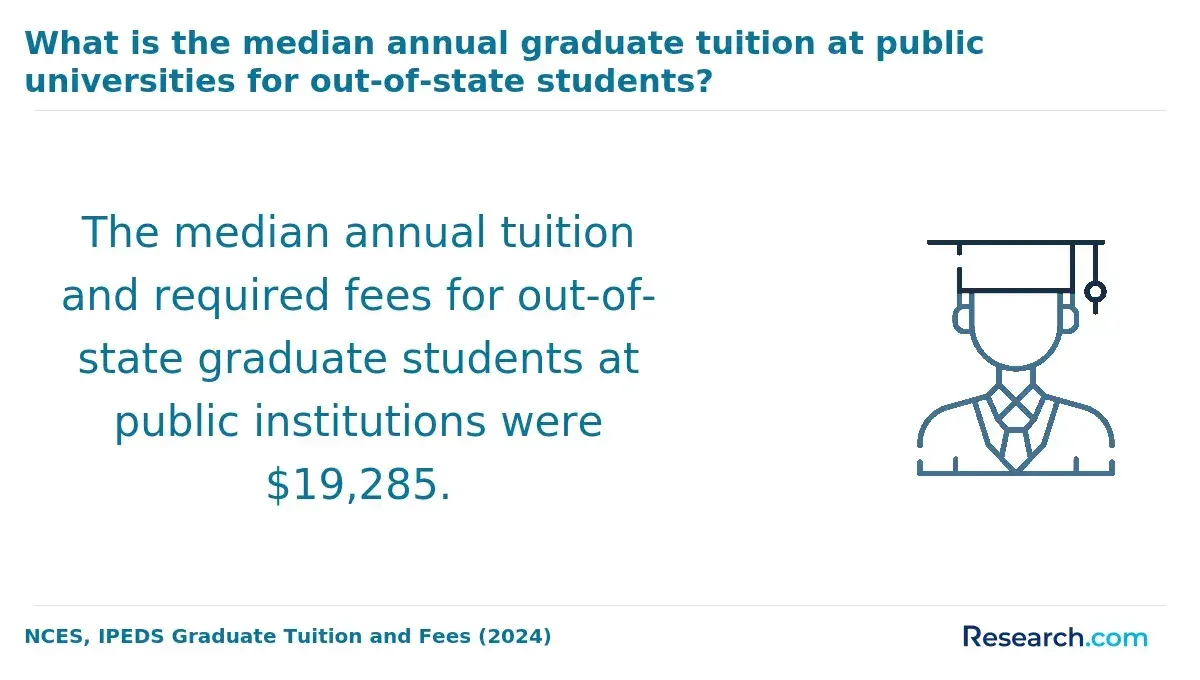
For cost, compare the full amount you would pay - not just an advertised per-credit rate. Include mandatory fees, materials, any required travel, and financing costs; then account for scholarships or employer reimbursement you are actually eligible to receive.
Published prices can change and may differ by residency or enrollment status. Regional searches for MBA program prices and tuition options MBA NC can help narrow a comparison, but confirm your total directly with each institution.
For a personal break-even check, divide your net education cost by a conservative estimate of the annual earnings increase attributable to a realistic job change. If that increase is unknown, calculate several scenarios rather than claiming a precise payback period. Also consider whether taking classes would delay a promotion, reduce work hours, or prevent you from taking a valuable assignment.
Pay varies substantially across risk specialties, industries, locations, and levels of responsibility. The Bureau of Labor Statistics reports a May 2025 median annual wage of $126,520 for all management occupations, compared with $50,980 for all U.S. occupations.
The management figure is useful context for longer-term goals, but it includes many jobs unrelated to risk and does not describe pay for new career changers or MBA graduates.
The same agency projects about 1.1 million openings per year, on average, across management occupations from 2025 to 2035, including openings created when workers leave occupations.
That is not a forecast of risk management vacancies. For a useful salary comparison, match local job postings and occupational wage data to the specific role and experience level you could pursue next.
There is no single license required for every risk management job. Requirements depend on the work: selling insurance or providing certain regulated financial services can involve state or federal licensing, while many corporate risk and compliance positions do not have a universal license. Always check the duties and jurisdiction for the role you want.
Credentials such as the Financial Risk Manager (FRM) or Professional Risk Manager (PRM) may be relevant to particular financial risk roles. Insurance and enterprise risk fields have their own professional designations.
These credentials are not interchangeable with an MBA: they can signal subject-specific knowledge, while the MBA emphasizes broader business management. Review job postings before paying for either path; the credential employers request in your target niche is more informative than a general list of certifications.
How Can You Choose an Accredited Online Risk Management MBA?
First, confirm that the institution holds recognized institutional accreditation. Then check whether its business school has separate programmatic accreditation, such as AACSB, ACBSP, or IACBE. Institutional and business-school accreditation are different checks; neither confirms that a particular risk concentration is offered online.
Next, verify the concentration's official name, required courses, delivery format, total cost, and access to career services. Ask admissions or program staff for examples of risk-related projects and whether online students can join employer events.
If your goal is technology risk, it may also help to compare affordable MBA schools degree programs with information systems coursework rather than assuming every risk concentration covers that field.
Make the final choice against a named target role. A well-accredited MBA with limited relevant coursework or weak access to career-switching opportunities may be a poorer fit than a more focused program, credential, or internal move.
Other Things You Should Know About MBA
Not necessarily. Schools may record a concentration on the diploma, transcript, or neither document. Ask the registrar how the credential is officially recorded.
Possibly, if the instructor approves it and your employer permits the use of its information. Ask about confidentiality rules before proposing a project involving internal data.
Many roles emphasize judgment, controls, communication, and business analysis rather than coding. Technical expectations vary considerably, so inspect the courses and job descriptions for your chosen specialty.
If you hope to transfer internally, a conversation about risk-related assignments may help you gain relevant experience. Consider your workplace relationships and timing before sharing plans for an external move.
- Online MBA Career Outcomes [2025] | Jenkins MBA https://mba.ncsu.edu/your-career/career-outcomes/online-mba-career-outcomes-2025/
- AACSB Accreditation in Graduate Business: Why It Matters | News at Poole College https://poole.ncsu.edu/news/2026/06/19/aacsb-accreditation-in-graduate-business-why-it-matters/
- Risk Management Managers: How to Become One | Franklin University https://www.franklin.edu/career-guide/financial-risk-specialists/how-to-become-risk-management-managers
- Is an Online MBA Worth It in 2025 - A Complete Guide | Edgewood College https://online.edgewood.edu/blog/is-an-online-mba-worth-it/
- What Does a Risk Manager Do? Duties, Skills, and Salary | SCU https://www.scu.edu/business/blog/careers/what-does-a-risk-manager-do/
- Accreditation for MBA Programs - ACBSP, AACSB or IACBE? | Northwest Missouri State University https://online.nwmissouri.edu/programs/business/mba/acbsp-aacsb-iacbe-accreditation/
- How to Get an MBA Without a Business Degree | Carson-Newman University https://www.cn.edu/cps-blog/earning-mba-without-undergrad-business-degree/
- Is a Risk Management M.B.A. Worth It? - Flex MBA | MTSU Online M.B.A. https://mba.mtsu.edu/articles/is-mba-in-risk-management-worth-it/
- What to Consider When Evaluating Online MBA Programs | Northeastern Online https://online.northeastern.edu/resources/what-to-look-for-when-choosing-an-online-mba-program/
- Risk Management and Insurance Career Directions for New MBAs | Wisconsin School of Business https://business.wisc.edu/faculty-research/risk-insurance/blog/risk-management-and-insurance-career-directions-for-new-mbas/


