Online MBA in Accounting: admissions guide for public sector professionals

Co-Founder and Chief Data Scientist
If you manage public funds or want to move into government financial leadership, an online MBA in accounting may look like a practical next step. But admission is only part of the decision: the curriculum must fit public-sector work, the schedule must fit your job, and the degree must serve your actual career goal.
This guide explains how to assess your readiness, prepare a stronger application, and compare an accounting MBA with more specialized alternatives before you commit.
Key Things You Should Know
- Admissions requirements vary by school; a nonaccounting bachelor's degree or government background does not automatically rule you out, but you may need accounting foundations.
- An accounting MBA is strongest for management-oriented goals; it does not automatically satisfy CPA education rules or qualify you for a government promotion.
- The $126,520 median annual wage for management occupations in May 2025 is broad labor-market context, not an expected salary for public-sector MBA graduates.
What is an online MBA in accounting for public sector professionals?
An online MBA in accounting combines a general management curriculum with an accounting concentration, track, or set of electives. The MBA core usually develops skills in finance, operations, leadership, strategy, and organizational decision-making. Accounting study adds a closer look at financial reporting, controls, auditing, or taxation, depending on the school. An MBA with one accounting elective is not necessarily a formally designated accounting concentration.
For a government employee, the value lies in applying financial information to budgets, stewardship of public resources, procurement oversight, and decisions involving multiple stakeholders. Private-sector accounting methods are useful, but public agencies also operate under distinct fund-accounting, reporting, legal, and accountability requirements. Examine the actual course descriptions rather than assuming an accounting label guarantees substantial governmental accounting coverage.
Is an online MBA in accounting worth it for government careers?
It can be worthwhile when your next role calls for broader management responsibility alongside financial expertise - for example, directing a budget team, managing agency operations, or overseeing financial controls. Its value is less certain if promotion depends mainly on civil-service classification, years of service, a specific accounting credential, or experience the degree cannot replace.
Start with the position you want, not the credential you prefer. Review actual vacancy announcements and internal promotion criteria, then compare the required education and experience with your current record. Ask your employer whether the program qualifies for tuition assistance and whether an MBA changes eligibility or pay under its personnel rules. For a healthcare-agency employee whose goal is operational leadership rather than accounting leadership, an online MBA for healthcare administrators may be a closer curricular fit.
If you primarily need technical accounting depth, a master's in accounting or targeted governmental accounting coursework may offer a more direct return. If you already meet the job's education requirements, a stretch assignment managing budgets or staff could be more valuable than another degree.
What accreditation should an online MBA in accounting have?
First, confirm that the university holds recognized institutional accreditation; this matters for degree recognition and may affect eligibility for federal student aid. Then check whether the business school has specialized accreditation, such as AACSB, ACBSP, or IACBE. Business-school accreditation is a separate question from the university's institutional status, and not every credible MBA has AACSB accreditation.
If AACSB accreditation matters to your employer or to you, compare verified AACSB MBA program options and confirm the current status with the accreditor and university. For government hiring, also check the wording of the specific vacancy announcement: an agency's degree requirements, approved fields of study, and transcript review matter more than a broad claim that an MBA is "accredited."
Delivery format changes the practical demands of a degree, not necessarily its academic purpose. This comparison highlights what a working public-sector applicant should verify before choosing either route.
| Consideration | Online MBA | Campus-based MBA |
| Schedule | May offer asynchronous work, but can still require live meetings and fixed deadlines | Typically requires travel to scheduled classes |
| Professional connections | May rely on virtual group work, alumni events, and optional visits | Offers more routine face-to-face interaction |
| Work continuity | Often easier to combine with continued employment | Part-time options may permit employment; full-time study can mean more time away |
| Applied work | May allow projects based on a current agency challenge, subject to confidentiality rules | May offer in-person projects and employer events |
Ask whether online students can use the same career services and attend the same recruiting events as campus students; do not assume access is identical. If you are considering a combined credential rather than a conventional MBA, compare its added requirements separately: listings of online MBA programs for working professionals mba programs do not establish that a dual program offers the accounting courses you need.
Expect a management core that commonly addresses managerial accounting, finance, operations, organizational behavior, and strategy. Accounting-focused courses might cover financial statement analysis, auditing and assurance, taxation, accounting information systems, or advanced reporting. Specific requirements vary; some programs offer only a small elective cluster, while others have a formal concentration.
For public-sector fit, look for coursework or projects involving governmental and nonprofit accounting, internal controls, fraud risk, public budgeting, or procurement. A course in corporate financial reporting can strengthen judgment without teaching the governmental standards used in your agency. If your goal is to prepare for technical accounting duties or licensure, compare syllabi and credit classifications - not just course titles - with a specialized accounting degree.
Schools commonly ask for a bachelor's degree and transcripts, a résumé, and a statement of purpose; some request recommendations, an interview, or GMAT/GRE scores. Policies on minimum grades, professional experience, testing, and deadlines differ by institution. An accounting bachelor's degree, CPA license, or government job is not a universal prerequisite. Applicants from nonbusiness fields should check whether introductory accounting or other foundation courses are required before or during the MBA.
For public-sector applicants, a strong application connects existing responsibilities to a specific management goal. Before submitting, work through this preparation checklist:
- Compare each school's published requirements, deadlines, test policy, and foundation-course rules; obtain written clarification where the policy is unclear.
- Identify examples of budget analysis, audit response, procurement oversight, process improvement, or team leadership, and describe your contribution without disclosing protected information.
- Explain why an MBA's management core and the program's actual accounting coursework serve your target role better than a narrower qualification.
- Confirm who can provide a substantive recommendation and whether your employer requires advance approval for tuition assistance or study time.
If your quantitative or accounting background is thin, an introductory course can demonstrate readiness. Treat that as an application-strengthening option unless the school explicitly makes it a requirement.
Completion time depends on required credits, course sequencing, entry points, and how many courses you take while working. Accelerated calendars can shorten elapsed time but intensify deadlines. Before applying, ask about live sessions, group-project meetings, required campus visits, and the maximum time allowed to finish.
Compare cost using the program's published tuition basis - per credit, course, term, or entire degree - plus mandatory fees, books, technology, and any required travel. Check whether foundation courses add charges and whether your employer reimburses tuition only after you pass a course. Borrowing also adds financing costs. For context, searches for online MBA programs with shorter timelines fast online MBA programs in healthcare management illustrate why an advertised short timeline in another specialization should not be treated as the completion time for an accounting MBA.
A manageable pace and employer funding can matter more than the shortest advertised schedule. Get a written estimate for your intended course load before judging affordability.
Possibly, but the MBA title alone cannot establish CPA eligibility. State boards of accountancy set rules for total education, accounting and business coursework, degree recognition, examinations, and experience. Requirements and alternative pathways can change, and an MBA course may count differently from an undergraduate or graduate accounting course depending on its content and the state's rules.
Before enrolling for CPA purposes, choose the state where you intend to seek licensure and compare your existing transcripts and the MBA's proposed courses with that board's current requirements. Ask the school for course descriptions and written guidance, but rely on the licensing board for the eligibility determination. A master's in accounting or individual qualifying courses may close a specific credit gap more efficiently than an MBA.
For someone already working in public finance, plausible paths include budget manager, government accounting manager, internal audit manager, financial operations director, or a broader agency management role. Duties can involve supervising staff, explaining financial results to leadership, strengthening controls, and allocating resources. Hiring still depends on the position's experience, education, and sometimes credential requirements; an MBA does not confer a CPA license or bypass a civil-service selection process.
The U.S. Bureau of Labor Statistics reports a $126,520 median annual wage for management occupations in May 2025. That figure covers management jobs across industries and career stages, so it is not an accounting-MBA salary or a prediction of government pay. Use the salary range in relevant agency postings and your employer's pay structure for a realistic comparison.
Career direction matters more than adding credentials indiscriminately. For example, a public-hospital nurse leader considering both clinical and business management education could examine a guide to online MSN and MBA dual-degree programs; that path serves a different goal from qualifying for a government accounting post.
How strong is demand for accounting MBA graduates in the public sector?
There is no reliable single demand measure for "public-sector accounting MBA graduates": employers advertise jobs and required skills, not one uniform degree outcome. Agencies need people who can maintain controls, interpret financial information, and manage resources, but hiring levels depend on budgets, vacancies, location, and civil-service rules.
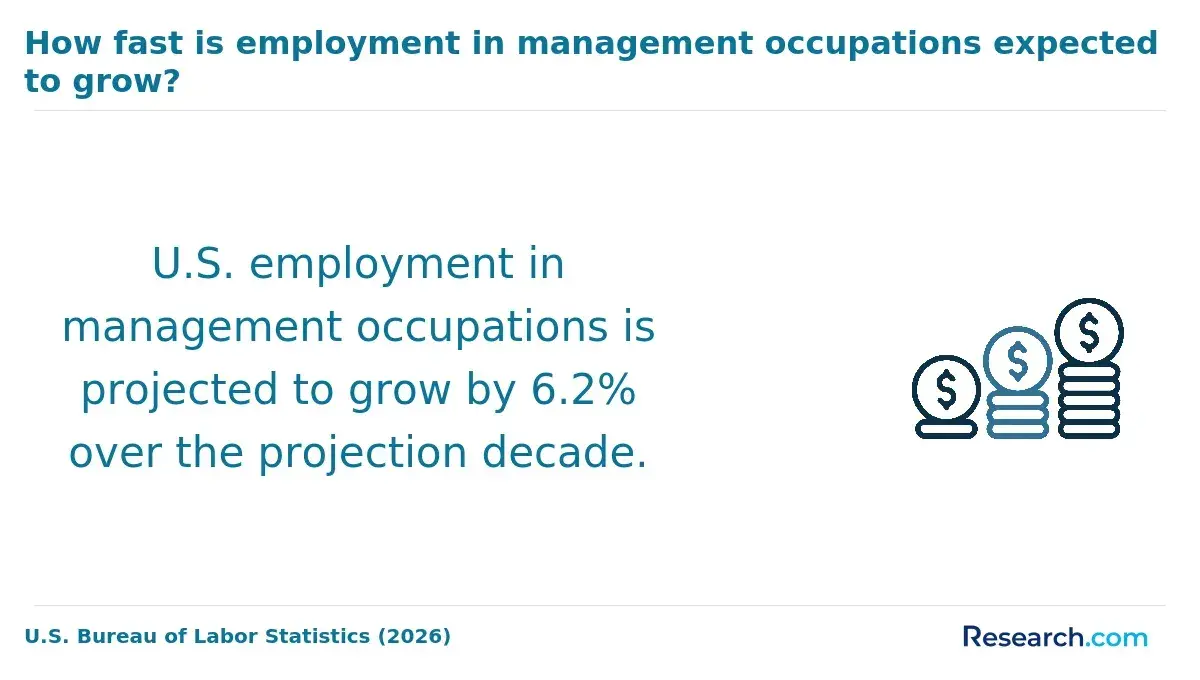
The Bureau of Labor Statistics projects about 1.1 million openings per year, on average, across all management occupations from 2025 to 2035, reflecting both growth and replacement needs. This is broad national context, not a forecast for government accounting positions. A better local signal is whether the agencies you would realistically join repeatedly advertise roles that value graduate management education alongside your experience.
Other Things You Should Know About MBA
Only with appropriate authorization. Describe your work in general terms and ask your employer and instructor about approved, anonymized, or public-data alternatives.
Not automatically. Ask your supervisor or human resources office about training leave, flexible schedules, and any service commitment tied to education assistance.
No. A degree does not grant clearance; the hiring agency determines whether a position requires one and manages the applicable process.
Potentially, if the school and program are eligible and you meet applicable student-aid requirements. Confirm eligibility with the financial aid office before relying on loans to cover costs.
- Cost of Attendance (Budget) | 2025-2026 Federal Student Aid Handbook https://fsapartners.ed.gov/knowledge-center/fsa-handbook/2025-2026/vol3/ch2-cost-attendance-budget
- Types of Financial Aid: Grants, Work-Study, and Loans | studentaid.gov https://studentaid.gov/understand-aid/types
- Options for Financing Higher Education | Military OneSource https://www.militaryonesource.mil/education-employment/for-service-members/money-for-higher-education/
- Merit Hiring Plan Frequently Asked Questions | U.S. Office of Personnel Management https://www.opm.gov/policy-data-oversight/hiring-information/merit-hiring-plan-resources/merit-hiring-plan-frequently-asked-questions/
- Evaluation of Foreign Degrees - United States Department of State https://www.state.gov/global-community-liaison-office/family-member-employment/family-member-employment-in-the-d-c-area/evaluation-of-foreign-degrees
- Admissions | Accounting & Information Systems | The Center for Excellence in Teaching, Learning & Leadership https://www.qc.cuny.edu/academics/ais/ms-accounting/admissions/
- Online Master of Public Administration (MPA) - Newark https://spaa.newark.rutgers.edu/online-mpa
- Synchronous vs. Asynchronous Learning | Saint Leo University https://www.saintleo.edu/about/stories/blog/synchronous-vs-asynchronous-learning-for-course-delivery
- 100% Online MBA in Accounting Degree - WPU | WPUNJ https://online.wpunj.edu/degrees/business/mba/accounting/
- M.B.A. in Accounting | St. John's University https://www.stjohns.edu/academics/programs/accounting-master-business-administration