Online MBA in International Business: Admissions Guide for First-Time Managers

Co-Founder and Chief Data Scientist
Your first management role may expose gaps that were easy to overlook as an individual contributor: setting budgets, resolving team conflicts, and making decisions across markets. An online MBA in international business could help, but admission policies and the value of the specialization vary by school.
This guide explains what first-time managers should prepare before applying, how to judge whether a program fits their responsibilities, and when a shorter or less expensive option may be the better move.
Key Things You Should Know
- Most applications assess your academic record, work experience, goals, and recommendations. A business bachelor's degree or extensive management experience is not universally required.
- For a newly promoted manager, evidence of leading people or projects matters more than simply claiming an interest in global business. Check each school's testing, prerequisite, and concentration policies.
- Budget for the full program, not just tuition, and treat salary claims cautiously. The U.S. management-occupation median was $126,520 in May 2025, not an expected salary for MBA graduates.
What is an online MBA in international business?
An online MBA in international business is a broad graduate management degree with coursework focused on decisions that cross national markets. Students typically study the MBA core, such as accounting, finance, strategy, operations, and organizational behavior, alongside subjects such as global market entry or cross-border supply chains.
The label matters. At one school, international business may be a formally designated concentration; at another, it may be a few electives within a general MBA.
Before applying, check the degree requirements and ask whether the specialization appears on the transcript. Online delivery also does not establish whether classes are self-paced, include live meetings, or require travel.
Is an online MBA in international business worth it for first-time managers?
It may be worthwhile if your new role requires both stronger general management skills and decisions involving overseas customers, suppliers, or teams. The combination is less compelling if you need only one narrow skill or have no realistic way to apply the international coursework. An MBA can improve how you manage; it does not, by itself, grant authority over a larger team or qualify you for a senior global role.
Start with the work you expect to do over the next few years. If you are moving from supervising individual contributors to owning a budget and coordinating across regions, compare programs on leadership practice, managerial finance, and applied international projects.
If your immediate challenge is conflict resolution or basic budgeting, employer training or targeted courses may address it sooner and at lower cost. If you want a substantial move into a specialized function, investigate its experience requirements before assuming an MBA will enable the switch.
For a financial decision, compare the total amount you would pay and the work time you would give up with a plausible advancement path at your employer. Include employer education assistance, but confirm any repayment obligation if you leave. Benefits such as confidence, broader judgment, and professional connections can matter even when a precise salary return cannot be established.
How do you choose an accredited online MBA in international business?
First, confirm that the university has recognized institutional accreditation; this is distinct from optional, specialized business-school accreditation, such as AACSB, ACBSP, or IACBE. Verify an accreditation claim through the accreditor or the U.S. Department of Education's institutional accreditation database rather than relying only on a program advertisement.
Then compare the actual online offering. Examine how many international business courses are required, whether they address the markets or functions relevant to your job, and whether online students can use the career and alumni services you value.
Ask for live-session schedules, group-project expectations, residency requirements, and a sample course sequence. A program marketed as flexible may still be difficult to manage alongside a new leadership role.
Finally, distinguish access from outcomes: a global alumni network or an international elective is not evidence that online students receive overseas placements. Ask what applied projects and employer connections are available to your cohort, and weigh those answers against total cost.
Requirements belong to the individual school, not to the specialization as a whole. Most applicants should expect an academic record and materials that show professional experience and motivation, but they must verify each program's rules before preparing tests or requesting recommendations.
The table separates common application components from policies that require a school-specific check. Use it to avoid treating a typical MBA practice as a universal requirement.
| Application area | What to check with the school | How a first-time manager can prepare |
| Degree and transcripts | Accepted undergraduate credentials, any GPA threshold, and transcript procedures | Explain relevant quantitative or business coursework; a nonbusiness degree need not be a barrier. |
| Work experience | Minimum years, leadership expectations, and whether a new manager qualifies | Document project ownership, decisions, collaboration, and early people-management results. |
| Tests and preparation | GMAT/GRE policy, waivers, and any accounting, statistics, or other foundation work | Refresh weak areas without assuming a course or test is mandatory. |
| Application materials | Resume, essays, recommendations, interview, deadline, and application fee | Connect specific management challenges to the MBA and its verified international coursework. |
A useful application explains why the international focus fits work you have done or can reasonably pursue, not just a desire to "work globally." If your management title is recent, describe an earlier project in which you influenced colleagues, allocated resources, or handled conflicting priorities. Give recommenders examples they can corroborate.
Before submitting, check each school's current application page and ask admissions staff about any unclear eligibility rule. If testing or academic history is your main concern, comparisons of online MBA programs with accessible admissions can help identify policies to investigate, but confirm the current requirements and international business options directly with each school.
Applicants educated outside the United States should also ask whether credential evaluation and proof of English proficiency apply, and whether the school permits enrollment from their location. These policies are separate from U.S. visa or work authorization; enrolling in a U.S. online MBA does not itself confer either.
Expect a general MBA foundation in managerial accounting, finance, marketing, operations, strategy, and leadership. That foundation is especially relevant when a first-time manager must move from doing the work to planning resources, evaluating trade-offs, and guiding others.
International business coursework may cover market-entry strategy, global supply chains, cross-cultural management, international finance, or the business implications of differing regulatory environments.
Schools choose different combinations and levels of depth; a course about global marketing, for example, is not the same as a complete international business concentration. Compare required courses, elective availability, and any capstone or consulting project rather than relying on the program name.
If your goal is specifically customer acquisition across markets, compare international business with marketing specialization choices for MBA students. Marketing may provide more depth in customer research and positioning, while international business may better address coordination across countries and functions. Neither replaces hands-on market experience.
Completion time depends on the program's required credits, course sequence, start dates, and how many courses you take while working. An accelerated schedule can shorten enrollment but may intensify group work and deadlines just as you are learning to manage a team. Part-time study can spread the workload, though it may delay when you can use later courses.
Ask for a term-by-term plan at your intended pace, including when international business electives run and whether prerequisites can delay them. Also check the maximum time allowed to finish, leave-of-absence rules, live-session times, and required travel. Do not estimate weekly effort from credit hours alone; assessment and collaboration vary by course.
When comparing completion claims, check that you are comparing the same credential and workload. For instance, an MBA completion time comparison page covering accelerated MSN-MBA dual degrees describes a different, nursing-specific path, not a standard international business MBA timeline.
There is no single price for this degree. Schools may publish tuition per credit, course, term, or program, and the quoted figure may exclude mandatory fees. Calculate tuition using the required workload, then add technology or program fees, books and software, application or graduation charges, and any required travel. Check whether your course pace changes the amount you pay.
Use an MBA tuition comparison to identify potentially lower-cost schools, then obtain a current, itemized estimate for the specific online MBA and international business option. An annual tuition figure is not the total degree cost, and a low-cost general MBA may not offer the specialization you want.
Ask your employer what expenses its education benefit covers and whether continued employment is required. If borrowing, account for interest and repayment rather than comparing tuition alone. The most affordable useful choice may be a general MBA with relevant electives, or a shorter course, if the added price of a formal concentration would not change your work opportunities.
For a first-time manager, the most credible next step is often broader responsibility in a function you already know. Someone managing domestic operations, for example, may pursue regional operations work involving international suppliers.
A sales team lead may seek responsibility for accounts across markets. Responsibilities can include coordinating teams, budgets, vendors, and market plans rather than simply traveling internationally.
International business knowledge may support progression toward roles in global operations, international marketing, supply chain management, or business development. Hiring still depends on functional experience, employer needs, and sometimes language or market knowledge. A substantial switch, such as moving from people management into technical supply chain analysis, may require additional projects or training.
Industry context matters, too. A manager in health services may find that MBA career fit and job options in nursing differ from those in a multinational retailer: clinical credentials and sector experience cannot be supplied by an international business concentration. Use career examples as paths to investigate, not positions the degree makes you immediately eligible to hold.
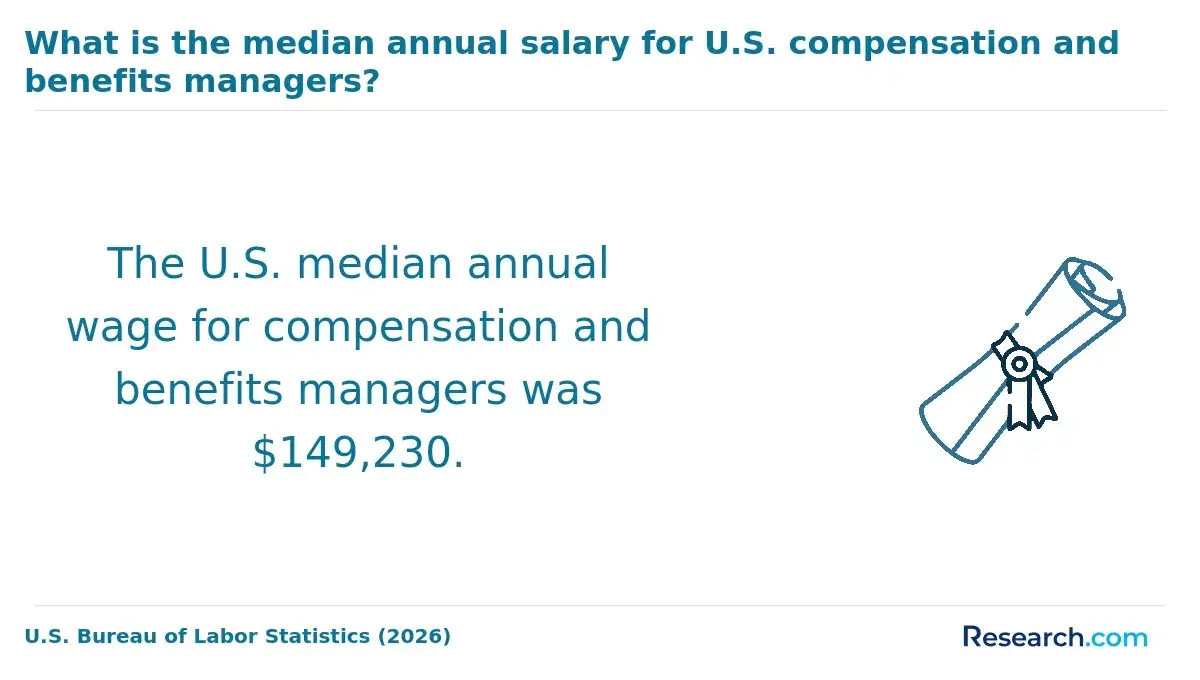
There is no reliable single salary for holders of this MBA. Pay depends on the occupation, level of responsibility, industry, location, and prior experience, not just the concentration. According to the U.S. Bureau of Labor Statistics, the median annual wage across U.S. management occupations was $126,520 in May 2025.
That occupational median includes managers with many educational backgrounds and career stages; it is neither an international business MBA graduate salary nor a reasonable starting-pay promise for a newly promoted manager.
To make salary information useful, identify the role you could realistically pursue next and compare its local pay with your current compensation. Separate a raise you may earn through experience or a normal promotion cycle from one you have reason to expect because of the degree.
If an employer cannot describe a relevant advancement path, projected salary gains are too uncertain to justify a large tuition commitment on their own.
Do international business MBA careers require licenses or certifications?
There is generally no license required simply to work as an international business manager. Requirements attach to specific duties or regulated professions, not to the MBA concentration. For example, an MBA does not qualify someone to practice law, perform licensed accounting work, or take a clinical role.
Optional credentials in areas such as project management or supply chain management may help when an employer values those skills, but they are not substitutes for management experience and should not be assumed necessary for every global role.
Before paying for a credential, review job postings for the role and location you want, then check the issuing organization's eligibility rules. For a first-time manager, demonstrating sound decisions and effective team leadership may be the more immediate priority.
Other Things You Should Know About MBA Programs
That depends on whether you need tuition support, scheduling flexibility, or a supervisor's recommendation. Review workplace policies first; if confidentiality matters, ask the school whether another professional reference is acceptable.
Possibly. Schools differ on when students declare a concentration and whether completed electives can count toward a new one. Ask an advisor before choosing courses, particularly if specialized classes run infrequently.
Diploma and transcript wording varies by institution. Ask the registrar for a sample or written description rather than assuming the online and campus credentials are labeled identically.
Some courses permit workplace-based projects, subject to instructor approval. Confirm how confidential company information, client data, and employer permission are handled before proposing one.
- Evaluation of Foreign Degrees - United States Department of State https://www.state.gov/global-community-liaison-office/family-member-employment/family-member-employment-in-the-d-c-area/evaluation-of-foreign-degrees
- Graduate Applicants Educated Outside the U.S. | CUNY SPS https://sps.cuny.edu/admissions/applicants-educated-outside-us/graduate-applicants-educated-outside-us
- Online MBA in International Business at UNCW https://onlinedegree.uncw.edu/programs/business/mba/international-business/
- Admission to the MBA Program - Ole Miss Online https://online.olemiss.edu/mba/admissions.html
- MBA Requirements: What You Need to Apply in 2026 | SCU https://www.scu.edu/business/blog/admissions/mba-requirements/
- English Language Proficiency | University of Arkansas https://international-students.uark.edu/admissions/english-language-proficiency.php
- MBA Admissions Requirements | Online MBA & Executive MBA https://mba.wsu.edu/admissions-details/
- Admissions - Miami Online MBA https://onlinemba.miami.edu/admissions/
- What are the entry requirements for an MBA? | gmac https://www.gmac.com/resources/learners/how-to-apply/application-guidance/mba-requirements
- Your Guide to MBA Requirements | The Princeton Review https://www.princetonreview.com/business-school-advice/mba-requirements