Online MBA in Leadership: Curriculum and Workload for Nonbusiness Bachelor's Graduates

Co-Founder and Chief Data Scientist
A leadership-focused MBA can build on a nonbusiness degree, but the adjustment is not limited to learning how to manage people. You may also need to read financial statements, analyze data, and make business decisions while keeping up with online coursework. This guide explains what the curriculum usually covers, where preparation gaps arise, and how to assess the weekly workload before enrolling. It is for graduates considering management advancement who want to know whether a full MBA fits their experience, schedule, and goals.
Key Things You Should Know
- A nonbusiness bachelor's degree does not automatically bar admission; check each school's foundation-course and work-experience policies.
- Expect a broad MBA core alongside leadership electives. Your workload will depend on course pace, quantitative preparation, live meetings, and group projects - not online delivery alone.
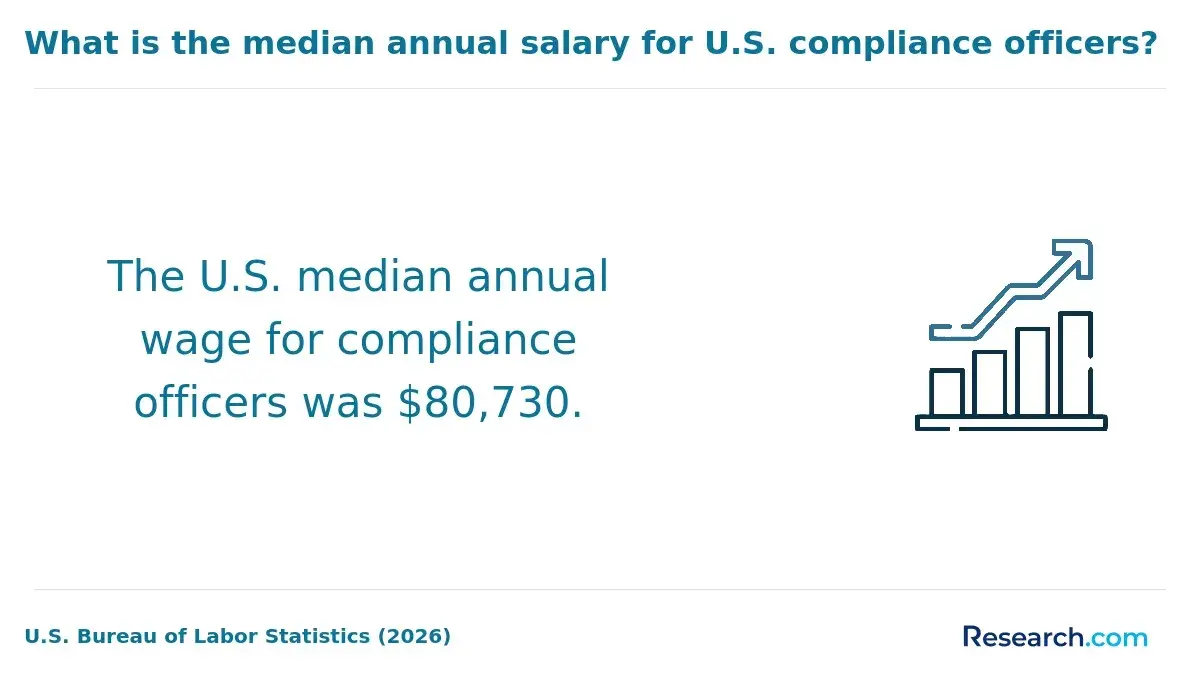
- The U.S. Bureau of Labor Statistics reports a $126,520 median annual wage for management occupations in May 2025, but that figure covers workers across occupations and experience levels, not leadership MBA graduates.
What is an online MBA in leadership for nonbusiness graduates?
An online MBA in leadership is a graduate business degree with general management coursework and an emphasis on leading teams, organizations, or change. "Leadership" may be an official concentration, a track, or simply a theme reflected in electives. Check the degree requirements rather than assuming those labels mean the same thing.
For someone with a bachelor's degree in education, engineering, the humanities, or another nonbusiness field, the MBA can connect existing expertise to business decisions. An educator might apply organizational behavior to staff development; an engineer might use finance and strategy to evaluate a product proposal. Neither needs to discard prior disciplinary knowledge to benefit from business training.
The degree is broader than a leadership certificate or a specialized management master's degree. If you need both business fundamentals and leadership practice, that breadth may be useful. If you already know the business core and want only people-management training, a shorter credential may be more efficient. An online MBA programs degree guide can help you identify options, but the course requirements should determine whether a particular program meets this goal.
Can you earn an online leadership MBA with a nonbusiness bachelor's degree?
Yes, at programs that accept applicants from any undergraduate major. Admission and academic readiness are separate questions, however: a school may admit you directly, require introductory courses, or recommend preparation before quantitative classes. Policies vary, so do not assume that every nonbusiness graduate has the same gap.
Compare your transcript and work experience with the actual course descriptions. A psychology graduate who uses statistics at work may feel comfortable with analytics but be new to accounting. A science graduate may know quantitative methods yet have little experience with marketing or organizational decisions. Work involving budgets, projects, clients, or teams can also provide useful context even if your degree was not in business.
If a school requires foundation coursework, ask whether it carries graduate credit, adds tuition, or must be completed before the MBA begins. That distinction can change both the total workload and the value of an apparently short program.
What does an online MBA in leadership curriculum include?
Most leadership-focused MBAs combine a business core with leadership-related courses; the exact mix is school-specific. The core teaches managers to interpret business information and coordinate functions. Leadership courses then focus more directly on people, decisions, and organizational change. This comparison shows what a nonbusiness graduate may need to learn and where prior experience can help.
| Curriculum area | Typical management-level work | Preparation to consider |
| Accounting and finance core | Interpret financial statements, assess budgets, and evaluate investments | Review basic accounting terms and spreadsheet skills if unfamiliar |
| Analytics and operations core | Use evidence to assess performance, processes, and trade-offs | Refresh quantitative reasoning; check whether courses require statistics |
| Strategy and marketing core | Evaluate customers, competition, and organizational priorities | Connect course cases to your industry or target role |
| Leadership concentration or electives | Practice communication, negotiation, team leadership, ethics, or change management | Look for feedback and applied assignments, not only readings about leadership |
| Capstone or applied project, if required | Bring several business functions together in a case, simulation, or organizational problem | Check project scope and group-work expectations |
A leadership MBA normally approaches finance as a managerial decision tool, not as preparation for professional accounting practice. Likewise, studying organizational behavior is not the same as gaining responsibility for employees at work. The strongest curriculum fit depends on which capabilities your current role lets you practice.
Look beyond the concentration title to the number and content of required leadership courses. If your goal is to lead in a particular sector, compare general leadership study with sector-specific choices. For example, fast online MBA programs in healthcare management may emphasize different operating problems; a short completion path alone does not establish that either curriculum provides deeper leadership training.
Schools commonly request an accredited bachelor's degree, transcripts, a résumé, and written material explaining your goals. Recommendations, interviews, tests, and professional-experience expectations vary by program. A test-optional policy at one school does not apply to another, and a nonbusiness major is not itself evidence that you need a test score.
Before applying, separate required preparation from advice intended to make you a stronger student. Ask admissions whether introductory accounting, economics, statistics, or other foundation work is mandatory; whether prior coursework can satisfy it; and when it must be completed. Then ask an academic advisor which early MBA courses tend to challenge students who have not studied business. Those answers are more useful than assuming you need an additional undergraduate credential.
In your application, describe a concrete leadership problem you have handled or hope to handle. Project coordination, mentoring, client communication, and process improvement can demonstrate relevant experience without overstating formal management responsibility.
The degree format changes how you participate, not necessarily what you are expected to learn. Online courses may offer recorded material, live discussions, fixed deadlines, or a combination. Campus courses typically require travel to scheduled meetings but can make informal interaction easier. Neither format guarantees access to the same recruiting events, internships, or peer network as another MBA format at the same school.
For workload planning, the distinction is control over study time. An asynchronous lecture may fit around employment, while a required evening meeting or team presentation may not. Online group projects can also require coordination across schedules. Ask for a sample course calendar showing assignment deadlines, live sessions, examinations, and any campus visits; do not infer a weekly time commitment from credit hours alone.
If speed matters, compare online MBA duration and schedule choices against your ability to handle simultaneous courses. A faster path concentrates the work rather than removing it. Students new to accounting or finance may prefer a pace that leaves room to build those fundamentals.
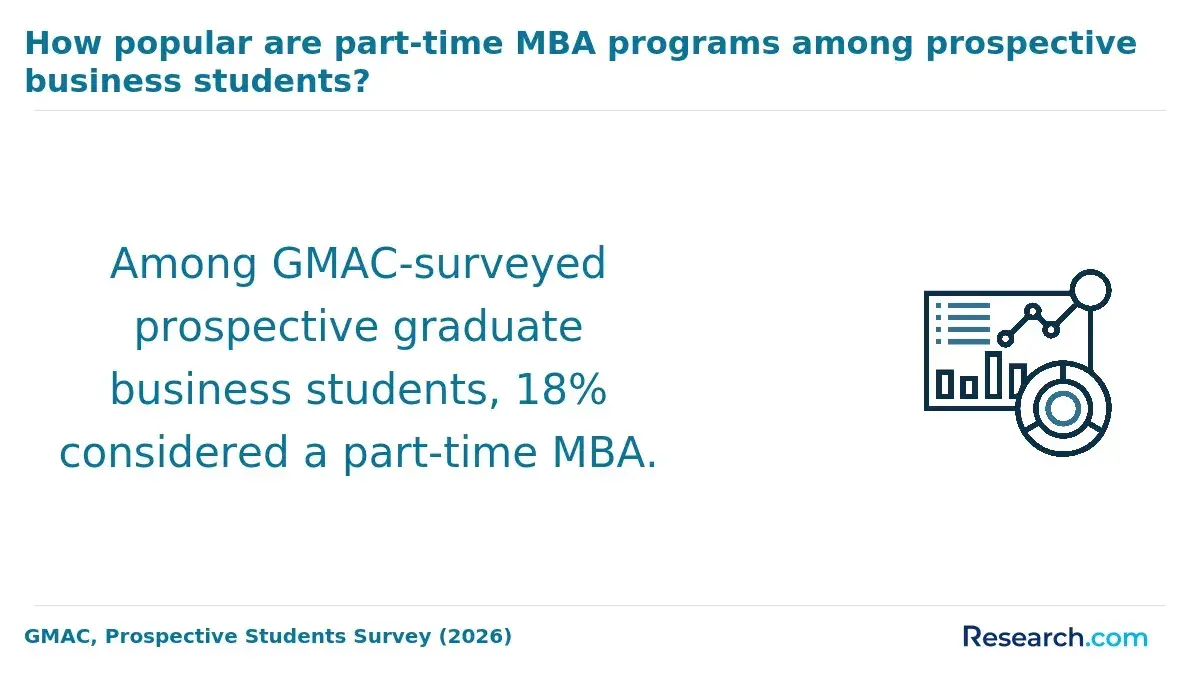
Completion time depends on required credits, course sequencing, enrollment pace, and any foundation courses. An accelerated schedule can be attractive if you can consistently protect study time; a slower schedule may allow you to apply new concepts at work without taking on several unfamiliar subjects at once. Ask whether leadership electives are offered often enough to support your intended pace.
Published tuition is only a starting point. Compare the total required credits and tuition basis, then add mandatory fees, materials, technology costs, and any required travel. Confirm whether foundation courses increase the bill and whether an employer will reimburse the program or only certain courses. Borrowing costs also matter if you will finance the degree.
Low advertised prices deserve the same scrutiny as expensive programs. A guide to MBA degree options for working adults 10 000 can introduce lower-cost possibilities, but verify each program's current total charges and whether it offers the leadership coursework you want. A less expensive general MBA with a useful project may be a better fit than a costlier program whose leadership label covers only a small part of the curriculum.
Leadership is used across occupations rather than serving as a single job title. The most realistic next step usually builds on your existing field: an experienced technical specialist might pursue team or operations management, while an educator or public-service professional might seek program leadership within their sector. Those moves draw on established subject expertise as well as new business skills.
A larger change - such as moving from classroom teaching into corporate marketing management - may require function-specific projects, contacts, and experience beyond leadership coursework. Examine job postings for your target role before choosing electives. Identify whether employers ask for budget ownership, direct reports, industry knowledge, or technical skills that your current work does not yet provide.
An MBA may help you prepare for broader responsibility, but it does not confer managerial authority or replace a required professional license. If your immediate goal is to supervise a small team in your current organization, an employer leadership program or targeted management course may be a more direct first step.
There is no single salary for a leadership MBA. The U.S. Bureau of Labor Statistics reports that the median annual wage across management occupations was $126,520 in May 2025. That is an occupational figure for people with varied education and experience - not the starting salary, expected raise, or earnings premium for MBA graduates.
Use compensation information for the specific role, location, and experience level you are targeting. An internal promotion, a move to another employer, and a transition into a new function have different prospects. Before borrowing for a degree, compare its full cost with advancement opportunities you can reasonably pursue, rather than using the broad management median as a projected personal outcome.
The U.S. Bureau of Labor Statistics projects management occupations overall to grow faster than the average for all occupations from 2025 to 2035, with about 1.1 million openings per year on average from growth and replacement needs. This indicates a sizable, varied labor market - not that those openings require an MBA or are entry-level leadership positions.
Outlook should be evaluated at the occupation level. A prospective operations manager and a prospective training manager face different hiring criteria, even if both use leadership skills. Check openings in your intended industry and location, and weigh your existing experience against the responsibilities employers list before treating broad demand as a reason to enroll.
How can you choose an accredited online leadership MBA program?
Start by confirming that the institution is properly accredited and that its MBA is actually offered online. Institutional accreditation and specialized business-school accreditation are different checks; AACSB, ACBSP, and IACBE are examples of business accreditors, but do not assume every accredited university holds one of those accreditations. Verify current status with the school and accreditor.
Then request the curriculum and a sample schedule. These checks turn a broad program search into a decision about your own preparation and capacity:
- Confirm whether "leadership" is a designated concentration and identify its required courses, electives, and applied work.
- Ask which foundation courses your transcript would trigger and whether they add time or cost.
- Check live attendance, group projects, exam arrangements, travel, and the availability of courses at your preferred pace.
- Compare the full cost with employer support and the career services available to online students.
Choose the program that closes your actual skill gaps without creating an unmanageable schedule or debt burden. If sector expertise matters more than a general leadership label, compare the relevant curriculum and full cost; even lists of MBA options by total cost programs online should be a starting point for verifying current charges and fit, not a substitute for those checks.
Other Things You Should Know About MBA
Possibly. Schools set their own transfer-credit limits and may require a close match in course content, grades, and when the course was taken. Request a written evaluation before relying on transferred credits to shorten the program.
Many schools have leave or re-enrollment policies, but the conditions vary. Ask whether a break affects your course sequence, financial aid, or deadline for completing the degree.
Diploma wording is an institutional policy, not a universal feature of online study. Ask the registrar for the exact diploma and transcript wording if it matters to you.
Some do; others assess students through projects, papers, or unproctored work. Check each program's exam rules, required technology, and any associated fees before enrolling.
- Admissions - Miami Online MBA https://onlinemba.miami.edu/admissions/
- Online Academic Support | umn.edu https://success.umn.edu/tools/online-support
- Prerequisite Courses for an Online MBA Program Without a Business Degree | UWF Online https://getonline.uwf.edu/business-programs/mba/general/prepare-mba-prerequisite-courses/
- Online MBA Program - Lamar University https://degree.lamar.edu/online-programs/business/mba/general/
- Online MBA Curriculum | Online MBA & Executive MBA https://mba.wsu.edu/mba/curriculum/
- How Many Credits Are Needed for an MBA? | University of Bridgeport https://www.bridgeport.edu/news/credits-needed-for-mba-degree/
- Curriculum - PMBA Evening Cohort - UT Dallas MBA https://mba.utdallas.edu/academics/professional-mba-evening-cohort/curriculum/
- What Will You Learn in an MBA Curriculum? | Freeman News https://freemannews.tulane.edu/2025/06/09/what-will-you-learn-in-an-mba-curriculum
- What to Expect from MBA Coursework - Gary W. Rollins College of Business https://blog.utc.edu/business/2022/05/16/what-to-expect-from-mba-coursework/
- Full-Time MBA Curriculum and Concentrations | Rutgers Business School-Newark and New Brunswick https://www.business.rutgers.edu/full-time-mba/curriculum