Online MBA in Risk Management: Admissions Guide for Career Changers

Co-Founder and Chief Data Scientist
Changing careers into risk management takes more than adding a concentration to an MBA application. Admissions committees need to see how your existing work connects to the field, while you need to know whether the program can help you gain the skills and access to employers your target role requires.
This guide explains how to assess your readiness, build a credible application, and compare online programs without assuming the degree alone will secure a career switch.
Key Things You Should Know
- A nonbusiness background does not automatically rule you out; show how your experience relates to decisions involving uncertainty, controls, compliance, finance, or operations.
- Check each school's actual requirements for work experience, tests, prerequisites, and a formally available risk management concentration before applying.
- For a substantial career change, prioritize applied projects and access to risk employers over the concentration label alone; the MBA is not a substitute for relevant experience.
What is an online MBA in risk management?
An online MBA in risk management combines a broad business-management education with study of how organizations identify, assess, finance, and respond to uncertainty. The MBA core may cover accounting, finance, strategy, operations, and leadership. Risk-focused coursework may address enterprise risk management, insurance, financial risk, or governance, depending on the school.
The program label matters. A formal concentration has defined requirements; a general MBA with one risk elective may offer much less depth. Ask whether the concentration appears on the transcript, which courses are available online, and how often they run. Likewise, a school's accelerated schedule in another field does not establish the pace of its risk curriculum: MBA degree pacing options fast online MBA programs in healthcare management illustrate why applicants must check the schedule for their chosen specialization.
Is an online MBA in risk management worth it for career changers?
It can be worthwhile when your past work gives you a bridge into risk and the MBA fills a management or business-knowledge gap. A supply-chain professional who has managed disruptions, for example, may use risk coursework to pursue operational resilience. A candidate seeking quantitative financial-modeling work from an unrelated field may need more technical preparation and direct experience than an MBA provides.
Compare the degree's full cost with the transition it can realistically support. Include fees, time spent studying, any reduced work hours, and the value of employer reimbursement. Then ask whether graduates can access relevant projects, alumni, and recruiting - not merely whether the program advertises career services. If cost is the main barrier, cost-effective MBA choices online MBA programs under $30,000 can provide a starting point, but verify total charges and risk-course availability before treating any program as a fit.
A targeted certificate, risk-related assignment at work, or specialized master's degree may be more direct if you already have management skills but lack a specific technical foundation. The MBA is most persuasive when you need both broader business judgment and a practical route into the target function.
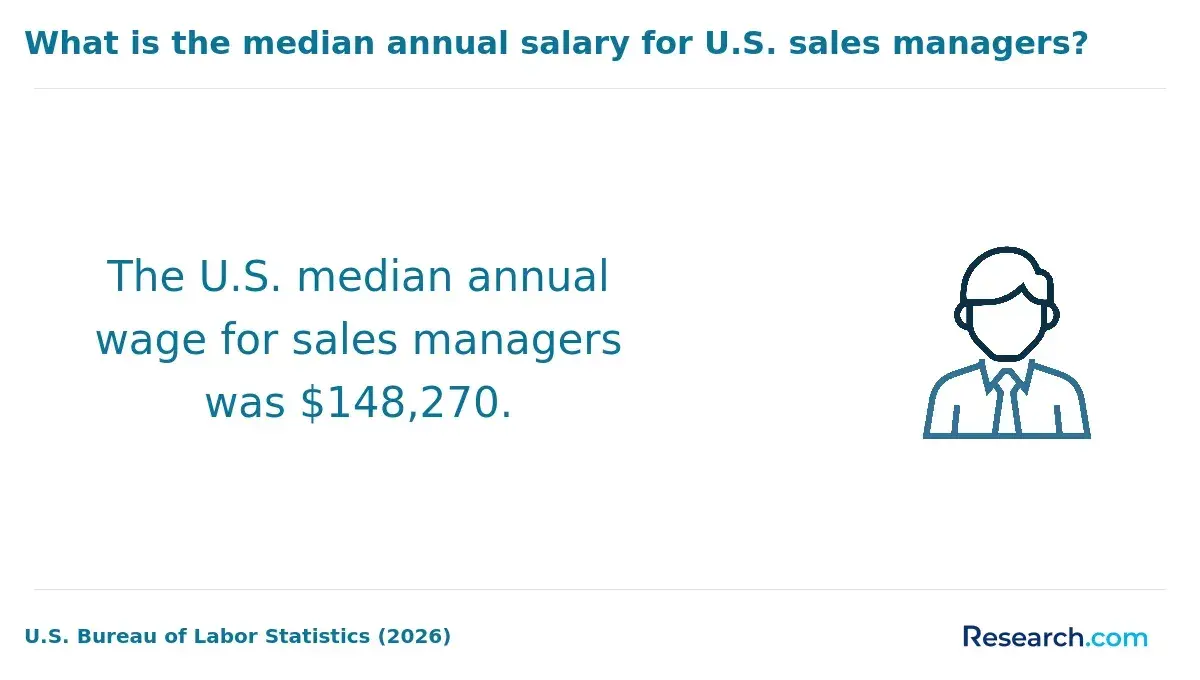
What careers can you pursue with an online MBA in risk management?
Start with roles that build on what you already know. Risk work differs substantially across industries: assessing insurance coverage is not the same job as evaluating credit exposure or coordinating cybersecurity governance.
The distinctions below can help you choose an attainable first target rather than treating "risk manager" as a single entry-level occupation.
| Potential pathway | Experience you can build on | Gap to investigate |
| Operational risk or business continuity | Operations, process improvement, incident response | Control testing, scenario planning, reporting |
| Insurance or corporate risk | Claims, procurement, contracts, finance | Coverage, risk transfer, industry practices |
| Compliance or enterprise risk | Audit, legal operations, regulated-sector work | Applicable rules, governance, risk assessments |
| Financial risk | Banking, accounting, financial analysis | Quantitative methods and the employer's required technical skills |
For an adjacent switch, seek assignments involving controls, vendor assessments, or incident reviews while enrolled. For a larger switch, ask prospective employers which entry-level or analyst roles lead toward your goal. An MBA may support advancement later, but senior risk positions generally call for substantial function-specific experience.
Requirements belong to the individual MBA program, not to risk management as a universal field of study. Schools commonly request evidence of a completed bachelor's degree and may request a résumé, essays, recommendations, or an interview. Work-experience expectations, minimum grades, GMAT or GRE policies, deadlines, and foundation courses vary; confirm each on the current admissions page.
A career changer's application should make the transition understandable. Before submitting it, take these steps:
- Identify your target risk role and two or three transferable examples, such as evaluating suppliers, resolving control failures, or making decisions with incomplete information.
- Review your preparation in accounting, finance, statistics, and spreadsheets; ask whether any gaps require a formal prerequisite or can be addressed through recommended preparation.
- Explain in your essay why the school's specific risk courses and opportunities support your next step, without claiming that coursework replaces professional experience.
- Confirm testing, recommendation, transcript, and deadline rules directly with each program before finalizing your application.
A nonbusiness bachelor's degree is not automatically disqualifying. What matters is whether you meet the school's stated criteria and can show readiness for graduate-level business work.
Expect the business core to develop managerial decision-making, while risk courses apply that foundation to uncertainty and organizational controls. Depending on the program, specialized subjects may include enterprise risk frameworks, insurance and risk financing, financial or operational risk, analytics, and governance. A capstone or employer-based project can help a career changer demonstrate applied judgment, but its availability and scope must be verified.
Read the course descriptions rather than relying on the concentration name. A course on managing cyber risk, for example, may teach oversight and investment decisions rather than hands-on security engineering. Also check whether required electives rotate: an advertised accelerated MBA format may not allow a risk-focused student to take every needed course on that timetable. Comparisons of MBA schools with accelerated formats mba programs are useful only when the relevant course sequence is confirmed.
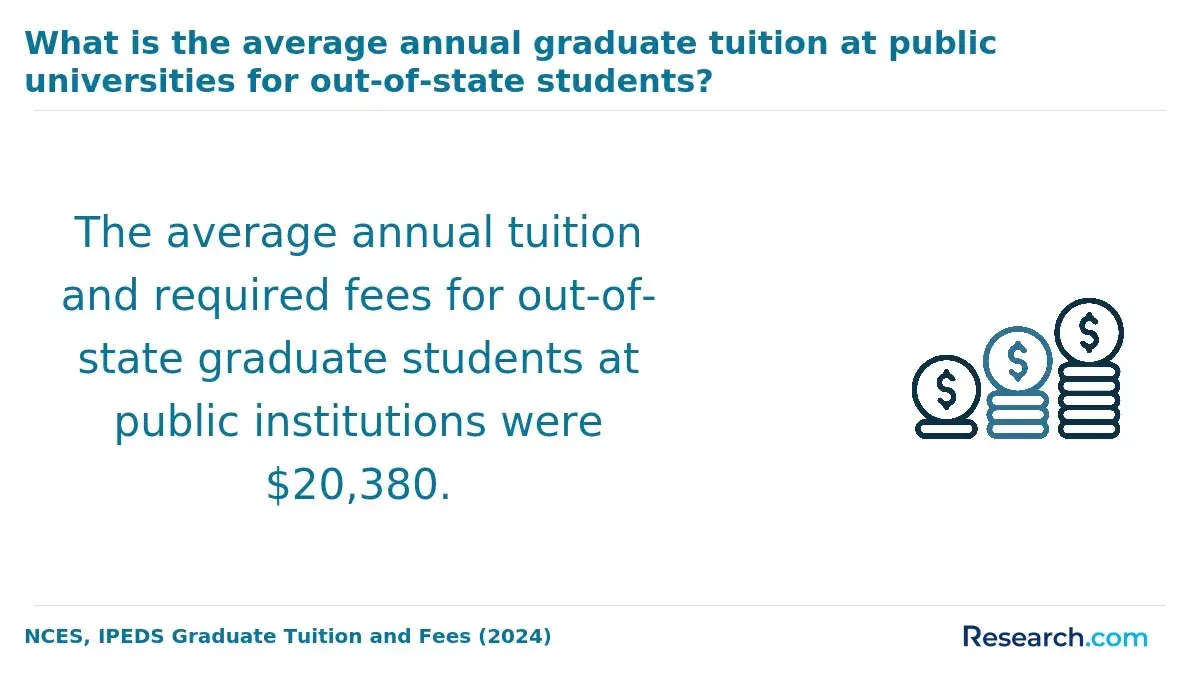
Both depend on the school's required credits, course sequence, enrollment pace, tuition structure, and fees. Part-time study may preserve income but extend the period over which you pay; a faster pace may be harder to combine with work or a risk-related project. Ask for a term-by-term plan showing when the concentration's required courses are offered.
Build a personal cost estimate from published tuition, mandatory fees, materials, and any required travel, then subtract only funding you are eligible to receive. Compare that total - not an advertised per-credit rate - with your budget. Regional options may merit a look: for an applicant able to use North Carolina programs, low-cost online MBA programs MBA NC offer an affordability comparison, provided their online curriculum supports the intended risk pathway.
An online program can let you remain employed and apply lessons at work. A campus program may make in-person employer events or a full-time internship easier to pursue. Neither format guarantees access to those opportunities, so the better choice depends on how you plan to gain risk experience during the degree.
Ask online programs whether classes have required live meetings, whether group work crosses time zones, and whether residencies are mandatory. Then ask both online and campus programs whether career coaching, employer events, and recruiting for your target roles are open to students in your format. For a substantial career change, those answers may matter more than delivery mode itself.
Check that the institution holds recognized institutional accreditation, then separately check whether its business school holds specialized accreditation, such as AACSB accreditation. These are different claims; neither establishes that a particular risk concentration is available online. A comparison focused on business-school quality and accreditation can help frame the review, but confirm current status with the institution and accreditor.
For career-switching quality, request the current curriculum and ask who teaches the risk courses, how students complete applied work, and which career services online students can actually use. Treat schoolwide employment figures cautiously unless they identify online MBA students and relevant risk roles.
A certification can demonstrate focused knowledge, but its value depends on your target job. The Financial Risk Manager designation aligns with financial risk; the Associate in Risk Management designation focuses on risk-management practice and is often relevant to insurance-related paths. Other fields, including information security and audit, have their own credentials.
Before paying for an exam, read the credential body's current eligibility, examination, experience, and maintenance rules. Compare job postings in your target sector: if employers consistently request a particular designation, it may be a better near-term investment than another elective. An MBA does not automatically award a certification or waive its requirements.
What salaries and job outlook can risk management graduates expect?
There is no single US salary or job-growth figure for "online MBA in risk management graduates." Risk-related work spans occupations and seniority levels, and earnings depend on prior experience, employer, location, and specialty. The US Bureau of Labor Statistics reports a May 2025 median annual wage of $126,520 for management occupations as a group. That is a broad occupational benchmark, not an expected starting salary for someone switching into risk.
BLS projects management occupations overall to grow faster than the average for all occupations from 2025 to 2035, with about 1.1 million openings per year on average from growth and replacement needs. Those openings are not specific to risk management. For a realistic compensation target, compare current postings for the exact role and experience level you could enter, then weigh that range against the MBA's total cost and any income you would give up.
Other Things You Should Know About MBA
That depends on the school. Ask its registrar for a sample diploma and transcript, including how any concentration is recorded.
Only with appropriate employer and school approval. Ask whether the project can use anonymized data or a public case instead.
Do not assume so. Insurance licensing is governed by state-specific requirements; check the relevant state's rules for the activity you want to perform.
Possibly, but the credentialing organization decides what qualifies. Check its current rules before enrolling in a course for that purpose.
- Accreditation in the U.S. | ed.gov http://www.ed.gov/laws-and-policy/higher-education-laws-and-policy/college-accreditation/accreditation-in-the-us
- How to Become a Risk Manager [Career & Salary Guide] | University of San Diego Online Degrees https://onlinedegrees.sandiego.edu/risk-manager-career-guide/
- How Much Does an Online MBA Cost? | University of Bridgeport https://www.bridgeport.edu/news/cost-of-online-mba/
- Admissions | Robert H. Smith School of Business https://www.rhsmith.umd.edu/programs/online-mba/admissions
- MBA Requirements: What You Need to Apply in 2026 | SCU https://www.scu.edu/business/blog/admissions/mba-requirements/
- Tuition and Financial Aid - Online MBA - Pace University https://online.pace.edu/graduate-programs/mba/tuition-financial-aid/
- GMAT and GRE Waiver Policies | JHU Carey Business School https://carey.jhu.edu/admissions/gmat-gre-waiver-policies
- 15 Transferable Skills That Work Across Industries | CityU of Seattle https://cityu.edu/transferable-skills/
- Online MBA Admissions | CSU College of Business https://biz.colostate.edu/academics/graduate-programs/mba/online-mba/admissions
- Part-time MBA - Online/Modular Option - NYU Stern https://www.stern.nyu.edu/programs-admissions/mba-programs/part-time-mba-manhattan/academics/online-modular-option