Careers After an Online MBA in Finance for Small Business Owners

Co-Founder and Chief Data Scientist
For a small business owner, an online MBA in Finance can support two different ambitions: making better decisions inside the business or preparing for a finance career beyond it. Those goals call for different courses, networks, and returns on your investment.
This guide examines realistic career paths, the experience employers may expect, and the cost of studying while you run a company. It will help you decide whether a full MBA fits your next move - or whether more targeted training would serve you better.
Key Things You Should Know
- The most direct outcome is often a stronger role in your own business: managing cash flow, evaluating investments, and planning growth.
- Corporate finance and advisory roles are possible transitions, but an MBA alone does not replace relevant finance experience or required credentials.
- The U.S. median annual wage for management occupations was $126,520 in May 2025; it is an occupational benchmark, not an expected MBA salary or an estimate of owner income.
What careers can you pursue after an online MBA in Finance as a small business owner?
Your first career option may be to remain an owner while taking on more deliberate financial leadership. An MBA in Finance combines broad management study with finance-focused coursework; it can help you decide when to hire, borrow, expand, acquire another business, or preserve cash. Those decisions matter more than a new job title if you intend to keep operating your company.
The paths below differ in how directly they use ownership experience and what additional proof of finance ability an employer or client may seek.
| Path | What you would do | What makes the transition credible |
| Owner-operator with finance leadership | Oversee budgets, cash forecasts, financing, and growth decisions | Documented improvements in the business's financial performance |
| Founder or acquisition entrepreneur | Evaluate a new venture or business purchase and plan its financing | Due diligence, valuation judgment, and operating experience |
| Financial manager at a growing company | Manage planning, reporting, and financial controls | Relevant accounting knowledge and experience managing comparable work |
| Small-business finance consultant | Help clients assess pricing, cash flow, or expansion plans | A defined service, demonstrable results, and appropriate professional boundaries |
Running a business gives you evidence of decision-making under real constraints. It does not automatically show that you have managed a formal finance department. If you want an employed role, translate ownership into specific responsibilities and results rather than assuming employers will recognize the title alone.
How does an online MBA in Finance benefit small business owners?
The potential benefit is better capital allocation: knowing whether an expansion can generate enough cash to justify its cost, how much working capital the business needs, and which risks could disrupt a repayment plan. The MBA core also connects finance to customer acquisition, operations, and hiring, so a promising spreadsheet does not become a decision detached from how the business actually runs.
That breadth is valuable when several problems are connected. If your only gap is bookkeeping, tax planning, or a single financing decision, a targeted course, experienced mentor, accountant, or short executive program may be faster and less expensive. Compare the MBA's total cost and time away from operations with the decisions you expect to make differently - not with an assumed post-graduation pay raise.
What does an online MBA in Finance teach small business owners?
At the management level, finance study teaches you to interpret financial statements, forecast cash needs, evaluate investments, and weigh funding options. You might use those skills to test whether adding a location would strain payroll before new sales arrive, or whether a profitable product still ties up too much inventory cash.
The broader MBA core helps you examine the assumptions behind those calculations: market demand, operational capacity, staffing, and competitive strategy. A finance concentration generally adds focused courses, but its depth varies by school. It is not a substitute for professional accounting preparation, advanced quantitative training, or hands-on experience arranging complex transactions.
Financial planning and analysis, commercial lending, financial management, and business valuation are possible directions. They are not equally accessible from every ownership background. An owner who built budgets, negotiated credit, and reviewed monthly results may have a stronger case for planning or lending work than an owner who delegated all financial decisions.
For a substantial switch, look for a bridge: take responsibility for more financial reporting in your current company, complete a substantial finance project, or pursue a role serving businesses in an industry you know. Some employers may expect accounting, banking, modeling, or valuation experience beyond an MBA.
Investment advice and certain accounting services can also involve registration, licensure, or other requirements; check the rules for the specific role rather than treating the degree as authorization to practice. Career stage changes the calculation. Owners considering a later-career transition may find career-focused choices in online MBA programs after 50 useful when weighing time to recoup costs against their existing expertise.
An online MBA may let you continue operating your business and apply assignments immediately. A campus-based program may make it easier to pursue intensive in-person recruiting or step away for an internship. Neither format is inherently stronger academically or more flexible in practice: online courses can still require live sessions, group meetings, residencies, and fixed deadlines.
For an owner, the decisive comparison is often the cost of being unavailable. Ask each program when required activities occur, whether you can slow your course load during a busy season, and how online students access career services and employers. If speed matters, compare published schedules rather than assuming the shortest advertised option fits your workload; an online MBA time-to-degree guide degree programs can help you frame that comparison.
Course titles and requirements vary. A typical MBA core addresses managerial accounting, marketing, operations, strategy, organizational behavior, and business analytics. Finance-focused study may include corporate finance, financial statement analysis, investments, valuation, or financial risk. Some programs add a capstone or applied project; others let students select electives instead of completing a formally designated concentration.
Read the actual degree plan before applying. For a business owner, a course in working-capital management or entrepreneurial finance may be more immediately useful than an investments elective. Also check whether finance courses teach you to build and challenge models yourself or primarily to interpret analyses prepared by others.
Most applicants should expect a bachelor's degree and an application that explains their professional experience. Schools may also request a résumé, essays, recommendations, an interview, or GMAT or GRE results; test policies and experience expectations vary. A business bachelor's degree is not universally required, although an owner without recent accounting or quantitative coursework may benefit from preparation before finance classes begin.
Show admissions teams what you actually managed: revenue decisions, budgets, financing, employees, and setbacks you learned from. Check each school's current requirements and deadlines rather than treating a general admissions checklist as official policy. If application timing is important, MBA application requirements by program online MBA programs with rolling admission can provide a starting point for schools to investigate.
There is no reliable single price or completion time for an online MBA in Finance. Total cost depends on required credits, tuition rates, mandatory fees, materials, any travel, and financing charges. Program length depends on course sequencing and how many classes you can manage while running the business. An accelerated schedule may reduce time to completion while increasing the short-term burden on your company.
For a meaningful comparison, request a full program cost estimate and a course-by-course schedule at your intended pace. Add the cost of delegating work or reducing your hours, then subtract only funding you have confirmed, such as an applicable scholarship or employer contribution. An online business school cost comparison can help identify candidates, but a quoted annual tuition figure is not the same as total cost.
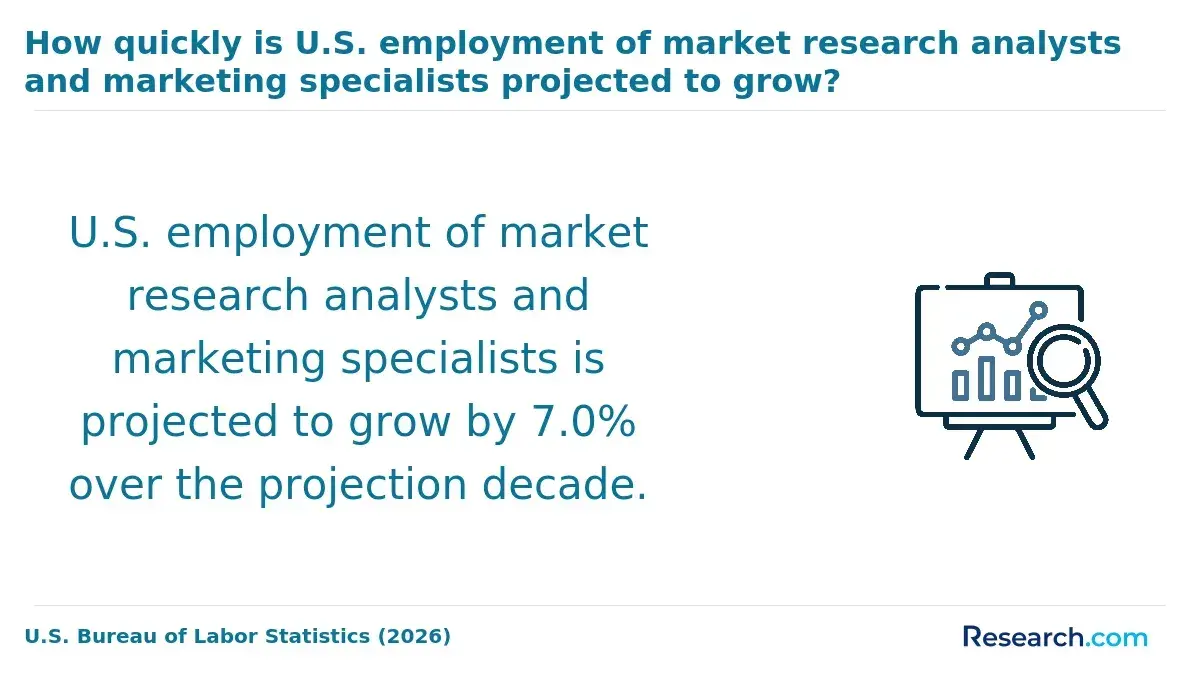
The U.S. Bureau of Labor Statistics reports a median annual wage of $126,520 for management occupations in May 2025 and projects employment in that broad group to grow faster than the average for all occupations from 2025 to 2035. Those figures describe occupations, not finance MBA graduates. They do not predict what a new financial manager will earn - or what a small business owner can take home.
Your relevant comparison is the compensation and experience required for a specific target job in your location. For owners, business profit, cash available to pay yourself, and the value of the company may be more useful measures than salary. For a career switch, compare likely entry points with your current income and consider whether you would need to accept a narrower role before advancing.
How can you choose an accredited online MBA in Finance?
Confirm that the institution holds recognized institutional accreditation, then check whether its business school has specialized accreditation and what that accreditation covers. These are different claims; neither tells you by itself whether the finance coursework fits your goals. Verify that the finance concentration is formally offered online rather than assuming a finance elective earns the designation.
Shortlist programs by the decisions you want to make after graduation. Compare finance-course depth, projects you can apply to your company, scheduling constraints, full cost, and career support for online students. Ask for the current curriculum and delivery schedule in writing. A program selection for online MBA programs resource can help you find schools to investigate, but your business needs should decide the final fit.
Other Things You Should Know About MBA
Not by itself. Lenders assess factors such as the business's finances, repayment capacity, and the proposed use of funds. MBA coursework may help you prepare a clearer financing case, but the degree does not replace lender underwriting.
Sometimes. Ask whether instructors permit company-based projects and whether group work or presentations could expose confidential information. You may need to anonymize financial or customer data.
Describe the financial work you performed, its scale, and measurable results you can substantiate. Separate decisions you made personally from work handled by your accountant, bookkeeper, or lender.
Do not assume it is. U.S. tax treatment depends on your circumstances and whether the education meets applicable rules, including rules concerning qualification for a new trade or business. Consult a qualified tax professional before relying on a deduction.
- MBA vs Master's in Finance: Which Degree Fits Your Goals? | SCU https://www.scu.edu/business/blog/mba/mba-vs-masters-in-finance/
- FPAC vs. MBA FP&A Concentration: Which Do You Need? | Arkansas State University Online https://degree.astate.edu/online-programs/business/mba/financial-planning-analysis/fpa-certification-vs-mba/
- Jobs That Require an MBA: Career Paths and Salaries | Touro University Worldwide https://www.tuw.edu/business/21-jobs-require-mba/
- What Jobs Can I Get With an MBA Degree in Finance? | BGSU Online https://onlinedegree.bgsu.edu/programs/business/mba/finance/jobs-with-mba-degree-in-finance/
- Online MBA vs Full-Time MBA: ROI, Cost and Career Outcomes | Jenkins MBA https://mba.ncsu.edu/2026/04/27/choosing-between-an-online-mba-and-full-time-mba/
- What to Consider When Evaluating Online MBA Programs | Northeastern Online https://online.northeastern.edu/resources/what-to-look-for-when-choosing-an-online-mba-program/
- Career Paths and Typical Duties for Jobs With an MBA | UNC Kenan-Flagler's Business School's Online MBA https://onlinemba.unc.edu/news/jobs-with-an-mba/
- MBA in Finance: What careers are available to you? | gmac https://www.gmac.com/resources/learners/business-careers/career-planning/mba-finance-careers