
Online MBA in Risk Management: Curriculum and Workload for Career Changers

Co-Founder and Chief Data Scientist
An online risk management MBA can help you move from managing one kind of problem to weighing risks across an organization. But the degree's value depends on what you already know, which risk role you want, and whether you can fit the coursework around your job.
This guide explains what the MBA core and risk courses typically cover, how demanding online study can be, and where practical experience matters more than another credential. Use it to decide whether an MBA - or a narrower qualification - is the better next step.
Key Things You Should Know
- The MBA core builds broad management skills; risk courses apply them to decisions about financial, operational, regulatory, and other exposures. Check the actual course list before assuming a program has a formal risk concentration.
- For career changers, an applied project and access to risk employers may matter more than a concentration label. An MBA alone rarely substitutes for experience in the target function.
- Online workload depends on course load, live meetings, group projects, and your quantitative preparation. Request a term-by-term schedule and a full cost estimate before enrolling.
What is an online MBA in risk management?
It is a graduate business degree that combines an MBA's general management core with coursework focused on identifying, assessing, communicating, and responding to organizational risk. Schools may call the focused portion a concentration, specialization, track, or set of electives. Those labels are not interchangeable: a single risk elective does not necessarily constitute a formal concentration.
Risk management reaches beyond insurance. Depending on the program, students may examine enterprise risk management, financial exposure, business continuity, compliance, cybersecurity governance, or supply-chain disruption. The MBA perspective is usually managerial: deciding which risks warrant attention, what a response costs, and how to explain trade-offs to leaders. It is not automatically advanced training in actuarial modeling, law, or technical cybersecurity.
Is an online MBA in risk management worth it for career changers?
It can be worthwhile when your existing experience gives you a credible bridge into risk work and you also need broader business judgment. An operations manager moving into enterprise risk, for example, can build on process controls and incident response. A professional seeking a highly technical modeling role may get more direct preparation from specialized quantitative study and relevant work experience.
Compare the degree's full cost and time commitment with the positions you could realistically pursue from your current background. Ask whether the school offers risk-focused projects, career support for experienced online students, and introductions to employers in your target field. If you would need to leave work, count foregone earnings too; if you can keep working, test whether the study schedule is sustainable.
A shorter course, employer-supported project, or professional certification may be the better first move when you mainly need one functional skill. Compare alternatives by their intended audience: a listing of affordable online MBA programs option 2 degree programs covers nursing-focused MSN/MBA dual degrees, not a direct substitute for risk management study unless nursing leadership is also your goal.
What careers can an online MBA in risk management lead to?
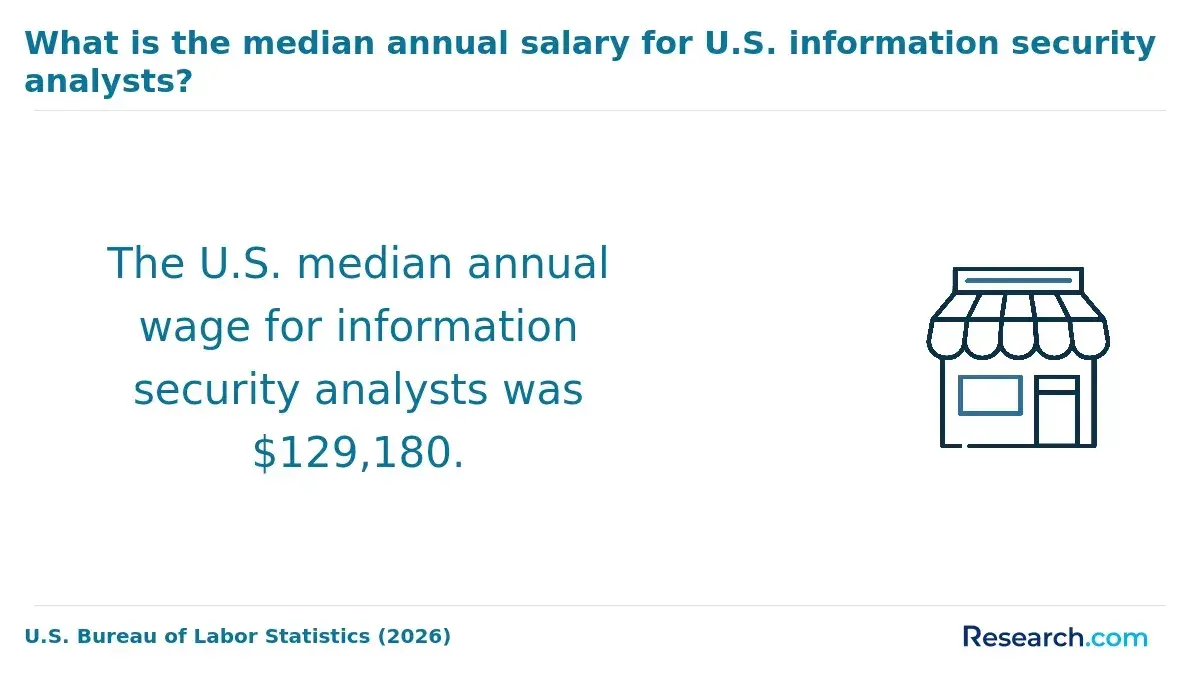
The most realistic destination usually connects to your prior industry or function. Someone from finance may pursue risk analysis or controls work; someone from operations may move toward business continuity or operational risk. Senior risk leadership typically requires substantial relevant experience in addition to graduate education.
The distinctions below help identify where an MBA may add value and where a career changer still needs functional preparation.
| Target work | Useful prior experience | Likely gap to close |
| Operational or enterprise risk | Operations, audit, project management, or process improvement | Risk assessment methods and reporting across business units |
| Financial risk or controls | Finance, accounting, banking, or analytics | Sector-specific rules, data methods, and controls experience |
| Insurance or claims risk | Insurance, claims, legal operations, or procurement | Coverage, underwriting, or claims knowledge relevant to the role |
| Cyber or technology risk governance | IT operations, security, audit, or compliance | Technical context and experience assessing technology controls |
For perspective, the U.S. Bureau of Labor Statistics reports a May 2025 median annual wage of $126,520 for management occupations as a group. That broad figure is not the pay of risk MBA graduates or an estimate of what a career changer will earn; role, location, industry, and experience are more useful for evaluating a specific offer. Engineers bringing technical experience into business decisions may also find an online MBA programs for engineers degree guide useful when comparing program fit.
Expect two layers: an MBA core that teaches how organizations allocate resources and make decisions, and risk-focused study that applies those decisions under uncertainty. Requirements vary by school, so compare required courses rather than relying on a concentration's name.
This table shows common subject areas and what each could help a career changer practice; it is not a standard curriculum shared by every program.
| Curriculum layer | Typical subjects | Risk-management application |
| MBA core | Accounting, managerial finance, operations, strategy, analytics, and leadership | Weigh the cost, operational effect, and organizational ownership of a risk response |
| Risk-focused courses or electives | Enterprise risk, insurance, compliance, financial risk, or crisis management | Assess exposures, evaluate controls, and communicate priorities |
| Applied work, when offered | Cases, simulations, consulting projects, or a capstone | Develop a defensible recommendation using imperfect information |
For a substantial career switch, look closely at the applied assignment. A project that requires you to assess a risk, compare responses, and present a recommendation can produce stronger evidence of readiness than a course title alone. Ask whether you can use a public case or approved, anonymized workplace data; access to confidential employer information should never be assumed.
Online delivery may let you remain employed while testing new risk responsibilities at work. A campus-based program may offer more in-person contact and, particularly in a full-time format, a different recruiting environment. Neither format automatically provides better instruction or stronger career-switching access.
If you need to change both industry and function, investigate how each program connects students with employers, alumni, projects, and internships. Ask specifically whether online students can use the same career services as campus students and whether recruiting events suit working professionals. For an adjacent switch while staying employed, the ability to apply lessons immediately may outweigh the benefits of relocating - but only if the online schedule genuinely fits.
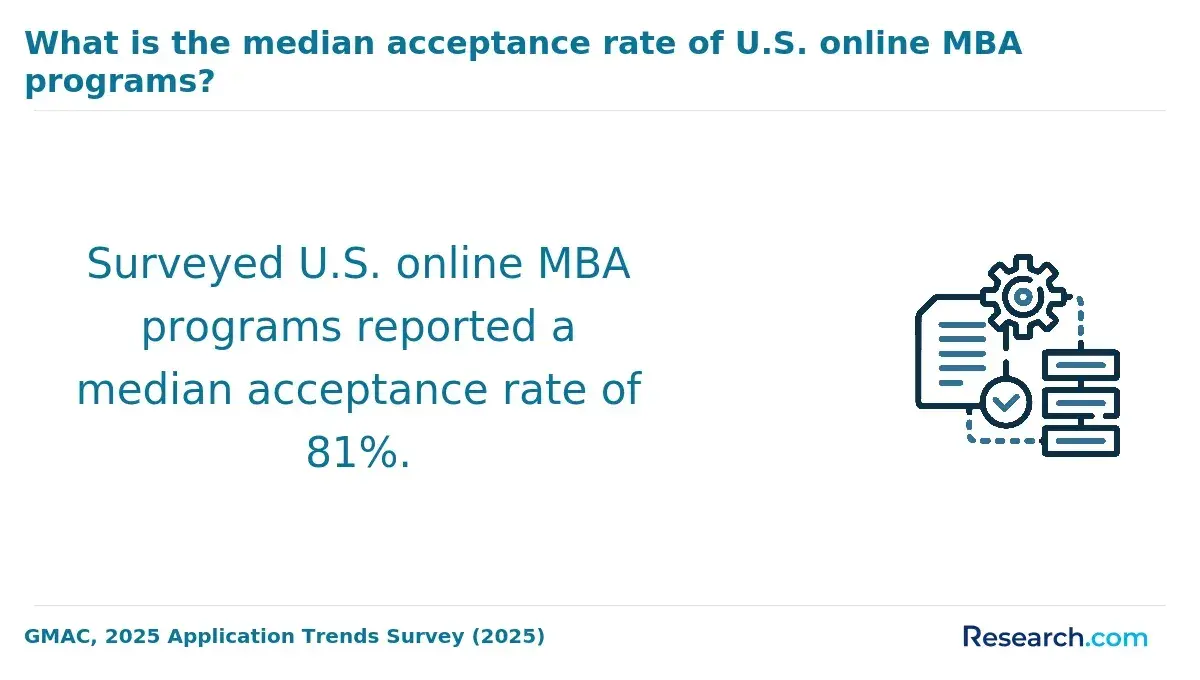
Requirements are set by each university, not by the risk specialization as a whole. Applications commonly involve a bachelor's degree, academic records, a résumé, and a statement of goals; schools differ on work experience, recommendations, interviews, prerequisites, and GMAT or GRE policies. A nonbusiness degree does not automatically rule you out.
Career changers should explain the connection between past work and the intended risk role rather than claiming the MBA will create that connection by itself. If accounting, statistics, or finance is unfamiliar, ask about foundation courses and consider introductory preparation before the first term. Applicants concerned about their academic record can review online MBA admission requirements online MBA programs for low-GPA applicants, then verify each school's current policy directly.
There is no single completion time or price. Both depend on required credits, transfer or foundation coursework, tuition rules, enrollment pace, and fees. Accelerating can shorten the calendar commitment but increase the number of courses and overlapping deadlines in each term.
Request a written estimate covering tuition, mandatory fees, books or software, and any required travel. Confirm whether a published figure is per credit, per term, or for the entire degree. If affordability is a constraint, MBA program prices and tuition options online MBA programs under $30,000 can provide a price-screening starting point; verify current total costs and whether each program offers enough risk coursework for your goal. Employer assistance can change your out-of-pocket cost, but eligibility and repayment conditions matter.
Plan for more than watching recorded lectures. Core finance and analytics courses may require substantial practice if those subjects are new to you; risk courses may add cases, research, presentations, and group decisions. Weekly demands can fluctuate sharply around exams and project deadlines, so a single advertised time estimate may conceal the busiest weeks.
Before committing to a pace, obtain sample syllabi and a term schedule. Check which sessions are live, when group members are expected to meet, whether exams have fixed windows, and whether a residency is required. Then map the busiest weeks against work obligations and leave room for a slower term if your first courses expose preparation gaps. Shorter online MBA completion plans degree programs may save calendar time, but they are a poor fit if overlapping quantitative courses would keep you from learning or completing a useful risk project.
First, verify that the university holds recognized institutional accreditation. Then check whether the business school or MBA has specialized business accreditation, such as AACSB, ACBSP, or IACBE, if that matters to you or a prospective employer. Institutional and business-school accreditation answer different questions; neither, by itself, verifies the depth of the risk curriculum.
Use the accreditor's directory and the university's current program information rather than a promotional badge alone. Confirm that the online MBA is covered where coverage is specified, then examine the course requirements and instructor expertise separately.
Which certifications and licenses do risk management professionals need?
There is no universal U.S. risk-management license required for every risk role. Requirements depend on the work: an insurance-producing position, for example, can involve state licensure, while many internal enterprise-risk roles do not. Read the requirements for the specific job before paying for an exam or credential.
Credentials such as the Financial Risk Manager (FRM), Professional Risk Manager (PRM), or Risk Management Professional (RIMS-CRMP) can signal different areas of knowledge, but they are not interchangeable with an MBA or with hands-on experience. Check each credential's eligibility, examination, experience, and maintenance rules against your target job postings. If those postings emphasize one technical credential over broad management education, that may be the more direct next investment.
Other Things You Should Know About MBA
Often, yes. Public filings, published cases, and simulated scenarios may support a project, subject to the instructor's rules. Ask about acceptable data sources before enrolling.
That varies by school. The concentration may appear on the transcript, diploma, both, or neither. Ask the registrar how it is recorded.
Possibly, if course availability and program rules permit it. Ask an advisor whether completed electives would still count and whether a change would delay graduation.
Not necessarily. Schools set their own technology requirements, and individual courses may require additional tools. Check the program's equipment list and sample syllabi before buying software.
- Types of Financial Aid: Grants, Work-Study, and Loans | studentaid.gov https://studentaid.gov/understand-aid/types
- Cost of Attendance (Budget) | 2025-2026 Federal Student Aid Handbook https://fsapartners.ed.gov/knowledge-center/fsa-handbook/2025-2026/vol3/ch2-cost-attendance-budget
- Curriculum | Robert H. Smith School of Business https://www.rhsmith.umd.edu/programs/online-mba/curriculum
- Corporate Governance and Risk Management MBA Concentration - Lamar University https://www.lamar.edu/business/general-business/master-of-business-administration/corporate-governance-and-risk-management.html
- Experiential Learning - CNDLS - Georgetown University https://cndls.georgetown.edu/resources/experiential-learning/
- What Will You Learn in an MBA Curriculum? | Freeman News https://freemannews.tulane.edu/2025/06/09/what-will-you-learn-in-an-mba-curriculum
- MBA in Enterprise Risk Management | The University of Olivet https://www.uolivet.edu/academics/professional-graduate/mba-program/mba-in-enterprise-risk-management/
- What Can You Do with a Master's in Risk Management? | Master of Management, Risk and Analytics https://ra.poole.ncsu.edu/blog/2026/04/careers-in-risk-management-where-a-masters-degree-can-lead/
- How to Become a Risk Manager [Career & Salary Guide] | University of San Diego Online Degrees https://onlinedegrees.sandiego.edu/risk-manager-career-guide/
- How Many Hours of Work Per Online Course Credit | ASU Online https://asuonline.asu.edu/newsroom/online-learning-tips/discover-weekly-number-hours-online-students-study/


