Online MBA in Nonprofit Management: Admissions Guide for Small Business Owners

Co-Founder and Chief Data Scientist
Running a small business can demonstrate the leadership an MBA admissions committee values, but it may leave little time to prepare an application - or study for a degree.
An online MBA in nonprofit management is most relevant if you want to lead a mission-driven organization, develop a business-nonprofit partnership, or apply sector-specific lessons to your company. This guide explains what schools commonly request, how to present owner experience, what to verify about each program, and when a shorter course may be a better investment.
Key Things You Should Know
- Business ownership can strengthen an MBA application when you document decisions, results, and lessons learned; it does not replace a school's stated degree or application requirements.
- Confirm that nonprofit management is an available online concentration, not merely a single elective, before tailoring your application to it.
- The most useful admissions comparison covers eligibility, test and experience policies, total cost, and whether coursework fits the hours your business needs from you.
What is an online MBA in nonprofit management?
It is a graduate business degree that combines an MBA's general management core with coursework focused on mission-driven organizations. The core typically develops skills in accounting, finance, marketing, operations, and leadership. Nonprofit-focused study may address fundraising, governance, accountability, and managing programs against a mission rather than profit alone.
Program labels matter. A school may offer a formal concentration, a certificate alongside its MBA, or only one relevant elective. Ask whether the specialization appears on the transcript, how many courses it requires, and whether every required course is available online. A broader search of online MBA programs in the US can identify possibilities, but each school's current catalog should settle those questions.
Why should small business owners earn an MBA in nonprofit management?
The degree can make sense when an owner has a defined mission-related goal: moving into nonprofit leadership, building a social enterprise, or managing partnerships that involve donors, boards, and community organizations. Your experience with cash flow, hiring, customers, and operations gives you practical examples for class discussions and an application.
The specialization adds context that ordinary small-business experience may not provide, particularly board oversight, restricted funding, and measuring outcomes that are not sales.
Those benefits are less compelling if your immediate problem is customer acquisition or bookkeeping in an otherwise conventional business. A targeted course, accountant, mentor, or small-business development resource may address that problem sooner and at lower cost.
Owners who began operating a business without a conventional employment history can compare graduate business programs with flexible admission, while checking whether each school counts self-employment as professional experience.
Is an online MBA in nonprofit management worth the cost?
It may be worthwhile when you can name a role or business initiative that needs both broad management training and nonprofit expertise - and can fund the degree without putting operating cash at risk. Its value is less certain if you are exploring the sector but have no opportunity to apply what you learn. An MBA is not a prerequisite for starting a nonprofit or serving its mission.
For an owner, the investment includes more than tuition: study hours may displace sales, client service, and management work. Compare the full cost and lost business capacity with a nonprofit management certificate, individual graduate courses, or direct experience through a board or project.
If you own a veteran-run business, online MBA programs in the US and veterans may offer another comparison point; confirm benefit eligibility and each program's actual support rather than assuming military service covers the cost.
First, verify that the university holds recognized institutional accreditation. Then check whether the business school or MBA has specialized accreditation, such as AACSB, ACBSP, or IACBE. Institutional and business-school accreditation are different checks; neither confirms that a nonprofit concentration exists or that its courses can be completed online.
Use the institution's and accreditor's current listings to confirm the status and scope of accreditation. If you may later pursue another degree or seek employer tuition assistance, ask how that institution or employer evaluates the MBA before enrolling.
Expect an MBA core built around managerial decisions, with nonprofit-specific courses layered onto it. Depending on the school, those courses might cover nonprofit finance, fundraising, board governance, program evaluation, or social entrepreneurship. A course title alone will not show how deeply it treats the subject: review descriptions, required credits, and the sequence in which courses are offered.
For an owner considering a move into nonprofit leadership, the distinction between business finance and nonprofit finance is especially useful. Managing sales and cash reserves does not automatically prepare you to account for donor restrictions or report results to a board. An applied project with a real organization could help bridge that gap, but verify that online students can participate and whether you may propose a project involving your own business.
Requirements belong to the university, not to the nonprofit specialization as a whole. Online MBA applicants commonly submit evidence of a bachelor's degree, transcripts, a résumé, and written statements; some schools also request recommendations, an interview, a GMAT or GRE score, or prerequisite coursework.
Minimum grades, experience rules, test waivers, deadlines, and policies for nonbusiness majors vary. Check the current admissions page for each program rather than treating a common practice as a requirement.
As an owner, your strongest application will translate self-employment into evidence an admissions committee can assess. Prepare the following materials while confirming which ones each school actually requests:
- List your business responsibilities and outcomes, such as budgeting, hiring, customer retention, or process improvements, and explain your personal contribution.
- Identify a specific nonprofit goal and the knowledge gap the MBA would address; connect that goal to courses the school actually offers.
- Choose recommenders who can assess your judgment and leadership, such as a client, partner, lender, or community collaborator, if the school accepts professional references.
- Review your transcripts and refresh accounting or quantitative skills if needed; ask whether the program requires foundation courses or offers preparation before enrollment.
- Confirm the application deadline, testing policy, required documents, and whether business ownership satisfies any experience expectation.
A lower undergraduate GPA need not end the search, but the school's published policy controls eligibility. An online MBA admissions comparison can help you locate options; ask whether later coursework, professional results, or an optional statement can provide useful context.
Completion time depends on required credits, course sequencing, transfer-credit policies, and whether you enroll part-time or at an accelerated pace. A concentration can also affect timing if its required courses run infrequently. Ask for a term-by-term plan based on your intended course load, not the school's fastest advertised completion time.
Online does not necessarily mean self-paced. Before applying, check live-session times, group-project expectations, exams, campus visits, and rules for pausing enrollment. An owner who cannot reliably step away during peak business periods may be better served by a slower schedule, even if it delays graduation.
There is no single price for this degree. Calculate tuition using the school's published rate and the credits you would actually need, then add mandatory fees, books or software, and any required travel. Check whether concentration courses carry different charges and whether tuition can change while you are enrolled. A tuition-only figure is not a complete budget.
For comparison, online MBA programs with manageable tuition may provide starting points, but verify current rates, required credits, and nonprofit coursework with each school. Ask about scholarships, payment plans, and employer assistance if applicable. Keep projected tuition payments separate from the cash your business needs for payroll, taxes, and reserves.
For an established owner, the most plausible paths build on existing management experience: operating a nonprofit venture, moving into operations or development management at a mission-driven organization, or leading a business that partners with nonprofits. Executive roles usually require substantial sector experience, board relationships, and a record of managing people and funding; the MBA alone does not confer them.
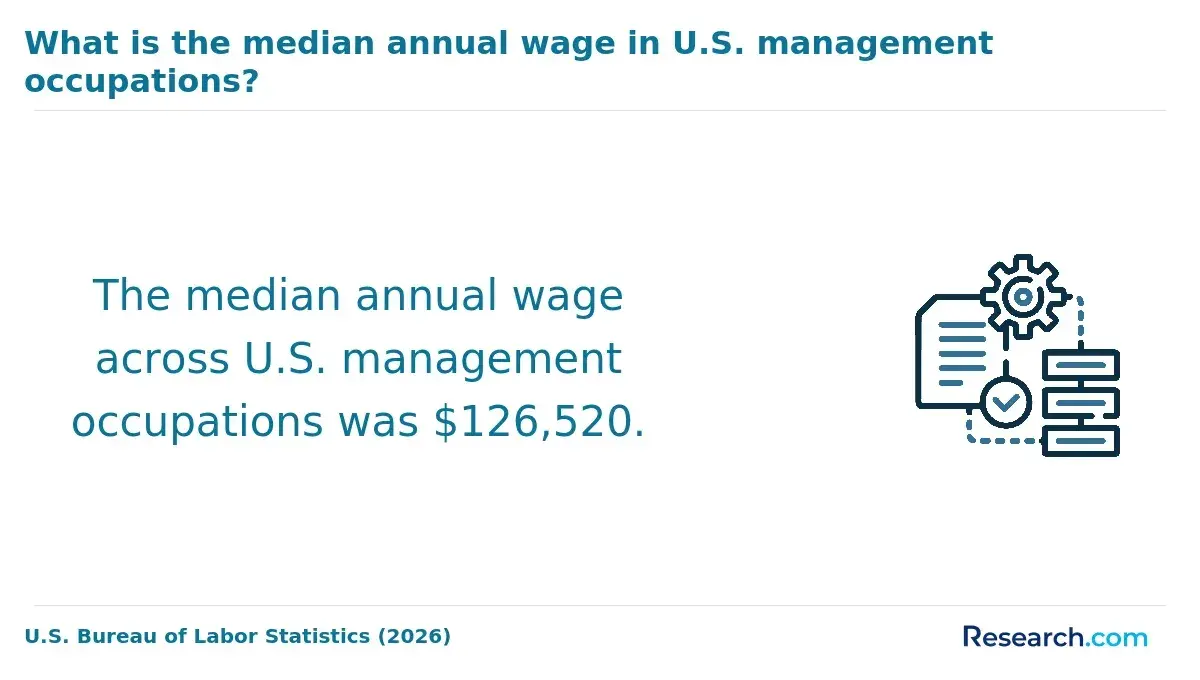
The U.S. Bureau of Labor Statistics reports a May 2025 median annual wage of $126,520 for management occupations overall. That broad figure is not a nonprofit salary or an expected MBA outcome. Pay for a specific opportunity depends on the role, organization, location, and your prior experience. Compare actual nonprofit job postings with your current owner income and benefits before assuming a career move will raise compensation.
Do nonprofit management careers require licenses or certifications?
Nonprofit management generally does not have a single occupational license. An MBA is an educational qualification, not permission to practice a regulated profession. Particular responsibilities - such as legal, accounting, or clinical work - may require separate credentials, and nonprofit organizations must follow applicable rules governing their operations and fundraising.
Voluntary credentials or short courses in fundraising, nonprofit accounting, or governance may be more direct than an MBA if you need one specific skill. Before choosing either path, review job descriptions for the roles you want and separate required qualifications from preferences.
Other Things You Should Know About MBA
Possibly. Ask the instructor whether owner-led projects are permitted and how the school handles confidential company information, client consent, and conflicts of interest.
Yes, but the organizations should keep their finances, decisions, and obligations distinct. Seek appropriate legal or tax advice before setting up a shared venture or transferring resources between them.
No. Nonprofits may receive funding from multiple sources, including grants, fees, and earned revenue. How funds may be used depends on their terms and applicable rules.
No. A concrete plan to serve a mission can help explain your interest, but forming an organization is not a standard MBA admissions step. Consider whether an existing nonprofit could advance the same goal first.
- Online MBA - Master's Degree in Business Administration | University of Maryland Global Campus https://www.umgc.edu/online-degrees/masters/mba-business-administration
- The Benefits of Submitting an Optional GMAT or GRE Exam Score | Hankamer School of Business | Baylor University https://hankamer.baylor.edu/mba/full-time/admissions/GMAT-GRE-Optional
- MBA Requirements: What You Need to Apply in 2026 | SCU https://www.scu.edu/business/blog/admissions/mba-requirements/
- MBA FAQs | Labovitz School of Business and Economics https://lsbe.d.umn.edu/faq
- Master of Business Administration, Nonprofit Leadership | Antioch University https://www.antioch.edu/academics/leadership-management/master-of-business-administration/mba-nonprofit-leadership/
- Chapter 1: Understanding Grants and Funding Sources | umn.edu https://manifold.open.umn.edu/read/chapter-1-foundations-81f6ef38-cca2-4fc5-a287-f30d0547666e
- How Many Hours of Work Per Online Course Credit | ASU Online https://asuonline.asu.edu/newsroom/online-learning-tips/discover-weekly-number-hours-online-students-study/
- What Are the Prerequisites for an MBA Program? | marymount.edu https://marymount.edu/blog/what-are-the-prerequisites-for-an-mba-program/
- Courses in the Nonprofit Management Certificate Program | SUNY Purchase https://www.purchase.edu/academics/continuing-education/mindedge/courses/
- UC Davis Online MBA Admissions - Deadlines & Requirements https://onlinemba.ucdavis.edu/admissions/