
Online MBA in Cybersecurity Management: admissions guide for first-time managers

Co-Founder and Chief Data Scientist
Moving from cybersecurity contributor to manager changes the job: you may still understand the technical risks, but now you must set priorities, explain trade-offs, manage people, and defend a budget. An online MBA in cybersecurity management could help with that transition, but admission policies and the depth of security coursework vary by school. This guide explains how to assess your readiness, build a credible application, compare programs, and decide whether a full MBA is the right next step.
Key Things You Should Know
- A cybersecurity management concentration does not universally require a technical bachelor's degree, certification, or prior supervisory title; check each MBA's actual admissions rules.
- For first-time managers, the strongest application connects security experience to decisions about people, budgets, risk, and communication—not just technical accomplishments.
- The Bureau of Labor Statistics projects about 1.1 million annual openings across all US management occupations from 2025 to 2035; that is not a forecast for cybersecurity managers or MBA graduates.
What Is an Online MBA in Cybersecurity Management?
It is a graduate business degree that combines a general MBA core with coursework focused on managing cybersecurity as an organizational risk. Depending on the school, cybersecurity management may be a formal concentration, a track, or simply a selection of electives. Confirm which designation appears in the official curriculum rather than relying on a program search result.
The management emphasis matters. An MBA can help you weigh security investment against other business priorities, communicate risk to executives, and coordinate teams. It is not a substitute for hands-on training in incident response, security engineering, or penetration testing. Likewise, schools offering online dual MBA programs provide a different degree structure; a dual degree does not automatically include cybersecurity management coursework.
Is an Online Cybersecurity MBA Worth It for First-Time Managers?
It may be worth pursuing if you already have relevant security or IT experience and your next role requires broader financial, organizational, and leadership judgment. The best near-term return may be the ability to run a team and influence decisions—not an immediate promotion. Before enrolling, ask your supervisor which responsibilities you could realistically take on while studying and after graduating.
Value is less certain if you need to develop technical security skills first, cannot identify a plausible management opportunity, or would take on substantial debt without employer support. A targeted management course, supervised team-lead assignment, or security credential may address a narrower gap at lower cost.
Experienced leaders comparing flexible online executive MBA options should also check their intended cohort: an executive format may be less suited to someone taking an initial management role.
What Careers Can an Online Cybersecurity MBA Prepare You For?
For someone already working in security or IT, realistic next steps may include a security team lead, security program manager, governance, risk, and compliance manager or a manager responsible for security operations. These jobs differ: some emphasize staffing and delivery, while others focus on policy, audits, vendors, or enterprise risk. Employers may still expect substantial security experience, even when an MBA is preferred.
A first management assignment is a more credible immediate goal than chief information security officer. If you work in another field, the transition may require security experience before management credentials carry much weight. For example, a nurse interested primarily in healthcare administration should not mistake accelerated online MSN-MBA dual-degree programs for preparation to lead a cybersecurity team; they serve a different professional goal.
The MBA core typically develops accounting, finance, strategy, operations, and organizational leadership. Cybersecurity-focused courses may apply those tools to enterprise risk, security governance, incident decision-making, compliance, and technology investment. Actual courses and their technical depth vary, so inspect required classes rather than assuming a concentration title guarantees a particular subject.
For a first-time manager, look for assignments that require a business case for a control, a risk briefing for nontechnical leaders, or a staffing and resource plan. These exercises reveal whether the program helps you translate expertise into managerial decisions. Also check whether leadership coursework covers feedback, conflict, and team performance; security strategy alone will not teach you to supervise people.
Requirements are set by individual schools, not by the specialization as a whole. Programs commonly ask for evidence of an undergraduate degree and may request transcripts, a résumé, recommendations, essays, an interview, or a GMAT/GRE score. Experience expectations, test waivers, prerequisite courses, and deadlines differ. Do not assume that a nonbusiness degree or lack of a management title rules you out; confirm the written policy with admissions staff.
Your application should show readiness for graduate business work and potential to lead. Use this preparation sequence to separate official requirements from ways to strengthen your candidacy:
- Check each program's current degree, work-experience, testing, and prerequisite rules; ask whether cybersecurity courses have separate entry requirements.
- Identify examples of influence without formal authority, such as coordinating incident stakeholders, mentoring colleagues, or securing approval for a risk-reduction project.
- Explain why you need MBA-level budgeting and people-management skills now, and name a realistic next role rather than claiming the degree will make you an executive.
- Address preparation gaps honestly: review accounting or quantitative fundamentals if needed, and ask whether the school offers foundation coursework.
Applicants with nonbusiness degrees can compare online MBA programs for nonbusiness majors but must still verify the cybersecurity curriculum and admissions rules of any program they consider.
Completion time depends on required credits, course sequencing, how many courses you take at once, and whether the school offers the cybersecurity courses every term. Ask for a sample part-time schedule, not just the advertised fastest finish. As a new manager, you may need room for incident escalations, performance reviews, and group projects alongside classes.
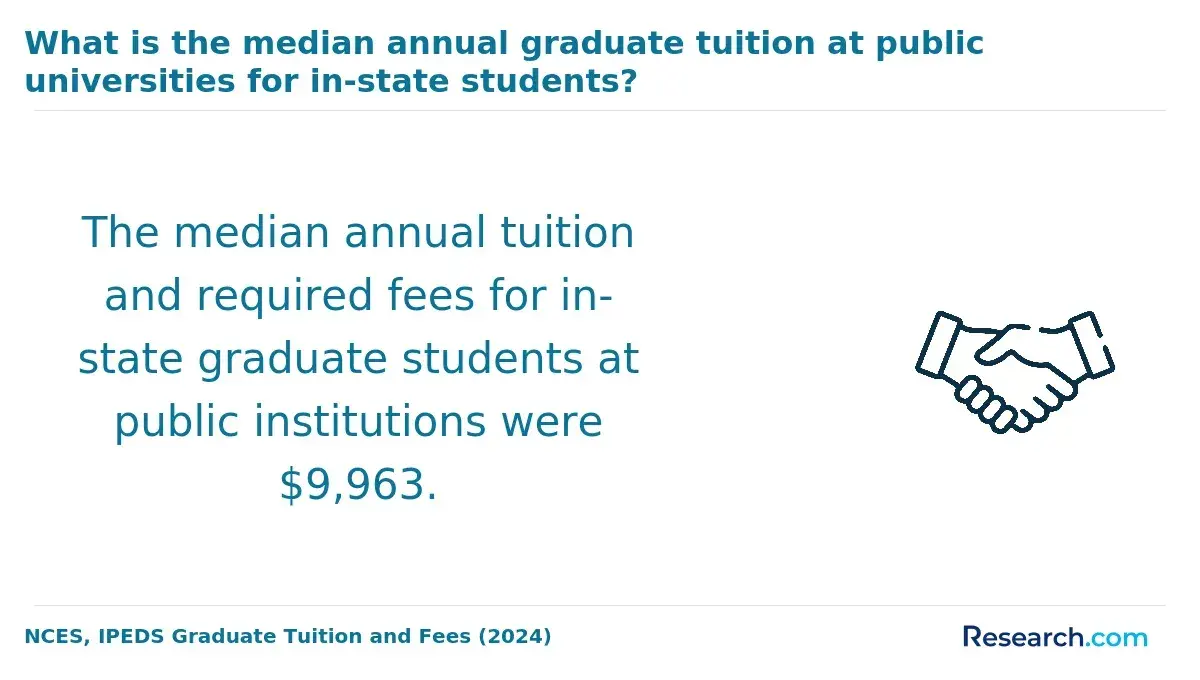
Compare the full cost of attendance: tuition, mandatory fees, materials, technology charges, and any required travel. Ask how employer tuition assistance applies to part-time study and what happens if you pause enrollment. When comparing affordable AACSB-accredited online MBA programs, verify both the current total cost for your enrollment plan and whether the cybersecurity option you want is available online. A low advertised per-credit price does not establish the final bill.
An online MBA can let you keep your job and apply coursework to current security decisions. That advantage disappears if required live classes conflict with on-call duties or group work regularly consumes your limited evenings. Ask specifically about synchronous sessions, examinations, residencies, and the time zone used for live meetings.
A campus MBA may provide more in-person contact and recruiting access, but it can require commuting or time away from work. Neither format guarantees better career outcomes. If your aim is promotion within your current organization, continued employment may make online study attractive. If you need a major career change, compare the actual recruiting and networking services available to online students before deciding.
First, verify the institution's accreditation through the accreditor or the US Department of Education's recognized-accreditor resources. Then check whether the business school holds specialized accreditation, such as AACSB, ACBSP, or IACBE, if that distinction matters to you. Institutional accreditation and business-school accreditation are different claims; neither confirms that a cybersecurity concentration exists.
For your shortlist, request the official online degree plan and compare the courses you must take, not merely those offered as electives. Ask whether the concentration appears on the transcript, whether required courses are offered often enough for your intended pace, and whether online students can use the relevant career services. Those answers are more useful to a first-time manager than a ranking without evidence of program fit.
Certifications can document security knowledge that an MBA's business core does not teach. For governance-oriented work, consider whether CISM aligns with the roles you want; for broader security leadership, CISSP may be relevant. Both have their own experience and credentialing rules, so check the issuing organization's current eligibility requirements before treating either as an immediate option.
Choose a credential for a specific gap. An MBA may strengthen your ability to justify a security budget and lead a team, while a certification may provide more direct evidence of security-domain competence. Neither replaces documented experience managing risks, projects, or people.
What Are the Salary and Job Outlook for Cybersecurity Management Careers?
The Bureau of Labor Statistics reports a $126,520 median annual wage in May 2025 for US management occupations as a group. That figure is not a cybersecurity-management salary, an entry-level manager salary, or an estimate of what an MBA graduate will earn. Cybersecurity leadership roles span different occupations and employers, making a single broad median a poor basis for calculating your personal return.
For a more useful estimate, compare local postings for the specific role you could plausibly pursue with your current experience. Consider the posted responsibilities and pay range alongside your existing compensation, the MBA's total cost, and any employer funding. Treat advancement as a possibility to evaluate—not an outcome caused by enrolling.
Other Things You Should Know About MBA
Yes. With permission, describe your decisions, collaborators, and results without disclosing confidential security details. Explain your contribution rather than presenting a team outcome as your own.
Follow the school's instructions. A supervisor who can describe your judgment, communication, and leadership potential may be more useful than a well-known expert who knows little about your work.
Not necessarily. Management-focused courses may use cases and business projects instead. Ask to see course descriptions if hands-on labs are important to your goals.
Yes, if a program's experience requirements allow it. Explain what the promotion has taught you, where you need development, and how you will balance study with your new responsibilities.
- Cost of Attendance (Budget) | 2025-2026 Federal Student Aid Handbook https://fsapartners.ed.gov/knowledge-center/fsa-handbook/2025-2026/vol3/ch2-cost-attendance-budget
- Understanding U.S. Accreditation | EducationUSA https://educationusa.state.gov/understanding-us-accreditation
- Accreditation in the U.S. | ed.gov http://www.ed.gov/laws-and-policy/higher-education-laws-and-policy/college-accreditation/accreditation-in-the-us
- Policies for Online Teaching | Teaching and Learning Resource Center https://teaching.resources.osu.edu/teaching-topics/policies-online-teaching
- Program: Cybersecurity Management, MBA - Hofstra University https://bulletin.hofstra.edu/preview_program.php
- Cybersecurity Risk Management (MBA) | Seton Hill University https://www.setonhill.edu/academics/degrees-programs/graduate-programs/cybersecurity-risk-management-mba.html
- What Does an MBA Teach You? Skills, Curriculum & Career Impact | Southwest Minnesota State University https://online.smsu.edu/resources/article/what-does-an-mba-teach-you/
- Online vs On-Campus College: Choose the Right Format | Bay Path University https://www.baypath.edu/news/bay-path-university-blogs/post/online-vs-on-campus-college-choose-the-right-format/
- Online MBA in Cybersecurity in Oregon | Bushnell University https://bushnell.edu/programs/mba/cybersecurity/
- MBA Requirements: What You Need to Apply in 2026 | SCU https://www.scu.edu/business/blog/admissions/mba-requirements/


