Online MBA in Cybersecurity Management: Admissions Guide for Nonbusiness Bachelor's Graduates

Co-Founder and Chief Data Scientist
A nonbusiness bachelor's degree need not rule out an online MBA in cybersecurity management. The harder decision is whether your academic background, work experience, and career goal make a management-focused degree the right next step.
This guide explains what admissions offices commonly evaluate, where business or cybersecurity preparation may help, and how to check a program's curriculum, accreditation, cost, and format before applying. It also distinguishes careers the MBA may support from technical security roles that usually call for different experience.
Key Things You Should Know
- A nonbusiness bachelor's degree is not an automatic barrier; check each school's degree, experience, testing, and foundation-course policies rather than assuming they are universal.
- Prepare for both sides of the degree: MBA accounting and finance, plus cybersecurity risk and governance. Neither a business major nor hands-on security experience is necessarily required by every program.
- Do not use broad management pay figures as an expected return: the U.S. median for management occupations was $126,520 in May 2025, not a reported salary for cybersecurity MBA graduates.
What is an online MBA in cybersecurity management?
It is a graduate business degree that combines an MBA's general management core with study of cybersecurity decisions. The business core typically addresses accounting, finance, operations, strategy, and leadership. Cybersecurity-focused study may address enterprise risk, security governance, incident-response planning, privacy, and how leaders allocate resources to protect an organization.
Program names matter. A formally designated concentration is different from a general MBA with a security elective, and the depth of security study varies. Check the degree requirements and transcript designation before assuming the specialization is substantial. This is primarily preparation for managing business and security decisions, not a substitute for technical training in network defense or software security.
Match the specialization to the work you want to do. If your goal is customer acquisition rather than security governance, it makes more sense to compare marketing MBA programs than to choose cybersecurity because it sounds broadly employable.
Can nonbusiness bachelor's graduates apply to an online cybersecurity MBA?
Often, yes. Many MBA admissions processes consider applicants from multiple undergraduate disciplines, but eligibility is set by each school. A computer science graduate may bring technical context but need more preparation in accounting; a communications graduate may bring stakeholder skills but need to build quantitative confidence. A healthcare or public policy graduate may already understand regulated environments and risk, even without a business major.
Separate admission eligibility from readiness to succeed. Ask whether the school requires prerequisite courses, assigns foundation modules after admission, or merely recommends preparation. Also check whether it expects professional experience: a strong academic record alone may not meet a program's stated experience requirement.
If your transcript is unconventional or your academic record is uneven, look closely at published eligibility rules and evidence the school accepts of later academic or professional progress. A comparison of online MBA programs with accessible admissions can help you build an initial list, but confirm the current cybersecurity option and its requirements directly with each school.
What are the admission requirements for an online cybersecurity MBA?
Requirements vary by university. Common application components include a completed bachelor's degree, transcripts, a résumé, a statement of purpose, and recommendations; some schools also request an interview or GMAT/GRE scores. Testing waivers and professional-experience expectations are program-specific. Do not treat a commonly requested item as a requirement until you see it on the program's current admissions page.
For a nonbusiness applicant, the strongest application connects prior experience to a credible management goal. An IT professional might describe decisions involving budgets or stakeholders; an applicant from another field might show how they have handled sensitive information, operational risk, projects, or team coordination. Before applying, use this checklist to separate mandatory items from ways to strengthen your candidacy:
- Confirm the degree, transcript, work-experience, test, recommendation, and deadline rules for your intended intake.
- Ask admissions which accounting, finance, statistics, or economics topics are prerequisites and which are optional preparation.
- Map your experience to a specific goal, such as security program coordination or technology-risk management, without claiming technical expertise you do not have.
- Identify a recent course, project, or work example that demonstrates quantitative ability if your transcript provides little evidence of it.
- Check whether admission to the MBA also grants access to the cybersecurity concentration and whether any concentration courses have separate prerequisites.
Introductory business coursework can improve readiness, but taking it before applying is not automatically necessary. Get the school's policy first so you do not pay for a course that will not satisfy its requirement.
Check two distinct questions: whether the university holds recognized institutional accreditation and whether its business school or MBA also holds specialized business accreditation. Specialized accreditation can be a useful comparison factor, but it does not replace institutional accreditation or prove that a particular cybersecurity concentration has independent accreditation.
Verification should come from the accreditor's directory and the institution's current disclosures, not just a logo on a recruitment page. Follow these steps before committing:
- Find the institution's exact legal name and confirm its current institutional accreditation in the accreditor's directory.
- If the school advertises business accreditation, verify that claim in the named accreditor's directory and check which business programs it covers.
- Confirm that the online MBA and cybersecurity option are offered by the institution you verified, including any differences between campuses or partner arrangements.
If an employer, another university, or a credentialing body has a particular recognition requirement, ask that organization directly whether the degree meets it. Accreditation does not guarantee credit transfer, hiring, or certification eligibility.
Expect an MBA core built around managerial accounting and finance, operations, organizational leadership, strategy, and decision-making. Cybersecurity management coursework may examine security policy, technology risk, governance, compliance, vendor risk, and communicating incident-related decisions to executives. A capstone or applied project may bring business and security considerations together, but it is not universal.
Read course descriptions rather than relying on a concentration label. A course on assessing cyber risk for executives serves a different purpose from a lab that teaches penetration testing. For nonbusiness graduates, the MBA core may be the steepest academic adjustment; for graduates without technology exposure, security terminology and systems concepts may require additional preparation. Ask for a sample syllabus and the full required-course sequence to locate your particular gaps.
There is no standard timeline or price. Completion depends on required credits, course availability, enrollment pace, and whether a foundation course adds work. Compare the published curriculum sequence with the pace you can realistically maintain alongside employment; an advertised accelerated completion time may assume a heavier course load than you want.
For cost, distinguish tuition from mandatory fees, books or software, financing costs, and any required travel. Ask whether tuition is charged per credit, course, or term, and whether rates change for online students or by residency. Then calculate your expected total using your own course plan and current school pricing. Online MBA financial planning is most useful when it compares complete, like-for-like costs rather than a single advertised tuition figure.
Employer education assistance can change the decision, but check reimbursement limits, grade requirements, and any obligation to remain employed. A lower-priced MBA without the security coursework you need may be poorer value than targeted graduate courses or employer-supported training.
The academic credential may be similar, but the experience can differ. Online study can reduce commuting and make it easier to keep working. It does not necessarily eliminate scheduled classes, group meetings, examinations, or campus visits. Campus-based study may offer more routine face-to-face interaction and access to activities that are harder to reproduce remotely.
The comparison below highlights features to verify with each school rather than benefits guaranteed by either format.
| Feature | Online MBA | Campus-based MBA |
| Schedule | May mix self-paced work with required live sessions | Usually centers on scheduled in-person classes |
| Networking | May rely on virtual teams, events, and optional visits | Offers recurring in-person contact, subject to program design |
| Career access | Recruiting and internship access must be confirmed | Recruiting and internship access must also be confirmed |
| Location costs | May reduce commuting or relocation; travel can still apply | May add commuting or relocation costs |
Ask the online program for actual live-session times, group-project expectations, residency requirements, and access to career services available to campus students. Applicants balancing a military transition may also want to compare online study options for online MBA programs and veterans, while verifying benefits and support with each institution.
The most plausible next role depends on what you have already done. Someone with security operations experience may use the MBA to pursue security program or risk-management responsibilities. A professional from audit, compliance, or project management may find an adjacent path into technology-risk coordination. Moving from an unrelated field directly into senior security leadership is a much larger transition.
Potential roles include cybersecurity program manager, information security manager, technology-risk manager, and security-focused consultant. Employers may expect prior technical, regulatory, or management experience for these positions; the MBA alone does not establish it. If your goal is hands-on security engineering or incident response, technical experience and specialized training are generally more direct preparation than a management MBA.
Use your prior discipline to narrow your target. A healthcare graduate interested in protecting patient information should distinguish a security-governance career from hospital operations leadership. For the latter, affordable graduate business education programs online focused on healthcare management may be a more relevant comparison.
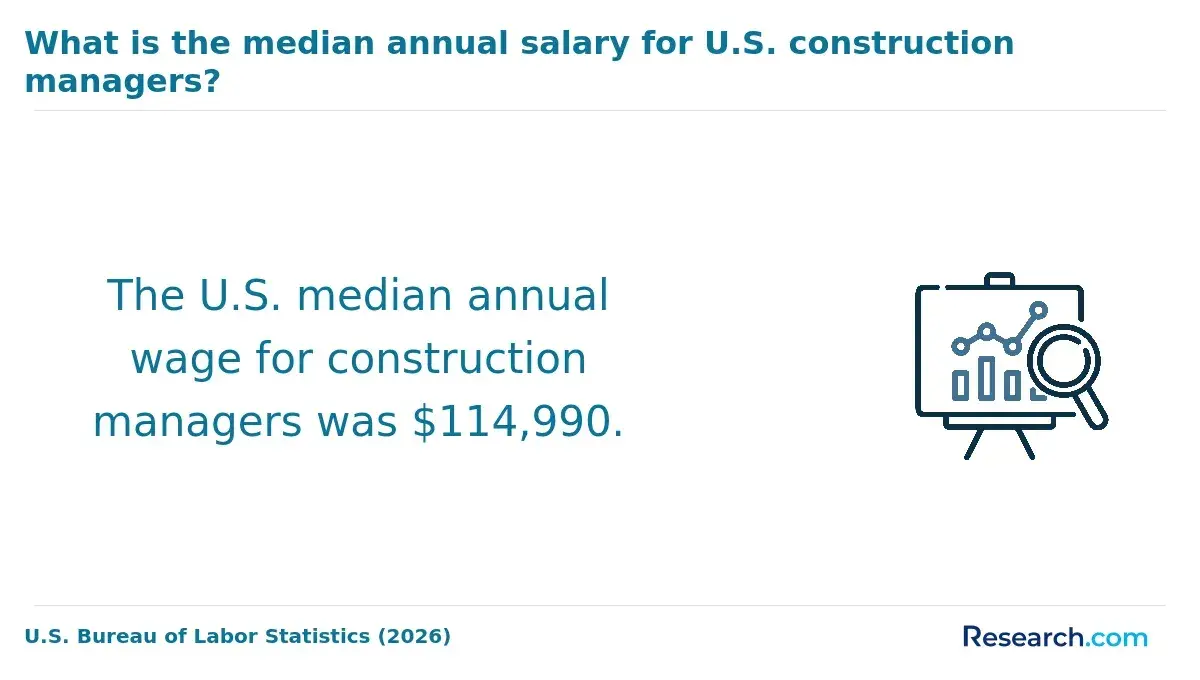
There is no single reliable salary for graduates of this specialization. Pay depends on occupation, location, industry, responsibilities, and prior experience. The U.S. Bureau of Labor Statistics reports a median annual wage of $126,520 for management occupations in May 2025. That figure describes a broad occupational group - not cybersecurity managers specifically, not new MBA graduates, and not an earnings increase caused by the degree.
For a useful personal estimate, compare pay for the particular roles you could plausibly enter with your current experience against roles you may qualify for after gaining both the degree and relevant responsibility. Include tuition, fees, borrowing costs, and employer support. If the degree would not materially change the jobs available to you, a salary figure for established managers is a weak reason to enroll.
Which certifications complement an MBA in cybersecurity management?
Choose a certification for a defined skill gap or target role, not simply to add letters after your name. Management-oriented security credentials can complement MBA study of governance and risk, while technical certifications can help establish knowledge the MBA does not teach. Eligibility for professional credentials may depend on documented experience, examinations, and ongoing requirements.
For example, CISSP is associated with broad security practice and has experience requirements; CISM emphasizes information security management. An entry-level security credential may make more sense for an applicant who needs foundational terminology before pursuing management-oriented credentials. Check each certifying body's current eligibility rules before budgeting for an exam. If your immediate goal is to build technical capability rather than lead security decisions, certification plus relevant work experience - or a specialized cybersecurity degree - may be a better first investment than an MBA.
Other Things You Should Know About MBA
Some schools accept applications from students nearing graduation, but they may require proof of degree completion before enrollment. Check the program's stated timing and documentation rules.
Possibly. Transfer-credit limits, grade rules, course equivalencies, and restrictions on concentration credits vary by school. Request a written evaluation before relying on a shorter completion plan.
No. A degree does not grant a clearance. Clearance eligibility is determined through a separate process tied to a qualifying position and the applicable government requirements.
That depends on the institution's diploma policy. Ask for confirmation about both diploma wording and how the degree or concentration appears on the transcript.
- School-Determined Requirements | 2024-2025 Federal Student Aid Handbook https://fsapartners.ed.gov/knowledge-center/fsa-handbook/2024-2025/vol1/ch1-school-determined-requirements
- Bellevue Online MBA in Cybersecurity Ranks No. 8 https://news.bellevue.edu/bellevue-universitys-online-mba-with-cybersecurity-concentration-ranks-no-8-nationally-for-2026/
- MBA Application Requirements | CBS Academics https://academics.business.columbia.edu/admissions/mba/application-requirements
- MBA Requirements: What You Need to Apply in 2026 | SCU https://www.scu.edu/business/blog/admissions/mba-requirements/
- MBA in Cybersecurity: Online Degree & Career Guide | UIS https://onlinecbm.uis.edu/degrees/business/mba/cybersecurity-management-program/online-degree-guide/
- Online MBA in Cybersecurity | Cybersecurity Management | Touro University Worldwide https://www.tuw.edu/academics/business/online-mba-cybersecurity-management/
- Cybersecurity Risk Management (MBA) | Seton Hill University https://www.setonhill.edu/academics/degrees-programs/graduate-programs/cybersecurity-risk-management-mba.html
- MBA with Cybersecurity Concentration | NDNU https://www.ndnu.edu/business-management/mba/cybersecurity.html
- Online Cybersecurity MBA | Management Focus | Lamar https://degree.lamar.edu/online-programs/business/mba/cybersecurity-management/
- Online Cybersecurity Management MBA at UWF https://getonline.uwf.edu/business-programs/mba/cybersecurity/