Careers after an online MBA in Supply Chain Management for military veterans

Co-Founder and Chief Data Scientist
Military logistics experience can be valuable in civilian supply chains, but employers may not immediately recognize its scope. For veterans considering an online MBA in supply chain management, the decision is whether the degree will help turn that experience into a specific civilian career move. This guide compares realistic roles, explains where an MBA adds value - and where experience or a certification may matter more - and covers salary context, education benefits, and program features to check before enrolling.
Key Things You Should Know
- Veterans with logistics, maintenance, contracting, or operations experience may be competitive for civilian supply chain roles, but an MBA does not automatically qualify them for senior management.
- The U.S. Bureau of Labor Statistics reports a May 2025 median annual wage of $126,520 across all management occupations; that is not a veteran or supply chain MBA graduate salary.
- Choose a program around a target job, its actual supply chain coursework, career support, total net cost, and verified eligibility for any VA education benefits you plan to use.
What careers can veterans pursue after an online MBA in supply chain management?
The most realistic path depends on what you managed in uniform. A veteran who coordinated transportation, inventory, maintenance, or procurement can often pursue a related civilian function before moving toward broader responsibility. An MBA may strengthen that progression by adding finance, commercial strategy, and business analytics; it does not replace experience with civilian suppliers, systems, or customers.
The table connects common military experience to plausible civilian directions. These are starting points for a job search, not automatic rank-to-title conversions.
| Relevant military experience | Potential civilian direction | Likely gap to address |
| Movement control or distribution | Transportation or distribution operations | Commercial carrier contracts, service metrics, and cost-to-serve |
| Supply, warehousing, or inventory accountability | Inventory planning or warehouse management | Demand forecasting and employer-specific planning systems |
| Contracting or vendor coordination | Procurement or supplier management | Commercial sourcing, negotiation, and supplier performance |
| Maintenance and readiness planning | Materials planning or aftermarket operations | Production schedules, customer commitments, and enterprise software |
Industry also matters. Defense contractors may readily understand military processes, while manufacturers, retailers, and healthcare organizations may require more translation. A veteran who is also a nurse and wants healthcare leadership has a different decision: online MSN and MBA dual-degree programs options may be worth comparing, but an MSN is not a requirement for general supply chain work.
How does an online supply chain MBA help veterans transition into civilian careers?
An MBA can help veterans explain operational decisions in terms civilian employers use: working capital, supplier risk, customer service, and return on investment. The strongest transition story pairs a specific military result with its business equivalent. For example, improving parts availability becomes evidence of inventory and service-level management - not simply "logistics leadership." Avoid disclosing sensitive operational details when describing that work.
The degree is most useful when paired with deliberate job-search work. Translate military titles into responsibilities on a civilian résumé, study the software and commercial practices named in target postings, and ask program career staff whether they support experienced online students seeking a functional or industry change. Employer projects, alumni introductions, and veteran career services may help, but their availability and access vary by school.
Career stage changes the calculation. Veterans transitioning after a long service career may need a program with substantial peer experience and senior-level career support rather than entry-level recruiting; guidance on online MBA programs education pathways after 50 can help frame that decision.
What jobs can you get with a supply chain management MBA?
An MBA can support both specialist-to-manager advancement and movement across related functions. Job titles overlap across employers, so compare responsibilities and required experience rather than relying on the word "manager."
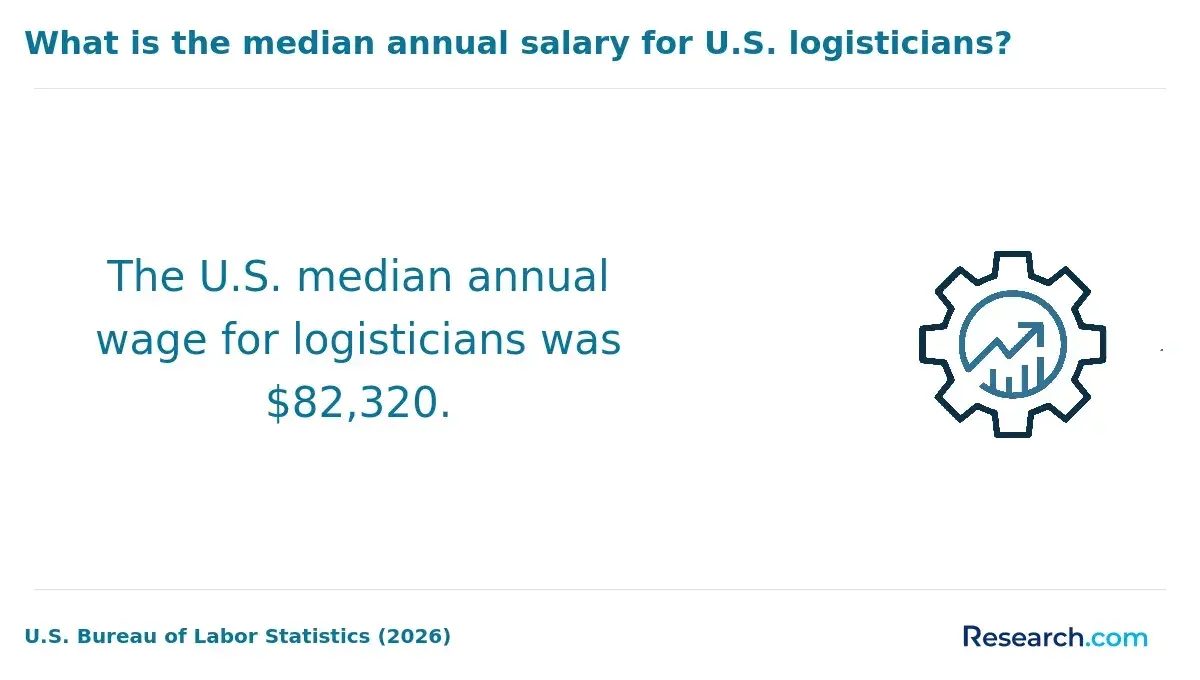
Supply chain analyst or planner: Uses demand, inventory, and delivery data to recommend operating decisions. This can be a practical entry point when military experience is relevant but commercial planning experience is limited.
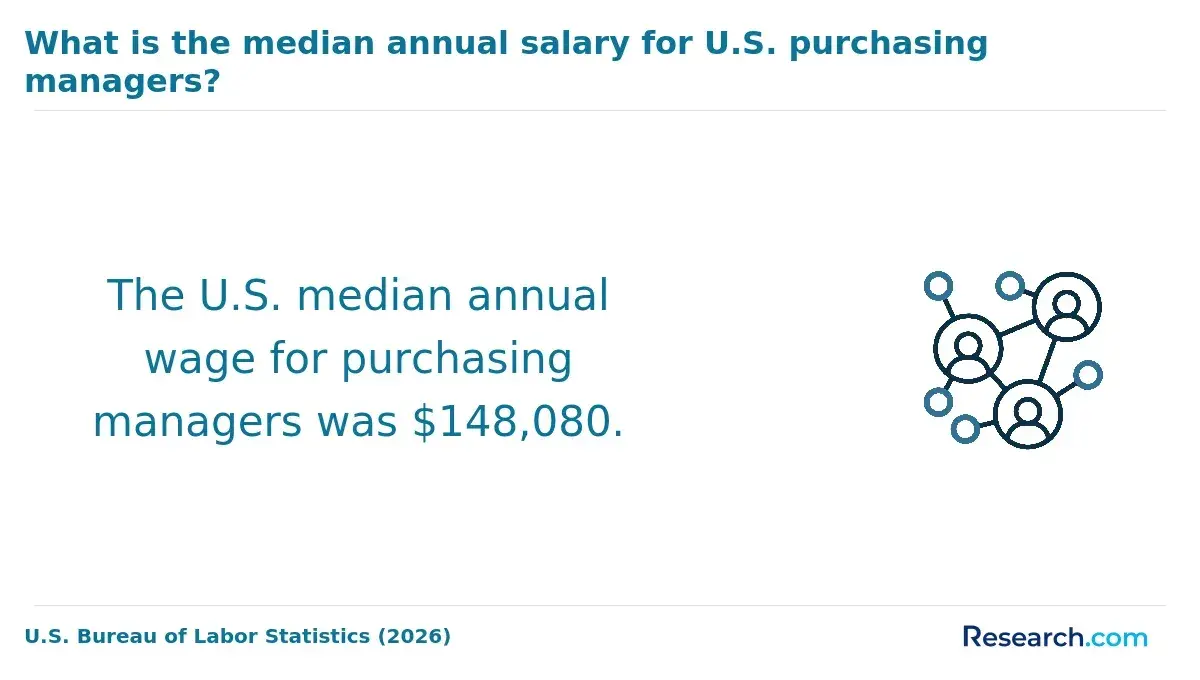
Procurement or sourcing manager: Leads purchasing strategy, supplier selection, and contract performance. Employers may expect a record of commercial negotiations, not just MBA coursework.
Logistics or distribution manager: Oversees transportation, warehousing, staffing, service, and budgets. Veterans with directly comparable responsibility may be closer to these roles than applicants changing functions entirely.
Operations manager or supply chain director: Coordinates performance across teams or functions. Director roles generally call for substantial civilian or directly transferable leadership experience; the MBA alone is not a shortcut to that level.
There is no reliable single salary for "veterans with a supply chain MBA." Pay depends on the occupation, location, industry, scope of responsibility, and prior experience. For context, the U.S. Bureau of Labor Statistics reports that the median annual wage across all management occupations was $126,520 in May 2025. That broad figure includes managers outside supply chains and does not describe MBA graduates, veterans, or an offer for a particular job.
For a useful personal estimate, compare posted pay ranges for the specific role and location you can credibly target now - not the title you hope to hold eventually. Separate base pay from bonuses, travel demands, and benefits. If a proposed MBA requires borrowing, test affordability against a conservative job outcome rather than assuming the degree will produce a management-level raise.
The broad management market offers opportunity, but it does not measure demand for supply chain MBA graduates specifically. The Bureau of Labor Statistics projects about 1.1 million openings per year on average across management occupations from 2025 to 2035, reflecting both growth and replacement of workers who leave those occupations permanently. Those openings span many fields and do not imply that a new graduate will qualify for them.
For a more relevant outlook, examine employers in your target region and industry: which planning systems they use, whether postings require procurement or manufacturing experience, and how often they seek supervisors versus analysts. Exposure to forecasting, supplier resilience, and business analytics can broaden options, but demonstrated results and familiarity with the employer's operating environment remain important.
The MBA core usually develops broad management skills such as accounting, finance, leadership, strategy, and operations. A formal supply chain concentration, when offered, adds designated coursework that may cover procurement, logistics, inventory, forecasting, and supply chain risk. An MBA with a single logistics elective is not necessarily a supply chain concentration; check the transcript designation and course requirements.
For veterans, the most valuable coursework often connects familiar operational decisions to commercial trade-offs: how inventory affects cash, how supplier choices affect risk, and how service targets affect cost. Applied projects using business data can provide interview examples. Course titles alone cannot establish depth, however, and managerial analytics instruction may not substitute for advanced technical training in planning software or data science.
Requirements vary by school. Applicants typically need a bachelor's degree and may be asked for transcripts, a résumé, essays, and recommendations. Programs set their own policies on professional experience, GMAT or GRE scores, interviews, and any foundation courses. Military service can demonstrate leadership and responsibility, but applicants should make the scope and results of that work understandable to civilian admissions readers.
A nonbusiness undergraduate degree does not automatically rule out admission. If your preparation in accounting or quantitative analysis is limited, ask whether the school offers introductory coursework and whether it adds time or cost. Applicants concerned about academic history can compare graduate business admissions options online MBA programs for low-GPA applicants, then confirm each school's current policy rather than assuming that relevant military experience overrides a stated requirement.
Completion time depends on required credits, course sequencing, transfer or waiver policies, and how many courses you take while working or transitioning. "Online" does not necessarily mean self-paced: live sessions, group projects, or residencies can affect a veteran's schedule. Ask each school for its published completion paths and what happens if deployment, employment, or family needs interrupt enrollment.
Compare total expected cost, not advertised tuition alone. Include mandatory fees, materials, technology, any required travel, and interest if you borrow. For a first pass at lower-priced schools, see this online business school cost comparison online MBA programs under $30,000; verify current prices and whether the listed programs actually offer the supply chain coursework you need.
GI Bill eligibility, remaining entitlement, and payment amounts depend on the individual and the approved program; online enrollment may affect housing payments. Yellow Ribbon participation and terms also vary. Confirm the program's VA approval and your benefits with the school's certifying official and the VA before treating an advertised price as your out-of-pocket cost. Employer tuition assistance can further change the comparison, though service commitments or reimbursement rules may apply.
Certifications are most useful when they address a gap visible in your target job postings. The MBA emphasizes business leadership across functions; a certification may signal more focused knowledge. Neither substitutes for proof that you can apply the skills at work.
ASCM's CSCP credential focuses on end-to-end supply chains, while CPIM is more closely associated with planning and inventory. The Institute for Supply Management's CPSM may fit procurement and sourcing goals. For process-improvement roles, an appropriately rigorous Lean Six Sigma credential may be relevant. Check current eligibility, exams, renewal obligations, and employer preferences before paying; a targeted certification or employer training may be a better first investment than an MBA if you only need one technical skill.
How can veterans choose an accredited online supply chain MBA?
Start with the civilian job you want, then compare programs against that job - not against rankings alone. Verify institutional accreditation through recognized U.S. accreditation information and check separately for any business-school accreditation the program claims. Institutional accreditation and specialized business-school accreditation are different; neither establishes that a particular supply chain concentration is offered online.
A useful shortlist review has several steps:
- Confirm that the online MBA offers a formal supply chain concentration or enough relevant coursework for your goal, and read the actual course descriptions.
- Ask how online students access career coaching, employer events, alumni, applied projects, and veteran support.
- Check live attendance, residency, interruption, and completion rules against your work and family commitments.
- Request a written estimate of tuition and mandatory costs, then verify program-specific VA benefit details and any employer assistance.
- Compare those findings with the experience requirements in real postings for your target roles.
If cost is the deciding constraint, affordable online MBA programs option 2 mba usa offers another starting point for comparison - not evidence that every listed MBA has the right specialization or veteran services. An MBA is most defensible when it closes a defined management or career-transition gap at a manageable net cost. If you already qualify for the target role, direct applications, employer development, or a focused certification may serve you better.
Other Things You Should Know About MBA
Most commercial roles do not. Some defense or federal-contractor positions require eligibility for a clearance or an active clearance, depending on the work. Read the posting rather than assuming prior service satisfies the requirement.
No. Veterans' preference applies to certain federal hiring processes, subject to eligibility and the position's rules; it is not a general requirement for private employers to select veteran applicants.
Some planning, analytics, and procurement work can be remote, but warehouse, distribution, and site operations roles often require an on-site presence. Check location and travel expectations before applying.
Possibly, but do not assume it does. Ask whether the program permits internships, whether online students can use its employer connections, and whether a project with your current employer could provide more relevant experience.
- Facility Security Clearance (FCL) FAQ | United States Department of State https://www.state.gov/facility-security-clearance-fcl-faq
- 4 Features to Look for in a Quality Online MBA Program | concordia.edu https://www.concordia.edu/blog/4-features-to-look-for-in-a-quality-online-mba-program.html
- Grad Insights: Is a Supply Chain MBA Worth It? | wsc.edu https://www.wsc.edu/news/article/1354/grad-insights-is-a-supply-chain-mba-worth-it
- Why Does Accreditation Matter So Much? - UWF Online https://getonline.uwf.edu/business-programs/mba/general/why-does-accreditation-matter-so-much/
- 4 Careers in Supply Chain Management | App State Online https://onlineprograms.appstate.edu/blog/supply-chain-management-careers/
- Veterans can transition into successful civilian supply chain management careers - Penn State World Campus https://www.worldcampus.psu.edu/about-us/news-and-features/veterans-can-transition-into-successful-civilian-supply-chain-management-careers
- How Much Does an Online MBA Cost? | Howard University Online MBA https://onlinemba.howard.edu/blog/online-mba-cost-guide/
- Logistics Officer 90A | goarmy.com https://www.goarmy.com/careers-and-jobs/support-logistics/transportation-inventory/90a-logistics-officer
- Your Guide to Supply Chain Salaries and Career Benefits | ascm.org https://www.ascm.org/ascm-insights/the-10-highest-paying-supply-chain-jobs/
- From Military Logistics to Civilian Supply Chain | ascm.org https://jobs.ascm.org/career-resources/on-the-job-3/from-military-logistics-to-civilian-supply-chain-2026-73