Online MBA in Real Estate: Admissions Guide for International Applicants

Co-Founder and Chief Data Scientist
An online U.S. MBA with a real estate focus can let you study without relocating, but admission is only one part of the decision. You also need to know whether the school accepts students in your location, how it evaluates overseas qualifications, and whether its courses support your career goal. This guide explains the application process and the checks that matter most to international applicants, from English-language policies to accreditation and U.S. work authorization. Use it to build a shortlist you can realistically attend and afford.
Key Things You Should Know
- Check overseas enrollment eligibility before applying: admission to a U.S. online MBA does not itself provide a visa or permission to work in the United States.
- International applicants may need evaluated academic records and proof of English proficiency; test, experience, and document policies vary by school.
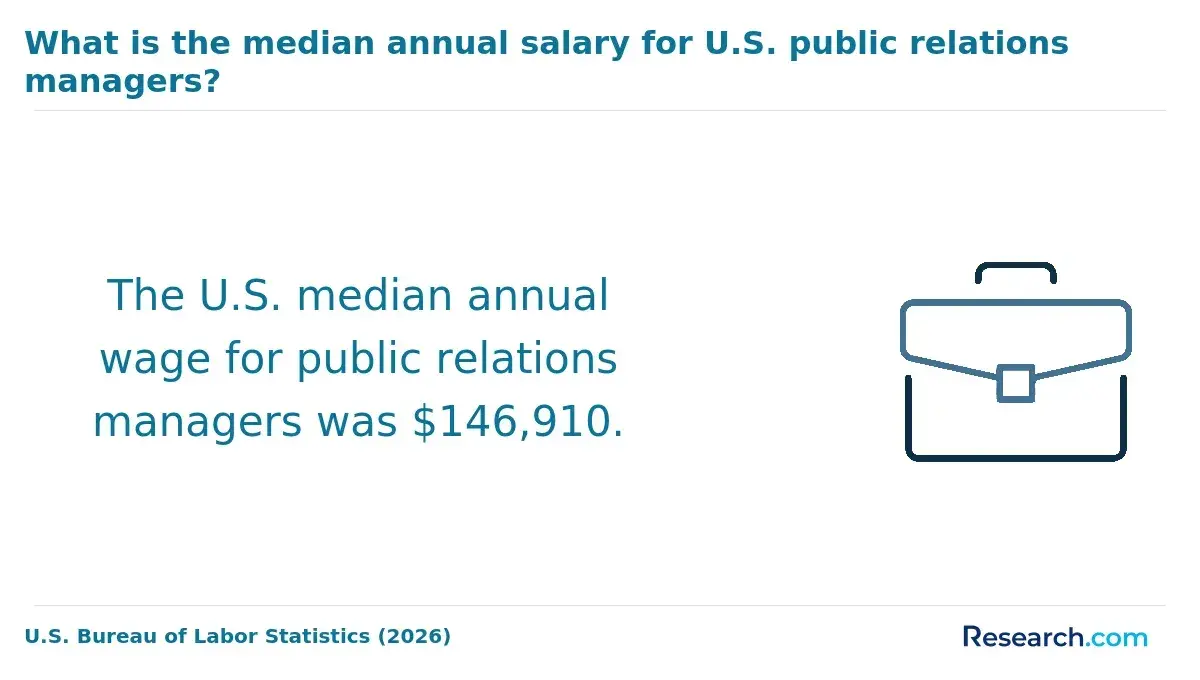
- For salary context, the U.S. median annual wage across management occupations was $126,520 in May 2025 - not a starting salary for real estate MBA graduates.
What is an online MBA in real estate?
An online real estate MBA is a Master of Business Administration delivered primarily online with coursework focused on property markets, investment, development, or related businesses. The MBA core generally develops broad skills in accounting, finance, strategy, and management.
Real estate study may be a formally named concentration, a track, or simply a set of electives; those are not equivalent, so check the degree requirements rather than relying on a marketing description.
The degree is best understood as management education applied to real estate. It is not a broker's license, a substitute for experience underwriting transactions, or a guarantee of access to a particular country's property market.
Why should international students choose an online real estate MBA?
The strongest reason is continuity: you may be able to keep your job, professional contacts, and local market experience while gaining a U.S.-oriented business education. That can suit professionals in development, banking, asset management, or construction who want to move toward investment or leadership responsibilities without leaving their current market.
The trade-off is that online access varies by location. Schools may restrict enrollment in some jurisdictions, schedule required live classes in U.S. time zones, or require travel for an immersion.
If ease of admission is part of your search, comparisons of online MBA programs with accessible admissions acceptance rates can help you identify schools to investigate, but an acceptance rate does not establish that a program admits students where you live.
Choose this route when the coursework and contacts fit the market where you intend to work. If your immediate goal is entry to the U.S. labor market, compare campus-based options separately: enrollment in an online degree, especially while living abroad, should not be treated as a path to U.S. immigration status or employment authorization.
What are the admission requirements for international MBA applicants?
Requirements belong to the individual MBA program, not to the real estate specialization as a whole. Schools commonly request evidence of a completed bachelor's degree or accepted equivalent, academic records, a résumé, and written statements.
Some request recommendations, an interview, professional experience, or GMAT/GRE results; others offer waivers or do not require a test. A real estate degree, license, or prior property-sector job is not a universal prerequisite.
International applicants may face additional documentation rules. Before paying an application fee, complete this preparation checklist with each admissions office:
- Confirm that applicants residing in your country can enroll and complete every required course or residency.
- Ask whether the school requires a course-by-course credential evaluation, which evaluator it accepts, and how official records and translations must be submitted.
- Check whether your prior education or professional background qualifies you for an English-language test waiver; otherwise, confirm accepted tests and score rules.
- Verify work-experience expectations, test policy, recommendations, deadlines, and any required foundation courses.
- Ask when official documents are due and whether your name must appear consistently across your application and records.
A stronger application connects your experience to a specific real estate goal - for example, moving from construction project delivery into development finance - and identifies any quantitative preparation you need to improve.
If your academic record is unconventional, online MBA programs with accessible admissions may offer schools to investigate, but verify each program's current international requirements directly.
Start with the U.S. institution, then check the business school. Search the U.S. Department of Education's accreditation database or the Council for Higher Education Accreditation directory for the institution's current status and accreditor.
Next, check any claimed business-school accreditation - such as AACSB, ACBSP, or IACBE - against the accreditor's own directory. Institutional and specialized business accreditation answer different questions; neither confirms that a real estate concentration exists.
Ask the school which institution awards the degree and whether the online MBA is included in its accredited offerings.
If you will use the qualification outside the United States, also ask the relevant employer, professional body, or education authority in your destination country how it evaluates U.S. online degrees. U.S. accreditation does not automatically establish local recognition for every purpose.
Expect the MBA core to cover managerial accounting, finance, strategy, and organizational decision-making. Real estate-focused courses may then address property valuation, investment analysis, development, capital markets, or portfolio management.
The balance matters: a program with one property elective may be useful for general management but provide less technical depth than a substantial real estate concentration.
Compare course descriptions with your intended work. An aspiring investment analyst should look for applied financial modeling and transaction analysis; a development professional may benefit more from feasibility, financing, and stakeholder-focused projects.
Ask whether projects use U.S. property assumptions and whether you can apply the methods to your home market. For professionals whose primary goal is clinical leadership rather than property decisions, online MSN and MBA dual-degree programs address a different need; they should not be mistaken for real estate training.
Completion time depends on required credits, course availability, transfer-credit policy, and whether you study full time or part time. A concentration can also affect sequencing if its courses run infrequently. Ask for a term-by-term plan based on the course load you can sustain from your time zone; an advertised fastest completion time may not describe your schedule.
Compare the full amount you would pay, not just the displayed tuition rate. This table separates common cost components so you can request a comparable written estimate from each school.
| Cost component | What may affect the total |
| Tuition | Required credits, per-credit or per-term pricing, and any rate that applies to international students |
| Mandatory fees | Technology, student services, graduation, or other required charges |
| Study materials | Books, software, and property-data or modeling tools |
| Travel | Any required campus visit, residency, or immersion |
| Payment and financing | Currency conversion, transfer charges, payment timing, and borrowing costs if applicable |
Scholarships, employer support, and payment-plan eligibility also vary. Many international students cannot rely on U.S. federal student aid, so confirm funding before accepting an offer. An online MBA tuition and total cost guide can help you frame the comparison, but only a school-specific estimate will establish your likely bill.
The distinction is not simply convenience versus prestige. Delivery format changes your access to live instruction, local employers, recruiting events, and potentially immigration-related options.
The comparison below highlights the practical differences an international applicant should investigate.
| Consideration | Online MBA | Campus-based MBA |
| Location | May permit study from abroad, subject to school and jurisdiction rules | Usually requires relocation and an appropriate immigration status |
| Scheduling | May offer recorded work but can still require live U.S.-time-zone sessions | Usually requires attendance on a local class schedule |
| Career access | May fit advancement with a current employer; recruiting access must be checked | May offer more in-person employer contact, subject to each program's services |
| Living costs | May avoid relocation costs but can include required travel | Typically adds housing and relocation expenses |
Ask both programs what career services international students actually use and whether online students can join the same employer events. If price is decisive, a list of online MBA programs under $30,000 can provide a budget starting point; verify current total charges and real estate coursework before treating any program as a match.
The most plausible next step depends on what you already do. A property analyst might pursue more responsibility in acquisitions or asset management; a construction manager might target development or investment planning; a banker might apply finance experience to real estate lending.
These moves still depend on transaction skills, local market knowledge, professional contacts, and an employer willing to hire or promote you. An MBA may help with management decisions across a property portfolio, but it does not by itself qualify someone for senior investment leadership or regulated brokerage work.
For a substantial career change, seek programs with relevant projects and confirm whether career services support students living abroad. If you mainly need valuation or modeling skills rather than broad management training, focused courses or a specialized real estate degree may be the more direct choice.
There is no single reliable salary for "real estate MBA graduates": roles, experience, employers, and U.S. locations differ too much. For broad context, the U.S. Bureau of Labor Statistics reports a May 2025 median annual wage of $126,520 across management occupations.
That figure describes workers in many management jobs, not recent MBA graduates or real estate specialists, so it should not be used as an expected post-degree offer. The BLS projects overall U.S. management employment to grow faster than the average for all occupations from 2025 to 2035.
That broad outlook does not predict hiring in a particular property market or your eligibility to work in the United States. For a personal decision, compare salaries for the specific role and location you could realistically enter, then weigh any potential increase against tuition, financing, and time away from paid work.
Do international graduates need U.S. real estate licenses or certifications?
It depends on the work. U.S. real estate brokerage and sales activities generally fall under state licensing rules; an MBA does not replace a required state license. Other roles, such as internal investment analysis or some asset-management work, may not require a broker's license, though employers can set their own credential expectations.
Requirements also vary by state and by the activities performed, not simply by job title. Check the relevant state regulator before planning to represent buyers, sellers, landlords, or tenants.
Professional designations may demonstrate expertise but are distinct from legal permission to perform licensed work. If you intend to work in the United States, confirm employment authorization separately: holding an online U.S. MBA or a state professional license does not itself grant it.
Other Things You Should Know About MBA
Some schools allow applications during a final undergraduate term, but typically require proof of degree completion before enrollment. Ask the program for its deadline.
Possibly. Transfer rules differ by school, and credit is not automatic even when the prior institution is recognized. Request an evaluation before assuming it will reduce your study time or cost.
Some schools welcome online graduates at in-person ceremonies. Participation does not provide a visa; confirm the event policy and any applicable U.S. entry requirements separately.
Tell the school before relocating. Enrollment permission, payment options, course access, and live-class times may change with your location.
- Recognition of Foreign Qualifications | ed.gov http://www.ed.gov/about/initiatives/international-affairs/recognition-of-foreign-qualifications
- Types of Financial Aid: Grants, Work-Study, and Loans | studentaid.gov https://studentaid.gov/understand-aid/types
- Chapter 3 - Courses and Enrollment, Full Course of Study, and Reduced Course Load | USCIS https://www.uscis.gov/policy-manual/volume-2-part-f-chapter-3
- Frequently Asked Questions | Study in the States https://studyinthestates.dhs.gov/tools-menu/frequently-asked-questions
- Tests & Waivers - NYU Stern - New York University https://www.stern.nyu.edu/programs-admissions/masters-programs/ms-accounting/admissions/tests-waivers
- English Proficiency Requirements | uchicago.edu https://socialsciences.uchicago.edu/admissions/application-materials/english-proficiency-requirements
- English Proficiency Policy - Undergraduate Admission https://www.admission.richmond.edu/process/international/english-proficiency.html
- GMAT and GRE Waiver Policies | JHU Carey Business School https://carey.jhu.edu/admissions/gmat-gre-waiver-policies
- International Application Documents - Utah Admissions https://admissions.utah.edu/information-resources/international-application-documents/
- International applicants - UC Admissions https://admission.universityofcalifornia.edu/admission-requirements/international-applicants/