
Online MBA in Public Administration: Admissions Guide for Working Parents

Co-Founder and Chief Data Scientist
An online MBA can help a working parent build management skills without leaving a job, but admission is only one part of the decision. A program may accept your background yet require live evening classes, group meetings, or travel that your household cannot accommodate. This guide explains what to look for in admissions policies, how to prepare a credible application, and how to judge whether an MBA focused on public administration fits your career goals, budget, and caregiving schedule.
Key Things You Should Know
- Admission rules vary by school: a nonbusiness bachelor's degree is not necessarily a barrier, and GMAT or GRE policies, work-experience expectations, and foundation courses must be checked program by program.
- For working parents, asynchronous lessons do not eliminate deadlines, group projects, live meetings, or possible campus visits; confirm the full schedule before applying.
- An MBA is most compelling when broad management skills support a realistic advancement plan. For public-sector policy or administration roles, compare an MPA before committing household funds.
What is an online MBA in public administration?
An online MBA in public administration is a graduate business degree that applies management education to government, nonprofit, or other mission-driven organizations. The MBA core typically covers accounting, finance, operations, strategy, and organizational leadership. Public administration coursework may address public budgeting, governance, accountability, or relationships among agencies and community stakeholders.
The label needs scrutiny. One school may offer a formally named public administration concentration; another may offer only related electives within a general MBA. Ask whether the specialization appears on the transcript, how many relevant courses are available online, and whether those courses are offered often enough to fit your planned pace.
An MBA emphasizes managing organizations and resources. A master of public administration, or MPA, generally places more emphasis on public institutions, policy implementation, and government administration. Parents seeking business leadership that can transfer across sectors may prefer the MBA; those pursuing public-service policy or agency-specific roles should compare MPA curricula and employer preferences. When exploring affordable AACSB-accredited online MBA programs, check the actual public-sector coursework rather than assuming accreditation signals a public administration specialization.
Is an online MBA in public administration worth it for working parents?
It can be worthwhile when you already work in government, a nonprofit, or a related organization and can use MBA projects and management training to pursue responsibilities your employer values. The case is stronger if your employer helps pay, your chosen program accommodates caregiving interruptions, and the credential addresses a specific gap in your advancement plan. It is weaker if the target position requires policy expertise or years of sector experience that an MBA will not replace.
For a parent, the relevant cost is more than tuition: it includes childcare during live sessions, time taken from paid work or family responsibilities, and the risk of paying for courses you cannot complete on schedule. Before applying, compare program calendars with your household's busiest periods and ask a potential employer sponsor whether reimbursement requires a minimum grade or continued employment. Affordable online MBA programs can provide a useful price reference, but verify current total charges and whether they offer the public-administration content you need.
If your goal is a narrowly defined public-sector function, an MPA, targeted graduate course, or employer training may deliver more relevant preparation at a lower total cost. If you want to manage budgets, teams, and operations across public and private organizations, the MBA may offer broader value.
What are the admission requirements for an online public administration MBA?
There is no universal admissions standard for this MBA focus. Schools commonly evaluate an accredited bachelor's degree, academic record, professional experience, and evidence that an applicant can handle graduate business work. Some request a résumé, statement, recommendations, interview, or GMAT or GRE scores; others waive or do not require particular items. A public administration concentration does not, by itself, establish a separate admission requirement.
A nonbusiness degree may be acceptable. Depending on the school and your transcript, you might take foundation work in accounting, statistics, or economics before or during the MBA. Public-sector applicants can strengthen an application by describing measurable work with budgets, procurement, service delivery, teams, or stakeholders without claiming management authority they have not held.
Use this preparation sequence to separate published requirements from steps that could improve your application:
- Confirm the current degree, GPA, test, work-experience, prerequisite, and deadline policies on each program's admissions page; ask whether admission to the MBA also permits the desired concentration.
- Gather transcripts and a résumé that explains the scope of your work, including relevant leadership or operational responsibilities.
- Prepare a statement connecting your intended public-service role to specific courses, while explaining a realistic study plan alongside employment and caregiving.
- Ask recommenders who have observed your work to address your judgment, collaboration, and readiness for graduate study; leave time for any required interview or credential review.
Before paying an application fee, ask admissions staff whether you can begin part time and what happens if caregiving requires a term off. These are enrollment policies, not assumptions to make from the word "online."
Delivery format changes the practical burden on a household, but it does not determine the degree's academic quality or career relevance. The comparison below highlights commitments to verify for each specific program.
| Factor | Online MBA | Campus-based program |
| Class schedule | May combine recorded lessons with fixed live sessions and deadlines | Usually requires attendance at scheduled campus classes |
| Family logistics | May reduce commuting but still require childcare for meetings and assessments | May require recurring travel and childcare during class time |
| Collaboration | Group projects may depend on coordinating across time zones | In-person meetings may be easier to arrange around class, but require campus access |
| Career access | Online students' access to recruiting and events varies by school | Campus networking may be more immediate, but opportunities still depend on the program |
Compare actual schedules, not format labels. Ask for a sample course calendar, required visit dates, and the career services available to part-time online students. If cost influences your choice, lower-cost graduate business programs offer a starting point for comparison, not proof that online study will cost less than a local campus option after fees and travel.
Expect a business-management core, followed by whatever public administration concentration courses or electives the school actually offers. Core classes may teach managerial accounting, financial decision-making, organizational behavior, operations, and strategy. Relevant public-sector classes may examine public finance, ethics, governance, nonprofit management, or the constraints of managing services funded by taxpayers, grants, or donations.
Course titles alone can hide important differences. A public budgeting course may focus on government appropriations, nonprofit funding, or general financial management. Review descriptions and recent schedules to see whether assignments let you apply ideas to your workplace. Also ask when group projects meet: a recorded lecture can be watched after bedtime, but a collaborative presentation may still need a fixed evening.
For applicants who lack business coursework, foundation modules may add work before core classes. They can be useful preparation, but you should confirm whether they add credits, fees, or time to completion.
Completion time depends on required credits, term length, course sequencing, and how many courses you take at once. A parent taking fewer courses may preserve a workable routine but spend longer enrolled. Conversely, an accelerated calendar can compress deadlines and group work even when all instruction is online. Ask whether concentration courses are available each term and whether a pause affects your ability to finish.
For an honest cost comparison, obtain each school's current tuition basis - per credit, course, or term - and the credits your admission offer requires. Add mandatory fees, foundation courses, books or software, travel for any residency, childcare, and potential borrowing costs. Then subtract only aid or employer reimbursement you are eligible to receive under its stated conditions. Do not treat an advertised tuition figure as your complete cost of attendance.
Parents considering another profession-specific credential should keep pathways distinct. For example, MBA degree pacing options in accelerated MSN/MBA dual-degree programs serve a different purpose for eligible nursing professionals; their requirements should not be mistaken for those of a public administration MBA.
For someone already employed in public service, the MBA may support a move toward program management, operations leadership, budgeting, procurement management, or nonprofit administration. These jobs involve coordinating people and resources while meeting funding rules, public accountability standards, and organizational goals. Advancement still depends on experience, openings, and the hiring criteria of the agency or employer.
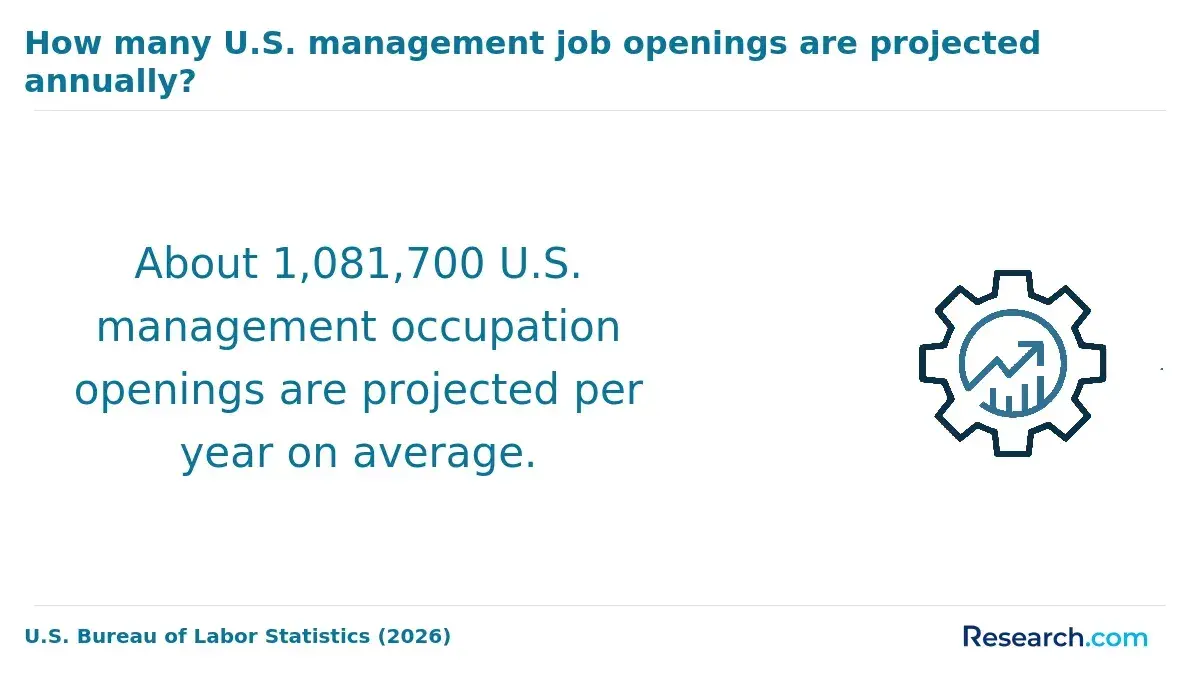
A move from the private sector into government is a different proposition. Business experience may transfer, but applicants may also need knowledge of public procurement, civil-service processes, grants, or the communities an agency serves. Seek relevant projects or service experience while studying rather than relying on the credential alone. U.S. Bureau of Labor Statistics projections indicate about 1.1 million openings annually across management occupations on average from 2025 to 2035, from growth and worker replacement. That broad figure signals possible management opportunities, not a forecast of public administration MBA jobs.
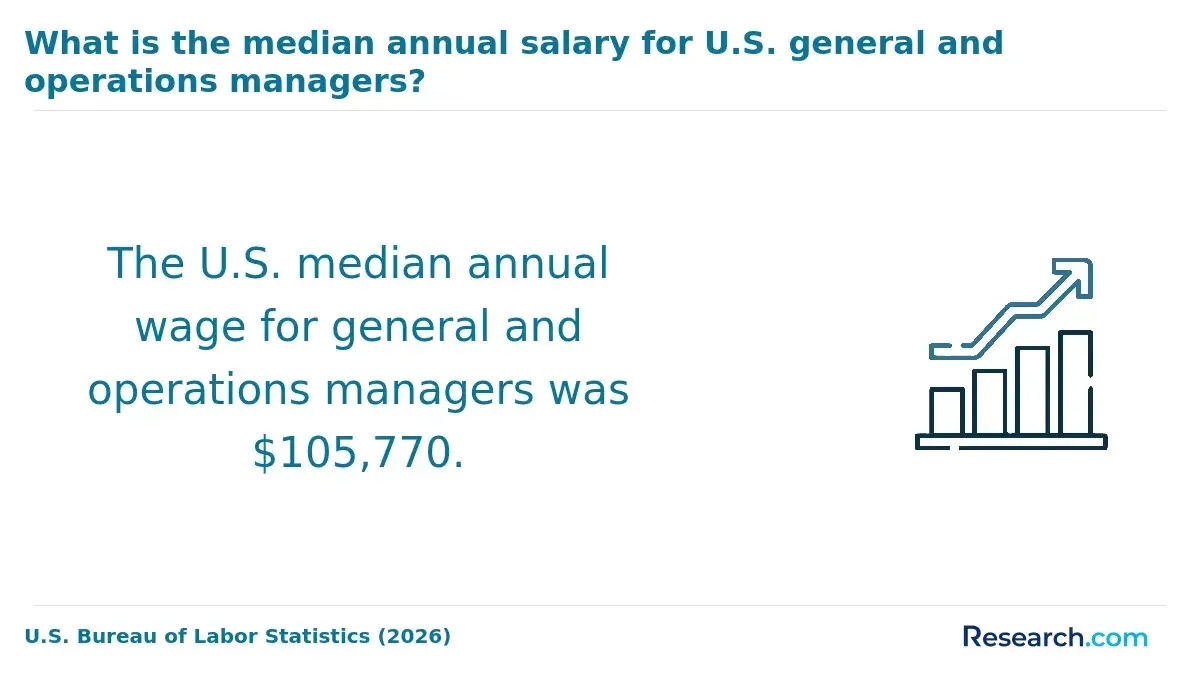
There is no single reliable salary figure for public administration MBA graduates: pay varies by occupation, employer, location, experience, and whether the role uses the degree. For context, the U.S. Bureau of Labor Statistics reports a median annual wage of $126,520 for management occupations in May 2025. That figure covers managers across industries and education backgrounds; it is not a graduate earnings estimate or a realistic starting-salary promise for a public-sector applicant.
For a useful personal estimate, review pay ranges for specific positions in your target agency or local nonprofit market, then compare their stated qualifications with your experience. If you already work under a public-sector pay scale, ask how promotion eligibility and salary bands operate before attributing a potential raise to the MBA.
An MBA itself generally does not confer a professional license for public administration or nonprofit management. Some specific jobs may require credentials, eligibility checks, or specialized qualifications set by an employer or jurisdiction. For example, an MBA does not substitute for a professional accounting license in a role that requires one.
Voluntary certifications can help in a particular function, but choose them based on job postings and eligibility rules rather than assuming every public-service manager needs one. If your target role centers on policy analysis or a regulated profession, examine its requirements before choosing an MBA curriculum.
How can you choose an accredited online public administration MBA?
Start by verifying that the university has recognized institutional accreditation and that it is authorized to enroll students where you live. Then check whether its business school holds specialized accreditation, such as AACSB, if that matters to your employer or goals. Institutional accreditation and business-school accreditation are different checks; neither proves that a public administration concentration is available online.
Make your shortlist using the courses, admissions policies, and constraints that matter most to your household. Request written answers about live attendance, group work, campus visits, course rotation, leave policies, career support for online students, and total charges. Compare low-cost online MBA programs only after confirming which options meet your accreditation and curriculum requirements.
Finally, speak with your employer about advancement criteria and education assistance. A program that fits both those criteria and your weekly caregiving schedule is a more defensible choice than one selected for its ranking or advertised speed alone.
Other Things You Should Know About MBA
Usually you can apply while on leave, but deadlines and documentation rules vary. If you expect to start classes during leave, confirm enrollment and deferral policies before accepting an offer.
Some instructors permit workplace-based projects, subject to course rules and employer confidentiality. Ask how students obtain approval before planning to use sensitive agency or client information.
Not necessarily. Ask whether group membership is assigned, when live meetings occur, and how teams coordinate across time zones.
Possibly. Schools set limits on eligible credits, grades, course age, and whether transferred work can satisfy concentration requirements. Request a formal evaluation before assuming credits will shorten the MBA.
- Employer-offered educational assistance programs can help pay for college | Internal Revenue Service https://www.irs.gov/newsroom/employer-offered-educational-assistance-programs-can-help-pay-for-college
- Types of Financial Aid: Grants, Work-Study, and Loans | studentaid.gov https://studentaid.gov/understand-aid/types
- Cost of Attendance (Budget) | 2025-2026 Federal Student Aid Handbook https://fsapartners.ed.gov/knowledge-center/fsa-handbook/2025-2026/vol3/ch2-cost-attendance-budget
- Child Care Access Means Parents in School Program (84.335A) | U.S. Department of Education http://www.ed.gov/grants-and-programs/grants-special-populations/grants-economically-disadvantaged-students/child-care-access-means-parents-school-program-84335a
- Tuition & Financial Aid - Online Master's in HEB - UF https://hebmastersonline.hhp.ufl.edu/admissions/tuition-financial-aid/
- How Do Asynchronous Classes Work? | Hopkins EP Online https://ep.jhu.edu/news/how-do-asynchronous-classes-work/
- Does the GMAT/GRE waiver affect my application? - Carey Blog https://blog.carey.jhu.edu/article/does-the-gmat-gre-waiver-affect-my-application
- Effective Practices that Support Adult Learners | acenet.edu https://www.acenet.edu/Research-Insights/Pages/Student-Support/Effective-Practices-Adult-Learners.aspx
- 7 High-Impact Government and Public Service Careers for MPA Graduates - Cornell Brooks Public Policy https://publicpolicy.cornell.edu/masters-blog/7-high-impact-government-and-public-service-careers-for-mpa-graduates/
- MBA with Public Administration Certificate | CCO https://online.champlain.edu/degrees-certificates/mba-public-administration-specialization


