Best Online MBA in Finance Programs for Nonbusiness Bachelor's Graduates

Co-Founder and Chief Data Scientist
A nonbusiness bachelor's degree does not rule out an online MBA in finance, but it changes what you should compare. A program that assumes accounting knowledge may feel very different from one that builds it into the curriculum.
This guide offers an evidence-based shortlist of online options and explains how to check preparation requirements, total cost, scheduling, and career support. It is designed to help you find a program that fits both your academic starting point and the finance work you want to do.
Key Things You Should Know
- A nonbusiness bachelor's degree is not an automatic barrier. Compare each school's foundation-course policy and experience expectations before applying.
- UNC Wilmington, LSU Shreveport, and the University of North Texas offer online MBA options with a named finance concentration or focus. Confirm current online availability and requirements directly with each school.
- The U.S. median wage for management occupations was $126,520 in May 2025, according to the Bureau of Labor Statistics, but that figure covers many occupations and is not an expected salary for MBA graduates.
What is an online MBA in finance for nonbusiness graduates?
It is a graduate management degree delivered primarily online, with a general MBA core and a designated finance concentration, focus, or set of finance requirements. Core courses typically introduce accounting, marketing, operations, strategy, and leadership. Finance coursework applies those foundations to decisions such as valuing investments, financing a company, and managing financial risk.
The distinction matters if you studied engineering, healthcare, the humanities, or another nonbusiness field. Your previous degree may give you useful industry knowledge or quantitative skills, while the MBA supplies business vocabulary and management context. A named finance concentration usually offers more directed study than a general MBA with one finance elective, but neither is automatically equivalent to a specialized master's in finance.
Can you earn an online MBA in finance without a business degree?
Many MBA programs consider applicants from a range of undergraduate majors. Schools evaluate the whole application, and some assign introductory coursework based on prior study. A mathematics graduate may need accounting more than quantitative practice; a communications graduate with budgeting responsibilities may already have relevant workplace experience.
Choose the degree around your goal rather than your bachelor's label. An experienced professional seeking broader financial responsibility may benefit from an MBA's management core.
Someone who already leads an organization and wants a format built for senior managers could instead examine online executive management degrees. Someone seeking a technical entry-level finance role should also compare a specialized degree, targeted courses, and relevant work experience.
Which online MBA in finance programs are properly accredited?
Start by confirming that the university holds recognized institutional accreditation. Then check whether its business school or MBA holds specialized accreditation, such as AACSB accreditation. Institutional and business-school accreditation answer different questions; neither confirms that a particular concentration is currently offered online.
The shortlist below favors identifiable online MBAs, a named finance option, AACSB-accredited business schools, and relevance to applicants who need to assess their business preparation. It is a fit-based comparison, not a national ranking. Catalogs, delivery details, and prices can change, so use it to narrow your inquiries rather than as a substitute for current written program terms.
| Online MBA option | Finance offering and accreditation | Potential fit for a nonbusiness graduate | Key question before applying |
| University of North Carolina Wilmington | Online MBA with a finance concentration; AACSB-accredited business school | Applicants who want a clearly identified finance path within a broad MBA | Which foundation subjects, if any, would my transcript require? |
| Louisiana State University Shreveport | Online MBA with a finance concentration; AACSB-accredited business school | Applicants comparing concentration coursework alongside overall affordability | What is my complete tuition-and-fees quote, including any required foundations? |
| University of North Texas | Online MBA finance option; AACSB-accredited business school | Applicants who want to examine the depth and sequencing of finance study | Which finance courses are available online during my intended enrollment period? |
No single school is best for every nonbusiness graduate: the strongest fit depends on the courses you have already taken, the finance subjects you need, and the schedule you can sustain. If AACSB accreditation and cost are your initial filters, use budget-conscious MBA program choices to broaden your search, then verify that any candidate actually offers an online finance concentration.
Expect to document an accredited bachelor's degree, academic history, and professional background. Depending on the school, an application may also request a résumé, statement, recommendations, or an interview. GMAT or GRE rules and professional-experience expectations vary; a test waiver at one university says nothing about another's policy.
For the shortlist, ask admissions to review your transcript before you commit. Request separate answers about eligibility, required foundation work, and the date you can begin finance courses. An applicant with strong workplace responsibility but limited accounting may be admissible while still needing academic preparation. Conversely, a recent graduate with business electives should not assume those electives replace a school's experience requirement.
There is no universal prerequisite package. Programs may require or recommend introductory financial accounting, economics, statistics, quantitative methods, or finance. Some teach these topics in the MBA core; others use pre-MBA modules or additional courses. Prior coursework may satisfy a requirement, but only the school can determine whether it accepts a particular course.
Separate required foundations from useful preparation. If a school requires an accounting module, include its time and price in your comparison. If it merely recommends preparation, an introductory accounting course or refresher may still make corporate finance easier. Ask whether foundations must be completed before admission, before enrollment, or before specific finance classes; the timing can change your graduation plan.
The MBA core generally emphasizes managerial accounting, financial decision-making, strategy, operations, and leadership. A finance concentration may then cover corporate finance, investments, financial markets, valuation, or risk. Course titles alone do not establish depth: compare required finance credits, electives, sequencing, and whether a capstone lets you apply financial analysis.
For a nonbusiness graduate, the most useful curriculum often connects finance calculations to business decisions. An engineer moving toward capital-project management, for example, may value investment appraisal and budgeting more than a narrow trading elective. Check the current catalog for each shortlisted school; a finance-themed course in a general MBA does not by itself make the degree a formal finance concentration.
Completion time depends on course load, term schedules, required foundations, and whether finance courses are offered when you need them. Ask each school for a term-by-term plan based on your transcript and intended pace, rather than relying on its fastest advertised completion time.
Compare a written estimate of total tuition and mandatory fees for the credits you must take. Add foundation coursework, books or software, possible travel, and financing costs where applicable.
A low advertised price may exclude expenses a nonbusiness applicant cannot avoid. online MBA programs under $10,000 per year can provide a starting point for an affordability search, but an annual price is not the full price of a finance MBA.
Employer assistance can improve affordability, though reimbursement rules may require a minimum grade or continued employment. Compare the amount you would pay personally with the specific advancement opportunity you expect; do not assume a broad management salary figure predicts your return.
An online MBA can let you remain employed and use your current role to practice financial analysis. Campus-based study may offer easier access to in-person activities and employers recruiting through that campus.
Neither format guarantees better instruction or career results. For a major career switch, investigate whether online students can use the same career advising, employer events, projects, and internship support as campus students.
"Online" also does not necessarily mean self-paced. Ask about live classes, group meetings, exams, campus visits, and the ability to slow enrollment when work intensifies. If speed matters most, compare MBA degree pacing options against the time you may need to build accounting and finance foundations; the shortest calendar can be a poor fit if it leaves little room to learn them.
Potential paths depend heavily on work completed before and during the MBA. A professional who already manages budgets might pursue financial planning, treasury, or broader management responsibilities.
A substantial move into investment research or corporate finance may require modeling skills, relevant projects, and entry-level functional experience. The degree alone does not qualify someone for a senior finance title.
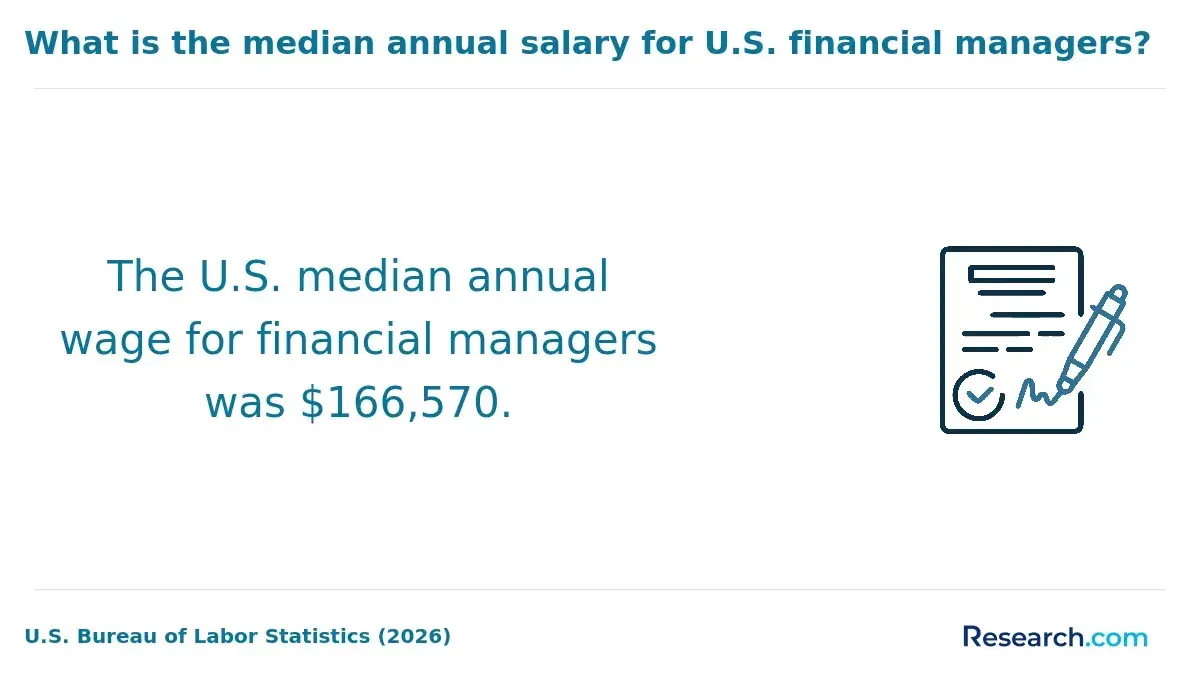
The Bureau of Labor Statistics reports a May 2025 median annual wage of $126,520 for U.S. management occupations. That is an occupation-group figure, not pay for finance MBA graduates, new career changers, or a particular job. Use compensation information for the specific role and market you are targeting when judging whether tuition is worthwhile.
Your original discipline can be an advantage when paired with finance. A healthcare professional, for example, might target budgeting or financial operations in a familiar sector rather than compete immediately for an unrelated investment role. Readers considering that route can also compare healthcare administration and MBA pathways before choosing a finance concentration.
Which certifications and licenses complement an MBA in finance?
Choose an additional credential only after identifying the work you want to perform. The CFA designation is associated with investment analysis and has its own examinations and experience requirements.
The CPA license concerns professional accounting and depends on state education, examination, and experience rules; an MBA finance concentration does not automatically satisfy them. Some securities or advisory positions have separate registration or licensing requirements tied to the job and employer.
If your gap is basic accounting or financial modeling rather than a regulated qualification, targeted coursework and a work project may be a more direct next step. Before paying for an MBA and a credential, check job descriptions in your target market to see which skills employers actually request.
Other Things You Should Know About MBA Programs
Diploma wording varies by university. Ask the registrar for the exact diploma and transcript language if that distinction matters to you.
Possibly. Schools set their own declaration deadlines and course-availability rules, so confirm the change process before enrolling.
No. A STEM designation depends on the school's classification of the specific program, not the presence of finance in its name.
Policies differ. Ask career services which recruiting events, employer contacts, and individual advising appointments are open to online MBA students.
- The Business School Job Market in 2025 | AACSB https://www.aacsb.edu/insights/articles/2025/10/the-business-school-job-market-in-2025
- Is an MBA Worth It? ROI, Pros, Cons and Who Should Enroll | CSP Global Concordia University, ST. Paul https://online.csp.edu/resources/article/is-an-mba-worth-it/
- Online/Distance Students - UNI Career Services https://careerservices.uni.edu/students/onlinedistance-students
- What Is MBA Accreditation? • Rollins College https://crummer.rollins.edu/resources/what-is-mba-accreditation/
- Online MBA Degree Program | Master of Business Administration | University of Delaware Online https://www.udel.edu/academics/online/programs/mba-masters-business-administration/
- Career Planning | Howard University Office of Undergraduate Studies https://ous.howard.edu/career-resources/career-planning