Online MBA in Sustainability: Curriculum and Workload for Nonbusiness Bachelor's Graduates

Co-Founder and Chief Data Scientist
An online MBA in sustainability can connect your existing expertise - whether in science, engineering, education, or another field - to decisions about budgets, operations, and environmental impact. But a nonbusiness bachelor's degree can make the first accounting or finance course a bigger adjustment than the sustainability coursework itself.
This guide separates the MBA core from sustainability study, explains what drives the workload, and shows how to assess admissions, cost, and career fit before you enroll.
Key Things You Should Know
- A nonbusiness bachelor's degree does not automatically bar admission; check each school's foundation-course policy and assess your accounting and quantitative readiness.
- Expect a broad management core plus a smaller set of sustainability courses or electives. The workload depends heavily on course load, group work, live sessions, and your prior preparation.
- Compare the degree with your career goal, not a broad salary figure: the U.S. median annual wage for management occupations was $126,520 in May 2025, but that is not a sustainability MBA graduate salary.
What is an online MBA in sustainability, and who is it designed for?
An online MBA in sustainability is a general management degree with an emphasis on how organizations address environmental and, in some programs, broader social and governance challenges. A school might offer a formally named concentration, a track, a certificate, or simply relevant electives. Those options can differ substantially in depth, so the label alone does not establish what you will study.
The degree is most useful when you want to make or influence business decisions: evaluating investments, managing suppliers, redesigning operations, or leading organizational change. A nonbusiness graduate may bring valuable subject expertise - for example, an environmental scientist's understanding of emissions or an educator's stakeholder-engagement skills - while using the MBA to learn the financial and managerial side of implementation. If your goal is primarily environmental modeling, engineering, or policy research, a specialized master's degree may offer more appropriate technical depth.
Your background also affects which online program fits. A veteran with a nonbusiness degree, for instance, may want to compare leadership coursework with career-transition support; a guide to online MBA programs options and veterans can help frame that separate comparison. Regardless of background, confirm that the sustainability coursework itself is available online.
Can you earn a sustainability MBA with a nonbusiness bachelor's degree?
Many MBA programs consider applicants from a range of undergraduate majors, although each school sets its own admissions and preparation rules. A nonbusiness degree is not the same thing as a lack of useful experience: research, project coordination, technical analysis, public communication, and team leadership can all support graduate business work.
The likely adjustment is to the MBA core, not necessarily to sustainability concepts. Accounting introduces financial statements; finance asks you to evaluate cash flows and investments; economics, statistics, and analytics require comfort interpreting quantitative evidence. Some schools teach these subjects from the beginning, while others require or offer foundation modules before advanced courses. Ask whether those modules add tuition or time, and whether you can complete them before the first graded term.
If you are comparing schools with different entry policies, an online MBA programs with accessible admissions program comparison online MBA programs with accessible admissions may help you identify questions to ask. Accessible admission is only one criterion: confirm that the program provides enough academic support to help you succeed after admission.
What do you study in an online MBA in sustainability?
Curricula vary by school. The distinction that matters most is whether sustainability is integrated throughout the degree or confined to a few electives. The table shows the usual roles of different course types - not a universal course list.
| Curriculum component | What it may cover | Why it matters for a nonbusiness graduate |
| MBA core | Managerial accounting, finance, operations, marketing, strategy, analytics, and organizational behavior | Builds the business vocabulary needed to evaluate sustainability proposals alongside other organizational priorities |
| Sustainability specialization | Sustainable supply chains, corporate sustainability strategy, environmental risk, reporting, or responsible innovation | Applies management tools to resource use, stakeholders, and long-term business decisions |
| Electives | School-dependent options such as energy markets, social enterprise, or sustainable finance | Lets you align coursework with your prior discipline and target role, if the electives run online |
| Applied project or capstone | A business case, team consulting assignment, or strategy project, when offered | Creates an opportunity to demonstrate how you translate subject knowledge into a feasible business recommendation |
At the MBA level, you might compare the cost and operational implications of changing a supplier or assess how sustainability reporting affects management decisions. That is different from learning to conduct an engineering assessment or becoming qualified to provide environmental assurance. Read course descriptions and sample assignments, not just concentration names, to see where the program sits on that spectrum.
Expect recurring reading, quantitative problem sets, case discussions, presentations, and team assignments. Online delivery removes a commute; it does not remove deadlines or coordination with classmates. For nonbusiness graduates, an introductory finance or accounting course may require more preparation than a course that builds on their existing sustainability knowledge.
No reliable weekly-hour estimate applies to every program. A student taking several compressed courses at once will have a different schedule from one taking a single course in a longer term. Asynchronous lectures can still come with fixed discussion deadlines, while group projects may require evening meetings across time zones. Live classes, exams, and any campus visits create additional constraints.
Before enrolling, request a recent syllabus for a core quantitative course and a sustainability course. Check their assignment calendars, group-work expectations, live-session requirements, and assessment methods; then test the busiest weeks against your job and other obligations. If you already hold a senior management role, compare that commitment with an executive format - but account for its distinct fees and scheduling demands. A resource on online executive MBA financial planning is a starting point for that separate cost comparison, not a substitute for checking each program's workload.
Requirements belong to the individual school, not to the sustainability specialization as a whole. Programs commonly review an accredited bachelor's degree, academic record, résumé, and a statement of goals; some also request recommendations, an interview, test scores, or professional experience. A GMAT or GRE waiver at one school says nothing about another school's policy. Likewise, foundation courses may be required, optional, or unnecessary depending on the program and applicant.
A strong application should explain why your prior discipline leads logically to your target management work. Identify a decision you have helped make - such as coordinating a project, analyzing evidence, managing a budget, or working across departments - and explain what business skills you still need. If quantitative coursework is limited, recent study in accounting, statistics, or spreadsheet-based analysis may demonstrate readiness, but it does not replace an official prerequisite unless the school says it does.
Application calendars matter if you are fitting study around employment. Comparing MBA admission pathways for working adults online MBA programs with rolling admission may help with timing; verify the actual start date, document deadlines, and when foundation work must be finished before making plans.
Completion time depends on required credits, course sequencing, term length, and whether you study part time or accelerate. A foundation course, limited availability of sustainability electives, or a required capstone can extend the schedule even if the MBA core offers flexible pacing. Ask for a term-by-term plan showing when every course needed for the concentration will run.
For an accurate cost comparison, request the total required credits and published tuition basis - per credit, course, or term - plus mandatory fees. Add the cost of foundation work if it is not included, materials and software, any required travel, and financing costs. A tuition-only quote is not the total cost of attendance. Employer reimbursement may reduce your expense, but its eligibility rules and payment timing can affect cash flow.
If you are weighing online study against a geographically accessible campus program, a guide to MBA programs ranked by affordability mba nc offers one regional starting point. Compare the current full cost and curriculum of the actual programs you would attend rather than treating an affordability ranking as your final bill.
The academic distinction is not simply screen versus classroom. Compare how each format provides access to courses, people, and practical work relevant to your target career. An online MBA may let you keep your job and apply assignments at work; a campus program may make in-person recruiting or collaboration easier. Neither advantage is automatic.
For someone moving from a nonbusiness occupation into sustainability management, career access deserves particular scrutiny. Ask both programs whether their career services work with part-time students, whether employers recruit for the roles you want, and whether you can complete a relevant project without already holding a sustainability job. Check whether "online" includes required live meetings or visits, and whether a campus program's daytime schedule would require reducing your employment. The better format is the one that supplies the learning and connections you need at a workable total cost.
Start with the institution's accreditation, then check any separate business-school accreditation the program claims. These are different forms of review: institutional accreditation concerns the institution, while business-school accreditation evaluates business education under the accreditor's standards. Confirm each claim directly with the relevant accreditor, and verify that the online MBA - not merely a campus offering - includes the advertised sustainability path.
Quality also depends on evidence accreditation alone cannot supply. Request the current catalog requirements, online course rotation, faculty and project descriptions, and the services available to online students. If a school cites employment outcomes, ask which graduates were surveyed and whether results distinguish online MBA students or sustainability students. This prevents a broad school-wide figure from standing in for the experience you are considering.
An MBA may help a professional move toward sustainability strategy, supply-chain management, operations improvement, responsible sourcing, or related management work. The most realistic step depends on prior experience. A scientist already advising an organization on environmental issues might pursue responsibility for budgets and implementation; someone with neither business nor sustainability experience may first need a project or analyst role. The degree does not by itself qualify a graduate for senior leadership or specialized technical work.
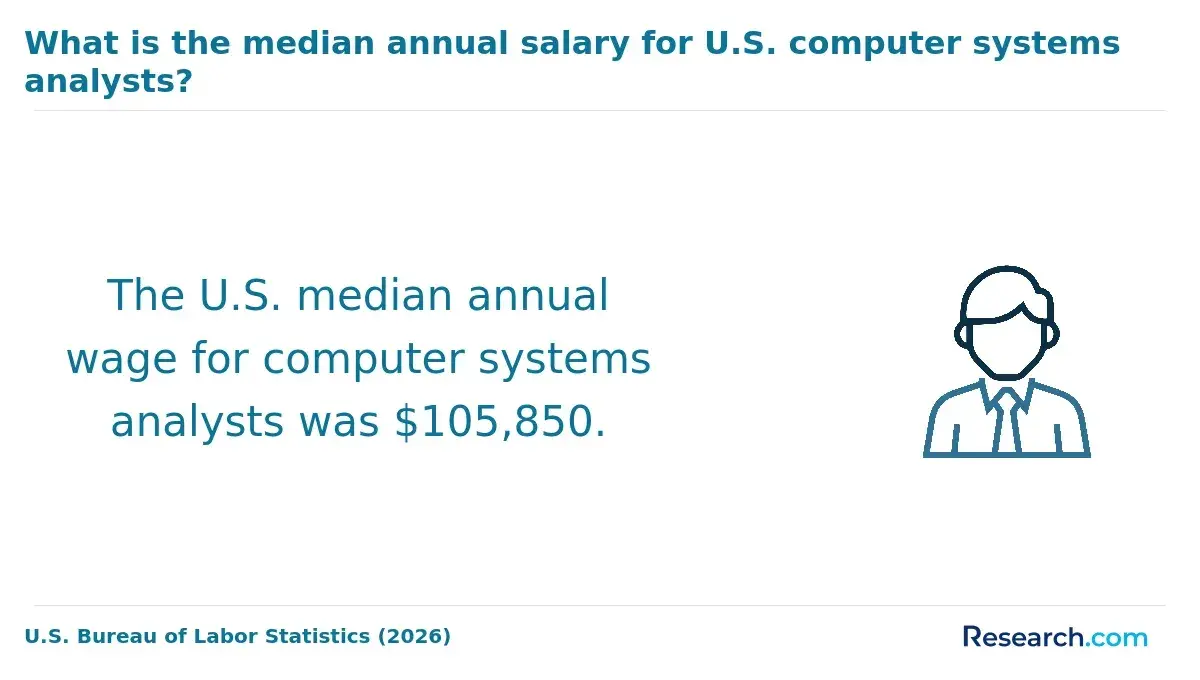
The U.S. Bureau of Labor Statistics reports a $126,520 median annual wage for management occupations in May 2025. That figure covers many kinds of managers, not sustainability specialists or MBA graduates, and many positions require substantial experience. Use salary information for the specific occupation, location, and career stage you are targeting - not the management-wide median - as the basis for a personal financial decision.
When evaluating career support, look for projects that produce work samples, access to alumni in your target function, and recruiting that accommodates employed online students. If your desired role calls for technical emissions accounting, engineering, or regulatory expertise, plan how you will obtain that experience separately.
Which sustainability certifications complement an online MBA?
A certification is most useful when it addresses a skill gap tied to your intended work, rather than adding another general credential. For example, LEED credentials may be relevant to building and real-estate projects, while sustainability reporting or greenhouse-gas accounting training may better fit a reporting role. Requirements, assessments, and renewal rules vary by credential and can change.
Choose the role first, then examine job descriptions to see which credentials employers actually request. Compare those requirements with your MBA coursework and prior degree. A focused course or certification may be a better first investment than an MBA if you need a specific technical skill but do not yet need broad management training; conversely, a certification alone is unlikely to replace the finance, operations, and leadership education you want from an MBA.
Other Things You Should Know About MBA
Not necessarily. Schools may record it on the diploma, transcript, or both. Ask the registrar how the completed concentration is documented.
Possibly. Transfer-credit limits, course equivalency, grade rules, and time limits vary by school. Get a written evaluation before assuming earlier coursework will shorten the program.
Often, but confirm that the institution is authorized to enroll students where you live. Also check whether any required in-person activity would involve travel.
That depends on the instructor's assignment rules and your employer's permission. Discuss confidentiality, data access, and publication restrictions before proposing the project.
- Partnering with Students to Develop a Capstone for a... - PMC https://pmc.ncbi.nlm.nih.gov/articles/PMC11732519/
- Academic Years, Academic Calendars, Payment Periods, and Disbursements | 2025-2026 Federal Student Aid Handbook https://fsapartners.ed.gov/knowledge-center/fsa-handbook/2025-2026/vol3/ch1-academic-years-academic-calendars-payment-periods-and-disbursements
- How to Rank the Top Sustainability MBA Programs | Bard College https://leadthechange.bard.edu/blog/the-best-way-to-rank-top-sustainability-mbas
- How Quantitative Skills Are Used Outside of STEM Careers | upenn.edu https://lpsonline.sas.upenn.edu/features/how-quantitative-skills-are-used-outside-stem-careers
- Online MBA | W. P. Carey School of Business | ASU Online https://asuonline.asu.edu/online-degree-programs/graduate/master-business-administration/
- What's the Difference Between Asynchronous and Synchronous Learning? | Ohio State Online https://online.osu.edu/content-hub/blogs/whats-the-difference-between-asynchronous-and-synchronous-learning/
- Master of Business Administration (MBA) Online | Penn State World Campus https://www.worldcampus.psu.edu/degrees-and-certificates/penn-state-online-mba-business-administration-masters-degree
- Capstone Projects - UGA Sustainability - University of Georgia https://sustainability.uga.edu/programs/programs-for-students/sustainability-certificate-program/students/capstone-projects/
- Online MBA Eligibility Requirements | Continuing and Professional Education https://cape.csustan.edu/online-mba-eligibility-requirements
- MBA Admissions Requirements | Online MBA & Executive MBA https://mba.wsu.edu/admissions-details/