Online MBA in Entrepreneurship: admissions guide for military veterans

Co-Founder and Chief Data Scientist
Military leadership can strengthen an MBA application, but it does not automatically answer a school's admissions requirements—or make an entrepreneurship MBA the right investment. Veterans also need to weigh education benefits, online scheduling, and whether a program will help them build a business or move into civilian management. This guide explains what to prepare before applying, how to compare programs, and which costs and career assumptions to check before committing.
Key Things You Should Know
- MBA admissions requirements vary by school; translate military responsibilities into measurable business-relevant experience rather than assuming a particular rank qualifies you.
- Post-9/11 GI Bill coverage depends on your eligibility and the approved program; online-only housing payments are generally capped at half the national average housing allowance.
- Choose a verified entrepreneurship concentration and delivery format that support your goal. The MBA may be less useful than targeted training if you need only one business skill.
What Is an Online MBA in Entrepreneurship for Military Veterans?
An online MBA in entrepreneurship is a graduate business degree that combines a general management core with coursework focused on launching, financing, or growing ventures. Some schools offer a formally named entrepreneurship concentration; others offer only related electives. Check the degree requirements rather than relying on a program's marketing language.
For veterans, the potential value lies in applying experience with teams, logistics, budgets, and uncertain operating conditions to civilian customers and markets. The degree can help someone planning a company, joining a startup, or pursuing innovation work inside an established organization. It is not a substitute for testing demand for a product or learning an industry's regulations.
How Do Veterans Pay for an Online MBA With GI Bill Benefits?
Eligible veterans may use Post-9/11 GI Bill benefits toward an approved MBA, but payment depends on their individual eligibility, remaining entitlement, enrollment, and the school's approved charges. At a public school, coverage rules differ from those at a private school; an annual private-school tuition cap can leave a balance. The Yellow Ribbon Program may help eligible students with otherwise uncovered tuition and fees when the school participates and has an applicable agreement. Neither GI Bill coverage nor Yellow Ribbon funding should be assumed before the school confirms it.
Online delivery can change the housing calculation. For online-only study, the monthly housing allowance is generally capped at half the national average, with the actual payment affected by such factors as enrollment intensity and benefit eligibility. An in-person course may change how the VA classifies enrollment, but do not add a campus visit solely to pursue a higher payment without checking the school's certification and VA rules.
Before accepting an offer, ask the school's VA certifying official to confirm the program approval, which charges it will certify, how your planned course load affects benefits, and whether a Yellow Ribbon place is available. Compare the school's answer with your VA Certificate of Eligibility and your remaining entitlement. Employer education assistance, scholarships, and savings may be needed for any gap.
What Are the Admission Requirements for an Online MBA in Entrepreneurship?
Most applicants should expect to document an accredited bachelor's degree and submit academic transcripts, a résumé, and application materials explaining their goals. Individual schools set their own GPA, professional-experience, recommendation, interview, and GMAT or GRE policies. An entrepreneurship concentration does not universally require a business bachelor's degree, prior company ownership, or a completed business plan.
Military work can demonstrate leadership, but admissions readers may not know what a unit title or occupational specialty entails. Show the scale of a responsibility, the decision you made, and its result in civilian language. If you have limited accounting or finance exposure, ask whether the program requires foundation courses and consider preparing for quantitative MBA work before classes begin.
Use this sequence to turn a general admissions checklist into a school-specific application plan:
- Confirm that the online MBA offers the entrepreneurship concentration or courses you want, then obtain its current application requirements and deadlines.
- Request transcripts early and check whether the school needs documentation beyond the standard résumé to understand military experience.
- Translate relevant leadership, operations, procurement, or budget work into specific examples for your résumé, essay, and interview.
- Check test and waiver rules directly; treat a test-optional policy at one school as no evidence of another school's policy.
- Explain the venture or civilian role you are pursuing and why this MBA's coursework and network fit that goal.
If testing requirements are a barrier, comparisons of online MBA programs with accessible admissions options acceptance rates can broaden a search. Verify the current policy and entrepreneurship curriculum with each school before applying.
Neither format is inherently better. An online MBA may let a veteran keep working, relocate, or develop a business while enrolled. A campus MBA may provide more frequent face-to-face interaction and access to recruiting activities, though opportunities differ by school. A veteran making a major civilian career change should investigate whether online students can use the same employer events, internships, and career advising as campus students.
"Online" also does not mean "self-paced." Live sessions, team projects, exams, and residencies can conflict with work or family commitments. Ask for a sample course schedule and the requirements for each term. If speed matters, a comparison of MBA completion time comparison fast online MBA programs in healthcare management illustrates why advertised timelines must be checked against the course load and required visits of the entrepreneurship program you would actually enter.
Benefit calculations may affect the choice as well: online-only enrollment can produce a different housing allowance from qualifying in-person enrollment. Compare each format's complete net cost and access to the people who could help you reach your post-service goal.
The MBA core typically develops managerial accounting, finance, marketing, operations, strategy, and organizational leadership. Entrepreneurship courses may then cover customer discovery, business models, venture finance, pitching, and growth decisions. The precise mix varies: one school may emphasize startup formation, while another emphasizes innovation inside existing companies.
Look for opportunities to test assumptions with potential customers, build financial forecasts, and receive feedback on a venture. Those activities can reveal whether a military-developed idea has a civilian market. Check whether any incubator, mentor network, or consulting project is actually open to online MBA students; an elective alone is not the same as a supported venture-building experience.
A veteran developing an environmentally focused business might also compare business-school options for online MBA in sustainability. Industry-specific knowledge may matter more than a general entrepreneurship label, depending on the intended venture.
Completion time depends on required credits, course sequencing, enrollment pace, and any foundation courses. Accelerating can reduce the time to graduation but increase weekly commitments; part-time study may better protect income or allow time to build a business. Ask each school for a completion plan based on the courses you would take, not just its fastest advertised timeline.
There is no reliable single price for this degree type. The components below show why comparing tuition alone can understate the commitment; request an individualized estimate before paying a deposit:
| Cost component | What it can include |
| Academic charges | Tuition, mandatory university or program fees, and any foundation coursework |
| Participation costs | Books, software, technology requirements, and travel for required visits |
| Financing and time | Loan interest, reduced work hours, or time away from operating a business |
| Offsets | Applicable VA benefits, Yellow Ribbon funding, scholarships, and employer assistance |
For a cost benchmark, cost-effective MBA choices affordable AACSB-accredited online MBA programs can help identify schools to investigate. Confirm each school's current total charges, entrepreneurship offering, and benefit treatment; a low published tuition rate is not necessarily your lowest net cost.
The closest path may be building or buying a business, where success depends on customers, cash flow, and execution rather than the degree itself. Veterans with relevant operational experience may also pursue small-business management, business development, product or program management, or innovation roles. Employers will evaluate industry knowledge and functional experience alongside the MBA.
For someone moving from military logistics into a related civilian operations role, the MBA may help explain strategic and financial decisions already encountered at work. A switch into software product management is a larger leap: relevant product experience, technical fluency, and a portfolio may matter more than an entrepreneurship concentration. If a technology-business path is the goal, online business school cost comparison degree programs can provide an alternative cost perspective, though the information-systems curriculum should be compared with your actual skill gap.
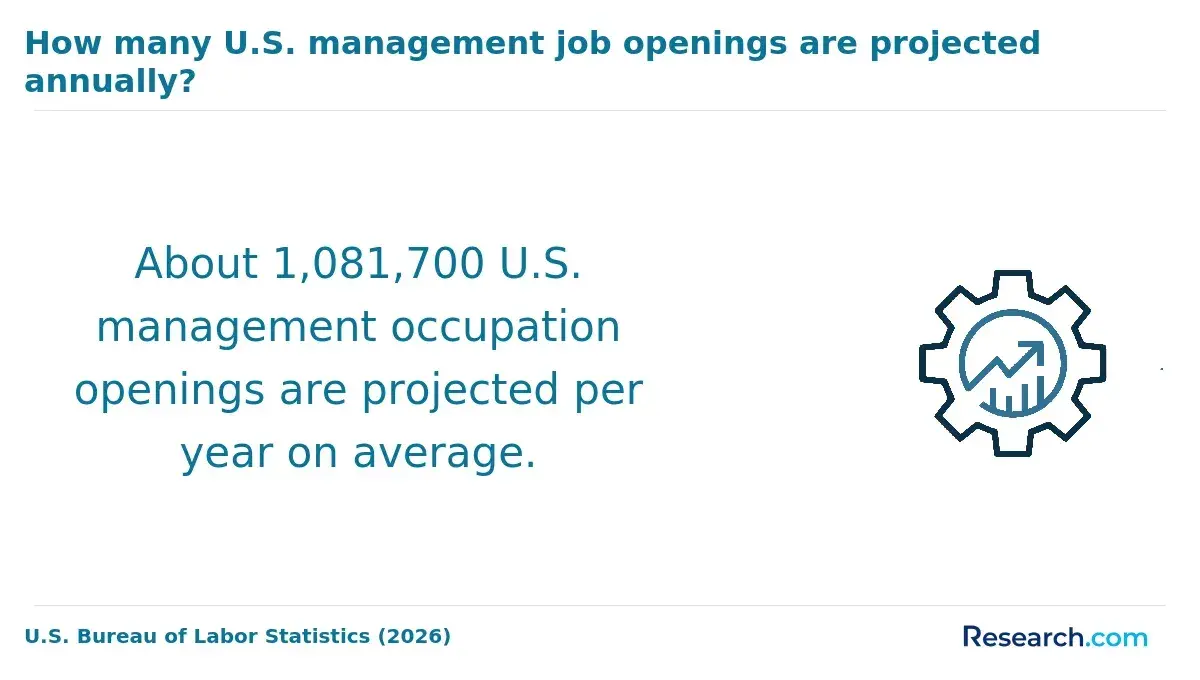
Before enrolling, identify target roles or a specific venture, review their experience requirements, and ask the MBA program for evidence that online students can access relevant projects, alumni, and career support. Management occupations are projected by the Bureau of Labor Statistics to have about 1.1 million openings annually, on average, from 2025 to 2035. That broad figure signals a range of opportunities—not openings reserved for MBA graduates or new entrepreneurs.
There is no dependable salary figure for all entrepreneurship MBA graduates. A founder's income can be uneven, while an employee's pay depends on role, location, industry, and prior experience. The Bureau of Labor Statistics reports a median annual wage of $126,520 for management occupations in May 2025. This is an occupational benchmark across workers with different credentials and experience, not an expected MBA salary or evidence that the degree caused higher pay.
For a personal financial assessment, compare a likely post-MBA role's compensation with what you could earn without the degree. Then weigh any remaining education cost, financing, foregone income, and the value of skills or contacts to your venture. If you primarily need help with pricing, bookkeeping, or customer acquisition, targeted courses and mentoring may offer a more direct return.
No general professional license is required simply to hold an entrepreneurship MBA or start many types of businesses. Requirements attach to the work performed and where the business operates—not to the concentration. For example, a regulated profession, a licensed trade, or a particular product or service may require additional credentials, permits, or approvals.
An MBA also does not confer accounting, legal, clinical, or other regulated professional qualifications. Before using a venture idea as the reason to enroll, check the rules governing that business in its intended location. Optional certifications can help with a specific skill, but they should address an identified need rather than serve as another general credential.
How Can Veterans Choose an Accredited Online Entrepreneurship MBA?
Start by verifying that the university holds recognized institutional accreditation and that the online MBA, not merely the campus MBA, offers the entrepreneurship coursework advertised. Business-school accreditation, such as AACSB accreditation, is a separate distinction; it does not establish that a particular concentration exists or that VA benefits will cover it.
Compare finalists on the same questions: Can you take the entrepreneurship courses online when needed? Are live sessions or visits required? Can online students use venture resources and career services? What will the program cost after confirmed benefits, and what happens if your enrollment pace changes? Ask the VA certifying official and the academic program staff separately, since benefit certification and curriculum planning answer different questions.
The strongest fit is the program whose requirements you can meet, whose schedule you can sustain, and whose practical opportunities support a defined civilian role or business. If you cannot identify how the full MBA would advance that goal beyond a shorter course, mentorship, or direct venture experience, defer the degree until its value is clearer.
Other Things You Should Know About MBA
Possibly, but graduate credit policies vary by school and many MBA programs limit transfer credit. Ask for an evaluation before assuming military training will shorten the degree.
Yes. Contact the university's disability services office to learn its documentation process and how approved accommodations apply to online coursework and exams.
Policies vary. Review the school's intellectual-property rules and any project agreements, especially when collaborating with classmates or an outside company.
School policy and course availability determine that. Ask an adviser whether changing concentrations would affect completed credits, graduation timing, or your education-benefit certification.
- Document Requirements | dfas.mil https://www.dfas.mil/Careers/Apply/Documents/
- Yellow Ribbon Program | Veterans Affairs https://www.va.gov/education/about-gi-bill-benefits/post-9-11/yellow-ribbon-program/
- Free small business counseling & local mentoring | Small Business Administration https://www.sba.gov/counseling/
- General Schedule Qualification Policies | U.S. Office of Personnel Management https://www.opm.gov/policy-data-oversight/classification-qualifications/general-schedule-qualification-policies/
- JST: Joint Services Transcript | militaryonesource.mil https://www.militaryonesource.mil/benefits/joint-services-transcript/
- GMAT/GRE Waiver Policy | UNC Online MBA https://onlinemba.unc.edu/admissions/application-requirements/gmat-waiver-policy/
- Graduate School Application Materials - UTK Student Success https://studentsuccess.utk.edu/career/plan-and-apply/graduate-school/application-materials/
- Timeline for Applying to Graduate School - CNS Career Services https://careerservices.cns.utexas.edu/resources/graduate-school-preparation/timeline-applying-graduate-school
- Online MBA | MBA Programs | School of Business | University of Connecticut https://mba.business.uconn.edu/mba-programs/online-mba/
- What makes someone a good candidate for a GRE/GMAT waiver? | Harvard Kennedy School https://www.hks.harvard.edu/admissions-blog/what-makes-someone-good-candidate-gregmat-waiver