Online MBA in Supply Chain Management: Curriculum and Workload for Nonbusiness Bachelor's Graduates

Co-Founder and Chief Data Scientist
A bachelor's degree outside business can be an asset in supply chain management, but it may leave you wondering how quickly you could adapt to MBA-level finance, accounting, and analytics. An online MBA can build those skills alongside operations and supply chain strategy if its courses and schedule fit your background and goals.
This guide explains what you are likely to study, where extra preparation may be needed, and how to assess the workload before committing. It also helps you decide whether a full MBA is more useful than a narrower qualification.
Key Things You Should Know
- A nonbusiness bachelor's degree does not automatically bar admission. Check each program's experience requirements and whether business foundation courses add time or cost.
- Expect a general MBA core plus supply chain courses. Accounting, finance, statistics, and group projects may require the most adjustment, depending on your prior study and work.
- Compare the actual course sequence and weekly schedule, not just the "online" label. The $126,520 median wage for U.S. management occupations in May 2025 is not a forecast of what supply chain MBA graduates will earn.
What is an online MBA in supply chain management?
It is a Master of Business Administration delivered primarily online that combines broad management education with focused study of how organizations source materials, plan demand, manage inventory, coordinate transportation, and serve customers.
Schools may call the focus a concentration, specialization, track, or set of electives. Those labels are not interchangeable: verify whether supply chain management is a formally designated option and how many courses it requires.
The MBA teaches students to make cross-functional decisions, for example, weighing inventory savings against service levels and cash flow. It is not necessarily advanced training in optimization, industrial engineering, or logistics software development. A specialized supply chain master's degree may offer more technical depth but less general management coursework.
Can nonbusiness bachelor's graduates enroll in an online supply chain MBA?
Graduates can enroll at programs that accept applicants from varied undergraduate disciplines, a nonbusiness degree can be eligible. Admission is school-specific, and some programs also expect professional experience.
A biology graduate who has managed laboratory purchasing, for example, may bring relevant supplier and compliance knowledge; an English graduate who coordinates projects may bring communication and stakeholder skills. Neither necessarily starts from zero, but their quantitative preparation may differ.
Distinguish admission eligibility from readiness for the first course. One school may embed introductory accounting and economics in the MBA; another may require foundation modules or recommend preparation before enrollment. Ask whether those modules carry credit, cost extra, or must be completed before concentration courses.
If broad admissions flexibility matters, a guide to online MBA programs with accessible admissions can provide a starting point, but check each program's actual supply chain curriculum.
What does an online MBA in supply chain management curriculum include?
There is no universal course sequence. The distinction to look for is how much of the degree develops general business judgment, how much develops supply chain expertise, and where you will apply both. This comparison also highlights likely adjustment points for graduates without business coursework.
| Curriculum component | Typical subject matter | Question for a nonbusiness graduate |
| MBA core | Managerial accounting, finance, marketing, economics, leadership, strategy, and business analytics | Are introductory concepts taught in the course, or assumed on entry? |
| Supply chain focus | Procurement, demand planning, operations, inventory, logistics, supplier relationships, and supply chain risk | Which subjects are required, and which are merely available as electives? |
| Applied work | Case analysis, simulations, team projects, or a capstone, where offered | Will projects let you use your existing industry knowledge and build evidence of new skills? |
A useful curriculum connects the components. A demand-planning case might ask you to interpret a forecast, estimate the cost of excess stock, and explain a recommendation to finance and sales colleagues.
That is management-level analysis; the technical depth will depend on the course, so inspect descriptions and sample assignments rather than assuming every MBA teaches the same modeling tools.
Your undergraduate field can shape the most useful specialization. Healthcare graduates interested in hospital procurement, for instance, should compare supply chain coursework with healthcare-focused MBA program options online; the latter may emphasize healthcare leadership rather than purchasing or distribution.
Programs commonly ask for a bachelor's degree and academic records; applications may also request a résumé, statement of goals, recommendations, an interview, or a GMAT/GRE score.
Testing policies and professional-experience expectations vary, so a general MBA admissions checklist is not a substitute for the school's current requirements. A supply chain concentration does not, by itself, imply an undergraduate business major or a professional certification requirement.
Use your application to connect prior work to a specific goal: explain a process you improved, a budget you managed, or a supplier or operations problem you want to learn to solve. If your transcript has little quantitative coursework, ask whether the school recommends accounting or statistics preparation and show evidence of any relevant learning.
Applicants searching for cost-effective MBA choices should note that the linked options focus on programs without a GMAT requirement; verify both testing policy and total cost directly with each school.
The academic distinction is not simply online versus in person. Compare the specific schools' required courses, faculty access, team assignments, career services, and employer connections.
Online delivery may let an employed student apply procurement or operations lessons at work without relocating. It can also mean coordinating projects across time zones and building relationships more deliberately.
A campus-based, full-time program may be a better fit for someone seeking a substantial career switch who needs intensive recruiting, internships, and frequent in-person contact. An online program may better serve someone advancing in an existing industry, provided it offers access to the projects, advising, and network they need.
Do not assume an online student receives the same recruiting opportunities as a school's campus MBA students; ask who can use each service.
Completion time depends on required credits, course availability, enrollment pace, and any foundation work. A published accelerated timeline may assume continuous enrollment and a heavier course load than a working student can sustain. Confirm when supply chain courses run: an elective offered infrequently can affect your finish date even if the MBA core is available year-round.
The fastest online MBA programs can help frame a speed comparison, but confirm that a prospective program offers the supply chain focus and schedule you need.
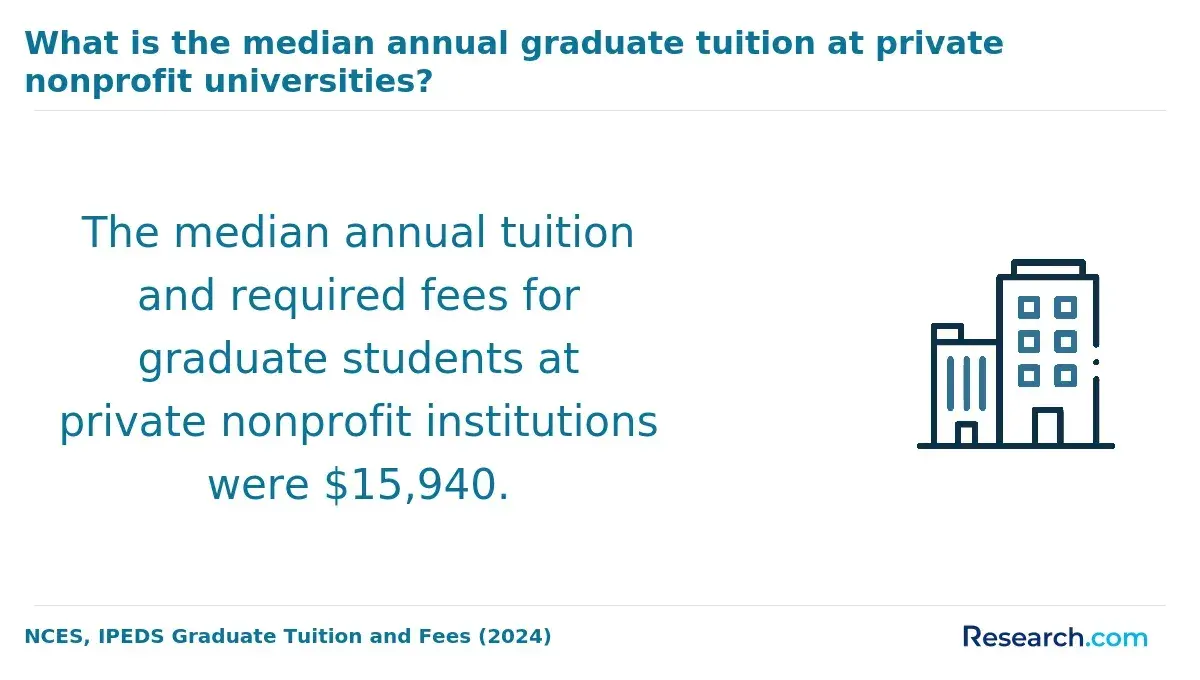
For a meaningful cost comparison, request the total credits required for your background, the tuition rate that applies to you, mandatory fees, and charges for foundation courses. Add books or software, any required travel, and financing costs.
Then account for employer assistance or other funding you can actually use. A lower tuition rate may not mean a lower total bill if additional preparatory courses are required.
Expect recurring reading, problem sets, case discussions, and group work, not just recorded lectures. For a nonbusiness graduate, the first accounting, finance, or analytics course may take more preparation than a familiar operations topic. Course credits alone cannot establish your weekly hours: assessment design, enrollment intensity, and prior knowledge matter.
Before enrolling, test the schedule against an actual workweek. These checks reveal commitments that a program's "flexible" description may leave unclear:
- Request sample syllabi for an MBA core course and a supply chain course; identify assignment deadlines, exams, and expected software use.
- Ask whether live classes, group meetings, residencies, or proctored exams require fixed times or travel.
- Map the published course sequence against your job's busiest periods, and ask about reducing your course load or taking a break.
If speed is your main constraint, a comparison of online MBA duration and schedule choices may illustrate how accelerated formats differ. Those healthcare programs should not be treated as substitutes for verified supply chain coursework.
For many students, a sustainable pace that leaves time to master unfamiliar business concepts is more valuable than the shortest advertised timeline.
Potential paths include purchasing or procurement management, operations management, logistics management, and supply chain planning leadership. The realistic next role depends heavily on what you have already done.
An engineer who has worked with production teams may be positioned to move into operations planning; a healthcare employee involved in purchasing may pursue broader sourcing responsibility. Someone with no related experience may first need an analyst, coordinator, or project role.
An MBA can strengthen budgeting, cross-functional leadership, and strategic decision-making, but it does not replace experience with suppliers, systems, inventory, or regulated industry processes.
If your goal is a technical planning role rather than general management, compare the MBA with targeted analytics courses, employer training, or a specialized supply chain degree. Ask prospective programs how online students gain relevant project experience and which employers participate in their career services.
There is no single dependable salary for "supply chain MBA graduates": that group spans occupations, industries, locations, and experience levels. For context, the U.S. Bureau of Labor Statistics reports a $126,520 median annual wage for management occupations in May 2025. That is the median for the broad occupation group, not for supply chain roles specifically, not for MBA holders, and not a likely starting salary after graduation.
Use salary information for the specific job and location you are targeting, then compare it with your current compensation and the degree's full cost. An MBA may support advancement, but a higher salary in a management occupation cannot be attributed to the degree alone. The strongest financial case usually depends on a credible path to new responsibilities, not the occupational median by itself.
Which accreditation and certifications matter in supply chain management?
First, confirm that the university holds recognized institutional accreditation; this is distinct from business-school accreditation. Business schools may also hold specialized accreditation from AACSB, ACBSP, or IACBE. Check the accreditor's listing and the scope of accreditation rather than assuming that a university's status verifies a particular concentration or delivery format.
Professional certifications serve a different purpose. Credentials from organizations such as ASCM or the Institute for Supply Management can demonstrate focused knowledge in areas such as planning or procurement, subject to each credential's current eligibility and exam rules.
They are not substitutes for an accredited MBA's broad management curriculum. If you already work in supply chain and need one specific skill, a certification or shorter course may be a more direct investment; if you need broader leadership and financial decision-making skills, the MBA may offer more relevant breadth.
Other Things You Should Know About MBA Programs
Diploma wording varies by institution. Ask the registrar for the exact wording if it matters to you; also confirm how the supply chain concentration appears on the transcript.
Possibly, but course availability and degree rules may limit a change. Ask an adviser which completed courses would still count and whether switching would delay graduation.
That depends on the courses. Request the current technology requirements and ask whether software licenses are included in tuition or fees.
Some instructors permit workplace-based projects, subject to course rules and your employer's confidentiality requirements. Check both before planning to use company data.
- How to Get an MBA Without a Business Degree | Carson-Newman University https://www.cn.edu/cps-blog/earning-mba-without-undergrad-business-degree/
- Online Master's Degree in Supply Chain Management (MBA) | wsc.edu https://www.wsc.edu/supply-chain-management-mba-online
- 100% Online MBA Supply Chain Management | Accredited | UNCP https://online.uncp.edu/degrees/business/mba/supply-chain-management/
- What to Expect in an MBA in Supply Chain Management Program: A Beginner's Guide | Lindenwood University https://www.lindenwood.edu/blog/what-to-expect-in-an-mba-in-supply-chain-management-program-a-beginners-guide/
- Master of Business Administration (MBA) in Supply Chain Management & Logistics | Baker University https://www.bakeru.edu/academic-programs/master-business-administration-mba-supply-chain-management-logistics
- What Classes Do You Take for MBA Programs? Topics to Learn | American Public University https://www.apu.apus.edu/area-of-study/business-and-management/resources/what-classes-do-you-take-for-mba-programs/
- MBA, Operations & Supply Chain Management Concentration | University of Dallas https://udallas.edu/academics/programs/master-of-business-administration/operations-supply-chain%20management.php
- How Many Hours of Work Per Online Course Credit | ASU Online https://asuonline.asu.edu/newsroom/online-learning-tips/discover-weekly-number-hours-online-students-study/
- Time on Task in Online Courses | RIT https://www.rit.edu/teaching/time-task-online-courses
- Synchronous vs. Asynchronous Classes: What You Need to Know - Boston University Questrom https://www.bu.edu/questrom/blog/synchronous-vs-asynchronous-classes-what-you-need-to-know/