
Careers After an Online MBA in Accounting for Career Changers

Co-Founder and Chief Data Scientist
An online MBA in accounting can help you move toward financial decision-making, but the career you can enter depends as much on your existing experience as on the degree. For a career changer, moving from operations into budgeting is different from becoming a licensed public accountant.
This guide compares realistic roles, explains where an MBA helps, and where it falls short, and shows you how to assess programs, costs, and qualifications against your target job.
Key Things You Should Know
- The most accessible transitions often build on your current work: operations professionals may move toward budgeting or financial analysis, while experienced accountants may use an MBA to pursue management.
- An accounting concentration does not itself establish CPA eligibility. State boards assess coursework, examinations, and experience separately.
- For salary context, the U.S. median annual wage across all management occupations was $126,520 in May 2025, not an expected salary for new MBA graduates or career changers.
What careers can you pursue after an online MBA in accounting?
An accounting-focused MBA combines general management study with accounting-related coursework. It can support a move into roles that use financial information to guide decisions, but employers will still assess your technical preparation and work history.
The pathways below distinguish an adjacent move from one that usually requires substantial additional experience or qualifications.
| Pathway | Typical work | Career-change consideration |
| Budget or financial analyst | Develop forecasts, explain variances, and support spending decisions. | A practical bridge for people with operations, project, or industry experience; employers may expect spreadsheet and financial-modeling skills. |
| Management accountant or cost analyst | Track costs, prepare internal reports, and assess performance. | More accounting coursework or hands-on reporting experience may be needed if your background is outside finance. |
| Internal auditor or risk analyst | Examine controls, processes, and compliance risks. | Process or regulatory experience can transfer, but audit methods and employer-specific qualifications matter. |
| Accounting manager or controller | Oversee reporting, controls, staff, and close processes. | Usually a progression for experienced accounting professionals, not a typical first job after changing fields. |
| Financial manager | Direct financial planning, reporting, or investment-related activities. | Generally requires substantial relevant experience and leadership responsibility. |
Public accounting is another possible destination, but entry into audit or tax work may require a more technical starting role and, for certain responsibilities, CPA licensure. An MBA may help you advance later without replacing that foundation.
Is an online MBA in accounting good for career changers?
It can be a good choice when you can connect your existing expertise to a specific finance-facing job. A supply-chain manager who already owns a budget, for example, may be able to combine operational knowledge with accounting and financial-analysis skills. A career changer with no exposure to financial statements may face a longer transition into technical accounting work.
Before enrolling, compare job postings for your target role with your experience. Separate skills you can demonstrate now, such as managing costs or explaining performance, from gaps in accounting standards, reporting, or software. Ask programs whether online students can access employer events, alumni introductions, applied projects, and internships; do not assume those opportunities mirror a campus MBA.
Career stage also changes the calculation. Professionals considering an online MBA in the US after 50 may place more weight on time to benefit, employer support, and whether the degree advances a defined role rather than starting an entirely new occupation.
If your goal is entry-level accounting practice, targeted accounting courses or a specialized master's in accounting may be more direct. If you already work in accounting and want broader leadership responsibility, the MBA's management core may offer a better fit.
Does an online MBA in accounting qualify you for CPA licensure?
CPA licenses are issued by state boards, which set requirements for education, the Uniform CPA Examination, and qualifying experience. Requirements and accepted coursework vary by jurisdiction. An MBA accounting concentration may supply relevant credits, but its title does not confirm that it contains the accounting subjects your state board requires.
If CPA licensure is your goal, request the program's course descriptions and a transcript evaluation before committing. Compare them with the rules of the state where you intend to seek licensure, including any distinctions between general business credits and upper-level accounting credits.
Ask the board or its designated evaluator, not just an admissions representative, whether your combined undergraduate and graduate record meets its education requirements.
The MBA core typically develops management-level skills in finance, strategy, operations, analytics, and leadership. An accounting concentration may add courses in financial reporting, managerial accounting, taxation, auditing, or controls, depending on the school. Check whether "accounting" is a formally designated concentration with required courses or simply a choice of electives.
For career changers, the distinction is consequential: a course that teaches managers to interpret statements may improve business decisions without providing the technical depth expected of an entry-level auditor. Look for projects that let you produce and explain a budget, analyze costs, or assess controls.
Your current profession may point to a different degree altogether. A nurse seeking both advanced nursing preparation and business study, for instance, could compare accelerated online MSN-MBA dual-degree programs. Those are distinct from accounting-concentration MBAs and should be evaluated against the intended role.
First, verify that the university holds recognized institutional accreditation. Then check whether its business school or program holds separate business accreditation, if that matters to your employers or professional goals. These are different credentials; neither confirms CPA eligibility.
For a career change, program fit also depends on accounting-course depth and access to experience. Compare the required concentration courses, prerequisites, applied work, online career services, employer relationships, live-session times, and any campus visits. Ask for outcomes relevant to career changers, not only aggregate MBA results that may largely reflect students already working in finance.
Start dates can matter if you need to coordinate study with a job transition. Some online MBA programs with rolling admission offer more application timing flexibility, but confirm the actual accounting-course sequence before assuming you can begin the concentration immediately.
Requirements vary by university. Common application materials include a bachelor's degree record, résumé, statement of purpose, and recommendations; a school may also request an interview or GMAT/GRE scores.
Work-experience expectations, test waivers, and accounting prerequisites are program-specific. A nonbusiness bachelor's degree does not necessarily rule you out, though you may need foundation coursework.
Explain your transition in concrete terms: identify the target role, show where you have handled budgets or business decisions, and describe how you will address technical gaps. If your academic record is a concern, compare published policies rather than assuming every school uses the same cutoff.
Resources on MBA admission pathways for working adults can help you identify options, but only the institution can confirm its current requirements and how it evaluates your application.
Completion time depends on the program's credit requirements, course sequence, and whether you study full- or part-time. A faster schedule is useful only if it leaves enough time to build the skills and employer connections your transition requires. Confirm how often accounting electives run and whether pausing enrollment would delay graduation.
Compare total cost, not an advertised per-credit figure alone: include required credits, mandatory fees, materials, possible travel, and financing costs. Also account for employer reimbursement and any income you might give up for an internship or reduced work hours. MBA programs with affordable tuition can be a starting point, but verify each school's current charges and whether the accounting concentration adds credits or fees.
A useful financial test is to compare the full amount you would pay with the career move you can realistically pursue, not with an occupational median. If a lower-cost course sequence would meet the same hiring requirement, the full MBA may be difficult to justify.
Both formats can teach an MBA curriculum; the important difference for a career changer is access to the experiences that make a transition credible. Online study may let you keep working and apply new skills in your current job. A campus program may be easier to use for intensive in-person recruiting or internships, but that depends on the specific schools and formats.
Ask each program which employers recruit online students, whether career coaching accommodates people changing functions, and whether internships or consulting projects are available to part-time students. Check for required live classes, group meetings, and residencies before treating "online" as synonymous with self-paced.
If you need a structured recruiting reset and can afford time away from work, a campus program may be worth considering; if you can build a finance-facing role with your current employer, online study may better preserve income and momentum.
There is no reliable single salary for "online MBA accounting graduates." Pay depends on the occupation, location, employer, prior experience, and whether you enter a new function or advance within one.
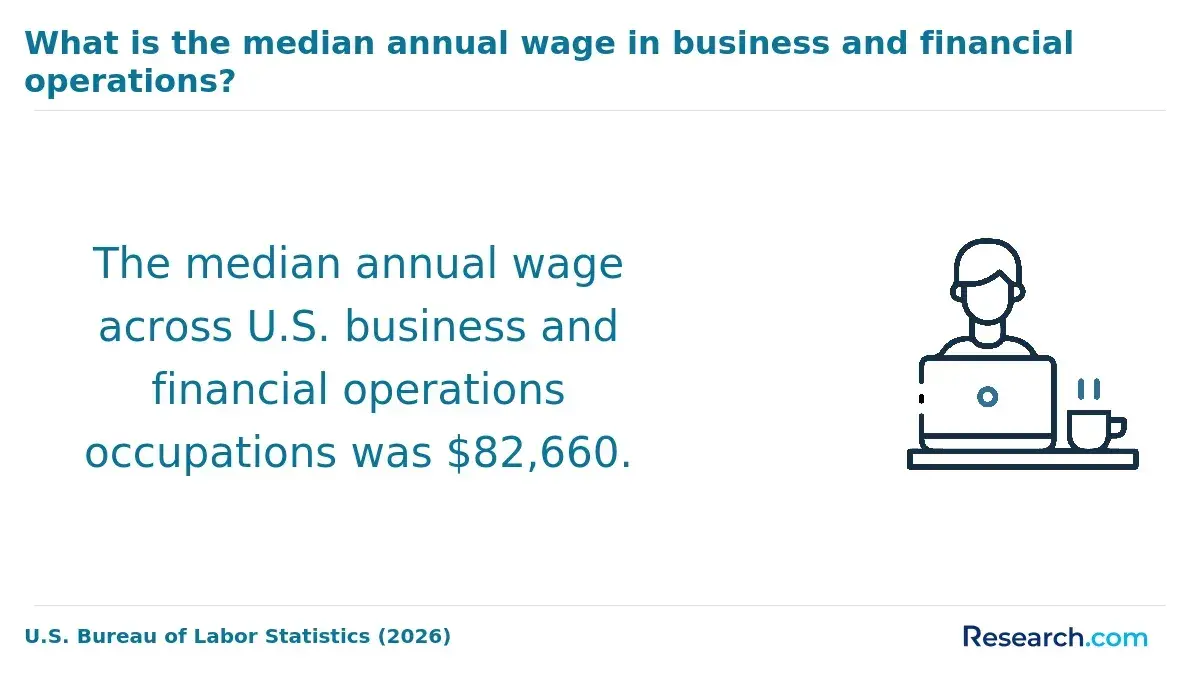
As broad context, the U.S. Bureau of Labor Statistics reported a median annual wage of $126,520 for all management occupations in May 2025. That figure includes experienced managers across many fields; it is not a starting salary, an accounting-specific figure, or an estimate of what an MBA will add to your pay.
For a useful personal estimate, compare local postings for the exact jobs you could qualify for now and after gaining accounting experience. Treat a controller's compensation as a potential later-career reference point, not the immediate payoff from graduation.
What is the job outlook for accounting careers after an MBA?
The outlook depends on which occupation you pursue. The U.S. Bureau of Labor Statistics projects about 1.1 million openings annually across all management occupations from 2025 to 2035, reflecting both growth and replacement needs. That broad figure does not measure openings specifically for accounting MBA holders or indicate that a new graduate qualifies for management roles.
Use occupation-specific postings to see whether employers in your market seek accounting experience, CPA licensure, industry expertise, or people-management history. A practical next move is to pursue a finance-related project at work while studying: it can test your interest, expose skill gaps, and give employers evidence beyond the degree.
Other Things You Should Know About MBA Programs
Possibly, especially through an internal move that uses your industry or management experience. A move into entry-level technical accounting may pay less than an established career in another field. Compare actual offers and internal opportunities before relying on a post-degree salary target.
Not necessarily. Staying employed may let you seek budget, reporting, or controls assignments that strengthen your résumé during the program. Change jobs first if a relevant role offers a clearer path to the experience your target employers require.
That depends on the school. Ask whether the concentration appears on the diploma, transcript, or both, and confirm the courses required to earn it. Employers may be more interested in the work you can demonstrate than the wording on the diploma.
Use work you are permitted to share, such as a sanitized budget analysis, forecast, cost-improvement project, or case study. Explain your assumptions, findings, and recommendation. Never disclose confidential employer financial information.
- Education Requirements | texas.gov https://www.tsbpa.texas.gov/applicants/education/
- Grad Insights: Career Career Paths After an Accounting MBA | wsc.edu https://www.wsc.edu/news/article/1498/grad-insights-career-career-paths-after-an-accounting-mba
- Jobs That Require an MBA: Career Paths and Salaries | Touro University Worldwide https://www.tuw.edu/business/21-jobs-require-mba/
- MPAcc vs. CPA Licensure: Do You Need Both? | Pittsburg State University https://degree.pittstate.edu/online-programs/master-professional-accountancy/mpacc-vs-cpa-licensure/
- Career Switchers | Master of Accounting | UNC Kenan-Flagler https://www.kenan-flagler.unc.edu/programs/master-of-accounting/career-services/career-advancement/switching-careers/
- Is an MBA Worth It? ROI, Pros, Cons and Who Should Enroll | CSP Global Concordia University, ST. Paul https://online.csp.edu/resources/article/is-an-mba-worth-it/
- How An Online MBA Can Lead to Career Change | Tulane University Freeman School of Business https://online-business.tulane.edu/online-mba/articles/online-mba-career-change/
- CPA vs. MBA: Which Is Better for Accounting Careers? | Northern Kentucky University Online https://onlinedegrees.nku.edu/programs/business/macc/professional-track/cpa-vs-mba-salary-careers/
- Is a Graduate Business Degree Worth the Investment? | Master of Accounting (MAC) Program https://mac.ncsu.edu/2026/05/12/is-a-graduate-business-degree-worth-the-investment/


