Online MBA in Marketing: Curriculum and Workload for Career Changers

Co-Founder and Chief Data Scientist
Moving into marketing from another field means learning the function while proving you can apply it. An online MBA in marketing may help, but its management core, specialization courses, and weekly demands need to match the role you want.
For career changers weighing a degree against a shorter route, this guide explains what you are likely to study, how to assess the workload, and how to turn coursework into relevant experience. It also covers the costs, career limits, and program features worth checking before you enroll.
Key Things You Should Know
- An online marketing MBA combines broad management courses with a smaller set of marketing courses. Check the actual course list before assuming it teaches hands-on campaign tools.
- For career changers, projects, employer connections, and time to build a portfolio can matter as much as the concentration name when judging workload and fit.
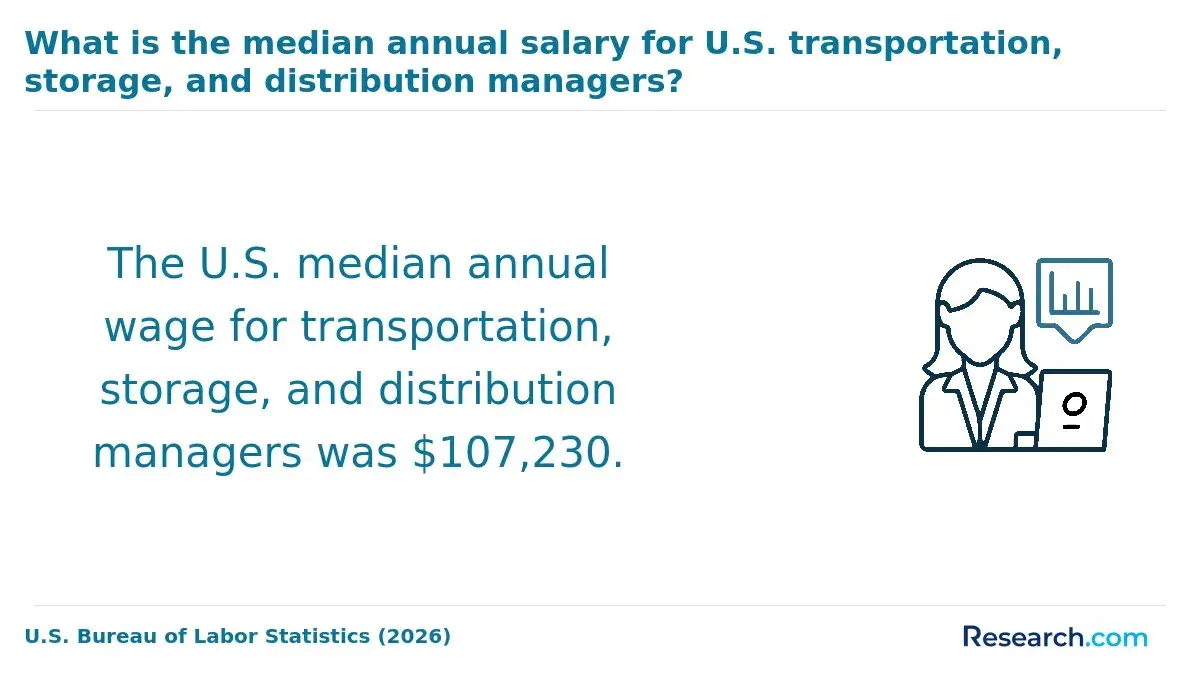
- The $126,520 May 2025 median wage for U.S. management occupations is not an expected salary for new marketing MBA graduates. Your likely entry point depends heavily on prior experience.
What is an online MBA in marketing, and is it suitable for career changers?
An online MBA in marketing is a general management degree with additional marketing study. Its core usually addresses areas such as accounting, finance, operations, strategy, and leadership; a marketing concentration, when formally offered, adds focused courses. A general MBA with one marketing elective is not necessarily a marketing MBA.
The fit depends on the distance between your current work and your target role. A sales professional moving toward product marketing can build on customer knowledge and commercial experience. An engineer targeting technical product marketing may bring valuable product expertise but need practice with positioning and customer research.
Someone seeking a first marketing job with no related experience may need demonstrable project work before a hiring manager treats the MBA as relevant preparation.
Choose the broad MBA when you want marketing knowledge alongside general management skills or expect to lead across functions. If your immediate goal is a hands-on specialist role, a focused course, certificate, or relevant work project may be a more direct first step.
An industry-specific MBA is another choice only if the curriculum fits your target function. For example, online MBA in sustainability options may interest someone targeting sustainability-focused businesses, but industry study alone does not replace marketing practice.
What courses are included in an online MBA in marketing curriculum?
There is no standard marketing MBA curriculum shared by every school. The table separates course categories so you can see how much of a prospective program develops general business judgment and how much addresses your marketing skill gaps.
| Curriculum component | Common subjects | Value for a career changer |
| MBA core | Managerial accounting, finance, operations, organizational behavior, and strategy | Helps you explain marketing decisions in terms of budgets, organizational goals, and business results |
| Marketing foundation | Marketing management, customer behavior, market research, and segmentation | Builds the vocabulary and decision-making framework needed for a functional switch |
| Concentration courses or electives | Depending on the school: digital marketing, branding, product management, pricing, or marketing analytics | Lets you match coursework to a target role rather than relying on the concentration label |
| Applied work, if offered | Campaign plans, client projects, simulations, or a capstone | Can provide work samples and concrete interview examples, especially if a real client or usable dataset is involved |
Read course descriptions for depth. A marketing analytics class may teach managers to interpret dashboards and decide what to measure; it may not provide extensive training in statistics, coding, or advertising platforms.
Likewise, a digital marketing elective does not necessarily produce a portfolio. Ask what students actually submit, whether they can work with outside organizations, and which tools the assignments use.
How much workload does an online MBA in marketing require?
Expect recurring reading, recorded or live instruction, discussions, quantitative assignments, exams, and group projects. Marketing courses may add research, presentations, and campaign or brand plans. There is no reliable universal weekly-hour figure: course intensity, term length, your preparation, and how many classes you take at once all change the commitment.
For a career changer, the hidden workload is often outside the syllabus. Learning unfamiliar marketing concepts, arranging group meetings, building work samples, and networking with practitioners all compete with paid work. Before enrolling, make a test schedule that accounts for the commitments most likely to collide:
- Request a recent syllabus and map every live class, team meeting, assessment, and major deadline onto a normal workweek.
- Check whether you can take a lighter course load during busy periods and whether skipping a term delays required marketing courses.
- Reserve separate time for portfolio projects or informational interviews; finishing assignments alone may not establish career-switching credibility.
"Online" describes delivery, not complete control of your hours. Verify time zones, attendance rules, group-work expectations, and any campus visits. If that schedule leaves no room to gain relevant experience, a slower pace may serve your career change better than the fastest available path.
Requirements vary by school. Applicants commonly encounter a bachelor's degree requirement and requests for academic transcripts, a résumé, recommendations, and a statement of goals.
Schools set their own policies on professional experience, interviews, prerequisites, and GMAT or GRE scores; do not assume a test waiver or a minimum experience threshold applies everywhere. A nonbusiness bachelor's degree does not automatically rule you out.
For a career changer, the application should connect prior work to a credible marketing direction. Describe the customers, products, data, budgets, or cross-functional decisions you have handled, then identify the functional skills you still need. If accounting or quantitative work is unfamiliar, ask whether the program offers foundation coursework and whether it adds time or cost.
Application timing can also affect when you start building experience. If you need to coordinate enrollment with a job change, compare deadlines and decision schedules; online MBA programs with rolling admission may offer another timing option, though rolling admission does not mean immediate acceptance or unrestricted start dates.
Completion time depends on required credits, course load, term length, course sequencing, and any foundation requirements. A faster schedule may reduce elapsed time but leave less capacity for the projects and networking a career changer needs. Ask for a term-by-term plan at the pace you can sustain, not just the school's shortest advertised completion time.
Compare total cost rather than a tuition headline. Include required credits multiplied by the applicable tuition rate, mandatory fees, books or software, any travel, and borrowing costs. Check whether marketing courses carry different charges and whether tuition may change before graduation. Employer assistance can lower your out-of-pocket cost, but eligibility and repayment conditions matter.
If affordability controls your choice, use online MBA programs with manageable tuition as a starting point, then verify each school's current charges and calculate the cost of the full degree. A less expensive MBA with limited marketing coursework or career support may be a poor bargain for a substantial career switch.
The degree format does not, by itself, determine academic quality. The consequential difference for many career changers is access: a campus program may make it easier to attend recruiting events, meet classmates regularly, or pursue an internship, while an online program may let you retain your job and apply coursework immediately. Neither advantage is automatic.
Compare the actual arrangements rather than the labels. Ask whether online students can use the same career advisers and employer events as campus students, whether internships or consulting projects are feasible while enrolled, and how group work is scheduled.
If you need a structured full-time recruiting reset into marketing, a campus program with verified employer access may be worth considering. If you can pursue a marketing transfer or project through your current employer, online study may be the more practical combination.
Start with a target role and the experience you already have. An operations analyst might pursue marketing operations or customer insights; a salesperson may have a stronger initial case for product marketing or account-focused strategy than for an unrelated creative role. A substantial switch often requires an intermediate position rather than an immediate move into marketing management.
Use coursework to generate evidence an employer can assess. The following sequence keeps the degree connected to a job search:
- Review target job postings and identify recurring responsibilities, such as customer research, campaign measurement, or product positioning.
- Choose electives and applied projects that address those responsibilities; where permitted, use a real employer, nonprofit, or client problem.
- Turn the work into concise samples that state the objective, your method, the recommendation, and what the evidence can and cannot show.
- Seek an internal transfer, project assignment, internship where feasible, or adjacent role while using alumni and career services to test your target.
Industry knowledge can strengthen this approach. A clinician or healthcare operations professional, for instance, may understand healthcare customers and constraints that a generalist does not.
They could compare marketing coursework with online MBA programs for healthcare professionals, then choose based on whether the target job calls primarily for marketing skills or broader healthcare management knowledge.
Possible destinations include marketing analyst, marketing operations specialist, product marketing specialist, brand or marketing manager, and eventually director-level work. These are not equivalent entry points.
Specialist and analyst roles can help a newcomer establish functional experience; management roles typically call for evidence of leading initiatives, making budget decisions, and delivering results.
The U.S. Bureau of Labor Statistics reports a May 2025 median annual wage of $126,520 across management occupations. That is a broad occupational figure, not a marketing-only figure, an MBA-graduate salary, or a realistic offer estimate for every career changer.
For a personal pay comparison, examine posted ranges for your target role and location and account for whether your previous experience qualifies you for specialist or manager-level work.
The U.S. Bureau of Labor Statistics projects about 1.1 million openings per year, on average, across management occupations from 2025 to 2035, including openings created when workers leave occupations. This signals a broad market for management work, not a count of marketing vacancies or jobs reserved for MBA holders.
For a marketing career change, the more useful question is whether employers in your chosen niche seek the skills you can demonstrate. Review current postings for the roles and industries you want, paying attention to requirements for campaign execution, analytics, product knowledge, and prior marketing experience.
An MBA can strengthen business judgment, but it does not remove competition from candidates who have already done the functional work.
How can you choose an accredited online MBA in marketing?
First, verify that the institution is accredited by an agency recognized by the U.S. Department of Education or the Council for Higher Education Accreditation. Then check whether the business school has separate, specialized accreditation, such as AACSB accreditation. Institutional accreditation and business-school accreditation answer different questions; neither confirms that a particular marketing concentration is available online.
When comparing MBA accreditation and school choices, use the school's current catalog to confirm the concentration name, required courses, and online availability. Ask for sample syllabi, an achievable course sequence, total charges, and a specific account of career services for online students.
The strongest fit is a program whose marketing assignments help close your particular experience gap at a pace and cost you can sustain. If it cannot offer relevant coursework, usable projects, or access to the support your switch requires, targeted training plus marketing experience may be a better next move than enrolling in an MBA.
Other Things You Should Know About MBA Programs
Diploma and transcript wording varies by school. Ask the registrar how the degree and concentration appear on each document before enrolling.
Possibly. Transfer limits, course-equivalency rules, grade requirements, and approval procedures vary. Get a written evaluation rather than assuming previous graduate credits will shorten the program.
Not necessarily; admission requirements are school-specific. Familiarity with spreadsheets, basic data interpretation, and the tools used in your target jobs can make coursework and a career switch easier.
Schools set their own leave and re-enrollment policies. Check how a pause would affect course sequencing, tuition, financial aid, and the deadline for completing the degree.
- General MBA vs. Specialized MBA: How to Choose | Concordia University Chicago https://career.cuchicago.edu/everything-you-need-to-know-about-choosing-a-general-mba/
- Getting an MBA While Working Full Time: How to Make It Work | Pace University New York https://www.pace.edu/news/getting-an-mba-while-working-full-time
- What to Consider When Evaluating Online MBA Programs | Northeastern Online https://online.northeastern.edu/resources/what-to-look-for-when-choosing-an-online-mba-program/
- Essential Skills You Will Gain from a Master of Marketing Degree | umn.edu https://carlsonschool.umn.edu/graduate/resources/marketing-skills-gained-from-masters-in-marketing
- Full-Time MBA Curriculum and Concentrations | Rutgers Business School-Newark and New Brunswick https://www.business.rutgers.edu/full-time-mba/curriculum
- Online MBA Information - Anderson School of Management | The University of New Mexico https://business.unm.edu/current-students/grad/online-mba-curriculum.html
- Online MBA with Marketing Management Concentration | Pace University Online https://online.pace.edu/graduate-programs/mba/online-mba-with-marketing-management-concentration/
- Curriculum - MTSU Online M.B.A. - Flex MBA https://mba.mtsu.edu/curriculum/
- Synchronous vs. Asynchronous Classes | Hopkins EP https://ep.jhu.edu/news/asynchronous-vs-synchronous-classes/