Online MBA in Entrepreneurship: Admissions Guide for Working Parents

Co-Founder and Chief Data Scientist
Applying to an online MBA while working and raising children takes more than assembling transcripts and a résumé. You also need to know whether the program's schedule, cost, and entrepreneurship coursework fit your household and career goals.
This guide explains what admissions committees commonly evaluate, how to prepare a credible application, and which program policies to check before you commit. It is designed to help working parents decide not only how to apply, but whether an online MBA is the right next step.
Key Things You Should Know
- Admission requirements vary by school; a business bachelor's degree, GMAT or GRE score, and existing company are not universal requirements.
- Before applying, confirm live-class times, group-work expectations, required travel, and options for slowing or pausing enrollment.
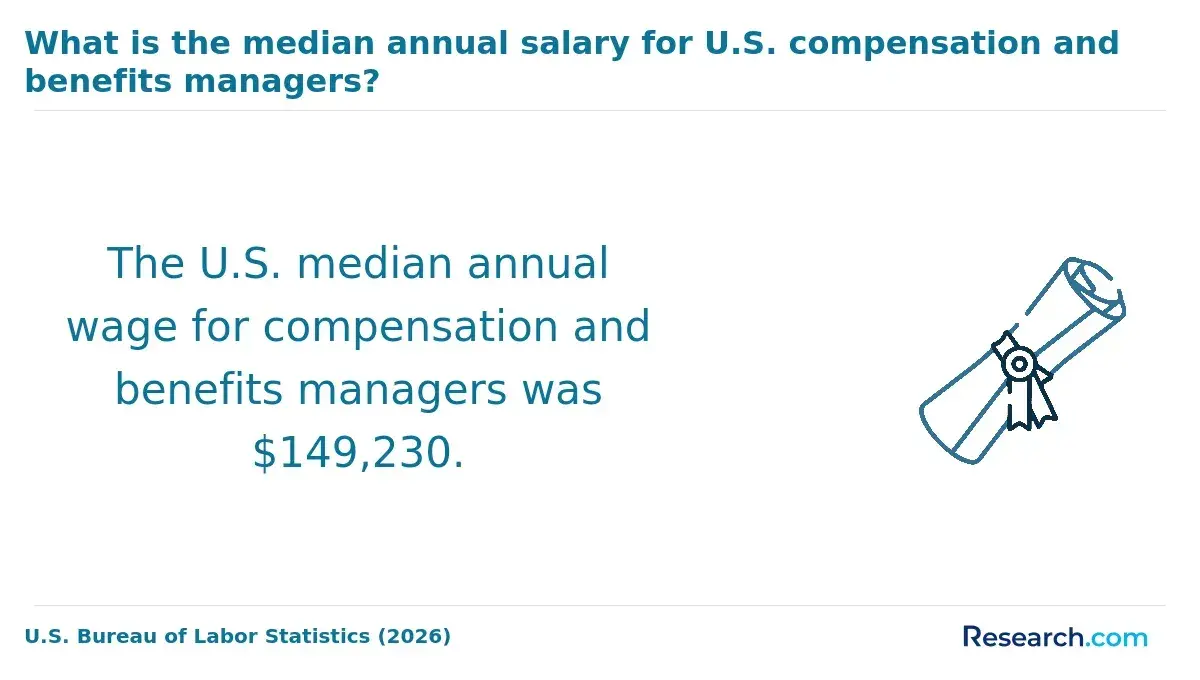
- The U.S. median annual wage for management occupations was $126,520 in May 2025, according to the Bureau of Labor Statistics; it is not an expected salary for entrepreneurship MBA graduates.
What is an online MBA in entrepreneurship?
An online MBA in entrepreneurship combines a broad business-management degree with coursework focused on identifying opportunities, testing business ideas, financing ventures, and managing growth. The entrepreneurship component may be a formally named concentration, a track, or a set of electives. Those arrangements are not interchangeable: check what appears on the transcript and how many relevant courses are required.
It can serve someone building a company, expanding a family business, or developing new products within an employer. "Online" describes where instruction is delivered, not when participation happens. A program may still require scheduled video classes, team meetings, or campus visits.
Is an online MBA in entrepreneurship worth it for working parents?
It may be worthwhile if you need broad financial, marketing, and operating skills; can apply projects to a real venture or role; and can pay without putting essential household needs at risk. For a parent seeking advancement at an existing employer, the value may come from stronger management skills and employer tuition assistance rather than from launching a startup.
The case is weaker if your immediate need is narrow - for example, learning bookkeeping or testing a product idea. A targeted course, mentor, or local small-business support program may deliver that knowledge with less cost and disruption. A practical test is to compare the full price and time commitment with the specific business decisions you expect the MBA to help you make. Do not base the decision on an assumed post-graduation salary increase.
How do online MBA programs compare with campus-based programs?
Delivery format changes which commitments are predictable and which require negotiation at home and work. This comparison highlights common differences, not guarantees about any particular school.
| Format | Scheduling implications for parents | Interaction and travel |
| Primarily asynchronous online MBA | Lectures may be available on demand, but deadlines and group meetings remain. | Remote interaction; required visits depend on the program. |
| Online MBA with live sessions | Regular class times may compete with pickup, dinner, or bedtime. | Scheduled faculty and peer contact; travel policies vary. |
| Campus-based MBA | Class meetings and commuting create fixed blocks of time. | More routine in-person contact, with a recurring travel commitment. |
Ask whether online students can use the same career services and recruiting events as campus students; do not assume identical access. Experienced managers considering a different format can compare the scheduling and career trade-offs involved in choosing an online executive MBA.
The MBA core generally develops management-level skills in accounting, finance, marketing, operations, strategy, and leadership. Entrepreneurship coursework may then address customer discovery, business models, venture financing, innovation, or scaling a small organization. Specific subjects and their depth depend on the school.
Applied work is especially valuable when you can use it to assess a real customer problem or improve an existing business. Confirm whether projects may use your own venture, whether team assignments are mandatory, and who owns intellectual property created in coursework. An MBA can improve business decision-making; it does not replace industry expertise, professional licensing, or the work of validating demand for a product.
Schools commonly request a bachelor's degree, transcripts, a résumé, and an application statement. Some also request recommendations, an interview, or GMAT or GRE scores; others offer waivers or do not require a test. Work-experience expectations and any prerequisite or foundation courses are program-specific. An entrepreneurship concentration does not universally require a business degree or an existing company.
Use the published requirements for each program to build your application plan. The following steps separate eligibility from the work of making your candidacy convincing:
- Check the current degree, experience, testing, document, and deadline requirements for each school and intake.
- Identify examples of leadership, resourcefulness, or business problem-solving from paid work, caregiving logistics, volunteering, or a venture - without presenting caregiving itself as formal managerial employment.
- Explain why this MBA's actual courses support a defined goal and how you will meet any live-session or residency requirements.
- Ask recommenders for specific examples of your judgment and follow-through, and allow time for transcripts and any required evaluations.
If you have limited employment history, compare stated policies rather than assuming every school requires the same number of years. Online MBA programs without work experience requirements can be a starting point, but verify each program's current admissions rules and entrepreneurship options directly.
Completion time depends on required credits, course availability, and how many classes you take at once. A part-time route can preserve room for work and caregiving but may extend the period over which your household must accommodate assignments. Ask whether entrepreneurship electives run every term and whether a pause would delay the courses you need.
Compare the total expected cost, not an advertised tuition figure alone: include required fees, books or software, any residency travel and childcare, and interest if you borrow. Check when employer reimbursement is paid and what happens if you change jobs. Listings of MBA programs with affordable tuition degree programs may cover specialized dual degrees such as an MSN/MBA; their prices are not a substitute for the cost of a standalone entrepreneurship MBA.
Build a schedule around the program's least flexible requirement, not its "online" label. Before accepting an offer, request a sample syllabus and term calendar. Check the timing of live classes, the usual window for team meetings, exam rules, required travel, and the process for reducing course load or taking leave.
For a realistic trial, reserve recurring study blocks and a backup caregiving arrangement during one ordinary workweek. Discuss with your household which commitments can move during exams or group projects. If collaboration would be especially difficult, research top online MBA programs with limited group work, then verify the requirements of individual courses; limited group work does not mean none.
Outcomes depend heavily on what you have done before the MBA. An owner may use the degree to manage cash flow, hiring, and growth. An employee might pursue product development, business development, innovation, or general-management responsibilities, usually by building on existing industry and functional experience. Starting a company is another path, but an MBA cannot establish product-market fit or guarantee funding.
If you want to innovate within a particular industry, compare entrepreneurship coursework with sector-focused options. For example, healthcare leadership MBA programs may be more relevant to a healthcare manager whose goal is organizational advancement rather than venture creation. Neither path substitutes for clinical qualifications where those are required.
There is no single reliable salary for this degree. A founder's income depends on the venture, while an employee's pay depends on occupation, location, experience, and employer. The Bureau of Labor Statistics reports that the median annual wage across U.S. management occupations was $126,520 in May 2025. That figure describes a broad occupational group - not entrepreneurship MBA graduates or the wage gain caused by earning an MBA.
For a useful financial comparison, look at compensation for the specific roles you could realistically pursue with your existing experience. If you plan to start a business, assess expected cash needs and the possibility of lower personal income while it develops rather than treating a management salary as your likely outcome.
How do you choose an accredited online MBA in entrepreneurship?
First, verify the institution's accreditation through the accreditor or an official U.S. Department of Education-recognized accreditation directory. Then check whether the business school holds separate programmatic accreditation, such as AACSB, ACBSP, or IACBE accreditation. Institutional accreditation and business-school accreditation answer different questions; a school need not claim both for you to assess its legitimacy and fit.
Next, compare the official curriculum and delivery details side by side. Confirm that entrepreneurship is available to online students as the type of concentration or elective sequence you want, and request written answers about live attendance, visits, elective rotation, career-service access, and leave policies. The best fit is the accredited program whose verified commitments your household can sustain - not necessarily the one with the strongest marketing claim about flexibility.
Other Things You Should Know About MBA
Often, but confirm that the school accepts students residing in your state before applying. Enrollment authorization and eligibility for particular services can depend on your location.
Not as a universal MBA requirement. You can explain an interest in starting a venture or applying entrepreneurial methods at work; check each school's stated criteria.
Ownership depends on school policies, any team agreements, and other applicable contracts. Review those terms before sharing confidential venture information in a class project.
In some circumstances, documented dependent-care expenses can be considered in a school's cost-of-attendance calculation. Ask the financial aid office what qualifies, what documentation it needs, and whether an adjustment would change your aid eligibility.
- Types of Financial Aid: Grants, Work-Study, and Loans | studentaid.gov https://studentaid.gov/understand-aid/types
- The role of Incubators and Accelerators in knowledge valorisation - Research and innovation https://research-and-innovation.ec.europa.eu/research-area/industrial-research-and-innovation/eu-valorisation-policy/knowledge-valorisation-platform/thematic-focus/role-incubators-and-accelerators-knowledge-valorisation_en
- Cost of Attendance (Budget) | 2025-2026 Federal Student Aid Handbook https://fsapartners.ed.gov/knowledge-center/fsa-handbook/2025-2026/vol3/ch2-cost-attendance-budget
- Employer-offered educational assistance programs can help pay for college | Internal Revenue Service https://www.irs.gov/newsroom/employer-offered-educational-assistance-programs-can-help-pay-for-college
- Reduced Course Load | Study in the States - Homeland Security https://studyinthestates.dhs.gov/sevis-help-hub/student-records/manage-program-dates-registration-and-course-load/reduced-course
- The Role of Business Incubators and Accelerators in Entrepreneurship Support | Congress.gov | Library of Congress https://www.congress.gov/crs-product/IF12794
- MBA Admissions Requirements | Online MBA & Executive MBA https://mba.wsu.edu/admissions-details/
- What happens to my financial aid if I enroll part-time or reduce my course load? - Student Financial Aid https://www.washington.edu/financialaid/2026/09/14/what-happens-to-my-financial-aid-if-i-enroll-part-time-or-reduce-my-course-load/
- MBA Application Requirements | CBS Academics https://academics.business.columbia.edu/admissions/mba/application-requirements
- Credit for Prior Learning, Credit by Examination, and Transfer Credit | University of Vermont Catalogue https://catalogue.uvm.edu/graduate/academicenrollment/transfercredit/