Careers After an Online MBA in Finance for Military Veterans

Co-Founder and Chief Data Scientist
Military leadership can translate well to civilian management, but moving into finance often requires more than a new credential. For veterans considering an online MBA in Finance, the key is matching existing experience to a realistic role - and identifying the finance skills employers will still expect.
This guide compares career paths, explains where the MBA helps and where it may not, and covers salary context, education benefits, and program selection. Use it to decide whether the degree is the right next step for your target job.
Key Things You Should Know
- Veterans with budgeting, acquisition, logistics, or team-leadership experience may be well positioned for financial operations, budget analysis, or corporate finance; an MBA alone rarely qualifies someone for senior finance leadership.
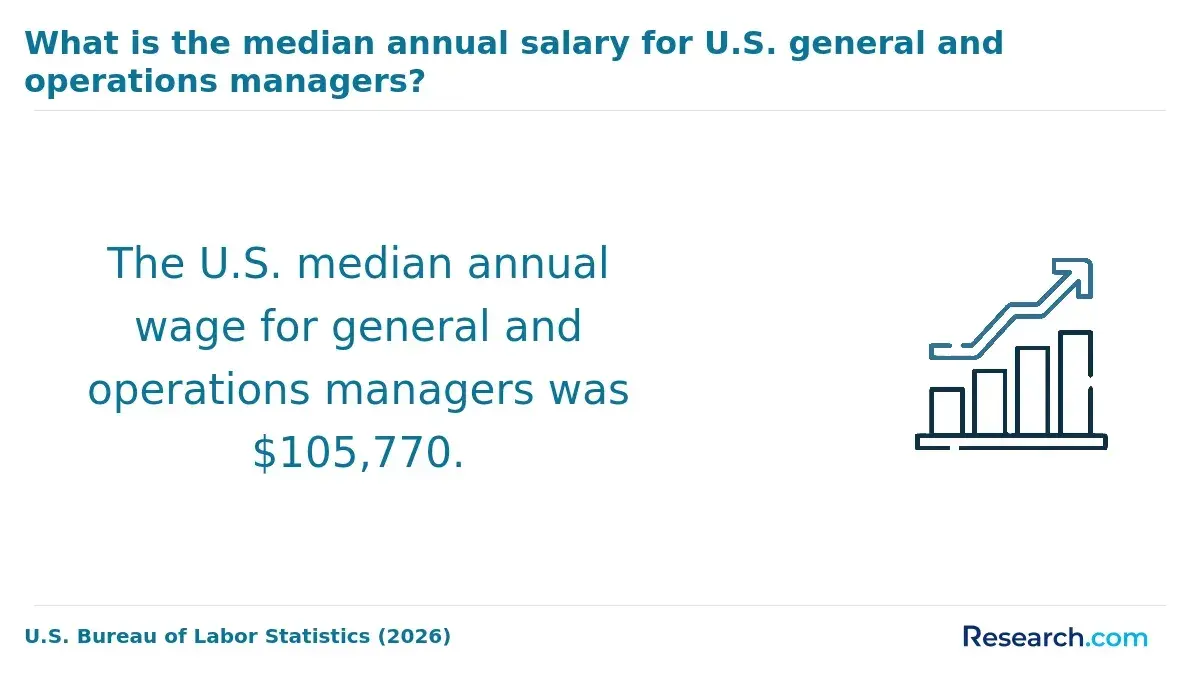
- For context, the US median annual wage across all management occupations was $126,520 in May 2025, according to the Bureau of Labor Statistics (BLS). That is not a starting salary or a forecast of what MBA graduates earn.
- Compare programs by finance coursework, civilian employer connections, total out-of-pocket cost, and how online enrollment affects your individual VA education benefits.
What careers can veterans pursue after earning an online MBA in Finance?
The strongest path usually builds on what a veteran has already done. An MBA in Finance combines broad business-management training with finance courses, but it does not replace experience preparing forecasts, evaluating investments, or working under an employer's financial controls.
The following paths show how different service backgrounds might connect to civilian finance work. The fit is a starting point for a job search, not an eligibility determination.
| Military experience | Potential civilian path | Likely skill gap to address |
| Budget execution or resource management | Budget analyst, financial analyst, or financial operations manager | Corporate reporting systems and employer-specific accounting practices |
| Acquisition or contracting | Procurement finance, contract financial analysis, or government-contracts management | Commercial pricing and profitability analysis |
| Logistics or operations leadership | Operations finance or financial planning and analysis (FP&A) | Forecasting, financial modeling, and performance reporting |
| Financial services or client-facing experience | Banking, commercial lending, or wealth management | Product knowledge and, for some positions, required registrations |
Industry matters as much as job title. A defense contractor may value familiarity with government procurement, while a healthcare employer may prioritize reimbursement and service-line budgeting knowledge. Veterans interested in healthcare finance should evaluate that industry-specific gap separately; a discussion of career choices for online MBA graduates in nursing-related settings illustrates how sector experience can shape management opportunities, though those clinical paths are not interchangeable with finance roles.
How does an online MBA in Finance benefit military veterans?
An online MBA can help veterans put leadership and resource decisions into civilian business language. A service member who managed a unit budget, for example, may already understand accountability and trade-offs; finance coursework can add cash-flow analysis, valuation, and the reporting vocabulary used by corporate employers. Management courses can also help explain how those decisions affect strategy and teams across a business.
The online format may let a veteran keep working or remain in one location during a transition. It is not automatically schedule-free: live classes, group projects, exams, and occasional campus requirements depend on the school. Likewise, an online cohort offers networking only if the program makes it practical to meet alumni and employers.
The MBA is most valuable when paired with evidence of finance ability. A forecasting project, a finance-related assignment at work, or a clearly quantified account of past budget responsibility gives an employer more to assess than the degree title alone. Veterans moving from operations into FP&A may have a shorter transition than those seeking investment roles without relevant deal or market experience.
What jobs can you get with an online MBA in Finance?
Job titles can obscure substantial differences in responsibilities and hiring standards. These are plausible targets, depending on prior experience and the skills developed during and after the MBA.
- Financial analyst: Builds forecasts, reviews performance, and supports investment or operating decisions. Financial modeling and spreadsheet proficiency matter alongside the degree.
- Budget analyst: Develops and monitors budgets for employers, including government agencies and contractors. Military resource-management experience can be relevant, but hiring rules differ by employer.
- FP&A manager: Leads planning, forecasts, and business-partner discussions. Employers commonly expect substantial prior analysis or finance experience before assigning management responsibility.
- Financial manager or controller-track professional: Oversees reporting, cash, controls, or a finance team. Accounting-intensive controller roles typically demand deeper accounting experience than an MBA concentration alone provides.
- Commercial lending or relationship manager: Assesses borrowers and manages business-client relationships. Credit analysis and sales experience may be more decisive than MBA coursework.
For a veteran without civilian finance experience, analyst or finance-adjacent roles may be a better first target than finance director. A veteran who already led budgets or worked in banking may instead use the MBA to compete for broader responsibility. Review actual postings in your preferred location: the recurring requirements will reveal whether your main gap is a degree, technical practice, industry experience, or a license.
An MBA in Finance is generally a management degree with a finance concentration, track, or group of electives - not the same as a specialized master's in finance. The MBA core commonly covers accounting, strategy, operations, marketing, analytics, and organizational leadership. Finance-focused study may cover corporate finance, valuation, investments, financial markets, and risk, but schools differ in what they require and how deeply they teach it.
For career preparation, examine assignments as well as course names. Building a forecast or evaluating a capital project can provide more usable evidence for an FP&A application than a course that only surveys finance concepts. If your goal is government contracting, look for opportunities to apply financial analysis to contracts or operational decisions.
A different specialization may be better if the target role is not primarily financial. For example, veterans focused on hospital operations rather than corporate finance might compare one-year graduate business programs fast online MBA programs in healthcare management against finance-focused options, while checking the actual curriculum and pace of each school. A single finance elective does not necessarily constitute a formally designated Finance concentration.
Requirements vary by school. Online MBA applicants commonly submit a bachelor's-degree transcript, résumé, and application materials explaining their goals; a school may also request recommendations, an interview, or GMAT/GRE scores. Some programs waive testing or do not require it. A finance bachelor's degree is not a universal prerequisite, although applicants without accounting or quantitative preparation may benefit from foundation coursework.
Describe military work in terms an admissions reader can evaluate: budget scope, decisions made, people led, and measurable results, without disclosing sensitive information. Before applying, check each program's policy on professional experience, test waivers, prerequisite courses, and how it assesses military training. Lists of online MBA programs with accessible admissions program list can help identify options to investigate, but confirm current requirements with the school rather than assuming an easier application means a better career fit.
Completion time depends on credit requirements, term length, course sequencing, and whether you enroll full time or part time. An accelerated schedule may shorten the calendar time but leave less room for employment, family obligations, or a finance internship. Compare short-duration MBA pathways degree programs by their actual weekly commitments, live sessions, and required travel - not just the advertised finish date.
There is no single reliable price for an online MBA in Finance. To estimate your own cost, request the required credits and current tuition rate, then add mandatory fees, books or software, and any travel. Ask whether tuition differs by residency or enrollment pace. For a veteran using education benefits, the most useful comparison is out-of-pocket cost after confirmed benefits, not the published tuition alone; also consider benefit entitlement used and income you might forgo if you reduce work hours.
Potential funding includes an applicable GI Bill benefit, employer tuition assistance, school scholarships, and, for veterans found eligible, Veteran Readiness and Employment (VR&E). Eligibility, benefit level, remaining entitlement, and the school and program's approval all matter. Under the Post-9/11 GI Bill, payment rules for tuition and the housing allowance can differ between public and private schools and between exclusively online and in-person study. Yellow Ribbon participation may help eligible students with certain uncovered charges, but neither the student nor the program should be assumed eligible.
Ask the school's VA certifying official for a program-specific benefits estimate and verify it against your VA eligibility information before committing. Check how part-time enrollment affects your benefits and whether an employer pays tuition before or after a course is completed. Financing lists such as cost-effective MBA choices GMAT required may provide comparison leads, but a test policy does not establish your net price. Borrow only after comparing the amount you would pay across programs and considering whether a less expensive credential could close the same skill gap.
Many corporate finance and budgeting jobs do not require a professional license simply because they involve finance. Requirements change when the work involves regulated activities. Securities roles may require FINRA registrations and an associated firm; providing certain investment advice can trigger registration requirements. Public-accounting work and use of the CPA title are governed by state rules. An MBA in Finance does not grant those authorizations.
Optional credentials can be useful when they match a target role. The CFA designation is associated with investment analysis and has its own examinations and experience requirements; accounting credentials may be more relevant to a controller path. Before paying for a credential, read postings for the jobs you want and determine whether employers request it, prefer it, or primarily seek experience.
Pay depends on the occupation, location, employer, responsibilities, and the experience a veteran brings before earning the MBA. As broad context, BLS reports a $126,520 median annual wage for US management occupations in May 2025. This figure covers managers across fields and career stages: it is neither the median for finance managers specifically nor an expected salary for new MBA graduates.
BLS projects overall management employment to grow faster than the average for all occupations from 2025 to 2035, but that broad outlook does not establish demand for a particular finance job in your market. For a practical salary expectation, compare local postings for the exact role and seniority you can credibly pursue, then weigh likely compensation against your net program cost and any earnings lost while studying.
How can veterans choose an accredited online MBA in Finance?
First, verify that the university holds recognized institutional accreditation and that the online MBA - and a formal Finance concentration, if you want one - are actually offered. Business-school accreditation, such as AACSB, ACBSP, or IACBE accreditation, is a separate consideration; do not mistake it for the university's institutional status or assume every accredited MBA has the same finance curriculum.
Then test career fit rather than relying on a military-friendly label. Ask career services which finance employers recruit online students, whether veterans can use alumni mentoring and career coaching, and whether projects produce work samples. Confirm live-session times, group-work expectations, campus visits, and veteran support arrangements. Finally, obtain a written cost and benefits estimate and compare it with a targeted finance course, credential, or employer-supported move. The best choice is the one that addresses your specific hiring gap at a manageable cost - not necessarily the fastest or most recognizable MBA.
Other Things You Should Know About MBA
It may help for positions with defense contractors or federal agencies that require one. Most corporate finance jobs do not require a clearance, and employers still assess finance skills and job-specific experience.
Eligible veterans may receive preference under applicable federal hiring rules, but it does not guarantee selection. Check the vacancy's eligibility and qualification requirements.
Not always. Relevant budgeting or contracting work may support a direct application. An internship or applied project can be especially useful when changing into a finance function with little related experience.
Possibly, but studying online does not determine where an employer lets you work. Check each posting's location, travel, and hybrid-work requirements before treating remote work as part of your career plan.
- What Are Veterans' Job Prospects After They Serve? | Census.gov https://www.census.gov/library/stories/2025/01/veterans-employment-outcomes.html
- Defense Finance and Accounting Service - Careers https://www.dfas.mil/careers/security/
- Choosing the Right Financial Certification | The American College of Financial Services https://www.theamericancollege.edu/knowledge-hub/insights/choosing-the-right-financial-certification
- Why veterans should get an MBA | UF Warrington College of Business https://warrington.ufl.edu/news/veterans-should-get-mba/
- Explore Your Finance Career Path - CFI Career Map https://corporatefinanceinstitute.com/resources/career-map/
- Charles Schwab: Why Veterans looking for their next career should consider finance | aboutschwab.com https://www.aboutschwab.com/mss/story/why-veterans-should-consider-finance-careers
- Finance Career Job Outlook: Pros and Cons (With Salaries) | indeed.com https://www.indeed.com/career-advice/finding-a-job/finance-career-job-outlook
- 4 Growing Jobs for Veterans in Finance | gijobs.com https://www.gijobs.com/4-jobs-for-veterans-finance
- Finance and accounting salary benchmarks and trends | Robert Half https://www.roberthalf.com/us/en/insights/salary-guide/finance-and-accounting
- Corporate Finance Analyst: Description, Salaries, Hours, and Exit Opps | Mergers & Inquisitions https://mergersandinquisitions.com/corporate-finance-analyst/