
Is an Online MBA in Human Resources Worth It for Small Business Owners?

Co-Founder and Chief Data Scientist
Hiring your first managers, retaining employees, and building a workplace that can grow without your constant supervision all require skills that are hard to develop while running a business. An online MBA in human resources combines broad business education with a focus on managing people, but it also demands money and time away from operations. This guide helps small business owners judge whether that investment addresses their most pressing problems, what to check in a program, and when a shorter course or expert support would serve them better.
Key Things You Should Know
- An online HR MBA is most likely to pay off when you need both stronger business-management skills and a long-term plan for hiring, developing, and retaining a growing team.
- If your immediate problem is payroll, compliance, or a single hiring decision, targeted training or professional help is usually a more direct investment than a full MBA.
- The Bureau of Labor Statistics reports a May 2025 median wage of $126,520 for management occupations; that figure describes employed workers, not small business owner income or an MBA return.
Is an online MBA in human resources worth it for small business owners?
It can be, but only if you will use both halves of the degree. An MBA teaches broad management subjects such as finance, marketing, and strategy; an HR concentration adds people-related coursework. For an owner preparing to delegate decisions, build a management team, or expand to additional locations, that combination may be more useful than HR training alone.
The case is weaker if cash flow is tight, you cannot reliably leave day-to-day operations for coursework, or your main need is an answer to a specific employment question. An MBA can improve how you frame decisions, but it does not replace an accountant, employment attorney, payroll provider, or experienced HR adviser.
The comparison below separates long-term leadership development from narrower needs. It can help you avoid buying more education than your business can presently use.
| Current need | Likely better starting point | Why |
| Build a management team while improving finance and growth decisions | Online MBA with a substantive HR concentration | Connects people strategy to the broader business |
| Fix a discrete hiring, payroll, or compliance problem | Qualified professional support or focused training | Addresses an immediate issue without a degree-length commitment |
| Learn HR practice without a broad business curriculum | HR certificate, coursework, or a specialized graduate program | May offer more focused study, depending on the curriculum |
A useful return-on-investment test is whether you can name decisions you expect to make differently during the program - not merely a hoped-for increase in revenue afterward. Compare total educational spending and time away from the business with plausible benefits, such as a more reliable hiring process or less owner involvement in routine management. Those benefits matter, but they are difficult to attribute precisely to a degree.
What can small business owners learn in an online HR MBA program?
The greatest potential benefit is learning to treat staffing as an operating decision, not a sequence of emergencies. Organizational behavior and leadership coursework can help an owner define manager responsibilities, handle conflict, and plan for delegation. HR strategy may address recruiting, compensation, performance management, and employee development.
The MBA core matters just as much. Managerial accounting can sharpen decisions about whether a new hire is affordable; operations coursework can reveal whether a staffing shortage is actually a process problem. Marketing and strategy can help distinguish the employees needed for the business you have from those needed for the business you intend to build.
Courses generally teach frameworks and management-level analysis, not individualized legal advice or hands-on mastery of every HR system. The strongest fit is a program that lets you apply assignments to a real business problem while respecting employee privacy and the school's data-use rules.
How much does an online MBA in human resources cost and take to complete?
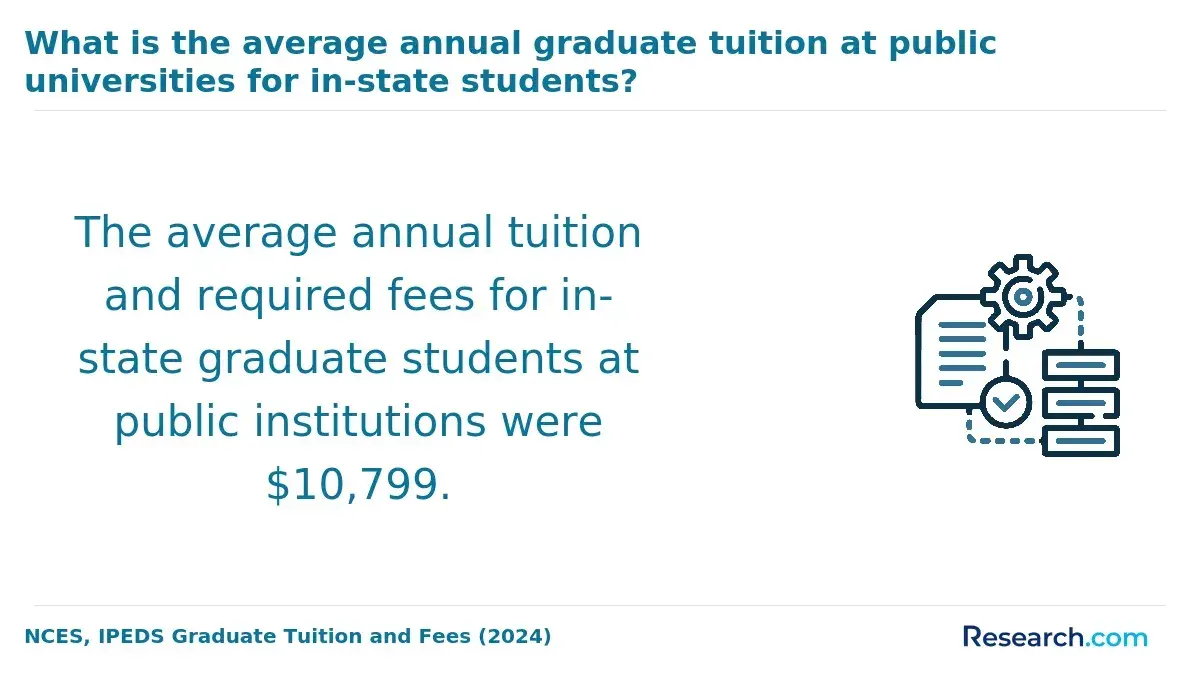
There is no reliable single price or completion time for online HR MBAs. Schools may charge by credit, course, or term, and the HR concentration may require particular electives without adding credits - or may change the total coursework. Part-time study can make tuition payments easier to spread out while extending the period in which school competes with business operations.
For a meaningful comparison, request each school's required credits, tuition basis, mandatory fees, books and software costs, and any travel expenses. Check whether changing pace affects charges or access to financial aid. An online MBA cost guide can help you identify affordability questions, but use the school's current written figures to calculate your own total.
For an owner, opportunity cost deserves its own line in the budget: Who handles customers, staffing, and urgent decisions while you study? A less expensive program may still be costly if its schedule forces you to reduce business hours or pay someone else to cover them. Ask the school for a sample course schedule and its rules for slowing or pausing enrollment before committing.
Curricula vary, but an HR concentration is usually a set of designated courses within a broader MBA, not a replacement for the business core. Core subjects commonly include accounting, finance, marketing, operations, strategy, and leadership. HR-focused offerings may cover talent management, employment relationships, compensation, or organizational change.
Read the degree plan rather than relying on the concentration label. Check how many HR courses are required, whether they are available online on a workable schedule, and whether the program offers an applied project. A single HR elective does not necessarily constitute a formal HR concentration. If your goal is advanced HR practice rather than overall business leadership, compare the actual syllabi with those of a focused HR program.
Some are, but accreditation must be checked at two levels. First, confirm that the institution holds recognized institutional accreditation. Then check whether its business school or MBA has specialized business accreditation, if that distinction matters to you. Accreditation generally applies to the institution or business program - not separately to an HR concentration merely because it appears in the degree title.
Use the institution's accreditor information and the accreditor's own directory to verify current status. The same checks apply to an online delivery format; do not assume that an advertised concentration is available to online students. A guide to online business degree accreditation choices provides context for comparing business-school accreditation, but it cannot substitute for checking a prospective school's current listing.
Requirements differ by school. Applicants commonly need a bachelor's degree and may be asked for transcripts, a résumé, recommendations, or a statement of purpose. Policies on professional experience, entrance tests, interviews, and prerequisite business courses vary; owning a company does not automatically satisfy a school's experience standard.
If you have not taken accounting or statistics, ask whether the school requires foundation work or offers preparation within the MBA. Use your application to explain the decisions you have made as an owner - such as budgeting, hiring, or managing suppliers - rather than assuming that the job title alone demonstrates management experience. If formal experience is a concern, compare online MBA programs without work experience requirements, then confirm each school's current policy directly.
An online program can reduce commuting and make it easier to keep operating a business, but online does not necessarily mean self-paced. Live classes, group projects, fixed deadlines, and occasional campus visits may still require coverage at work. A campus program may offer more routine face-to-face contact, yet its travel and meeting schedule can be harder for an owner to sustain.
Compare the actual experience rather than the delivery label: ask when classes meet, how teams coordinate, whether visits are required, and what networking and career services online students can use. Owners who cannot routinely attend group meetings may find a comparison of top online MBA programs with limited group work useful, while still verifying each program's current assignments.
In general, a small business owner does not need an HR certification or professional license simply to manage employees. An MBA is also not an HR license. Voluntary HR certifications can demonstrate professional knowledge, but each certifying organization sets its own eligibility and examination rules; MBA study should not be assumed to qualify you automatically.
Managing employees does bring legal obligations that vary with your location, workforce, and activities. If you need an answer about classification, leave, workplace complaints, or another specific employment matter, obtain appropriate professional advice rather than treating a course or certificate as legal authorization.
For many owners, the primary outcome is a better-run business, not a new job title. If you later move into employment, your ownership experience may support applications for operations, people-management, or HR leadership roles - but employers will assess the scale and relevance of that experience. Leading a small team, for example, is not automatically equivalent to running a large organization's HR department.
The Bureau of Labor Statistics reports that management occupations had a median annual wage of $126,520 in May 2025. This is the midpoint for workers across management occupations, not an HR MBA graduate salary, an owner income estimate, or a prediction of what a career change would pay. For an owner considering employment, the useful comparison is between specific roles' requirements and the work you have actually performed.
How should small business owners choose an online HR MBA program?
Start with the business decisions you expect the degree to improve. Then test programs against your available time and the skills those decisions require, rather than choosing primarily by a ranking or a concentration name.
- Identify a concrete goal, such as developing managers across locations, and determine whether it requires both MBA core subjects and HR study.
- Confirm the formal online concentration, required courses, applied projects, and current accreditation.
- Request a complete cost estimate and sample schedule; account for business coverage during live sessions, group work, and any travel.
- Compare the degree with a targeted course, mentoring, or professional support, and enroll only if its broader learning justifies the added commitment.
If you are considering a second graduate credential alongside the MBA, examine dual MBA programs with particular caution: additional coursework should solve a specific business or career need, not merely add credentials. The best choice is the one you can complete and put to work without undermining the company you are trying to strengthen.
Other Things You Should Know About MBA
Possibly, but how the expense is treated for accounting and tax purposes depends on your business and circumstances. Discuss the proposed payment with a qualified tax professional before assuming it is deductible.
That depends on the school's leave and re-enrollment policies. Ask how a pause affects course availability, tuition, financial aid, and the time allowed to finish the degree.
Many projects allow a real organization as a case, but permission and confidentiality rules vary. Check the course requirements and remove or protect employee and customer information before sharing it.
Leadership and organizational-change coursework may help you prepare future managers. For ownership transfers, valuation, or estate matters, you will also need advice from appropriately qualified professionals.
- Labor and Employment Training | California Office of the Small Business Advocate (CalOSBA) https://calosba.ca.gov/for-small-businesses-and-non-profits/business-learning-center/labor-and-employment-training/
- Choosing a School | Federal Student Aid https://studentaid.gov/resources/prepare-for-college/students/choosing-schools
- What is an MBA in HR Management | University of Bridgeport https://www.bridgeport.edu/news/what-is-mba-in-hrm/
- Why Get an MBA: Benefits & Advantages | MBA Program https://mba.wharton.upenn.edu/why-get-an-mba/
- MBA in Human Resources Online | wsc.edu https://www.wsc.edu/hr-management-mba-online
- What are the benefits of an MBA degree to a company? | Tippie College of Business https://tippie.uiowa.edu/about/who-we-are/advisor/mba/benefits-mba-degree-company
- Is an Online Business Degree Worth It? | American College of Education https://ace.edu/blog/what-employers-think-about-online-business-degrees/
- Is an MBA Worth It? Cost, Salary & Career Benefits | Notre Dame de Namur University https://www.ndnu.edu/articles/business-management/is-an-mba-worth-it.html
- Online Business Degree School | Purdue Global https://www.purdueglobal.edu/degree-programs/business/
- Online Master of Business Administration (MBA) | UMass Global https://www.umassglobal.edu/academic-programs/mba-business-administration


