
Online MBA in Cybersecurity Management: admissions guide for small business owners

Co-Founder and Chief Data Scientist
Running a small business gives you management experience, but it may not give you a clear way to evaluate cyber risks, oversee vendors, or budget for security. An online MBA in cybersecurity management could build those skills alongside finance and leadership - if its admissions requirements, schedule, and cost fit your business.
This guide explains how to prepare an application, distinguish management-focused coursework from technical training, and decide whether a full MBA is worth the time away from operating your company.
Key Things You Should Know
- Business ownership can provide strong MBA application evidence: document your decisions about budgets, staff, customers, vendors, and risk rather than relying on your job title alone.
- A cybersecurity concentration usually teaches governance and management, not hands-on security engineering; verify the official curriculum before applying.
- Do not justify tuition with an assumed salary increase: the U.S. Bureau of Labor Statistics reports a $126,520 median annual wage for management occupations in May 2025, not for MBA graduates or business owners.
What is an online MBA in cybersecurity management?
It is a graduate business degree that combines an MBA's management core with coursework focused on cybersecurity decisions. The core typically addresses finance, accounting, operations, strategy, and leadership. Cybersecurity study may cover governance, risk assessment, privacy, incident planning, or technology management. The exact mix depends on the school.
For a small business owner, the goal is usually to make better decisions about protecting the company - not to become its security engineer. A program might offer a formally named cybersecurity concentration, a broader technology or risk-management track, or only relevant electives. Those are different academic offerings. Check the degree requirements and transcript designation before treating a cybersecurity course as a concentration.
Is an online MBA in cybersecurity management worth it for small business owners?
It can be worth it if you need broad business-management development and expect to apply the cybersecurity coursework to consequential decisions: expanding operations, managing customer data, negotiating vendor contracts, or building a more resilient company. Its value is less certain if your immediate need is a security assessment or a practical plan to address known vulnerabilities.
The following comparison separates an ongoing education goal from an urgent operating need. Neither option replaces the other.
| Option | Best fit for an owner | Main limitation |
| Cybersecurity-focused MBA | Developing broader financial, leadership, and risk-management judgment over time | Requires substantial tuition and study time; does not itself secure the business |
| Targeted course or executive education | Learning a defined skill, such as cyber-risk oversight or incident planning | Offers less breadth in business management |
| Qualified security adviser or managed service provider | Assessing current systems and implementing protections | Addresses an operating need rather than awarding a management degree |
Consider the return in terms of decisions you can improve, not an assumed post-MBA paycheck. Compare total education costs and time away from the business with a realistic alternative: what could you achieve by combining targeted training, mentoring, and professional security support? Comparing MBA degree options for working adults may surface dual degrees, but an MSN/MBA, for example, fits a nursing-related goal rather than a typical small-business cybersecurity need.
How do you choose an accredited online MBA in cybersecurity management?
Start by checking that the institution holds recognized institutional accreditation. Then check whether its business school holds specialized accreditation, such as AACSB, ACBSP, or IACBE. Institutional and business-school accreditation are different; a school's claim about one does not establish the other. Confirm each status with the accreditor and ask which entity awards the online degree.
Next, inspect the published curriculum. Identify the required MBA core, the number and subjects of cybersecurity courses, and whether the specialization is available to online students. Ask who teaches the security courses and whether assignments address small-company constraints, such as limited staff, outsourced IT, and competing cash-flow needs.
Finally, request the actual course schedule - not simply a description of the program as "flexible." Compare live meetings, group-work expectations, examinations, and any campus visits with the hours when your business needs you. Lists of MBA programs that fit around work can help you identify possibilities, but verify the current schedule directly before applying.
The most useful combination for many owners is managerial finance plus cyber-risk oversight. Finance coursework can help you weigh a security investment against payroll, inventory, and growth needs. Operations and leadership coursework can help you assign responsibility, train staff, and make an incident plan workable across the business.
Cybersecurity management courses may address security governance, risk assessment, vendor oversight, privacy, business continuity, and incident response. The National Institute of Standards and Technology's Cybersecurity Framework offers a common way to organize these management discussions; studying a framework, however, is not the same as learning to configure networks or conduct technical testing.
Look for applied assignments you could adapt to your company, such as a vendor-risk review or a proposal for prioritizing security spending. If customer acquisition is a more pressing gap than cybersecurity leadership, compare the curriculum with graduate business programs in marketing rather than choosing a specialization solely because the topic feels urgent.
Requirements are set by each university, not by the cybersecurity specialization as a whole. Online MBA applications commonly involve an undergraduate degree, academic transcripts, a résumé, and written statements; some schools also request recommendations, interviews, or GMAT/GRE scores. Experience thresholds, GPA policies, testing rules, and deadlines vary. A computer science degree or cybersecurity certification should not be assumed necessary unless a particular program says so.
Business ownership can be compelling professional experience when you make its scope clear. Before applying, prepare evidence that helps an admissions committee understand both your management readiness and your reason for studying cybersecurity:
- Update your résumé with the size and scope of the business, your responsibilities, and specific decisions you led; distinguish revenue or staffing responsibilities from activities you delegated.
- Use your statement to connect a business problem - such as vendor oversight or continuity planning - to the program's actual courses and your broader management goals.
- Identify a recommender who can describe your judgment and collaboration, such as a client, business partner, lender, or former supervisor, if the school accepts that relationship.
- Review your preparation in accounting, finance, and quantitative work; ask whether foundation courses are required or simply available.
- Confirm the current deadline, test policy, transcript process, and any interview requirement directly with each program.
If an older GPA does not reflect your present capabilities, address it factually and show more recent evidence of academic or business readiness. MBA admission pathways for working adults may help you find schools to investigate; inclusion on a list is not an admission guarantee.
Completion time depends on required credits, course sequencing, term lengths, and whether you study part time or at an accelerated pace. Ask whether cybersecurity courses run every term: an infrequently offered required course can delay graduation even when the MBA core is available regularly.
For an owner, the meaningful measure is the schedule you can sustain during busy seasons. Request a sample part-time course plan and ask when live sessions, group meetings, and major project deadlines occur. accelerated graduate business degrees may be appealing, but a shorter calendar can concentrate the same academic demands into periods when the business cannot spare your attention.
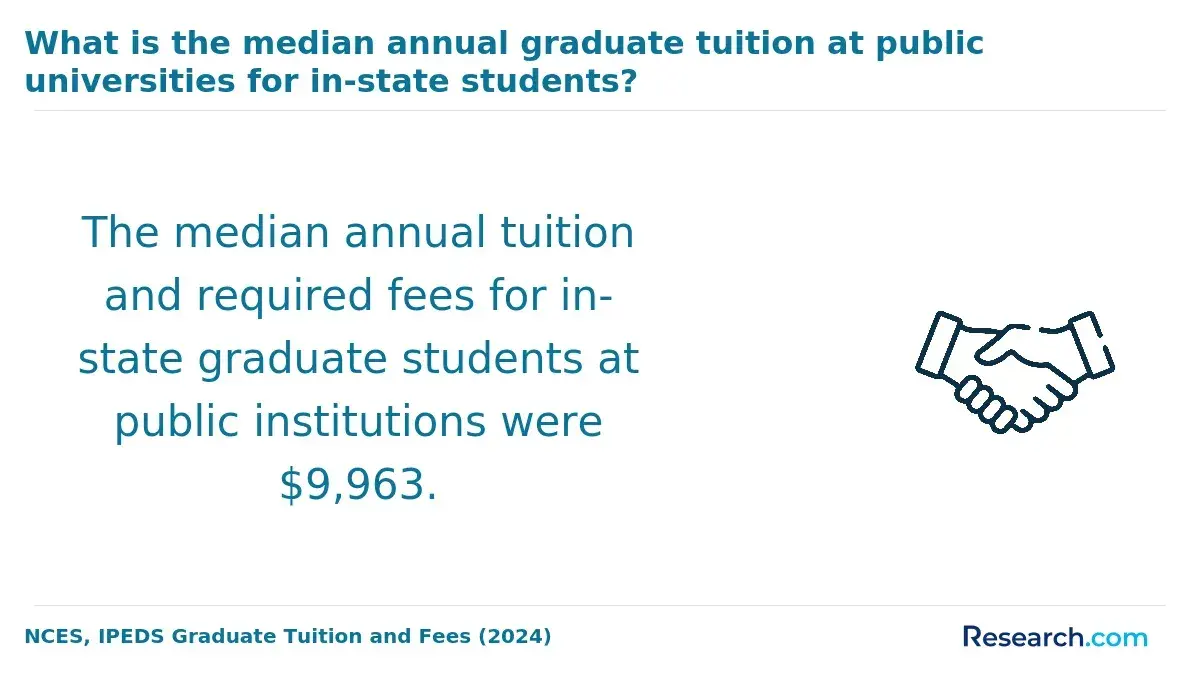
There is no dependable single price for this degree type. Schools may charge per credit, course, term, or program, and a cybersecurity concentration may require different courses or fees from a general MBA. Without a named school's current published charges, a precise price would be misleading.
Build a personal budget from the school's written cost information. The components below matter because a tuition quote alone may understate what the degree requires:
- Required credits multiplied by the applicable tuition rate, plus mandatory program and university fees.
- Books, software, technology charges, and any required travel or residency costs.
- Financing costs, after accounting for scholarships, eligible employer support, or other funding you can actually use.
- The value of work you must delegate or decline while studying, including its effect on business cash flow.
Ask whether tuition changes with enrollment pace and whether taking a break triggers new fees or a revised degree plan. If you finance the degree, compare the expected payment with a conservative business cash-flow forecast rather than assuming future earnings will cover it.
For many small business owners, the most immediate outcome is not a new job. It is stronger oversight of security spending, vendors, staff responsibilities, and continuity planning within the company they already run. Owners who later seek employment may find that experience relevant to technology operations, risk management, security program coordination, or consulting.
Hiring standards change with the role. A management position may call for evidence that you have led people, budgets, and risk decisions; a technical security role may require substantial hands-on experience the MBA does not provide. Senior security leadership generally requires a track record managing security programs, not simply a concentration on a transcript. If a career move is the goal, compare job descriptions with your existing experience before selecting courses or projects.
Pay depends on the occupation, location, employer, and level of experience - not on the MBA title alone. The U.S. Bureau of Labor Statistics reports a median annual wage of $126,520 for management occupations in May 2025. That figure covers a broad group of managers; it is not a cybersecurity-management salary, an MBA-graduate outcome, or a measure of small-business owner income.
If employment after the degree matters to you, compare salary information for the specific job you intend to pursue and check whether postings require technical security experience. If you plan to keep operating your business, assess financial value through plausible improvements to operations and risk management instead of applying an employee salary figure to your investment.
Which cybersecurity certifications complement an online MBA?
Certifications can add focused knowledge, but they serve different purposes from a broad management degree. CISM is oriented toward information security management, while CISSP covers a wide range of security domains. Both have experience requirements for full certification, so check the certifying organization's current eligibility rules before committing to an exam.
For an owner who wants to communicate more effectively with an IT provider, introductory security training may be more useful initially than pursuing an advanced credential. If you intend to oversee security professionally, compare each certification's knowledge areas and experience requirements with the roles you want. Neither a certification nor an MBA replaces a qualified technical assessment of your company's current systems.
Other Things You Should Know About MBA
No. If you suspect an active incident or know of a serious vulnerability, seek appropriate technical and legal advice promptly. An MBA is a long-term education decision, not an incident-response service.
Possibly. Ask the program whether assignments permit work on your company and what information instructors or teammates would need to see. You can often frame a project around a business problem without sharing sensitive records.
Use anonymized or hypothetical examples unless you have a clear basis for sharing information. Follow your company's confidentiality obligations and ask the instructor about alternatives before submitting real customer, employee, or security data.
Do not assume you can. U.S. tax treatment depends on your circumstances and applicable rules governing work-related education. Consult a qualified tax professional before including an expected deduction in your affordability calculation.
- Cybersecurity for Small Business | Federal Trade Commission https://www.ftc.gov/business-guidance/small-businesses/cybersecurity
- Types of Financial Aid: Grants, Work-Study, and Loans | studentaid.gov https://studentaid.gov/understand-aid/types
- Cybersecurity for Small Businesses | fcc.gov https://www.fcc.gov/communications-business-opportunities/cybersecurity-small-businesses
- Return to School | Employer Tuition Assistance Programs | UMass Global https://www.umassglobal.edu/blog-news/get-your-employer-pay-college-tuition-assistance-programs
- Online Cybersecurity Management MBA at UWF https://getonline.uwf.edu/business-programs/mba/cybersecurity/
- A Guide to Careers in Cybersecurity | Neumann University https://www.neumann.edu/academics/grad/careers-in-cyber-security
- What's the Difference Between Asynchronous and Synchronous Learning? | Ohio State Online https://online.osu.edu/content-hub/blogs/whats-the-difference-between-asynchronous-and-synchronous-learning/
- How Should I Complete My Master's Degree? | Walden University https://www.waldenu.edu/online-masters-programs/resource/full-time-vs-part-time-how-should-i-complete-my-masters-degree
- Do You Need a Tech Background for a Cybersecurity Master's? | Bay Path University https://www.baypath.edu/news/bay-path-university-blogs/post/do-you-need-a-tech-background-for-a-cybersecurity-master-s/
- Graduate Admission Requirements | maryville.edu https://catalog.maryville.edu/content.php


