Online MBA in Finance: Curriculum and Workload for Military Veterans

Co-Founder and Chief Data Scientist
An online MBA in finance can help a veteran translate leadership and resource-management experience into civilian business work, but the degree adds a demanding academic schedule to an already consequential career transition. Finance courses also require more than an interest in investing: students must analyze financial statements, build forecasts, and defend decisions with numbers.
This guide explains what veterans are likely to study, how the workload changes with course load and program design, and what to verify before committing education benefits or personal funds.
Key Things You Should Know
- Expect a broad MBA management core plus finance courses in areas such as corporate finance, investments, or financial analysis; a finance elective alone does not establish a formal concentration.
- Online delivery does not eliminate deadlines, team projects, or possible live sessions. Compare the actual course sequence with your work, transition, and family calendar before choosing a pace.
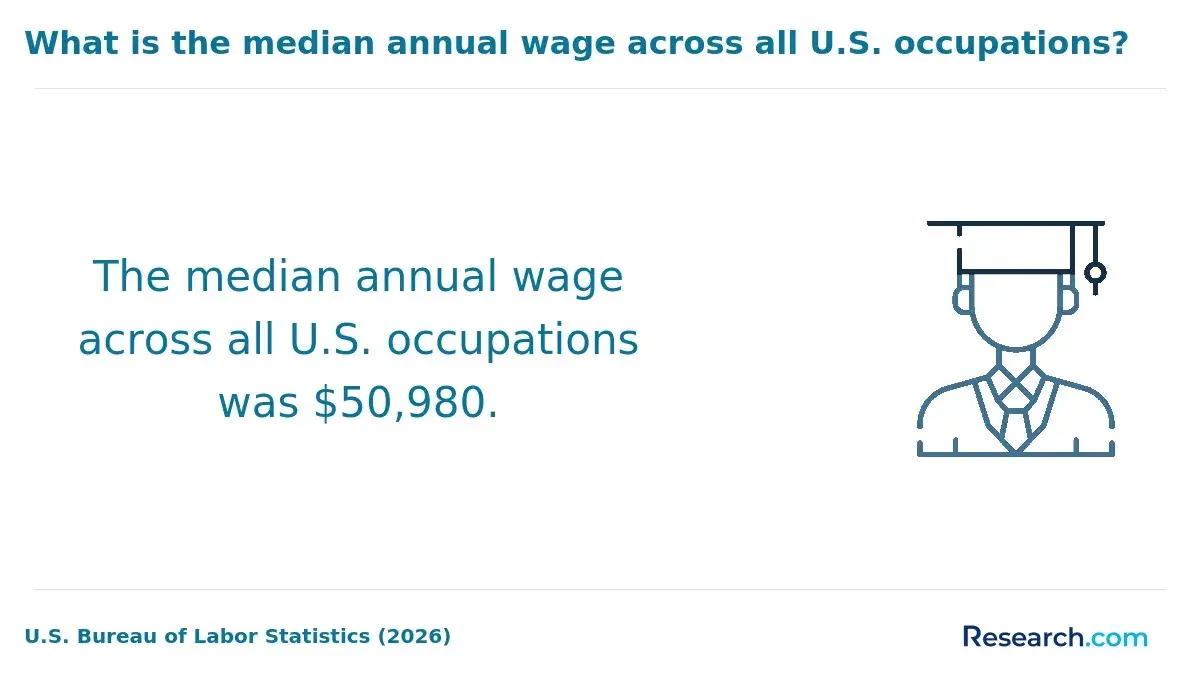
- The median annual wage across US management occupations was $126,520 in May 2025, according to the Bureau of Labor Statistics. That is an occupational benchmark, not a predicted salary for finance MBA graduates or veterans.
What Is an Online MBA in Finance for Military Veterans?
An online MBA in finance is a graduate management degree with additional finance study. Depending on the school, finance may be a formally designated concentration, an elective track, or simply a set of available courses. The MBA core develops cross-functional decision-making; finance coursework examines how organizations raise, allocate, invest, and manage money.
There is generally no separate academic degree reserved for veterans. What can make a program a better fit is its ability to recognize military experience in admissions, support a transition to civilian employment, and accommodate the student's schedule. A veteran who managed personnel or equipment may bring valuable leadership and resource-allocation experience, while still needing to learn civilian accounting conventions and how employers describe finance responsibilities.
How Does an Online MBA in Finance Compare With a Campus Program?
The most important difference is usually access, not the name of the degree: delivery affects when you study, how you meet classmates, and which recruiting opportunities you can use. These comparisons are starting points, not promises about any particular school.
| Decision factor | Online MBA | Campus MBA |
| Scheduling | May reduce commuting; live meetings, exams, and group deadlines can still be fixed. | Typically requires regular on-site attendance; the schedule depends on whether enrollment is full-time or part-time. |
| Finance practice | Can use remote case discussions, modeling assignments, and virtual team projects. | May offer more in-person collaboration and access to campus-based activities. |
| Career transition | Lets many veterans continue working, but access to internships and recruiting must be checked. | May make on-campus recruiting easier to use, particularly during a full-time career change. |
For a veteran already employed in a finance-adjacent role, an online format may preserve income while building management skills. Someone seeking a substantial switch into investment banking or another recruitment-intensive field should compare employers' recruiting access, internship options, and alumni connections - not assume that online and full-time campus students receive identical opportunities.
What Does the Curriculum Include in an Online Finance MBA?
Curricula vary by institution. The distinction to check is how much finance study sits beyond the general MBA core and whether students apply it in projects. This table shows common course categories, not a universal set of requirements.
| Curriculum component | What students may study | Why it matters for veterans |
| MBA core | Managerial accounting, economics, marketing, operations, strategy, analytics, and organizational leadership. | Connects prior leadership experience to civilian business functions and financial statements. |
| Finance concentration or electives | Corporate finance, valuation, investments, financial markets, risk, or financial modeling, depending on the school. | Builds the vocabulary and analysis used in finance-focused decisions; course titles alone do not establish technical depth. |
| Applied work | Cases, team presentations, company analysis, simulations, or a capstone, where required. | Provides work samples and practice explaining recommendations to civilian stakeholders. |
Expect management-level analysis rather than automatic preparation for every specialist finance job. A corporate-finance course may teach how to evaluate an investment decision, for example, without providing the depth of a specialized quantitative finance master's degree or satisfying professional certification rules.
Veterans with a nonbusiness undergraduate degree need not assume they are excluded, but they should check for foundation coursework and assess their comfort with spreadsheets, accounting, and algebra. Comparisons of online MBA programs for nonbusiness majors can help frame questions about academic preparation; the finance course list still needs to be checked at each school.
Workload depends on course design, academic preparation, and how many courses you take at once. Schools do not publish comparable weekly study-hour estimates, so a precise promise would be misleading. Expect time for readings and recorded or live instruction, spreadsheet-based analysis, assignments, discussions, and exam preparation. Finance modeling often takes longer when the underlying accounting is unfamiliar.
Team projects can be the hardest part to fit around civilian employment, reserve obligations, medical appointments, or a household move: classmates must coordinate even when lectures are asynchronous. Before enrolling, request recent syllabi or a sample course schedule and check the following commitments against a real week in your calendar:
- Fixed meeting and exam times, including the time zone used.
- Assignment deadlines and the number of courses running simultaneously.
- Group-work expectations, residency dates, and any on-campus visits.
- Options to reduce course load or pause enrollment if circumstances change.
If that calendar has no reliable study blocks, start at a lighter pace rather than treating "online" as permission to work whenever time appears. Veterans using education benefits should also check whether a reduced course load changes benefit payments before altering enrollment.
Requirements are set by each school, not by veteran status. MBA applications commonly ask for undergraduate transcripts, a résumé, and an explanation of professional goals; recommendations, interviews, work-experience expectations, and GMAT or GRE policies vary. A finance concentration does not universally require an undergraduate finance degree.
Translate military experience into responsibilities a civilian reviewer can assess: budget authority, size of teams led, decisions made under constraints, and measurable operational results where disclosure is appropriate. If accounting or quantitative work is new, ask whether the program requires foundation courses and whether they add time or cost. Applicants comparing test policies can use lists of affordable online MBA programs with no GMAT required as a starting point, then confirm the current policy with each admissions office.
Completion time depends on required credits, term length, course availability, and whether you enroll full-time or part-time. A finance concentration may fit within the MBA's standard elective space, or it may constrain when courses can be taken. A published minimum timeline may assume a course load that is impractical alongside a new civilian job.
Ask for a term-by-term plan showing when finance courses are offered, whether prerequisites create a sequence, and what happens if you skip a term. Be especially careful with accelerated-program search results: listings described as one-year MBA program choices degree programs may cover nursing/MBA dual degrees rather than a standalone finance MBA. Verify both the degree and the timetable before using a listing to plan your transition.
Eligible veterans may be able to use Post-9/11 GI Bill benefits for an approved online MBA, but eligibility, remaining entitlement, payment level, and the school's approval must be verified individually. The VA generally treats housing payments for exclusively online enrollment differently from those for qualifying in-person enrollment. Course load, rate of pursuit, and active-duty status can also affect payments; do not build a budget around a housing allowance until the VA and school have confirmed the applicable rules.
Check the program - not just the university - with the school's certifying official and the VA's GI Bill Comparison Tool. Ask how tuition and mandatory fees are certified, whether the program has required in-person components, and whether a change in enrollment would create a debt or reduce payments. For eligible students facing uncovered tuition, ask whether the school participates in Yellow Ribbon and whether a place is available for this program. Veteran support staff can help navigate certification, but they cannot promise a benefit determination on the VA's behalf.
There is no single veteran price for an online finance MBA. Schools may charge by credit, course, or term, and a tuition quote may exclude mandatory fees, materials, required travel, and borrowing costs. VA payments, Yellow Ribbon funding where applicable, scholarships, and employer assistance can change what a particular veteran owes.
Build a program-specific budget rather than comparing advertised tuition figures alone. These are the amounts to request from each school's financial aid or veteran services office:
- Total tuition based on the required courses, plus mandatory program and university fees.
- Books, software, and any required travel or residency costs.
- Expected VA-covered charges under your verified eligibility and enrollment plan.
- Remaining out-of-pocket cost after confirmed school, VA, and employer funding.
Comparisons of affordable AACSB-accredited online MBA programs can narrow an initial search, but published affordability is not your net price. Confirm finance-course availability and benefit certification before treating a lower sticker price as the better value.
A veteran's strongest next step usually builds on existing experience. Someone who managed procurement or operational budgets may be able to pursue financial planning and analysis, budgeting, or operations-finance work after developing civilian accounting and modeling skills. A move into investment management or a highly technical finance position may require more specialized experience, credentials, or recruiting access. An MBA does not by itself qualify someone for a regulated accounting role or a senior finance title.
The Bureau of Labor Statistics reports that employment in management occupations overall is projected to grow faster than the average for all occupations from 2025 to 2035. That broad outlook does not measure demand for finance MBA graduates. Evaluate the specific jobs you want by reading their experience and technical-skill requirements, then ask a program's career office how online students access employer events, alumni, and relevant projects.
If your goal is narrowly focused on financial analysis, a targeted course or specialized finance degree may address the skill gap more directly. The broader MBA is easier to justify when you also want responsibility for teams, strategy, and financial decisions across an organization.
How Can Veterans Choose an Accredited Online Finance MBA?
First confirm that the institution is accredited by an accreditor recognized by the US Department of Education. Then distinguish institutional accreditation from optional business-school accreditation, such as AACSB; one does not mean the other. Finally, confirm that the finance concentration is formally available in the online MBA rather than inferred from a single elective or a campus-only offering.
Shortlist programs using the finance courses you would actually take, the schedule you can sustain, your verified net cost, and career support available to online students. Ask for a current degree plan, sample syllabi, residency requirements, and an explanation of veteran services. Broad collections used for program selection for online MBA programs mba programs can surface alternatives, but a dual-degree listing should not be mistaken for a finance concentration in a standalone MBA.
Choose the program only after those checks align with your target role. A well-supported, manageable MBA may be valuable for a veteran moving toward civilian financial management; if the immediate gap is basic accounting or a specific technical skill, a shorter qualification may be the more practical first move.
Other Things You Should Know About MBA
Possibly, but graduate transfer-credit policies are school-specific. Ask the registrar whether documented military education or prior graduate coursework can satisfy any MBA requirement; professional experience alone does not necessarily replace a course.
Not automatically. CPA licensure requirements vary by state, and CFA Program eligibility and examinations are separate from an MBA. Check the relevant governing body before selecting courses for either goal.
Applicants can ask the school's disability services office about accommodations without assuming they must describe a disability in an admissions essay. Contact that office early enough to learn its documentation and request process.
Ask whether online students can join finance clubs, alumni events, employer presentations, and career advising. Follow up with classmates and alumni in roles you are considering; access to these opportunities varies by program.
- Education and Training - About This Tool https://www.benefits.va.gov/gibill/comparison_tool/about_this_tool.asp
- Independent Study And Online Learning | Veterans Affairs https://www.va.gov/education/about-gi-bill-benefits/how-to-use-benefits/online-distance-learning/
- Military Training Evaluation Program (MTEP) | dantes.mil https://www.dantes.mil/credit4training/
- College Credit for Military Experience | Transfer Credit Ohio https://transfercredit.ohio.gov/students/types-of-student/military/military
- Cost of Attendance (Budget) | 2025-2026 Federal Student Aid Handbook https://fsapartners.ed.gov/knowledge-center/fsa-handbook/2025-2026/vol3/ch2-cost-attendance-budget
- MBA Curriculum - Chattanooga https://www.utc.edu/gary-w-rollins-college-of-business/departments/graduate-programs/master-of-business-administration-mba/mba-curriculum
- MBA in Finance Online Degree at Bowling Green State University https://onlinedegree.bgsu.edu/programs/business/mba/finance/
- Synchronous vs. Asynchronous Learning | Saint Leo University https://www.saintleo.edu/about/stories/blog/synchronous-vs-asynchronous-learning-for-course-delivery
- Getting an MBA While Working Full Time: How to Make It Work | Pace University New York https://www.pace.edu/news/getting-an-mba-while-working-full-time
- What is an MBA in Finance? | University of Bridgeport https://www.bridgeport.edu/news/what-is-mba-in-finance/