Online MBA in Hospitality Management: Admissions Guide for Working Parents

Co-Founder and Chief Data Scientist
Applying to an online hospitality MBA while working and raising children involves more than meeting an admissions deadline. A program can accept your experience yet still require live classes, travel, or group meetings that strain your household schedule.
This guide explains what schools commonly request, how to present hospitality experience, and which program details to confirm before applying. It will help you decide whether an MBA supports your career goals, and whether you can complete it on terms your family can sustain.
Key Things You Should Know
- Admissions policies vary by school: a business bachelor's degree, GMAT or GRE score, and hospitality experience are not universal requirements.
- For working parents, the decisive format questions are when live sessions and group work happen, whether campus visits are required, and what happens if caregiving interrupts enrollment.
- The U.S. Bureau of Labor Statistics reports a $126,520 median annual wage for management occupations in May 2025; that broad figure is not an expected salary for hospitality MBA graduates.
What is an online MBA in hospitality management?
An online hospitality management MBA combines a general MBA's business core with study of hospitality operations. Depending on the school, hospitality management may be a formally designated concentration, a track, or simply a set of electives.
Check the degree requirements and transcript designation rather than relying on a program's marketing description.
The business core typically addresses finance, accounting, marketing, leadership, and strategy. Hospitality-focused study may apply those skills to lodging, food and beverage, events, service quality, or revenue management.
That combination is most relevant to professionals who want broader responsibility for people, budgets, and business performance - not just deeper training in one frontline task.
Is an online hospitality MBA worth it for working parents?
It may be worthwhile if you already have hospitality experience, can identify a plausible next role, and can fund and schedule the degree without putting household stability at risk. An MBA can strengthen your case for broader management responsibilities, but it does not replace a record of leading teams or running operations.
Its value is less certain if you are entering hospitality for the first time or would need substantial debt to pursue a promotion that is not yet realistic.
Compare the program's full cost with employer assistance, the work hours you would give up, and any childcare needed for fixed meetings or travel. Ask your manager what qualifications matter for the role you want; an internal assignment, targeted finance course, or hospitality credential may be a more direct first step.
Your intended industry also matters. If you are a nurse seeking leadership in patient care rather than hotel or guest operations, an online MSN and MBA dual-degree programs degree guide offers a more relevant comparison than a hospitality concentration.
How do you choose an accredited online hospitality MBA?
First, verify that the university holds recognized institutional accreditation. Then check whether its business school also holds specialized accreditation, such as AACSB, ACBSP, or IACBE accreditation. These are different forms of recognition; neither confirms that a particular hospitality concentration is offered online.
Read the current catalog for the exact MBA degree, hospitality course requirements, and any campus-based components. Compare programs on course availability as well as course titles: an elective offered infrequently may delay a parent who can take only one class at a time.
Ask whether online students receive access to hospitality employers, alumni, and career advising, rather than assuming campus MBA services are identical.
Accreditation is a starting point, not a measure of affordability. After confirming program fit, compare MBA tuition and fees using each school's current total-credit and fee requirements.
Most applications center on evidence that you can succeed in graduate business coursework and contribute professional experience. Individual schools set their own rules: some require a completed bachelor's degree from an accredited institution, while policies on minimum GPA, work experience, tests, interviews, and foundation courses differ. A hospitality-related undergraduate major is not a universal prerequisite.
To prepare an application without mistaking common practice for a school's official requirements, work through these steps:
- Check the program's current admissions page for deadlines, transcripts, recommendations, essays, résumé requirements, testing policies, and any interview.
- Identify the business skills your background demonstrates, such as staffing, service recovery, budgeting, sales, or scheduling, and describe their scope and results accurately.
- Review your preparation in accounting, finance, and quantitative work; ask whether the school requires foundation courses or offers optional refreshers.
- Explain why this MBA fits a specific career goal and how you will meet its academic commitments alongside work and caregiving.
- If your academic record has a weak period, ask how the school evaluates later coursework and professional growth rather than assuming admission is impossible.
Applicants concerned about grades can also examine graduate business programs with flexible admissions. A flexible policy is not an admission guarantee; confirm the requirements for the particular intake before applying.
Expect a general management foundation rather than a curriculum devoted entirely to hotels or restaurants. Core courses commonly cover managerial accounting, finance, marketing, operations, organizational behavior, and strategy.
Hospitality coursework may examine pricing and revenue decisions, guest experience, service operations, events, or tourism business models. The actual mix, and whether those courses are required or elective, varies by school.
For admissions planning, compare courses with the role you want next. A lodging supervisor seeking multi-property responsibility may benefit from finance, analytics, and operations projects. A restaurant manager aiming to grow a business may value cash-flow analysis and customer acquisition more.
Ask whether a capstone or group project can use a problem from your workplace; applied work can make study more useful, but employer permission and program rules may limit what you can share.
Completion time depends on the required credits, term structure, course availability, and how many courses you take at once. Part-time study can protect work and family time but may extend the period over which you pay fees.
An accelerated schedule may shorten enrollment while concentrating deadlines and group work. Ask each school for a course-by-course completion plan at a pace you could maintain during your busiest season at work and at home.
There is no reliable single price for an online hospitality MBA. Build a household budget that includes the costs a tuition quote can leave out:
- Tuition for all required credits, including any foundation or hospitality courses charged separately.
- Mandatory program, technology, and graduation fees, plus books and software.
- Travel, lodging, and childcare for required visits or live activities.
- Financing costs and any employer-reimbursement conditions.
If your budget has a firm ceiling, online MBA programs under $30,000 provide a starting point for comparison. Verify current total costs and whether any shortlisted school offers the hospitality coursework you need; a lower-priced general MBA is not automatically an equivalent specialization.
Online describes where you study, not when you must be available. Asynchronous coursework can let you watch lectures around shifts and caregiving, but it still has deadlines.
Live classes, team projects, exams, and residencies may create fixed commitments. Hospitality schedules can make evening meetings especially difficult because those hours may already be peak work time.
The format distinctions below show which commitments to investigate before you accept an offer:
| Program feature | Scheduling implication |
| Asynchronous lessons | Study time is flexible, but assignments and discussions may have fixed due dates. |
| Live sessions | Attendance may compete with shifts, school pickup, or bedtime routines. |
| Group projects | Meeting times depend partly on classmates, even when lectures are recorded. |
| Residencies or campus visits | Travel may require time off work and additional caregiving arrangements. |
| Part-time pacing or leave | Policies determine how readily enrollment can change during a family interruption. |
Before applying, request a recent syllabus and a sample part-time course sequence. Ask whether live sessions are recorded, attendance is mandatory, group meetings are scheduled by students, and a leave would affect course availability or financial aid. Test the proposed routine with your household for several weeks; an online label alone cannot establish that the schedule works.
For an experienced hotel, restaurant, or events professional, the MBA may support a move toward broader operations, revenue, sales, or multi-site management responsibilities.
The most credible path usually builds on work you have already done: a front-office manager might pursue wider lodging operations responsibility, while a restaurant manager might seek regional oversight. Senior positions still typically depend on demonstrated leadership and industry results, not the degree alone.
Hospitality skills can also transfer to organizations that manage complex service experiences, but changing industries requires evidence that you understand the new setting.
Someone targeting hospital administration or patient-experience leadership should compare hospitality study with MBA options for nurses and healthcare managers. Relevant healthcare knowledge may matter more than a hospitality concentration for those roles.
No broad occupational wage figure reliably predicts an individual hospitality MBA graduate's pay. The U.S. Bureau of Labor Statistics reports a median annual wage of $126,520 for all management occupations in May 2025. That figure spans industries and experienced roles; it is not a hospitality-specific wage or a post-MBA earnings estimate.
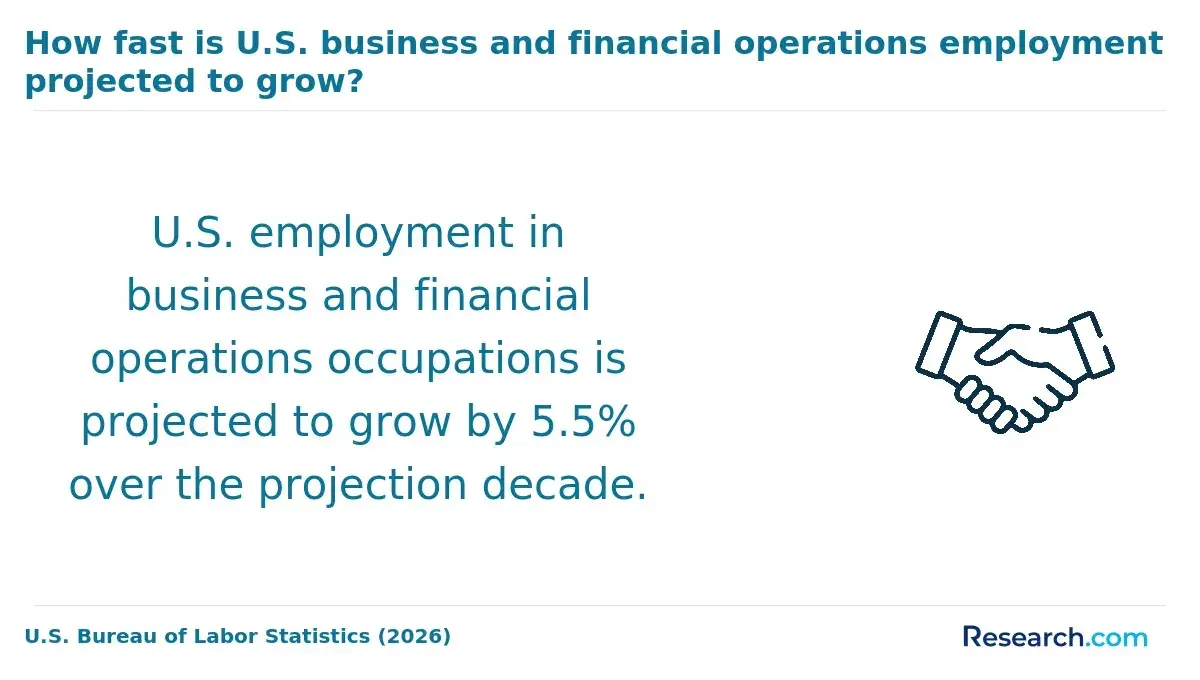
BLS projects overall employment in management occupations to grow faster than the average for all occupations from 2025 to 2035. That broad outlook does not establish demand for any one hospitality role or location.
For a useful personal estimate, compare compensation for the specific job title, market, and seniority level you could realistically reach, then weigh any likely increase against tuition, borrowing, and time costs.
Are certifications or licenses required for hospitality management careers?
An MBA is not a professional license, and there is no single license required for every hospitality management job. Particular duties may bring state or local food-safety, alcohol-service, or other regulatory requirements. Employers may also value role-specific credentials, but a certification does not automatically substitute for management experience or an MBA.
Check requirements for the position and jurisdiction you intend to work in. If your immediate goal is a regulated operational responsibility or a specialized revenue-management skill, a targeted credential or employer training may solve that need faster than a graduate degree. Choose the MBA when you also need its broader business and leadership education.
Other Things You Should Know About MBA
Yes, some employers attach service or repayment conditions to education benefits. Read the written policy before relying on assistance in your MBA budget.
Do not assume so. Ask whether internships or applied projects are available to part-time online students and whether participation is feasible alongside your job.
That depends on the school. Ask how the concentration appears on the diploma, transcript, or both if formal recognition matters to you.
Policies vary, and professional experience alone may not qualify for credit. Ask about prior-learning assessment, transfer limits, and whether approved credits reduce the courses you must take.
- Types of Financial Aid: Grants, Work-Study, and Loans | studentaid.gov https://studentaid.gov/understand-aid/types
- Employer-offered educational assistance programs can help pay for college | Internal Revenue Service https://www.irs.gov/newsroom/employer-offered-educational-assistance-programs-can-help-pay-for-college
- Cost of Attendance (Budget) | 2025-2026 Federal Student Aid Handbook https://fsapartners.ed.gov/knowledge-center/fsa-handbook/2025-2026/vol3/ch2-cost-attendance-budget
- MBA Requirements: What You Need to Apply in 2026 | SCU https://www.scu.edu/business/blog/admissions/mba-requirements/
- How to Choose an Online MBA Program | North Carolina Central University https://online.nccu.edu/blog/how-to-choose-an-online-mba-program/
- Learn the best way for you | ACC offers flexible classroom formats - Student Infohub | Austin Community College District https://students.austincc.edu/infohub/2024/08/06/learn-the-best-way-for-you-acc-offers-flexible-classroom-formats/
- Do I have to take the GMAT or GRE? - OSIM | Naveen Jindal School of Management https://osim.utdallas.edu/voices/admission-requirements-procedures-faqs/do-i-have-to-take-the-gmat/
- Online MBA in Hospitality and Tourism Management | Delaware State University https://online.desu.edu/degrees/business/mba/hospitality-tourism/
- Cost of Attendance (COA) | fitnyc.edu https://www.fitnyc.edu/admissions/costs/cost-of-attendance.php
- How to Turn Work and Life Experience Into College Credit | St. Thomas University https://www.stu.edu/news/how-to-turn-work-and-life-experience-into-college-credit/