Online MBA in Strategy: Curriculum and Workload for Small Business Owners

Co-Founder and Chief Data Scientist
Running a business leaves little room for coursework that cannot improve a real decision. An online MBA in strategy may help an owner evaluate growth opportunities, allocate cash, and lead a larger team - but its classes and group projects also compete with operating hours. This guide explains what the curriculum typically covers, how to assess the weekly workload, and where costs and scheduling constraints can change the value of the degree. It is designed to help small business owners decide whether an MBA, a shorter course, or learning through an advisor is the better next step.
Key Things You Should Know
- A strategy-focused online MBA combines a broad management core with strategy courses or electives; a strategy concentration is not available at every school.
- There is no reliable universal weekly-hour estimate. Course load, live meetings, group work, and your business's busiest periods determine whether a schedule is workable.
- Compare the full degree cost and time away from the business with the decisions you need to improve; the $126,520 median wage for US management occupations is not an earnings forecast for an owner or MBA graduate.
What is an online MBA in strategy for small business owners?
An online MBA is a graduate management degree delivered primarily through online coursework. A strategy emphasis examines how organizations choose markets, respond to competitors, allocate resources, and execute plans. Depending on the school, strategy may be a formally named concentration, a set of electives, or simply part of the required MBA core. Those options offer different levels of depth.
For an owner, the most useful distinction is between learning about strategy and making a better operating decision. Coursework may provide frameworks for deciding whether to open another location or enter a new market. Applying them still requires reliable information about the business's margins, customers, capacity, and cash position. An MBA makes more sense when the owner also needs broad finance, marketing, operations, and leadership training - not just help with one immediate decision.
What does an online MBA in strategy curriculum cover?
Curricula vary, but a strategy-focused MBA usually builds on the general MBA core rather than replacing it. The table separates common types of coursework so owners can check whether a particular program addresses their actual growth constraints.
| Curriculum component | Typical management-level focus | Potential use in a small business |
| MBA core | Managerial accounting, finance, marketing, operations, and organizational behavior | Assess cash needs, customer acquisition costs, process bottlenecks, and hiring decisions |
| Strategy courses or concentration | Competitive analysis, growth choices, resource allocation, and execution | Compare expansion options and decide what the business will not pursue |
| Electives | School-dependent topics such as entrepreneurship, analytics, or marketing | Build depth in the function limiting growth |
| Applied project or capstone, if offered | Analysis and recommendations based on a business problem | Test a proposed change before committing substantial resources |
Strategy coursework generally teaches students to evaluate evidence and make management decisions; it is not a substitute for specialized legal, tax, or technical advice. An owner whose main gap is customer acquisition may find an online MBA in marketing more relevant than a strategy concentration. Compare actual course descriptions and assignments rather than relying on the concentration label.
How much time does an online MBA require each week?
No single weekly-hour figure applies across online MBAs. Time depends on the number of concurrent courses, reading and quantitative preparation, recorded or live classes, assessments, and coordination with project teammates. A course described as asynchronous may still impose weekly deadlines and scheduled group meetings.
Before enrolling, build a schedule around the business's least flexible obligations. These checks turn a program's description of "flexibility" into a practical workload test:
- Request a recent syllabus and sample course calendar; mark live sessions, assignment deadlines, exams, and group projects.
- Ask how many courses students normally take at once and whether owners can reduce their load during peak seasons.
- Reserve recurring study blocks, then identify who can handle customer, staffing, or supplier issues during those blocks.
- Ask current students or the program team how much advance notice group work requires; do not assume it can all happen after business hours.
If the schedule works only when nothing goes wrong at work, a lighter course load is more credible than an accelerated plan. Owners without a dependable second-in-command should also consider the cost of being less available, not just the hours spent studying.
An online program can eliminate routine commuting and make it easier to remain involved in daily operations. It does not necessarily eliminate fixed commitments: live classes, team meetings, exams, and occasional campus visits depend on the program. A campus-based MBA may provide more predictable face-to-face contact, but travel and class times can remove an owner from the business more often.
Neither format is automatically better for networking. Owners seeking customers, partners, or local advisors should compare the cohort's geography and experience, access to alumni, and any in-person events. If the main objective is improving an existing business, a workable schedule and useful peer feedback may matter more than traditional on-campus recruiting. Confirm the requirements of the specific online track; a school's campus MBA features do not necessarily carry over to it.
Requirements are set by each school. Applicants commonly submit evidence of a completed bachelor's degree, academic transcripts, a résumé, and written statements or recommendations; schools differ on professional-experience expectations, interviews, and GMAT or GRE policies. A strategy concentration usually does not create a universal, separate admission requirement.
Owners can use the application to show responsibility that a job title may not capture: managing cash, hiring employees, negotiating with suppliers, or responding to a failed expansion. Applicants concerned about earlier academic performance can compare MBA programs with accessible admissions, then verify each school's current thresholds and review process. Before applying, ask whether accounting or quantitative foundation work is required; useful preparation is not the same thing as an official prerequisite.
Completion time depends on required credits, course sequencing, term length, and how many courses an owner takes at once. Accelerated and part-time routes can lead to substantially different schedules within the same school. A strategy concentration may also depend on when its electives are offered, even if the core courses run frequently.
One-year online MBA programs may appeal to owners who want to finish quickly, but a shorter calendar usually leaves less room for seasonal slowdowns. Ask for a term-by-term plan at the course load you can sustain, including any residency, capstone, or elective sequencing. The useful finish date is the one your business can support - not simply the fastest date advertised.
There is no dependable single price for this degree category: tuition structures and required credits vary by school. Compare each program's published total tuition or calculate tuition from its required credits and applicable per-credit rate, then add mandatory fees, materials, technology costs, and any required travel. Borrowing can add financing costs. A tuition-only figure is not the full cost of enrollment.
For owners, the less visible expense is time diverted from sales, supervision, or delivery. Estimate whether someone else must cover those duties and whether expected improvements - such as stronger pricing or fewer costly expansion mistakes - justify both the bill and the disruption. If the need is narrowly defined, a targeted course, executive education program, or experienced mentor may offer a better return at a lower commitment. Do not base the decision on a presumed post-MBA salary increase when you intend to keep running your own business.
For many owners, the primary outcome is not a new job: it is stronger decision-making while growing, stabilizing, or eventually selling a business. Experience running that business may also support a move into operations leadership, general management, business development, or strategy-related work. Employers will still assess the scope and results of that experience; an MBA concentration alone does not qualify someone for a senior strategy role.
Industry knowledge remains important. A healthcare practice owner considering management roles, for example, should examine sector-specific requirements and MBA options for nurses and healthcare managers rather than assume a general strategy curriculum covers healthcare operations. Owners contemplating a career change should investigate the target role's recruiting routes and experience requirements before paying for a degree.
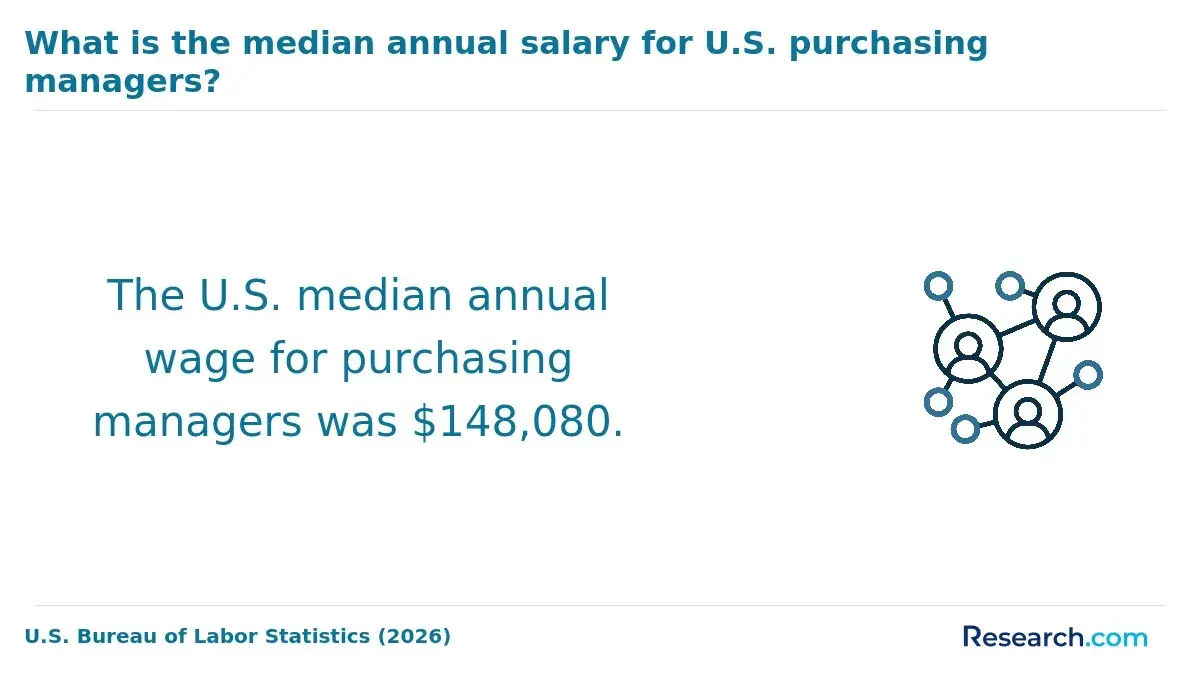
There is no single credible salary figure for "MBA graduates in strategy." Roles, locations, industries, prior experience, and business ownership produce different compensation. The US Bureau of Labor Statistics reports a $126,520 median annual wage for management occupations in May 2025. That figure describes workers across a broad occupational group - not strategy specialists, MBA graduates, or small business owners specifically.
Use occupation-level wages only as context if you are considering employment outside your business. For an owner, a more relevant measure may be sustainable owner compensation alongside cash retained for operations and growth. An MBA may improve decisions, but neither the BLS median nor a school's graduate outcomes establish what the degree will cause you to earn.
How can small business owners choose an accredited online MBA?
First, verify the university's institutional accreditation through the accreditor's or US Department of Education's listings. Then check whether the business school holds separate business-school accreditation, if that distinction matters to you. Institutional accreditation and specialized business-school accreditation are not interchangeable, and neither confirms that a strategy concentration is available online.
Next, obtain the online curriculum, a realistic course calendar, the full cost breakdown, and the rules for slowing or pausing enrollment. Ask whether a capstone may address your own business and what restrictions apply to confidential financial or customer information. Compare programs on those answers rather than a ranking alone. Veteran owners considering online MBA programs degree guide and veterans resources should also verify their individual education-benefit eligibility and the program's applicable approvals before factoring benefits into affordability.
Other Things You Should Know About MBA
Possibly. Ask the instructor or program whether the assignment permits it, whether classmates must access business information, and how confidential data will be handled.
Some programs permit a leave or lighter enrollment, but deadlines, course availability, and financial-aid effects vary. Get the policy before committing.
Access rules vary by platform and school. If you expect to reuse materials in your business, ask what you can download or retain.
Some schools review transfer credit, subject to limits on course equivalence, grades, and recency. Request an evaluation rather than assuming earlier coursework will shorten the degree.
- Free small business counseling & local mentoring | Small Business Administration https://www.sba.gov/counseling/
- How does an online MBA program work? | iu.edu https://kdblog.kelley.iu.edu/2024/05/02/how-does-an-online-mba-program-work/
- Master of Business Administration (MBA) in Strategic Management | Baker University https://www.bakeru.edu/academic-programs/master-business-administration-mba-strategic-management
- Synchronous vs. Asynchronous Classes: What You Need to Know - Boston University Questrom https://www.bu.edu/questrom/blog/synchronous-vs-asynchronous-classes-what-you-need-to-know/
- Online MBA Options for Working Managers | CTU https://www.coloradotech.edu/degrees/studies/business-and-management/articles/online-mba-options-working-professionals
- Online MBA Guide to Careers, Costs, and Specializations | Concordia University Chicago https://career.cuchicago.edu/online-mba-guide/
- How Long Does an MBA Take? What to Expect From Start to Graduation | University of Louisiana at Lafayette https://louisiana.edu/online/blog/how-long-does-mba-take-what-expect-start-graduation
- Online vs. In-Person MBA: Benefits and Differences | Freeman News https://freemannews.tulane.edu/2025/11/04/online-vs-in-person-mba-benefits-and-differences
- Online MBA - D'Amore-McKim School of Business https://damore-mckim.northeastern.edu/programs/mba-online/
- MBA Time Commitment: What to Expect from Full-Time and Part-Time Programs - Gary W. Rollins College of Business https://blog.utc.edu/business/2022/12/05/how-long-does-it-take-to-get-an-mba/