Is an online MBA in Finance worth it for public sector professionals?

Co-Founder and Chief Data Scientist
For a public sector professional, an online MBA in Finance is a substantial investment - and government pay and promotion rules can make its return less predictable than private-sector MBA marketing suggests. The degree may strengthen your ability to manage budgets, lead teams, and evaluate financial decisions, but it may not meet the specialized requirements of the job you want. This guide helps federal, state, and local employees assess career fit, program cost, scheduling, and alternatives before committing.
Key Things You Should Know
- An online MBA in Finance is most likely to pay off when its management and finance courses support a realistic move into budget, operations, or leadership work - not when a promotion depends mainly on grade, vacancies, or specialized experience.
- The U.S. Bureau of Labor Statistics reports a $126,520 median annual wage for management occupations in May 2025; that figure covers occupations across employers, not government MBA graduates or an expected post-degree salary.
- Compare the full price after employer assistance with the requirements of actual target vacancies. A public administration degree, accounting coursework, or focused finance training may be a better fit.
Is an online MBA in Finance worth it for public sector professionals?
Yes, potentially - if it closes a specific skills gap at a cost you can justify. A finance concentration adds focused electives to an MBA's broad management core. That combination can be useful for an experienced analyst preparing to supervise a budget team, or an operations manager who needs to make stronger financial decisions. It is less compelling if the next position primarily requires government accounting, policy analysis, or experience the degree cannot replace.
Public-sector return on investment is often tied to a particular vacancy, not a general MBA salary premium. Federal positions may have grade and qualification rules; state and local employers have their own classifications and pay practices. An MBA can make an application stronger without creating a promotion, changing a pay scale, or substituting for required specialized experience.
Before enrolling, compare the total amount you would pay after confirmed employer assistance with plausible benefits: eligibility for target roles, stronger performance in your current role, and career options outside government. If a promotion is part of your financial case, check its posted pay range and requirements rather than assuming the degree will produce a raise. Senior officials considering a leadership-oriented alternative can use an executive MBA tuition comparison to frame the cost question, while checking each program's actual finance coursework.
The degree is a stronger bet when you already have relevant public-sector experience, can apply the coursework at work, and can limit borrowing. Its value is uncertain when your target role is undefined or depends on experience you still need. If your goal is narrowly technical, targeted courses or a specialized degree may cost less and serve you better.
What can an online MBA in Finance teach public sector professionals?
An MBA typically combines management subjects - such as accounting, operations, strategy, leadership, and analytics - with finance coursework. Depending on the school, finance study might cover financial modeling, investments, risk, or capital decisions. A course in finance does not, by itself, establish that the online MBA offers a formally designated Finance concentration; verify the degree requirements and what will appear on your transcript.
The most useful learning may come from testing business methods against public constraints. Financial analysis can help an agency compare long-term costs, but public decisions also involve appropriations, procurement rules, transparency, equity, and service obligations. A strong program gives you room to examine those differences rather than treating public services as businesses whose only objective is profit.
Look closely at assignments and electives if you want to work with capital projects, grants, or agency budgets. Corporate valuation can develop transferable analytical judgment, but it is not a substitute for instruction in governmental fund accounting, public budgeting, or the regulations governing your agency.
What careers can an online MBA in Finance lead to in government?
The most realistic path usually builds on work you already do. The examples below distinguish roles where broad management training may help from roles where public-sector knowledge remains essential.
| Potential path | Where the MBA may help | What else employers may expect |
| Budget or financial management supervisor | Leading staff, analyzing trade-offs, and communicating recommendations | Agency budget-cycle experience and supervisory qualifications |
| Capital planning or infrastructure finance | Evaluating long-term costs, risk, and funding choices | Knowledge of public financing, project delivery, and applicable rules |
| Grants or program operations leadership | Managing resources, performance, and organizational change | Program-specific compliance and grant administration experience |
| Procurement or contract management leadership | Assessing costs, vendors, and operational risk | Applicable procurement experience and position-specific requirements |
A move from budget analyst to budget manager is generally more direct than a move into a specialized finance function with no relevant experience. If your agency work centers on environmental programs or climate-related investment, career-focused choices in online MBA in sustainability may also be worth comparing with a Finance concentration. Judge either option against the duties of the role you want, not the concentration's name alone.
An online format can let you remain employed and apply coursework to current agency problems. It does not necessarily mean studying entirely on your own schedule: live classes, group meetings, exams, and residencies vary by program. Ask for a sample course schedule and confirm whether required activities conflict with legislative sessions, fiscal-year close, travel, or other predictable work demands.
A campus-based MBA may be preferable if you can attend regularly and want frequent in-person contact or access to a particular recruiting network. Do not assume the online and campus versions offer identical electives, career services, or employer connections, even when the university awards the same degree. If you are comparing specializations as well as formats, fast online MBA programs in healthcare management show why time-to-degree claims must be checked for the specific field and program you would actually enter.
First, verify that the university holds recognized institutional accreditation. That is distinct from optional, specialized business-school accreditation, which may be held through organizations such as AACSB, ACBSP, or IACBE. Do not assume that a university's institutional accreditation means its business school has a separate business accreditation.
Check the institution's and accreditor's current records, then confirm that the online MBA and your intended finance coursework are offered by the accredited institution and business unit. Accreditation is an important quality check, not evidence that a particular concentration matches government work or that an employer will prefer it.
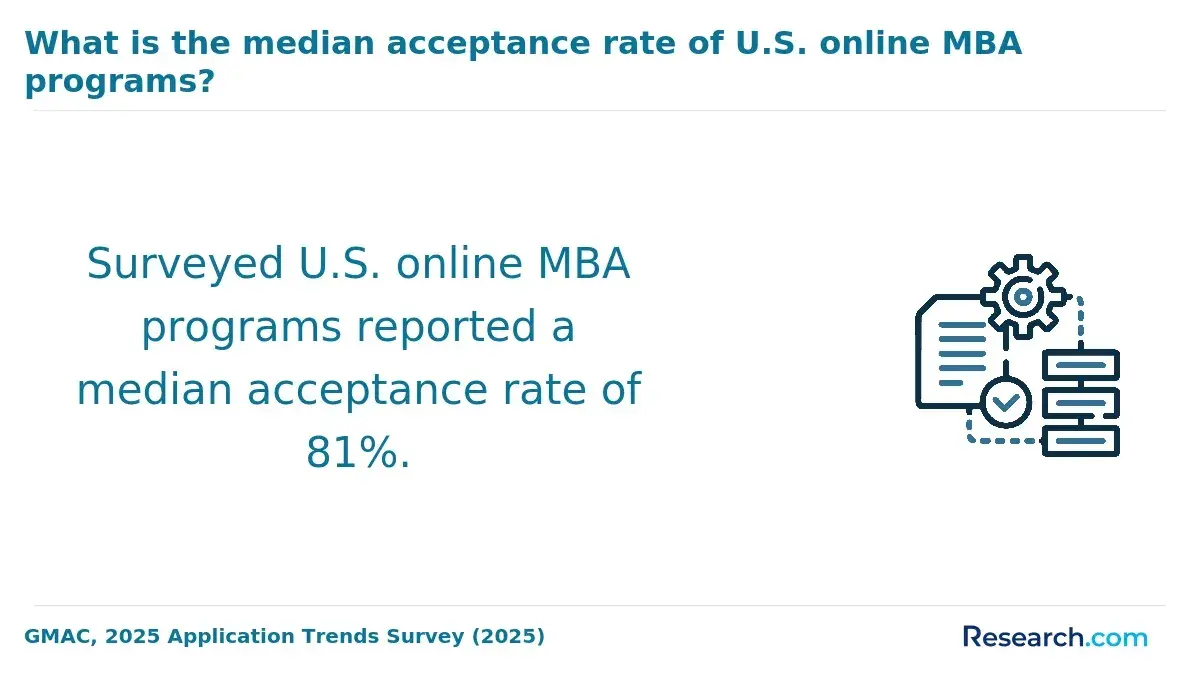
Requirements vary by school. Applicants commonly need a bachelor's degree and may be asked for transcripts, a résumé, recommendations, an essay, or an interview. Programs differ on professional experience, GMAT or GRE policies, and whether they require foundation courses in subjects such as accounting or statistics. Do not treat a test waiver at one school as a general MBA rule.
A government employee without a business bachelor's degree need not assume they are ineligible. Relevant budgeting, procurement, analytics, or team-leadership experience can provide useful preparation, while quantitative or accounting refreshers may address specific gaps. When comparing online MBA programs with accessible admissions, check whether a school's entry requirements and academic support fit your background - not just whether applying looks easy.
Completion time depends on required credits, course availability, prerequisites, and how many courses you take while working. An accelerated schedule can shorten enrollment but may be difficult during budget season or a demanding assignment. MBA programs with accelerated schedules are worth considering only after you confirm their Finance options and actual weekly obligations.
For an accurate cost comparison, ask each school for the total credits required and its current tuition basis, then add mandatory fees, materials, technology charges, and any required travel. Confirm whether the published price changes with enrollment pace or residency status. Compare that total with employer assistance you are actually eligible to receive, including any grade, tenure, course-approval, or continued-service conditions.
A useful personal break-even test is to divide your net cost - program expenses minus confirmed assistance - by a realistic annual increase in compensation from a role you could qualify for. If there is no defensible estimate of a pay increase, do not manufacture a payback period; evaluate whether the skills, responsibilities, and career flexibility justify the expense on their own.
There is no single reliable "online MBA in Finance salary" for government employees. Pay depends on the position, employer, location, grade or classification, and experience. The U.S. Bureau of Labor Statistics reports that management occupations had a $126,520 median annual wage in May 2025. That nationwide occupational figure includes workers beyond government and does not measure the earnings - or the degree's effect - of public-sector MBA graduates.
For a decision you can use, compare your present compensation with the posted ranges for specific roles you could plausibly pursue. Account for whether you would enter at a higher grade, compete for a supervisory vacancy, or move to a different employer. Benefits, pension considerations, and job stability may matter as much as the posted salary when weighing a public-sector move against a private-sector one.
It can improve your preparation and help demonstrate management-level financial knowledge, but hiring depends on the vacancy. Government announcements may distinguish required qualifications from preferred education; an MBA is most useful when you also meet the required experience and can show results from relevant work.
Start by reviewing several recent postings for the role you want. Compare their duties and qualification language with your experience, then identify the gaps an MBA could actually close. If the repeated requirement is supervisory experience, seek a team-lead assignment. If it is governmental accounting or contracting experience, pursue that work or targeted training before paying for a broad degree. Ask your human resources office how additional education is considered under your employer's promotion rules rather than relying on general MBA employment claims.
Do public finance careers require certifications or licenses?
Many government budget and management roles do not require a professional license, but requirements depend on the position and jurisdiction. Some accounting roles may call for accounting coursework or favor a CPA credential; an MBA in Finance does not automatically satisfy CPA educational or licensing requirements. Government financial management and procurement credentials may also be relevant to particular agencies or advancement paths.
Read target job announcements before choosing a credential. If a required qualification is an accounting credit threshold, procurement certification, or documented experience, confirm whether the MBA supplies it. A degree and a professional certification serve different purposes, and neither should be assumed to replace the other.
Other Things You Should Know About MBA
No. Public Service Loan Forgiveness depends on factors including eligible federal loans, qualifying employment, and qualifying payments under applicable rules - not on whether an MBA is online.
Only with appropriate authorization. Check agency rules on confidential information, procurement-sensitive material, records, and outside disclosure before sharing data with classmates or faculty.
Tax treatment depends on the type and amount of assistance and applicable rules. Ask payroll or a qualified tax adviser how your agency's benefit will be reported before relying on its full stated value.
Not necessarily, but you may need approval to receive education assistance, adjust your schedule, or use agency resources in coursework. Review your employer's policies before making those plans.
- Domestic/Civil Service Benefits - Careers - State Department https://careers.state.gov/benefits/civil-service-benefits/
- Student Loan Repayment | U.S. Office of Personnel Management https://www.opm.gov/policy-data-oversight/pay-leave/student-loan-repayment/
- Promotion - Graded Positions - New York State Comptroller https://www.osc.ny.gov/state-agencies/payroll/payroll-manual/promotion-graded-positions
- Public Service Loan Forgiveness | studentaid.gov https://studentaid.gov/manage-loans/forgiveness-cancellation/public-service
- Advancing Pay Equity in Governmentwide Pay Systems | Federal Register https://www.federalregister.gov/documents/2024/01/30/2024-01337/advancing-pay-equity-in-governmentwide-pay-systems
- Major in Public Financial Management | Paul H. O'Neill School of Public and Environmental Affairs https://oneill.indiana.edu/undergraduate/degrees-majors/public-financial-management.html
- Finance Courses: Build Critical Financial Skills | American College of Education https://ace.edu/degree-programs/take-a-class/finance-skills/
- Online vs. In-Person MBA: Benefits and Differences | Freeman News https://freemannews.tulane.edu/2025/11/04/online-vs-in-person-mba-benefits-and-differences
- Jobs That Require an MBA: Career Paths and Salaries | Touro University Worldwide https://www.tuw.edu/business/21-jobs-require-mba/
- M.B.A. vs. M.P.A.: Which Degree Fits Your Career Goals? | miami.edu https://news.miami.edu/uonline/stories/2025/08/mba-vs-mpa.html