Online MBA in Data Science for Business: Curriculum and Workload for Working Parents

Co-Founder and Chief Data Scientist
An online MBA can fit around a job more easily than a campus commute, but it still has to fit around school pickups, caregiving, and unpredictable evenings. For working parents considering data science for business, the crucial questions are what the degree actually teaches and when the work must get done.
This guide separates management-focused analytics from technical data science, shows where scheduling pressure tends to arise, and explains what to verify before committing household time and money.
Key Things You Should Know
- An MBA in data science for business usually combines a management core with analytics coursework; it is not automatically a technical data science degree.
- For working parents, live classes, group meetings, project deadlines, and required travel matter more than an "online" label. Request a sample course calendar before enrolling.
- Costs and workloads vary by school. Compare the full program price and a realistic family schedule before choosing an accelerated pace.
What is an online MBA in data science for business?
It is a Master of Business Administration that connects business decisions with data analysis. Students typically study the MBA's broad management subjects while learning to frame business questions, interpret evidence, and work with analysts or technical teams.
Schools may call the focus data science for business, business analytics, or something similar; those labels do not establish identical coursework.
Check whether the subject is a formal concentration with required courses, an elective cluster, or simply a course within a general MBA. An MBA is usually the better fit when the goal is to manage products, teams, operations, or strategy using data.
Someone seeking intensive training in statistical modeling, programming, or data engineering should compare it with a specialized master's degree or targeted technical study.
What does an online MBA in data science curriculum include?
Curricula vary, but the distinction to look for is how much time goes to the MBA core versus analytics-specific study. This comparison shows what each part may contribute to a parent's professional goal:
| Curriculum component | Typical focus | What to check |
| MBA core | Accounting, finance, marketing, operations, strategy, and leadership | Whether assignments use data to make managerial decisions |
| Analytics specialization | Data visualization, predictive analysis, business intelligence, or data governance | Which courses are required and which tools students actually use |
| Applied work | Case studies, team projects, consulting work, or a capstone, if offered | Project scope, team-meeting expectations, and whether workplace data is permitted |
An analytics course may teach students to interpret a model's results and weigh business risks without training them to build production-grade models. Look at syllabi and assignment examples, not just course titles.
If your objective is specifically customer acquisition or brand leadership, an online MBA in marketing may offer a more relevant elective mix than a broadly data-focused track.
How much workload should working parents expect from an online MBA?
There is no dependable universal weekly-hours figure. Time depends on course design, enrollment pace, quantitative preparation, and whether a team deliverable lands during a busy week at home or work. An asynchronous lecture can be watched after bedtime; a scheduled discussion, timed exam, or group presentation cannot necessarily be moved.
Before applying, ask for a recent syllabus and term calendar. Identify recurring live sessions, exam windows, group-project milestones, and the busiest assignment week.
Then test a possible study schedule against a normal workweek and a week with a sick child or disrupted childcare. Build in a backup caregiver or a lighter course load rather than treating every evening as available study time.
Online MBA programs with asynchronous classes may give parents more control over lecture viewing, but deadlines and collaboration can still be fixed. Ask whether students may take one course at a time, pause enrollment, or extend completion without losing access to required courses or financial support.
Online study removes a routine commute and may let parents study after children are asleep. Campus study can make in-person networking, recruiting events, and spontaneous faculty contact easier, but travel and class attendance may require regular childcare.
Neither format guarantees flexibility: online programs can require live evening meetings or residencies, while some campus programs offer predictable part-time schedules.
Compare the actual calendar, not the delivery label. Ask how often you must attend in real time, whether group members set their own meeting times, and whether online students can use the same career services and recruiting events as campus students.
If finishing quickly matters more than studying remotely, examine one-year MBA program choices alongside the childcare and work adjustments their pace would require.
Requirements are set by each school. MBA applications commonly request a bachelor's degree record, résumé, and evidence of professional goals; schools differ on work-experience expectations, recommendations, essays, interviews, and GMAT or GRE policies.
A business or computer science bachelor's degree is not a universal requirement for a data-focused MBA.
For readiness, assess whether you can interpret charts, work with spreadsheets, and follow introductory quantitative reasoning. A foundation course or short refresher may help if those skills are rusty, but it should not be mistaken for an official prerequisite unless the program says so.
Parents returning to school should also ask when prerequisite work must be completed, since it may add time before the MBA courses begin.
If admissions flexibility is important, compare online MBA programs with accessible admissions by their current stated requirements. An admission-friendly policy says little about whether the analytics curriculum or schedule fits your goals.
Completion time depends on required credits, term length, course sequencing, and how many courses you take at once. A faster plan can reduce time enrolled but concentrate deadlines in weeks when paid work and caregiving have not decreased.
Review accelerated online MBA programs only if their actual course calendars leave room for family contingencies.
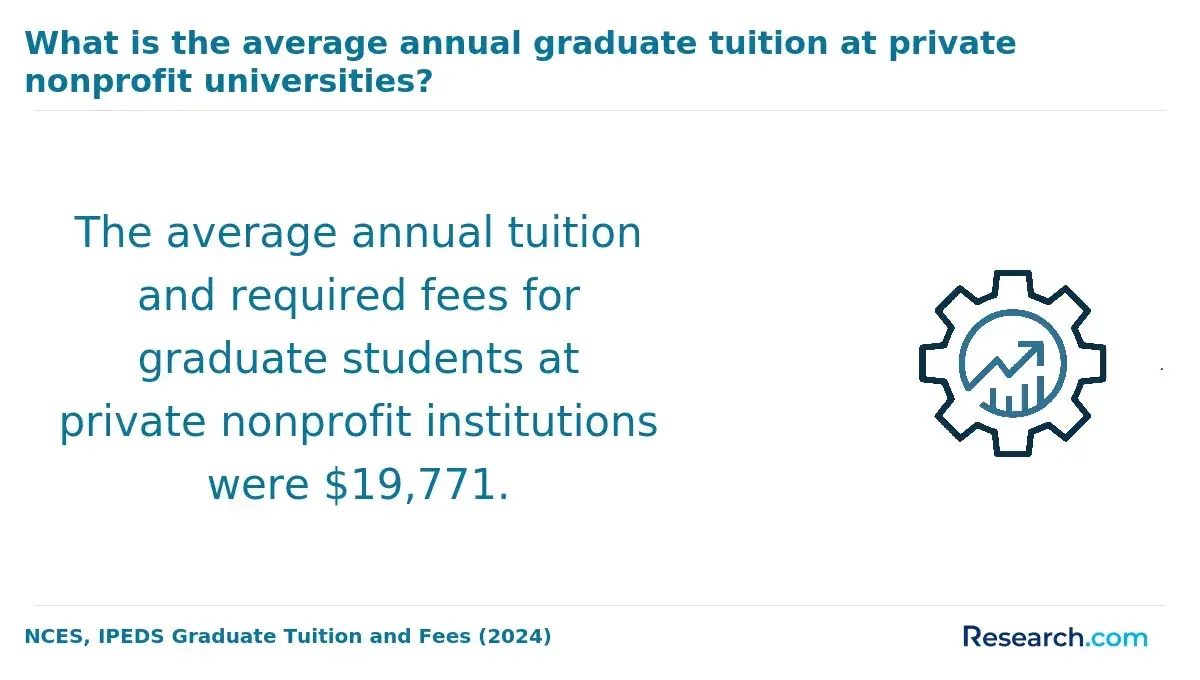
For cost, request a written estimate covering total tuition, mandatory fees, books or software, and any required travel. Check whether the quoted rate is per credit, course, term, or entire program; whether taking fewer courses changes fees; and whether employer reimbursement requires a minimum grade or continued employment.
Loan interest and childcare for live sessions or residencies can also affect the household budget. Published tuition alone is not the total cost of attendance.
First, verify the university's current institutional accreditation through the accreditor or the U.S. Department of Education's recognized-accreditor information.
Then check whether the business school separately holds AACSB, ACBSP, or IACBE accreditation if that distinction matters to you. Institutional accreditation and specialized business-school accreditation are different claims; neither proves that a particular concentration is offered online.
For this decision, quality also means usable course access and support. Confirm the current concentration requirements in the catalog, request sample analytics assignments, and ask how online students reach faculty, technical help, and career advisers outside standard work hours. If a residency or team project is advertised, obtain its schedule and participation requirements in writing.
The strongest pathway usually builds on experience you already have. A marketing professional might use analytics coursework to pursue marketing operations or customer-insights leadership; an operations professional might move toward process improvement or analytics management.
In either case, the MBA can strengthen budgeting, stakeholder communication, and decisions informed by data.
Business analyst, product manager, and analytics manager roles differ substantially by employer. Some expect hands-on SQL, statistics, industry expertise, or prior responsibility for a team. Review postings for your target role before selecting electives, and seek a work project that demonstrates the missing skill.
An MBA concentration alone is unlikely to qualify someone with no technical background for a specialized data scientist position.
The U.S. Bureau of Labor Statistics reports a median annual wage of $126,520 for management occupations in May 2025. That is an occupation-group figure, not the pay of data-focused MBA graduates: it includes managers with different degrees, industries, locations, and levels of experience.
BLS projects management employment to grow faster than the average for all occupations from 2025 to 2035, but that broad outlook does not predict hiring for a particular MBA concentration.
For a useful personal estimate, compare pay ranges in local postings for roles you could realistically enter with your present experience. A promotion within your field may be more plausible than an immediate move into technical data science.
Weigh any potential increase against program costs and the time your household must commit; do not treat a broad occupational median as an expected return on tuition.
Are certifications or licenses required for data science business careers?
Most business analytics and data-informed management roles do not require a professional license simply because they use data. Employers may value demonstrated ability with particular tools or methods, and a relevant certification can help document that ability. It does not replace experience interpreting results, communicating trade-offs, or managing a business decision.
Requirements can change with the underlying profession. For example, an analytics role tied to a regulated accounting or clinical function may involve qualifications specific to that function. Check the requirements of the actual position rather than assuming either the MBA or a software certificate supplies every credential you need.
Other Things You Should Know About MBA
Possibly. Transfer-credit limits and eligible courses vary by school. Ask for a written evaluation before relying on credits to shorten your plan.
Sometimes, with instructor and employer approval. Check confidentiality rules before sharing customer records, internal financial information, or proprietary data.
Diploma wording is school-specific. Ask the registrar for a sample or written description if it matters to you or your employer.
Confirm eligible programs, reimbursement timing, grade requirements, annual limits, and any repayment obligation if you leave your job. Get the policy in writing before enrolling.
- Cost of Attendance (Budget) | 2025-2026 Federal Student Aid Handbook https://fsapartners.ed.gov/knowledge-center/fsa-handbook/2025-2026/vol3/ch2-cost-attendance-budget
- Types of Financial Aid: Grants, Work-Study, and Loans | studentaid.gov https://studentaid.gov/understand-aid/types
- What Is Data Science? Definition, Skills, Applications & More | Harvard SEAS https://seas.harvard.edu/news/what-data-science-definition-skills-applications-more
- Data Science Master's Prerequisites: Are You Ready? | Boston University https://www.bu.edu/online/2026/09/04/data-science-masters-prerequisites-how-to-tell-if-youre-ready/
- What is Data Science? | UC Berkeley School of Information's Online Master's Programs https://ischoolonline.berkeley.edu/data-science/what-is-data-science/
- MBA Business Analytics Courses & Career Pathways | ucr.edu https://business.ucr.edu/mba/business-analytics-courses
- What Should Data Science Education Do With Large Language Models? · Issue 6.1, Winter 2024 | Harvard Data Science Review https://hdsr.mitpress.mit.edu/pub/pqiufdew
- How Many Hours of Work Per Online Course Credit | ASU Online https://asuonline.asu.edu/newsroom/online-learning-tips/discover-weekly-number-hours-online-students-study/
- What's the Difference Between Asynchronous and Synchronous Learning? | Ohio State Online https://online.osu.edu/content-hub/blogs/whats-the-difference-between-asynchronous-and-synchronous-learning/
- Application-Based Assessments | Undergraduate Admission https://www.k-state.edu/academic-affairs/academic-innovation-center/program-management/instructional-design/alternative-assessment/application-based-assessments/