Online MBA in Organizational Change: admissions guide for military veterans

Co-Founder and Chief Data Scientist
Military leadership can be strong preparation for an organizational change MBA, but translating that experience into a civilian application takes planning. Veterans must also decide whether the degree builds skills they need, fits their schedule, and makes good use of education benefits.
This guide explains what admissions committees commonly evaluate, how to present military experience without relying on jargon, and which program and funding details to verify before applying. The goal is to help you choose a suitable MBA - or decide that a more targeted option would serve you better.
Key Things You Should Know
- An organizational change concentration does not usually impose a universal military-rank, bachelor's-major, or certification requirement; check each MBA's admissions rules and whether the concentration is formally offered online.
- Translate military experience into evidence of decisions, team leadership, resources managed, and measurable change - not just titles or duties.
- VA eligibility and school charges determine the value of benefits. The BLS median wage of $126,520 for management occupations in May 2025 is occupational context, not a predicted MBA graduate salary.
What is an online MBA in organizational change?
An online MBA in organizational change is a general management degree with coursework focused on leading transitions in how organizations operate. Students typically study the MBA core - such as finance, operations, strategy, and organizational behavior - alongside topics such as stakeholder engagement, culture, communication, and implementation.
The label matters less than the course requirements. One school may offer a formally named concentration; another may offer only a change-management elective. Check the degree plan to see what appears on the academic record, how many relevant courses are available online, and whether a project lets you address a real organizational problem.
Military experience offers useful examples of coordinating teams through new procedures or missions. Civilian change work also calls for skills that may be less visible in a service record: gaining support without command authority, explaining financial trade-offs, and accounting for customers or employees who can leave the organization.
Is an online organizational change MBA worth it for military veterans?
It can be worthwhile for a veteran seeking broader business responsibility who needs both an MBA core and practice leading change. Its value is less certain if the immediate goal is a narrowly defined technical role or if a program's cost would require substantial borrowing without a plausible advancement path.
Start with the job you want, not the concentration name. Compare its requirements with your existing leadership experience, then assess whether you need business fundamentals, civilian employer connections, or a specific functional skill. For a move into systems transformation, for example, compare the change-focused curriculum with MBA options by total cost degree programs that emphasize information systems; the lower-cost or better-matched route may not be the organizational change concentration.
Estimate your personal cost after confirmed benefits and employer support, including fees and any travel. Then consider the work time you can realistically commit and whether the program's career services serve online veterans seeking your target roles. An employer-sponsored project or a shorter change-management course may be a better first step if you already have an MBA-level management foundation.
What careers can veterans pursue with an organizational change MBA?
The most realistic next role usually builds on a veteran's prior function, industry knowledge, and level of responsibility. Change-related work appears across operations, project and program management, internal consulting, and people-focused leadership; employers generally hire for those functions, not for the concentration title alone.
The comparisons below show where military experience may transfer and what an applicant may still need to demonstrate.
| Potential path | Transferable experience | Common civilian gap to assess |
| Operations manager | Coordinating people, processes, and resources | Commercial budgets, customer measures, or industry-specific operations |
| Program or project manager | Planning, risk management, and cross-team execution | Employer-specific tools and evidence of delivery outside a command structure |
| Change or internal consulting role | Implementing procedures and communicating across stakeholders | Client-facing work, influence without authority, and business-case development |
| Healthcare operations or transformation | Leading teams in complex, regulated settings | Healthcare payment, compliance, and delivery-system knowledge |
A veteran targeting healthcare should compare general change coursework with healthcare leadership degree options online. Neither an MBA nor military leadership experience alone establishes the sector expertise needed for every healthcare management opening.
Requirements are set by the individual university, usually for admission to its MBA rather than separately to the concentration. Common application components include a bachelor's degree from an institution the school accepts, transcripts, a résumé, and a statement of purpose. Schools differ on work-experience expectations, recommendations, interviews, GMAT or GRE policies, deadlines, and foundation coursework. Do not treat a test waiver or a nonbusiness bachelor's degree as an automatic admissions decision.
For veterans, the strongest preparation is to make the application legible to readers who have not served. These steps strengthen an application but are not universal admission requirements:
- Confirm that the named concentration is available to online students and ask whether it requires a separate application.
- Request transcripts early, including any military training record the school will evaluate, and ask whether introductory accounting or quantitative preparation is recommended.
- Rewrite résumé bullets in civilian terms: explain the problem, your scope of responsibility, what you changed, and the result; omit sensitive details.
- Use the statement to connect a specific civilian role to the MBA core and change coursework, rather than assuming leadership experience explains the career goal.
- Ask potential recommenders for examples of judgment and collaboration, and verify each school's recommender, test, and deadline policies before submitting.
If your service included substantial management responsibility but no conventional corporate job title, contact admissions about how it evaluates that experience. An explanation of scope can be more useful than a direct rank-to-title comparison.
The MBA core supplies the business context for change decisions: accounting and finance help assess a proposal's cost, operations explains process effects, and strategy connects an initiative to organizational goals. Change-focused courses may cover organizational diagnosis, stakeholder resistance, communication plans, culture, and how to measure implementation. The exact mix varies by school.
Look for assignments that require a business case and a plan for putting it into practice, not just a presentation about leadership styles. A veteran who has implemented new procedures can use such work to demonstrate how military leadership methods adapt when civilian employees, executives, and customers have different incentives. Ask whether a capstone can use an unclassified workplace problem and whether the school helps students find an alternative project if it cannot.
If your intended change work is specifically in healthcare, compare this general curriculum with healthcare leadership MBA programs healthcare administration. Sector-specific courses may be more valuable than an additional general change elective.
Completion time depends on required credits, transfer or waiver policies, course sequencing, and whether you study full- or part-time. Published accelerated timelines may assume uninterrupted enrollment and a substantial weekly commitment. Ask for a term-by-term plan using the pace you could maintain while working or managing a transition.
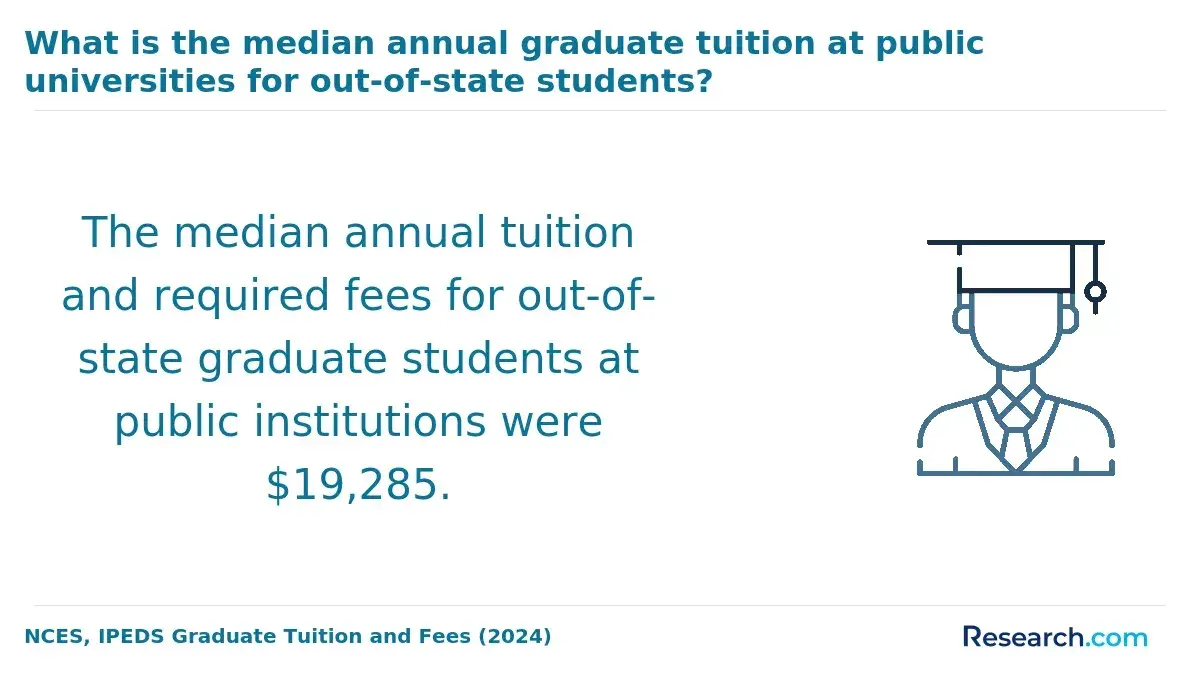
For cost, request a written estimate that separates tuition from mandatory fees, books or software, and any required residency travel. Confirm whether a quoted price is per credit, per term, or for the entire degree; then compare what remains after benefits and other confirmed funding. Lists of cost-effective MBA choices mba usa can help identify candidates, but a published tuition figure is not your final out-of-pocket cost.
Also account for time away from paid work and any borrowing needed to cover a gap. A lower-priced program that delays completion or offers little access to your target employers may be a worse fit than its tuition suggests.
Online study can let veterans stay employed or enroll without relocating, but delivery varies: some courses are asynchronous, while others require live meetings, group projects, or campus visits. A campus MBA may provide easier access to in-person recruiting and cohort relationships, particularly for someone making a major industry switch. Neither format guarantees stronger career results.
Ask each program for live-session times, group-project expectations, required travel, and the career services actually available to online students. If coordinating team assignments across time zones would be difficult, examine online MBA programs with limited group work program list as a starting point, then verify current course requirements directly with the school. Group work may be inconvenient, but it can also provide practice influencing civilian colleagues without formal authority.
Start by confirming which VA education benefit you have, your eligibility level, and your remaining entitlement. Then verify that the particular school and MBA program are approved for VA benefits. Approval, benefit coverage, and payment amounts are separate questions; veteran status by itself does not establish eligibility for a specific benefit.
For eligible Post-9/11 GI Bill students, tuition coverage depends in part on benefit level, school type, and applicable limits. A housing allowance may depend on enrollment intensity and course location; online-only study is treated differently from qualifying in-person study. Yellow Ribbon funding is not automatic: it depends on the student's eligibility, a participating school, and the school's agreement and available places.
Before committing, obtain your VA Certificate of Eligibility and ask the school's certifying official to review your intended course load, tuition and fees, any Yellow Ribbon contribution, and whether a required campus component changes how enrollment is classified. Have the school explain what you would owe if benefits do not cover the full program or your enrollment changes.
First verify that the university holds recognized institutional accreditation. Then check whether its business school or MBA has specialized business accreditation, such as AACSB, ACBSP, or IACBE, if that distinction matters to your employers or professional goals. Institutional accreditation and business-school accreditation are different; neither proves that a particular concentration is offered online.
Use the institution's and accreditor's current records rather than a marketing phrase such as "accredited MBA." Also confirm the program's VA approval separately. Accreditation can support academic credibility and affect aid or transfer decisions, but it does not guarantee that another university will accept credits or that an employer will prefer the degree.
What salaries and job outlook can organizational change MBA graduates expect?
The U.S. Bureau of Labor Statistics reports a $126,520 median annual wage for management occupations in May 2025. That figure covers people across management jobs and experience levels; it is not a starting salary or an earnings estimate for organizational change MBA graduates.
BLS projects management occupations to grow faster than the average for all occupations from 2025 to 2035, with about 1.1 million openings annually on average from growth and replacement needs. That broad outlook does not establish demand for a particular concentration. For a useful salary comparison, identify your target occupation and location, then compare its posted requirements and pay with roles you could realistically obtain given your military and civilian experience.
Other Things You Should Know About MBA
Possibly, but graduate transfer-credit policies are often restrictive. Ask the school to evaluate specific training or prior graduate coursework before assuming it will shorten the MBA.
Only if you can discuss it without disclosing classified, controlled, or otherwise protected information. Ask the instructor about an approved, unclassified substitute when needed.
Enrollment alone does not determine clearance status. Follow your security office's reporting and information-handling rules, particularly for outside activities or coursework involving sensitive material.
That depends on the school's enrollment policies and course schedule. Check time zones, live attendance, examination arrangements, and any campus requirements before applying.
- Yellow Ribbon Program | Veterans Affairs https://www.va.gov/education/about-gi-bill-benefits/post-9-11/yellow-ribbon-program/
- General Schedule Qualification Policies | U.S. Office of Personnel Management https://www.opm.gov/policy-data-oversight/classification-qualifications/general-schedule-qualification-policies/
- Tips for Writing a Federal Resume | U.S. Department of Labor https://beta.dol.gov/about/careers/how-apply/tips-writing-federal-resume
- Military Training Evaluation Program (MTEP) | dantes.mil https://www.dantes.mil/credit4training/
- Applying to Grad School - The City University of New York https://www.cuny.edu/admissions/graduate-studies/prepare/
- x_MBA Admissions | Milgard School of Business - UW Tacoma https://www.tacoma.uw.edu/business/xmba-admissions
- Master of Science in Learning and Organizational Change | Northwestern University https://sesp.northwestern.edu/graduate-professional/learning-and-organizational-change/ms-learning-organizational-change/
- Before You Apply | Graduate and Professional Admissions https://gradstudy.rutgers.edu/apply/before-you-apply
- Organizational Change Management | College Of Business https://business.oregonstate.edu/programs/continuing-and-professional-education/organizational-change-management
- Benefits and Financial Aid for Veterans | erau.edu https://erau.edu/admissions/financial-aid/types-of-aid/military-and-va-benefits/veterans