Careers after an online MBA in Technology Management for military veterans

Co-Founder and Chief Data Scientist
Military leadership can translate well into civilian technology organizations, but employers may not immediately recognize how experience in logistics, communications, operations, or cybersecurity fits their management roles. An online MBA in Technology Management can help bridge that gap by adding business and technology-strategy skills. This guide examines realistic career paths for veterans, where experience matters more than the degree, and how to weigh program cost, benefits, and career support before enrolling.
Key Things You Should Know
- Veterans often have the strongest path into technology operations, program delivery, and risk roles that build on their existing military responsibilities; an MBA alone rarely qualifies someone for a senior technology post.
- The US Bureau of Labor Statistics reports a May 2025 median annual wage of $126,520 for management occupations overall - not a starting salary or an earnings figure for technology management MBA graduates.
- Before using education benefits, confirm that the specific online program is VA-approved, calculate your remaining out-of-pocket cost, and check whether its career services reach your target employers.
What careers can veterans pursue after earning an online MBA in Technology Management?
The most realistic career path usually starts with what a veteran has already managed. An MBA in Technology Management combines a broad business education with coursework on decisions involving technology, such as digital operations, innovation, or IT governance. It can strengthen a move into civilian management, but it does not replace hands-on technical experience.
The following paths connect common military responsibilities to civilian work. Job titles and requirements vary by employer, so use the duties - not just the title - to assess fit.
| Military experience | Potential civilian path | Likely gap to address |
| Coordinating systems, personnel, and deadlines | Technology program or implementation manager | Commercial budgets, vendors, and product-delivery methods |
| Running logistics or maintenance operations | Technology operations or supply-chain systems manager | Enterprise software and private-sector performance measures |
| Leading communications or IT teams | IT service delivery or technology operations manager | Employer-specific platforms and civilian IT service practices |
| Managing security procedures or mission risk | Technology risk or cybersecurity governance manager | Industry regulations and demonstrable security expertise |
These are broad pathways, not guaranteed post-graduation placements. The Bureau of Labor Statistics projects about 1.1 million management-occupation openings annually, on average, from 2025 to 2035. That figure spans management fields well beyond technology; veterans should investigate demand for their target role and location rather than treat it as an MBA placement forecast.
A veteran moving from military communications into a civilian technology team may have an easier transition than one attempting to enter product management without customer or software-development experience. If the goal is primarily brand strategy or customer acquisition, online business degrees for marketing careers may offer a more relevant curriculum than technology management.
How does an online MBA in Technology Management benefit military veterans?
The degree's potential value is translation: it gives veterans a business vocabulary for work they may already know how to lead. Finance, operations, and strategy courses can help someone who managed a mission budget or coordinated complex teams explain those decisions in terms a civilian employer uses. Technology management coursework can add a framework for evaluating investments, vendors, risks, and organizational change.
Online study may allow a veteran to keep working during a transition, but "online" does not necessarily mean self-paced. Live classes, team projects, and required travel can still conflict with a new job, reserve duties, or caregiving. Ask about those commitments before enrolling.
The degree is most useful when paired with evidence of results: a civilian-facing résumé, measurable projects, and conversations with employers in the intended field. Experienced veterans already leading large organizations may also compare executive MBA programs in the US, while checking whether their schedules and costs make that format practical.
What jobs can you get with an MBA in Technology Management?
Employers hire for responsibilities and experience, not the concentration name alone. An MBA may support applications for technology project manager, IT operations manager, business systems manager, digital transformation manager, or technology vendor manager. Veterans whose backgrounds align closely with the work may also compete for program manager positions supporting defense contractors or government technology projects.
Seniority matters. A veteran who has supervised IT personnel may be ready to pursue an IT management opening; someone whose military leadership was outside technology may need a project coordinator, business analyst, or operations role first. Product manager positions often call for evidence of customer research and product decisions. Cybersecurity leadership roles typically require substantial security experience; management coursework is not a substitute for it.
Sector choice also changes the qualification test. Healthcare technology employers may value knowledge of patient-data rules and clinical workflows, so veterans interested in that setting should compare technology management with online healthcare administration. Federal positions and contractor roles may have separate hiring, eligibility, or clearance requirements that an MBA cannot waive.
Curricula differ by school. Typically, the MBA core covers managerial accounting and finance, operations, strategy, organizational leadership, and marketing. A technology management concentration, when formally offered, may add courses in IT strategy, digital transformation, innovation, technology projects, analytics, or information-systems governance. An elective on technology is not necessarily a designated concentration.
For career planning, examine what students actually produce. A course that asks students to evaluate a technology investment or lead an applied project may yield stronger interview examples than one focused only on terminology. Confirm whether veterans can use relevant workplace problems in assignments and whether a capstone involves an employer or a simulated case.
This is management-level preparation. A technology-focused MBA generally does not teach the depth of software engineering, data science, or hands-on cybersecurity expected in specialist roles. Veterans seeking those jobs should compare technical degrees, certifications, or supervised experience instead.
Requirements are set by each university. Common application components include a bachelor's degree, academic transcripts, a résumé, a statement of purpose, and recommendations. Schools differ on professional-experience expectations, interviews, GMAT or GRE policies, and whether applicants need foundation coursework. A nonbusiness undergraduate degree does not automatically rule out admission.
Veterans should describe scope and results rather than rely on rank or military acronyms: team size, resources managed, systems implemented, and measurable improvements are more informative to an admissions committee. If accounting or statistics feels unfamiliar, ask whether the program provides preparation before those courses. Also confirm its policies for applicants finishing active service or relocating during enrollment.
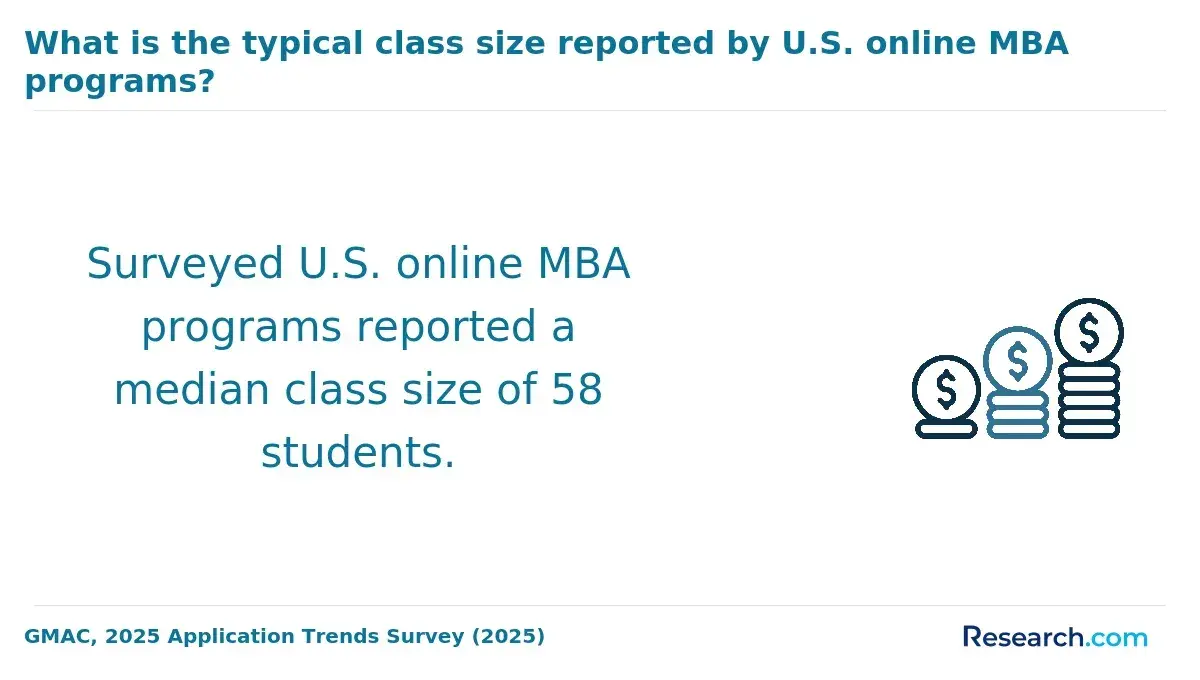
Completion time depends on the school's required credits, course sequence, term structure, and how many courses a student takes at once. A part-time route generally takes longer than an accelerated route, but published shortest-possible timelines may assume uninterrupted enrollment and a demanding course load. Concentration courses offered infrequently can also affect the finish date.
Ask an advisor for a term-by-term plan based on your intended pace, including any live sessions, group meetings, residencies, and rules for pausing study. Veterans balancing a civilian job or reserve obligations may find that business degrees for students needing schedule flexibility provide useful comparisons, but should verify each program's actual deadlines and attendance rules.
There is no reliable single price for this degree: schools may charge per credit, per course, or per term. To compare offers, calculate required credits multiplied by the applicable tuition rate, then add mandatory fees, books or software, and any required travel. A tuition-only figure is not the full cost of attendance. Ask whether concentration courses carry different charges and whether extending enrollment adds term-based fees.
For a veteran, the more useful comparison is expected out-of-pocket cost after confirmed VA benefits, scholarships, and employer assistance - not the advertised tuition alone. Check how a proposed course load affects benefit use and whether changing pace would alter your budget. If the remaining cost is substantial and the target job chiefly requires a technical skill, a shorter credential or employer training may be a better investment.
A veteran may be able to apply Post-9/11 GI Bill benefits to an online MBA if the individual is eligible and the specific program is approved for VA education benefits. Eligibility, remaining entitlement, payment levels, and any housing allowance depend on individual circumstances and enrollment details. Online-only study can affect the housing allowance; do not assume it matches the allowance for in-person attendance.
Confirm the financial picture before committing to a school. These checks help prevent a gap between an admissions offer and the funding you can actually use:
- Check your benefit eligibility and remaining entitlement through VA, rather than estimating from length of service alone.
- Ask the school's veterans certifying official whether the exact online MBA and concentration are approved, and how your planned course load will be certified.
- Request a written estimate of tuition, mandatory fees, expected VA payments, and any balance you would owe; ask whether Yellow Ribbon participation applies to your eligibility and program.
- If you may qualify for Veteran Readiness and Employment benefits, discuss education plans and benefit coordination with a VA counselor before selecting a funding route.
Yellow Ribbon funding is not automatic: it depends on qualifying Post-9/11 GI Bill eligibility and the school's participation and terms. Confirm details directly with VA and the institution before relying on any benefit in your enrollment decision.
No single salary describes veterans who complete this MBA. The Bureau of Labor Statistics reports a May 2025 median annual wage of $126,520 across US management occupations. That broad occupational median is useful context, but it is not a median for technology managers, veterans, new hires, or MBA graduates.
Pay for a particular opening will depend on its duties and seniority, location, industry, and the candidate's relevant experience. A veteran moving into a first civilian technology role should not budget around a senior-manager salary. Compare actual postings for the target job and location, then weigh the likely compensation change against the MBA's remaining cost and time commitment. Broad management employment projections likewise cannot predict openings in one technology specialty.
How do you choose an accredited online MBA in Technology Management?
Start by confirming that the university holds recognized institutional accreditation. Then check whether its business school has additional accreditation, such as AACSB, ACBSP, or IACBE; institutional and business-school accreditation are different, and specialized accreditation alone does not establish that a particular concentration is offered online. Confirm the concentration's official name and required courses in the current catalog.
Next, test the program against the job you want. Ask career services whether online students can access employer events, alumni contacts, résumé support, and recruiting relevant to veterans. Examine applied projects, cohort experience, live-session requirements, total cost, and VA program approval separately. A general comparison of online MBA programs can provide a starting point, but a ranking cannot establish whether a school's technology coursework or employer connections fit your transition.
The strongest choice is a program whose coursework fills a specific gap and whose cost remains reasonable under your confirmed benefits. If employers in your target field consistently ask for technical platform experience rather than business education, build that experience first and reconsider the MBA when you are pursuing management responsibility.
Other Things You Should Know About MBA
Diploma wording varies by institution. Ask the registrar for the exact wording if it matters to you; do not infer it from the program's marketing page.
Possibly, but graduate transfer-credit and prior-learning policies vary widely. Ask the program to evaluate your records before assuming military training will shorten the MBA.
No. An employer must determine the position's requirements and handle any applicable clearance process. A prior clearance can be relevant, but it does not replace an employer's hiring checks.
Only if the benefit's transfer or dependent-eligibility rules are met. Confirm the individual's eligibility with VA and check that the proposed program is approved before making financial plans.
- Translate your military skills to a civilian career - VA Careers https://vacareers.va.gov/job-news-advice/translate-your-military-skills-to-a-civilian-career/
- Veterans to workplace: Keys to successful transition - PMC https://pmc.ncbi.nlm.nih.gov/articles/PMC10013406/
- Independent Study And Online Learning | Veterans Affairs https://www.va.gov/education/about-gi-bill-benefits/how-to-use-benefits/online-distance-learning/
- Civilian Career Support & Resources | militaryonesource.mil https://www.militaryonesource.mil/resources/millife-guides/employment/
- US Veterans Pivot Into Business With An Online MBA | UC News https://www.online.uc.edu/blog/us-veterans-pivot-into-business-with-an-online-mba.html
- The Benefit of Online Degrees for Veterans | University of the Cumberlands https://www.ucumberlands.edu/blog/benefits-of-online-degrees-for-veterans
- Military-Friendly Online MBA Programs | Best MBA for Veterans https://hankamer.baylor.edu/news/story/2026/military-friendly-online-mba-programs-how-veterans-make-transition
- Military to Civilian Career Translation Guide | Skills Converter https://www.apsu.edu/human-resources/hiring-veterans/military-to-civilian-translation-guide.php
- The Benefits of Getting an Online MBA for Veterans | Gary W. Rollins College of Business https://blog.utc.edu/business/2023/11/09/benefits-of-an-mba-for-veterans/
- The 6 MBA Skills You'll Learn to Support Your Career Goals | Mitch Daniels School of Business https://business.purdue.edu/graduate-programs/blog/posts/skills-you-learn-from-mba.php