Best Online MBA in Human Resources Programs for Public Sector Professionals

Co-Founder and Chief Data Scientist
Government HR work requires more than recruiting and employee relations: leaders must manage budgets, organizational change, and decisions subject to public scrutiny. An online MBA with a human resources concentration can build those management skills, but a business-focused degree will not necessarily teach civil service rules or justify its cost for every public employee. This guide compares identifiable programs through a public-sector lens and shows how to check curriculum, scheduling, employer support, and career fit before you apply.
Key Things You Should Know
- Southern New Hampshire University, Arkansas State University, and Louisiana State University Shreveport offer online MBAs with identifiable HR concentrations; the best fit depends on curriculum, schedule, and your agency's tuition rules.
- An HR concentration adds people-management coursework to an MBA core, but applicants should verify whether it covers public employment law, collective bargaining, and government workforce practices.
- The $126,520 median annual wage for all U.S. management occupations in May 2025 is not a salary estimate for government HR staff or MBA graduates.
What are the best online MBA in human resources programs for public sector professionals?
There is no defensible single winner for every government employee. This shortlist includes institutions with an identifiable online MBA and a named HR concentration, then distinguishes them by the questions most likely to affect a public-sector decision: institutional setting, HR-course fit, scheduling, and total cost. It is a fit-based shortlist, not a national ranking; concentration requirements and delivery details should be confirmed in the current catalog.
The comparison identifies what each school offers and where a prospective student should focus their review. It does not treat a public university as proof that its courses specialize in government HR.
| Online MBA | Identifiable HR option | Potential fit for a public-sector applicant | Verify before applying |
| Southern New Hampshire University (SNHU) | MBA with a Human Resources concentration | Consider if you want a private nonprofit institution and an HR-focused MBA while remaining employed. | Which HR courses are available online, whether any address public employment, and the full tuition-and-fee estimate. |
| Arkansas State University | Online MBA with a Human Resource Management concentration | Consider if a public-university setting appeals to you or your employer's education policy favors particular institutions. | Course sequencing, live attendance requirements, residency-based pricing rules, and concentration electives. |
| Louisiana State University Shreveport (LSUS) | Online MBA with a Human Resource Management concentration | Consider if you want to compare another public-university MBA against your agency's reimbursement limits and work schedule. | Current concentration requirements, term pace, all mandatory fees, and access to career services as an online student. |
None should be presumed to offer a government-HR track merely because it offers HR management. Compare the assigned readings, projects, and available electives with the rules governing your own employer. For a broader price-first search, MBA programs ranked by affordability in the USA can provide additional candidates, but confirm that any candidate actually offers an online HR concentration.
Why should public sector professionals earn an online MBA in human resources?
The strongest case is an existing government HR professional moving toward responsibility for workforce strategy, budgets, or cross-agency change. The MBA core develops accounting, finance, operations, and leadership judgment; an HR concentration applies management thinking to staffing, compensation, employee development, and organizational performance. That combination can help a manager explain a workforce proposal in financial and operational terms, not just HR terms.
The case is weaker if your next position primarily requires detailed knowledge of civil service procedures or a specific labor agreement. Agency training, a targeted graduate course, or an MPA may address that gap more directly. For employees whose shifts or legislative-calendar demands are unpredictable, compare MBA programs that fit around work, then check actual deadlines and group-project expectations rather than assuming "online" means self-paced.
Is an online MBA in human resources accredited and respected by employers?
An online MBA is not accredited simply because it is online, nor is its HR concentration usually accredited separately. Check that the university holds recognized institutional accreditation. Then check whether its business school or MBA holds specialized accreditation, such as AACSB or ACBSP, if that distinction matters to you or your employer. Verify the status through the institution and accreditor rather than relying on a general claim about the school.
For government advancement, employer recognition is also practical: an agency may specify eligible institutions, job-related coursework, minimum grades, or advance approval for reimbursement. A respected degree does not override classification rules, competitive hiring procedures, or required experience. Ask HR how the degree would be evaluated for the specific position you want.
Expect a broad MBA core alongside HR-focused courses. Depending on the school, the concentration may address talent management, employment law, compensation, organizational behavior, or HR strategy. Those topics are relevant to public agencies, but a course framed around corporate hiring may not cover merit systems, veterans' preference, public-records obligations, union contracts, or the approval processes that govern your workplace.
A useful test is whether you can apply assignments to a real agency problem: reducing vacancy time within hiring rules, assessing training outcomes, or presenting a staffing plan within an appropriated budget. Ask for current syllabi and clarify whether you may use public-sector data in projects. If sector-specific policy expertise is your main objective, compare the MBA with an MPA or public administration coursework before choosing on the strength of an HR concentration name alone.
Requirements vary by school. Applicants commonly need a bachelor's degree and may be asked for transcripts, a résumé, a statement of purpose, or recommendations. Professional experience, undergraduate preparation, and GMAT or GRE policies are program-specific; an HR concentration does not itself establish a universal test or business-degree prerequisite.
If you work in government, use your application to show the scope of your work: workforce planning, supervision, budgeting, labor relations, or measurable service improvements. Applicants without a business background should ask whether accounting or quantitative foundations are required or recommended. If testing or cost is a barrier, compare affordable online MBAs that do not require the GMAT, while checking each school's current policy and HR concentration availability.
Duration depends on required credits, course sequencing, transfer or waiver policies, and how many courses you can take while working. A short advertised completion time may assume continuous enrollment at a pace that conflicts with a government employee's peak budget, hiring, or legislative periods. Ask for a term-by-term plan that includes every HR concentration course.
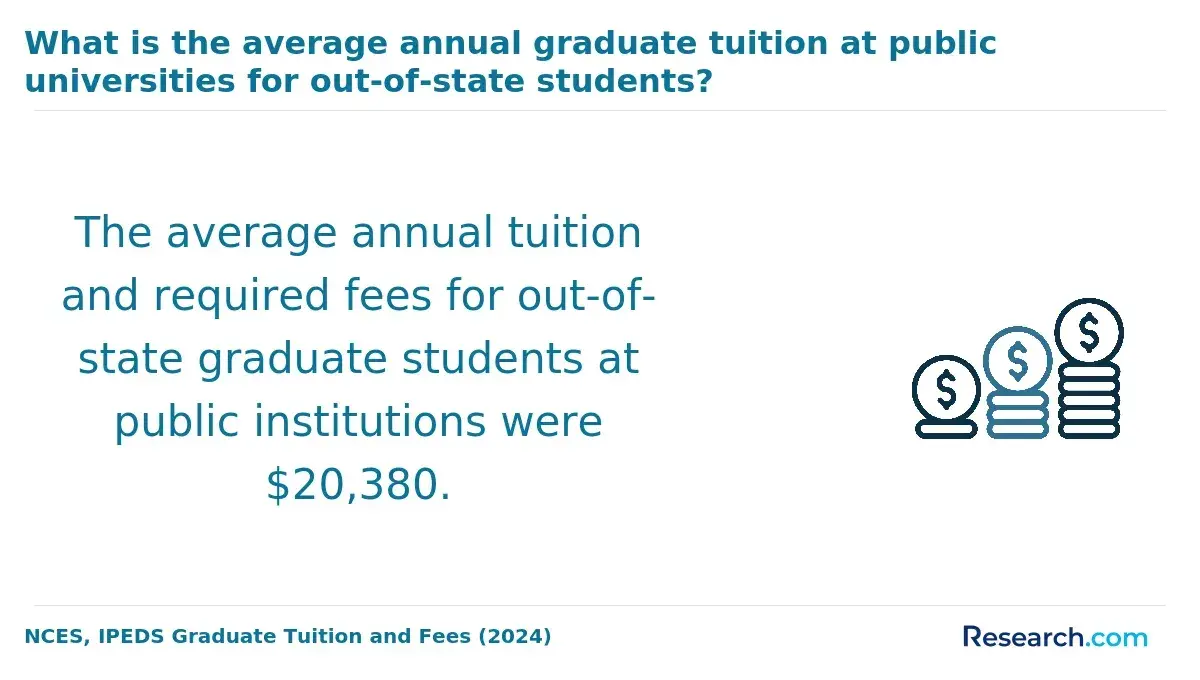
For cost, request a written estimate covering tuition for all required credits, mandatory fees, books and software, and any required travel. Compare that total with your employer's reimbursement cap and approval rules; tuition alone is not the full expense. Be cautious when comparing low-cost online MBA programs under $10,000: verify the current total and whether the program has the HR option you need. If you would borrow, include interest and repayment obligations in your personal calculation.
For someone already working in government HR, the MBA may support progression from specialist or analyst work toward HR management, workforce planning leadership, talent development management, or broader administrative leadership. The relevant responsibilities can include supervising staff, defending budget requests, managing hiring processes, and leading organizational change under public accountability requirements.
The degree is less direct as an entry ticket into government HR. Agencies may prioritize civil service eligibility, relevant HR experience, labor-relations knowledge, or supervisory history. A professional seeking a first government position should review actual vacancy announcements and build the missing experience; someone targeting a private-sector transition should separately assess whether the MBA offers useful employer connections and career services.
There is no reliable single "online MBA in HR" salary for government employees. The U.S. Bureau of Labor Statistics reports a $126,520 median annual wage for all management occupations in May 2025. That broad category is not limited to HR, public employment, or MBA holders, so it should not be used as a forecast of your post-degree pay.
Government compensation depends heavily on jurisdiction, position classification, grade or pay band, locality, and eligibility for promotion. For a useful estimate, compare the posted pay range for your target role with your current compensation, then examine whether the MBA is required, preferred, or not mentioned. Count a potential raise in your education decision only if there is a realistic route to the role - not merely because the degree could make you eligible to compete.
SHRM-CP, SHRM-SCP, PHR, and SPHR are examples of professional HR credentials that may complement an MBA. They assess HR knowledge and, depending on the credential, may have eligibility or renewal requirements. They are not substitutes for an MBA's management core, and an MBA concentration does not automatically confer certification.
Choose a credential by examining target job postings and your actual responsibilities. For a federal, state, or local employee, agency-specific training in civil service rules, labor agreements, or public-sector employment practices may be more immediately useful than a general credential. Confirm current certification eligibility and whether your employer pays examination or renewal costs before committing.
How should you choose the right online MBA in human resources program?
Start with the position you want, not the school's marketing description. A good choice has an official online HR concentration, coursework relevant to that position, a manageable schedule, and a net cost your likely career benefit can justify. Use the following checks to turn a shortlist into a decision.
- Compare target job postings and agency promotion rules with each program's MBA core and required HR courses.
- Request current syllabi, a full cost estimate, and a term-by-term schedule; ask explicitly about live sessions, group work, and campus visits.
- Confirm institutional and, where relevant, business-school accreditation, plus your employer's advance-approval and reimbursement rules.
- Ask what online students can use: career advising, alumni connections, and projects that permit public-sector problems or data.
- Compare the remaining net cost and time commitment with an MPA, focused coursework, certification, or employer training.
If completing the degree quickly matters, examine MBA programs designed for quicker completion as a separate option. An accelerated MBA is only a better choice if its HR curriculum and weekly demands still fit your work. For many public employees, a slower program with employer funding - or a narrower qualification - will be the sounder investment.
Other Things You Should Know About MBA
Often, but ask the instructor and your agency first. Employee records, personnel decisions, and nonpublic operational data may require permission or anonymization.
Diploma wording is set by the university. Ask the registrar for the exact wording if it matters to your employer or future applications.
Not necessarily. Supervision gives you more opportunities to apply the coursework, but an analyst with a clear route to management may also benefit. Base the timing on your target role, readiness, and funding.
The general management and HR skills can transfer. Each move still requires learning the destination employer's rules and showing relevant experience; an MBA alone does not establish either.
- Types of Financial Aid: Grants, Work-Study, and Loans | studentaid.gov https://studentaid.gov/understand-aid/types
- Employer-offered educational assistance programs can help pay for college | Internal Revenue Service https://www.irs.gov/newsroom/employer-offered-educational-assistance-programs-can-help-pay-for-college
- Pathways for Students and Graduates | Student Internships and Jobs | Working at CDC | Careers at CDC https://jobs.cdc.gov/working-at-cdc/student-intern-jobs/pathways.html
- Federal Human Resources Training in Washington, DC or Live Online | Graduate School USA https://www.graduateschool.edu/topics/federal-human-resources-training
- The Fundamentals of HR Employment Law for Compliance | Tulane University https://online.law.tulane.edu/blog/employment-law-and-hr-understanding-the-basics-and-staying-compliant
- Online MBA in Human Resources Degree | LSU Online https://online.lsu.edu/online-degree-programs/graduate/mba-human-resources/
- HR Management: Public vs. Private Sector | Claremont Lincoln https://claremontlincoln.edu/news-blog/hr-management-public-private/
- How does an online MBA program work? | iu.edu https://kdblog.kelley.iu.edu/2024/05/02/how-does-an-online-mba-program-work/
- Online/Modular Option - NYU Stern - New York University https://www.stern.nyu.edu/portal-partners/academic-affairs-advising/mba-programs/langone-part-time-mba/online-modular-option
- GMAT/GRE Exam Policy | marquette.edu https://www.marquette.edu/business/graduate/gmat-gre-waiver-policy.php