Is an Online MBA in Technology Management Worth It for Working Parents?

Co-Founder and Chief Data Scientist
An online MBA can help a working parent move from delivering technology projects to making broader business decisions, but tuition, deadlines, and group work still compete with a job and family life. A technology management MBA combines general management education with coursework on leading technology investments and change.
This guide explains when that combination may advance your career, how to test whether a program fits your household schedule, and when a shorter or cheaper option may serve you better.
Key Things You Should Know
- It may be worth it if you already have relevant experience, need broader management skills for a realistic next role, and can complete the program without unsustainable household debt or scheduling strain.
- Online does not mean anytime. Confirm live classes, group meetings, travel, course sequencing, and leave rules before committing.
- Do not use management salaries as an MBA payoff forecast. The U.S. median annual wage across management occupations was $126,520 in May 2025, but that figure includes workers without this degree and does not show what an individual graduate will earn.
Is an online MBA in technology management worth it for working parents?
Potentially, an online MBA in technology management is worth it for working parents if the degree addresses a specific career gap and its demands fit your family's capacity. It is most compelling for a technology professional who can see a credible route into managing teams, budgets, products, or technology strategy.
It is less compelling if the desired job primarily requires deeper engineering expertise, the employer offers no plausible advancement path, or completing the degree would depend on routinely sacrificing sleep or paid work.
Start with the role you want, not the credential. Compare its job requirements with your current experience, then ask whether business coursework, the school's network, and applied projects would close the gaps. A parent seeking an internal promotion may benefit from using coursework immediately at work; a parent attempting a major career change may need recruiting access and experience the degree alone cannot provide.
Value also includes less measurable benefits, such as confidence in financial decisions and the ability to lead cross-functional discussions. Those benefits matter, but they do not erase borrowing costs or childcare needs.
For parents later in their careers, a shorter period to use the degree may change the calculation. The top online MBA programs after 50 offers another perspective on that decision.
What careers can an online MBA in technology management prepare you for?
The MBA is generally a bridge from technical or operational experience into business leadership, not an entry ticket to every technology role. These paths differ in how much prior experience employers are likely to expect.
The comparison below separates plausible next steps from larger transitions, so you can judge whether the degree would build on your existing work.
| Career goal | Where the MBA may help | Experience still likely to matter |
| IT or technology operations manager | Budgeting, staffing, vendor decisions, and organizational change | Leading technical teams or operating systems and services |
| Technical product or program manager | Customer analysis, strategy, and cross-functional decision-making | Product delivery, project leadership, or industry knowledge |
| Technology strategy or transformation leader | Evaluating investments and aligning initiatives with business goals | A track record of delivering change across functions |
A software engineer or systems analyst moving into a first management role may have a more direct path than someone switching into technology from an unrelated occupation. Senior titles usually require demonstrated leadership beyond classroom study.
If your target is specifically a clean-technology business, compare technology management with online MBA in sustainability options; the better fit depends on whether your main gap is technology leadership or sustainability-focused strategy.
How much does an online technology management MBA cost and pay?
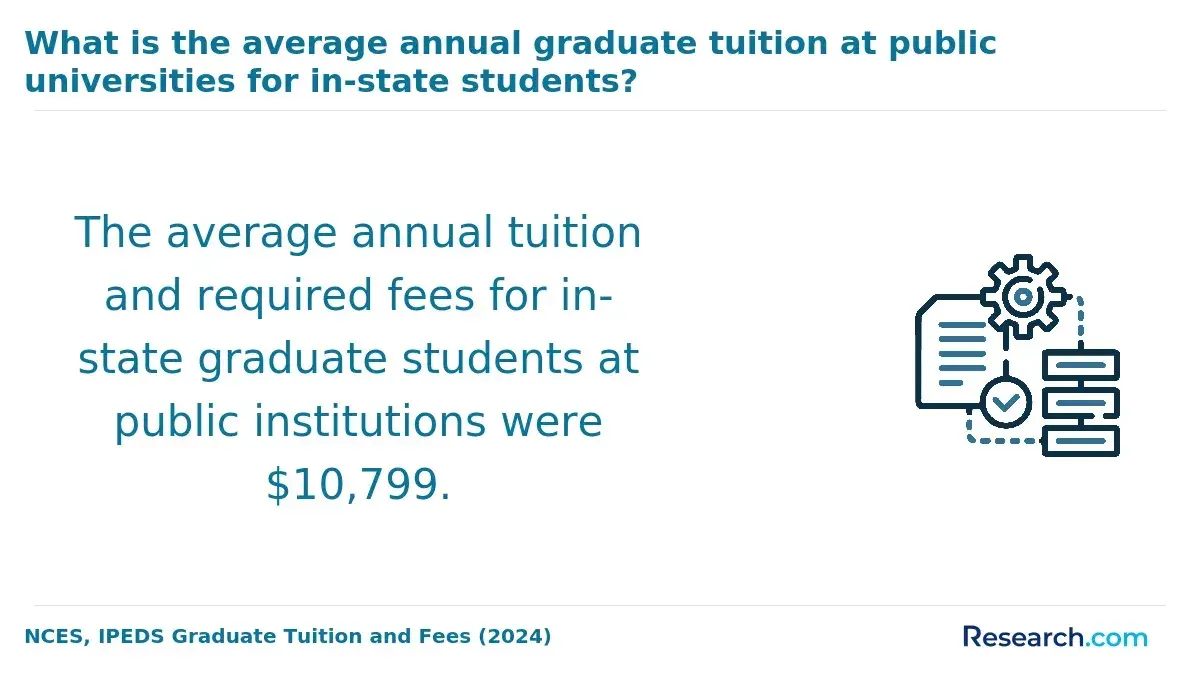
There is no reliable universal price or post-MBA salary for this specialization. Schools charge differently by credit, course, or program, and published tuition may exclude mandatory fees, materials, technology costs, and required travel. Ask each school for an estimate covering your intended pace, including any charges that continue during a slower term.
For a household decision, calculate net cost as tuition and required expenses minus aid and employer funding, then add expected financing costs, childcare, travel, and any income you would forgo. Compare that total with a plausible advancement scenario based on your employer's pay bands or relevant job postings.
If an expected annual compensation increase is credible, dividing net cost by that increase gives a rough payback period; it is not a prediction or proof that the MBA caused the increase.
For context, the U.S. Bureau of Labor Statistics reports that management occupations had a median annual wage of $126,520 in May 2025 and projects faster-than-average employment growth for the group from 2025 to 2035. That occupational median covers many jobs and education backgrounds, so it should not replace pay evidence for your intended role and location.
If cost is the deciding constraint, compare affordable online MBA programs, then verify each program's current full cost and technology-management coursework.
The MBA core typically develops management skills in accounting, finance, marketing, operations, strategy, and leadership. Technology-management coursework may apply those skills to technology investment, digital change, innovation, product decisions, or governance. The exact mix varies: a formally named concentration, a set of electives, and a general MBA with one relevant course offer different levels of depth.
For a working parent, the most useful assignments may be ones that can be applied to a real workplace decision, such as evaluating a vendor proposal or explaining the business case for a systems upgrade.
Check whether the school permits work-based projects and whether your employer allows you to use workplace information. An MBA develops managerial judgment; it should not be mistaken for advanced training in software engineering or another technical discipline.
Flexibility depends on course design, not the word "online." Recorded lessons may be available whenever you can study, while discussions, timed exams, group projects, and live classes can impose fixed obligations. A required residency may also create travel and childcare costs.
Before applying, request a recent course schedule and assessment calendar. The questions below expose commitments that a program's marketing description may leave unclear:
- Which classes require live attendance, and when are those sessions held?
- How often do teams meet, and can students choose meeting times?
- Are exams timed or monitored, and what happens if a child is sick?
- Are campus visits required, and can students reduce their course load or take a leave without losing completed work?
Then map a typical study week against work shifts, school pickups, bedtime routines, and backup childcare. Ask a current student with similar responsibilities how deadlines cluster; an average workload estimate alone may hide the busiest weeks.
Requirements vary by school. Programs commonly ask for a bachelor's degree, academic records, a résumé, and a statement of goals; some request recommendations, an interview, or GMAT/GRE scores, while others waive or do not require testing.
Professional experience expectations and deadlines also differ. Do not assume that a technology-management focus requires a technology bachelor's degree or that a nonbusiness major is ineligible.
If your undergraduate degree is outside business, ask whether accounting, finance, or quantitative foundation courses are required and whether they add time or cost. Online MBA programs for nonbusiness majors can provide comparison options, but each school's current admissions policy controls.
In your application, connect your work experience to the management problems you want to solve rather than relying on a broad interest in technology.
Completion time depends on required credits, course availability, enrollment pace, and any foundation work. A faster path can reduce the time to graduation but concentrate deadlines during the same months your family and employer need you. A slower path may protect your schedule while extending fees, borrowing, or the wait for career benefits.
Ask each school for a term-by-term plan at the course load you can sustain, not just its advertised fastest completion time. Check whether specialization courses run every term, how long you may remain enrolled, and what happens after an interruption.
Application timing matters too: if test preparation would delay your start, searches for lower-cost graduate business programs GMAT required should be followed by a check of each school's actual no-GMAT or waiver policy.
An online MBA may spare a working parent a regular commute and make it easier to keep earning an income. A campus-based MBA may offer more face-to-face interaction and access to activities that matter for a substantial career change. Neither format automatically provides better teaching, recruiting, or flexibility; those features depend on the program.
The practical comparison is between the specific opportunities you can actually use. Ask both schools whether online and campus students have access to the same career advisers, employer events, electives, and alumni activities.
If your goal is an internal promotion, schedule fit and immediate workplace application may outweigh campus recruiting. If you need an internship or a major industry switch, confirm that the online format offers a workable route rather than assuming its career services mirror the campus program.
First, verify that the university holds recognized institutional accreditation; this is distinct from accreditation of its business school or MBA. Business-school accreditors include AACSB, ACBSP, and IACBE, but their standards and the scope of an institution's accredited programs differ. A school's institutional accreditation does not, by itself, establish specialized business-school accreditation.
Check the accreditor's directory and the school's program information for the specific online MBA. Then compare curriculum, support, cost, and scheduling rather than treating an accreditation label as a complete measure of fit. If employer reimbursement is important, ask your employer whether it has its own accreditation requirements before you enroll.
Do technology management MBA graduates need licenses or certifications?
There is generally no professional license required simply to hold a technology management MBA or to work in a typical technology management role. Particular jobs may call for demonstrated expertise or prefer certifications in areas such as project management, cloud systems, or cybersecurity. Those credentials are separate from the MBA, and their requirements depend on the issuer and role.
Use target job postings to decide whether a certification would close a clearer hiring gap than another degree. For a parent whose immediate goal is to lead projects more effectively, focused employer training or a relevant certification may require less time and money. The MBA becomes more persuasive when the gap spans finance, strategy, people leadership, and technology decisions together.
Other Things You Should Know About MBA Programs
Possibly. Eligibility depends on the school, program, your enrollment status, and federal aid rules. Ask the financial aid office how your planned course load affects loan eligibility before budgeting around it.
Yes. Some employers require repayment if you leave within a specified period or do not meet course conditions. Get the policy in writing before counting the benefit as a reduction in cost.
Diploma wording varies by university. Ask the registrar for the exact degree and diploma language if it matters to you; also ask how any concentration appears on the transcript.
It can help if you want tuition support, schedule accommodations, or a work-based project. First consider your workplace relationships and whether the program would require a recommendation or approval to use company information.
- Accreditation in the U.S. | ed.gov http://www.ed.gov/laws-and-policy/higher-education-laws-and-policy/college-accreditation/accreditation-in-the-us
- Can You Work Full-Time and Go to School? A Practical Guide | Whitworth Online https://online.whitworth.edu/news-articles/can-i-go-to-school-and-work-full-time/
- Online MBA (OMBA) Tuition & Payment Options | FAU Business https://business.fau.edu/masters-phd/mba-program/online-mba/methods-of-tuition-payment/
- Online MBA vs. traditional MBA for working professionals | Capella University https://www.capella.edu/blog/business/online-mba-vs-traditional-mba/
- Is Online MBA Worth It? In a Word, Yes. | Babson College https://www.babson.edu/graduate/admissions/graduate-school-advice/is-online-mba-worth-it/
- Online vs. In-Person MBA: Which is Right for You? | Colorado Technical University https://www.coloradotech.edu/degrees/studies/business-and-management/online-vs-in-person-mba
- Master of Science in Technology Management and Data Analytics | UVA Wise https://www.uvawise.edu/academics/graduate/technology-data
- Management of Technology | Washington D.C. & Maryland Area | Capitol Technology University https://www.captechu.edu/fields-of-study/management-of-technology
- How Should I Complete My Master's Degree? | Walden University https://www.waldenu.edu/online-masters-programs/resource/full-time-vs-part-time-how-should-i-complete-my-masters-degree
- How Many Hours of Work Per Online Course Credit | ASU Online https://asuonline.asu.edu/newsroom/online-learning-tips/discover-weekly-number-hours-online-students-study/