Online MBA in Real Estate: Admissions Guide for First-Time Managers

Co-Founder and Chief Data Scientist
Moving from closing deals or analyzing properties to managing people and budgets changes what you need to know. An online MBA in real estate may help, but admission policies vary, and a concentration may not provide the hands-on experience your next role requires. This guide is for first-time managers and professionals approaching their first management role. It explains how to assess admission requirements, present your experience, identify preparation gaps, and decide whether an online real estate MBA is the right next step.
Key Things You Should Know
- A business bachelor's degree or existing management title is not necessarily required; each MBA sets its own degree, experience, testing, and prerequisite policies.
- For a first-time manager, the strongest application connects real estate work to decisions about budgets, teams, clients, risk, or stakeholders - not just transaction volume.
- The $126,520 median annual wage for US management occupations in May 2025 is occupational context, not an expected salary for real estate MBA graduates or new managers.
What Is an Online MBA in Real Estate?
An online MBA in real estate is a graduate business degree that combines a general management core with real estate-focused study. The core commonly covers accounting, finance, strategy, operations, and organizational behavior.
Depending on the school, real estate study may be a formally named concentration, an elective cluster, or only a course or two. Those are different levels of specialization, so check the degree requirements rather than relying on a program's marketing label.
For a first-time manager, the combination can be useful: finance courses may strengthen capital-allocation decisions, while leadership courses address delegation, feedback, and conflict.
Real estate electives may apply those skills to development, investment, property operations, or market analysis. An MBA teaches management judgment; it does not by itself provide a transaction record, a license, or authority to supervise staff.
Is an Online MBA in Real Estate Worth It?
It may be worth pursuing if your next role requires both broader business responsibility and real estate judgment - for example, moving from property analysis into responsibility for a portfolio budget and a team. The case is stronger when your employer offers tuition support, you can apply coursework at work, and the program's real estate courses match the decisions you want to make.
Its value is less certain if you mainly need to learn one technical task, such as building property cash-flow models, or if your target employer values completed deals and local relationships more than an MBA.
In that situation, a focused course, mentorship, or a role with greater project ownership may be a more direct investment. Before applying, compare the full cost and study time with a plausible next job - not an assumed senior-level salary. An MBA can prepare you for responsibility, but an employer still has to give you that responsibility.
What Are the Admission Requirements for an Online Real Estate MBA?
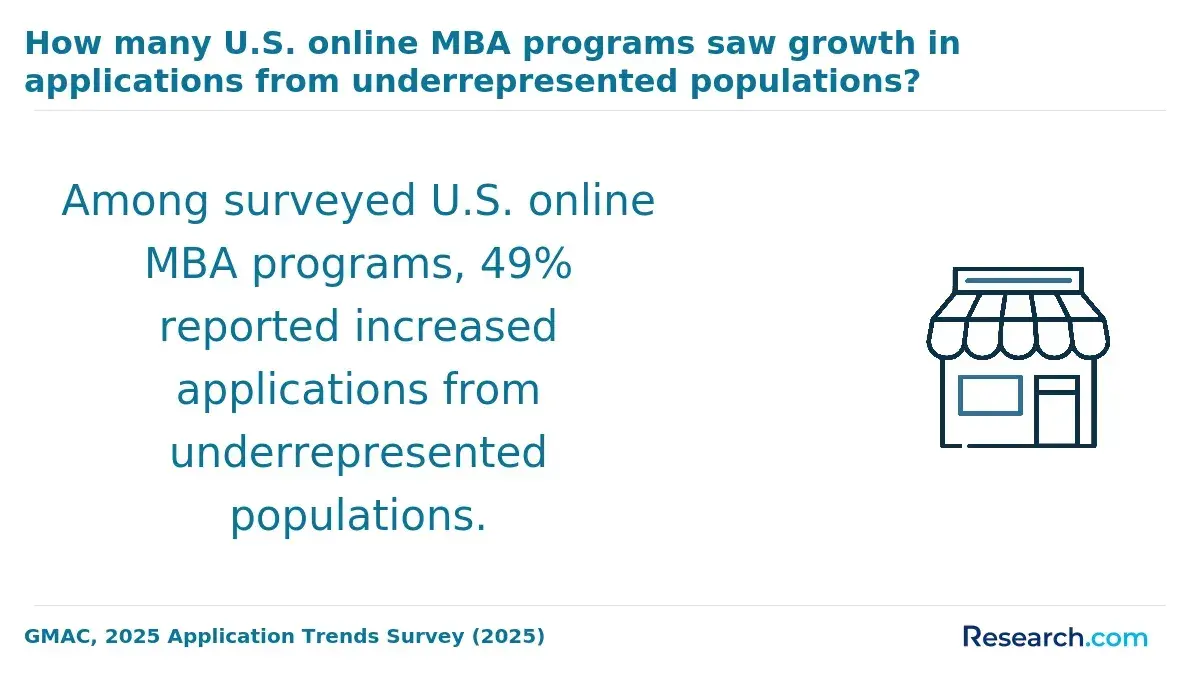
Requirements belong to the individual MBA program, not to the real estate specialization as a whole. Schools commonly ask for a bachelor's degree, transcripts, a résumé, and a statement of purpose; some request recommendations, an interview, or GMAT/GRE scores.
Experience expectations, minimum academic standards, test waivers, and deadlines vary. Verify each policy on the school's current admissions page before deciding whether you qualify.
First-time managers should not assume that a lack of direct reports makes their experience irrelevant. Leading a vendor handoff, coordinating a leasing project, training colleagues, or defending an investment recommendation can demonstrate readiness.
Describe the decision you owned, the people affected, and what changed. Be equally clear about what you have not managed; inflated titles make an application less convincing.
Use this checklist to turn general requirements into a credible application:
- Confirm the program's degree, work-experience, testing, recommendation, and deadline rules, including whether they differ for the online format.
- Identify examples of leadership without formal authority, such as resolving a tenant issue across teams or balancing a project budget.
- Review your preparation in accounting, finance, and quantitative analysis; ask whether missing knowledge calls for a prerequisite, a foundation course, or independent study.
- Explain why you need an MBA now, why its real estate curriculum fits your intended responsibilities, and how you will manage study alongside work.
- Ask recommenders to describe your judgment and growth potential with specific examples, rather than simply confirming your job title.
If application timing is your constraint, online MBA programs with rolling admission offer a comparison starting point. Rolling admission does not mean immediate enrollment or identical scholarship deadlines; confirm the dates with each school.
Delivery format changes how you access classmates, faculty, and real estate employers. The comparison below describes possibilities, not features guaranteed by either format; ask each school what its enrolled online students can actually use.
| Decision factor | Online MBA | Campus MBA |
| Employment continuity | Often designed for study while working, though live classes and group projects can still constrain evenings. | Full-time formats may require time away from work; part-time campus formats may preserve employment. |
| Real estate connections | May offer virtual alumni events and projects, but access to local site visits and recruiting must be checked. | May make local events and in-person recruiting easier to attend, depending on the school and market. |
| Applied learning | Can let a working manager test ideas in a current role, subject to employer approval and confidentiality rules. | May provide in-person projects or internships, but availability varies by program. |
"Online" does not necessarily mean self-paced. Ask about required live sessions, group-meeting time zones, exams, and campus visits. If maintaining a full-time job is essential, compare online MBA programs with asynchronous classes while checking whether real estate electives follow the same schedule as the MBA core.
Expect the MBA core to build business-wide decision skills, while real estate courses apply finance, markets, and operations to property decisions. Depending on the program, relevant courses might address real estate investment analysis, development, property management, valuation, or real estate law.
A course title alone will not show whether students analyze deals, manage a project, or simply survey the industry; request syllabi and recent project descriptions.
For admissions preparation, compare the curriculum with your own experience. A leasing professional may need more practice with accounting and investment analysis; an analyst moving into supervision may need more work in organizational behavior, communication, and conflict resolution.
A nonbusiness bachelor's degree does not automatically rule out admission. For an online MBA admissions comparison online MBA programs resource focused on programs without business prerequisites, use the listing as a starting point and verify current foundation-course policies directly.
Time to completion depends on required credits, course availability, transfer or waiver policies, and how many courses you take while working. Check whether real estate electives run often enough to support your planned pace.
A published accelerated timeline may assume a course load that is difficult to combine with a first management job; an online MBA time-to-degree guide MBA programs comparison can help you frame questions about sequencing, but only the school can confirm its current schedule.
For cost, obtain the current tuition basis - per credit, course, term, or full program - then add mandatory fees, materials, technology, and any required travel. Ask whether tuition differs by residency or enrollment pace and whether employer assistance has grade or continued-employment conditions.
Do not compare a tuition-only figure from one school with a total program estimate from another. If borrowing, include financing costs in your personal decision even when they are absent from a school's published price.
For a first-time manager, the most realistic next step is often broader responsibility within an existing real estate function. A property operations specialist might seek oversight of staff, vendors, and operating budgets; an investment analyst might progress toward coordinating underwriting and presenting recommendations.
Development, asset management, and brokerage leadership are other possible directions, but employers may expect local market knowledge, completed projects, client relationships, or a deal record in addition to the degree.
Choose application examples and MBA projects that support the role you actually want. If your goal is people management, look for chances to supervise, coach, or coordinate colleagues at work. If your goal is investment responsibility, seek exposure to assumptions, financing, and post-acquisition performance. Neither pathway follows automatically from earning the MBA.
There is no single reliable salary for "real estate MBA graduates." Pay varies by role, location, employer, experience, and - in some jobs - commissions or bonuses. The US Bureau of Labor Statistics reports a May 2025 median annual wage of $126,520 for management occupations.
That broad figure includes managers outside real estate and at many career stages; it is not a starting salary, an MBA premium, or a forecast of your earnings. For a useful financial comparison, identify the specific positions you could reasonably pursue after graduation and compare their local compensation with your current pay.
Separate base salary from variable compensation and weigh any likely increase against tuition, financing, and time spent studying. A promotion is possible without an MBA, and completing one does not establish that it caused a later pay increase.
The MBA itself does not confer a real estate license. Whether you need one depends on the work you perform and the state where you perform it. Brokerage activities, for example, are regulated under state-specific rules; confirm applicable requirements with the relevant state licensing authority before taking on those duties. Internal management or investment-analysis roles may have different requirements.
Professional certifications may help demonstrate expertise in a particular function, but they are separate from an MBA and should be evaluated against the target job. Before paying for either credential, review job postings for your intended role and distinguish legally required qualifications from employer preferences.
How Do You Choose an Accredited Online Real Estate MBA?
First, verify that the institution holds recognized institutional accreditation and that the online MBA is included in its accredited offerings. Then check whether the business school holds specialized accreditation, if that matters to your goals; institutional and business-school accreditation are not the same claim.
Confirm the status through the accreditor and the institution rather than assuming that a school's general reputation settles the question.
Next, compare the programs on the factors that matter to a new manager: admission eligibility, the depth of real estate coursework, leadership practice, access to career services, scheduling, and total cost.
Ask whether the concentration appears on the transcript, whether its courses are offered online, and whether online students can join relevant employer events. If your academic record or experience makes admission uncertain, you can compare online MBA programs with accessible admissions, then check each school's actual standards. Accessible admission is not a reason to overlook academic fit or program quality.
A sensible shortlist includes programs where you meet or can realistically strengthen your admission profile, can complete the courses around your job, and can name a specific management responsibility the degree would help you perform better. If you cannot identify that responsibility, gain more exposure at work or try targeted study before committing to a full MBA.
Other Things You Should Know About MBA
It depends on your relationship and goals. A conversation can help if you want tuition assistance or projects that support your studies. If you are not ready to share your plans, check whether the program accepts a recommender other than your current supervisor.
Only if your employer permits it and you can protect confidential information. Ask the instructor whether an anonymized case or public-market data can meet the assignment requirements.
Describe the scope of your coordination, the decisions you made, and how you handled disagreement. Do not label vendor oversight as employee supervision; the distinction helps a program understand your actual starting point.
Ask how much advance notice they receive for live meetings, how group work is scheduled, and whether the real estate courses they wanted were available when they needed them. Those answers can reveal practical constraints that a program overview may not show.
- What's Different About an MBA in Real Estate? | Longwood Online https://online.longwood.edu/business/mba/real-estate/whats-different/
- The Application Process | Humanities Academic Services Center https://hasc.washington.edu/application-process
- Career paths in real estate | Cornell SC Johnson College of Business https://business.cornell.edu/news/2025/03/03/real-estate-career-paths/
- Guidelines to Waive Standardized Test Requirements | UTD https://graduate.utdallas.edu/staff-advisors/test-waiver/
- Policies for Online Teaching | Teaching and Learning Resource Center https://teaching.resources.osu.edu/teaching-topics/policies-online-teaching
- Tuition and Financial Aid | MIA-BUS https://onlinemba.miami.edu/admissions/tuition/
- What Can I Do With a Major In Real Estate? | uga.edu https://career.uga.edu/wcidwami/real_estate
- MBA Scholarships & Financial Aid: How to Pay for an MBA | University of Tulsa https://onlinedegrees.utulsa.edu/degrees/business/mba/how-to-pay-for-mba/
- How to Pay for an MBA: Smart Funding Strategies Explained | Jenkins MBA https://mba.ncsu.edu/2026/05/07/paying-for-your-mba-scholarships-employer-benefits-and-loans/
- Flex MBA Tuition, Scholarships, & Financial Aid | Lehigh Business https://business.lehigh.edu/academics/graduate/mba-programs/flex-mba/tuition-and-financial-aid